September 26: The Debate That Changed Politics, a Musical That Changed Broadway, and a Blended Family That Changed Television
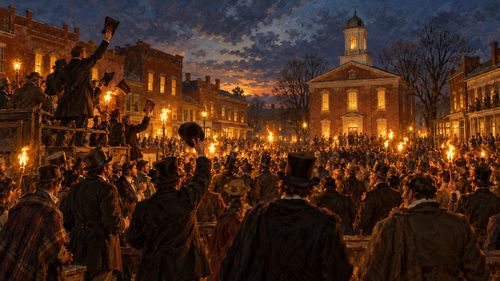
September 26 is a day for premieres — of new formats, new ambitions, new visions of what American life looked like or could look like. In 1960, two men stood at podiums in a Chicago television studio and conducted the first televised presidential debate in American history before an audience of somewhere between 85 and 120 million viewers, and the visual contrast between them — one tanned and composed, one pale and sweating — became the most discussed element of the encounter, permanently changing what presidential campaigns required candidates to be. In 1957, a musical opened on Broadway that took the most famous love story in the English language and set it in the gang-controlled streets of Manhattan, and in doing so demonstrated that the American musical could be a serious form of social art rather than simply an evening's entertainment. And in 1969, a television producer introduced American audiences to a family with six children from two previous marriages and presented their daily domestic life as something warmly, relentlessly, optimistically normal. Three September twenty-sixths. Three new things that became, almost immediately, part of the permanent furniture of American culture.
Chicago, September 26, 1960
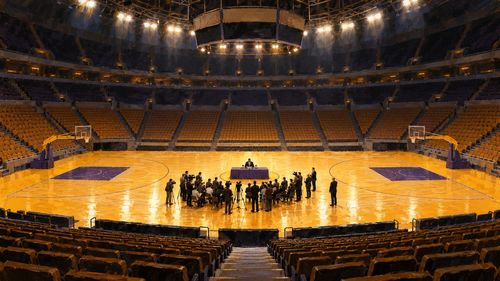
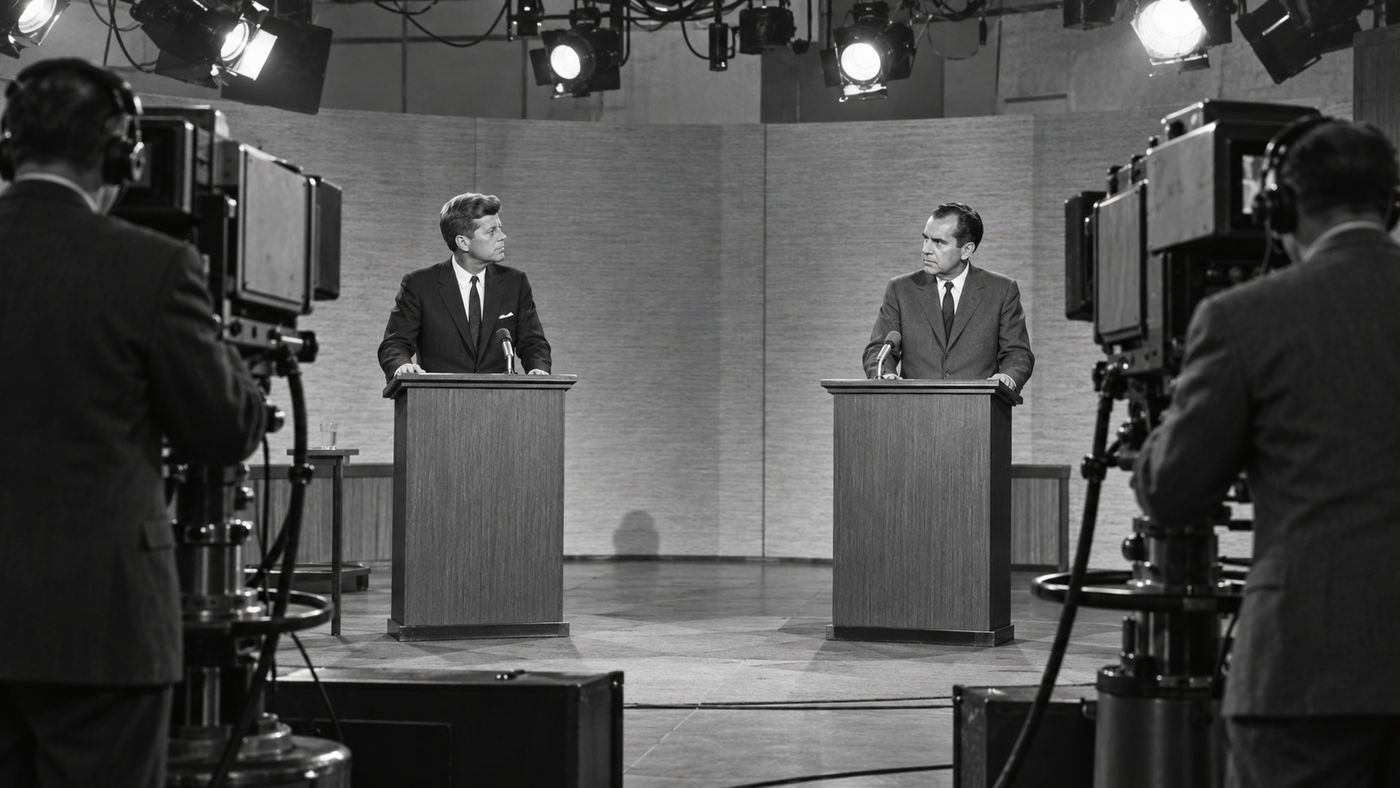
On September 26, 1960, Senator John F. Kennedy and Vice President Richard Nixon met at the CBS studios in Chicago for the first televised presidential debate in American history — broadcast simultaneously on CBS, NBC, and ABC to an audience estimated at between 85 and 120 million viewers, approximately sixty percent of American adults. The debate had been made possible by Congress's temporary suspension of the equal time rule, which would otherwise have required the networks to offer time to all presidential candidates, not just the two major party nominees. Nixon, the sitting Vice President and a more experienced debater, was widely expected to have the upper hand; Kennedy, the younger and less familiar figure, was considered to be carrying the greater burden of proof. What the television cameras recorded and transmitted to tens of millions of living rooms was something that radio listeners did not perceive in the same way: Nixon appeared pale, uncomfortable, and visibly perspiring under the studio lights, having declined professional makeup; Kennedy appeared tanned, composed, and visually confident.
The significance of the debate broadcast on September 26, 1960, has been analyzed and argued about for more than six decades. The standard account — that people who watched on television thought Kennedy won while those who listened on radio thought Nixon had the better of the exchange — is based on surveys whose methodology has been questioned, but the broader point about the visual dimension of the encounter has been accepted as essentially correct. The debate established television as the primary medium of presidential politics and created a new set of requirements for anyone seeking the office: physical presence, visual composure, the ability to seem natural and authoritative while being watched by tens of millions of strangers in their homes. Nixon, who lost the 1960 election by one of the narrowest popular vote margins in American history, refused to participate in televised debates in his successful 1968 and 1972 campaigns. The format returned as a regular feature of presidential campaigns in 1976 and has been a fixture ever since — each one carrying, consciously or not, the precedent established on September 26, 1960, in Chicago.
Tonight
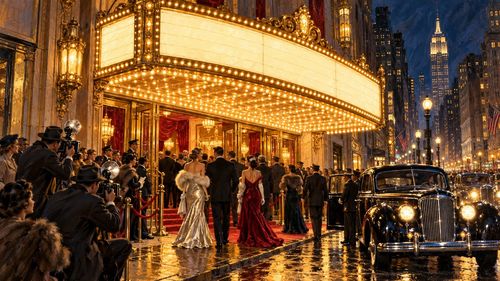
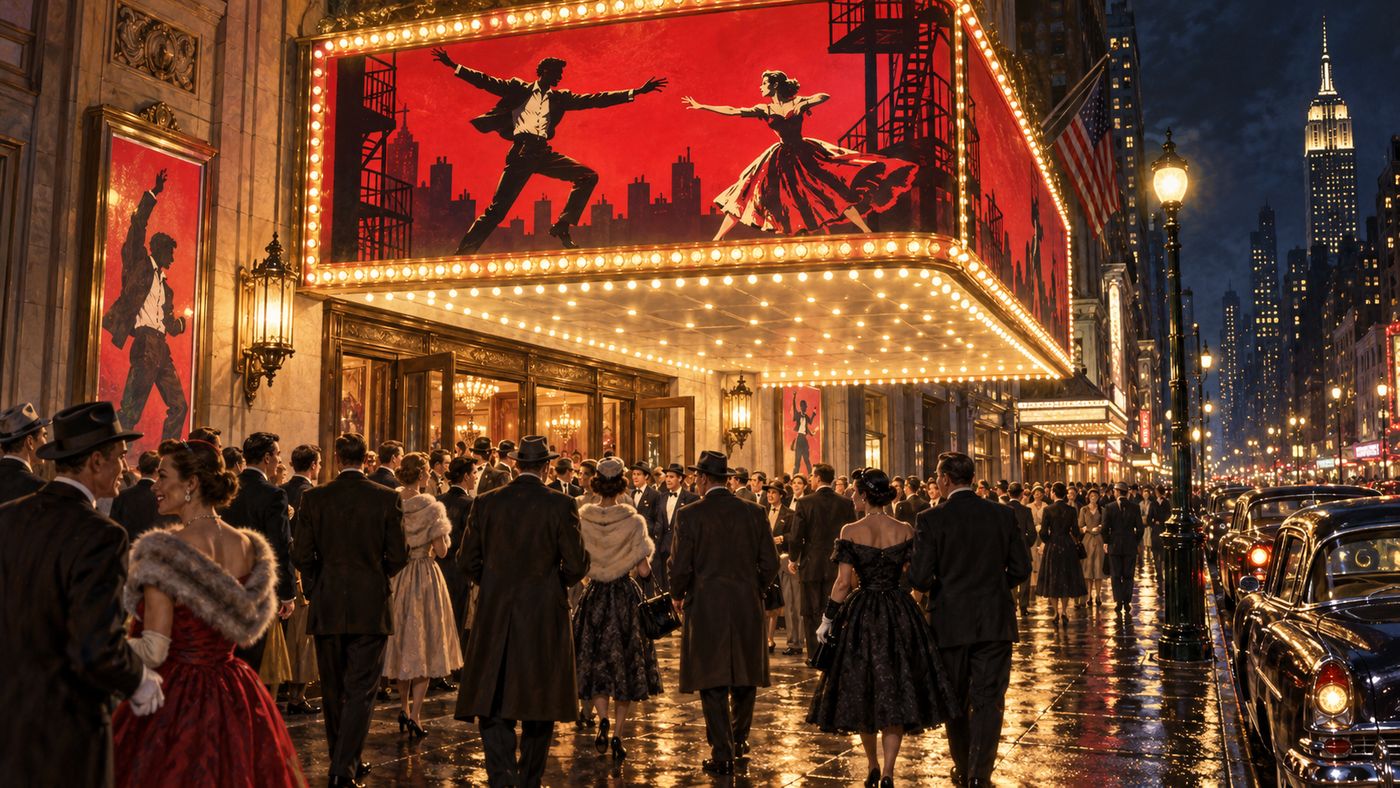
On September 26, 1957, West Side Story opened at the Winter Garden Theatre on Broadway — a musical that had taken nearly a decade from conception to stage, with a book by Arthur Laurents, music by Leonard Bernstein, lyrics by a then-unknown twenty-seven-year-old named Stephen Sondheim, and choreography and direction by Jerome Robbins. The show transplanted the Romeo and Juliet story to the gang-controlled streets of Manhattan's Upper West Side, replacing the Montagues and Capulets with the Jets — a white American gang — and the Sharks, Puerto Rican immigrants asserting their presence in the same neighborhood. Its central romance, between Tony of the Jets and Maria, whose brother leads the Sharks, was set against violence, racism, immigration, and the compressed geography of urban poverty. It was, by virtually any measure, the most ambitious musical Broadway had yet attempted — and the most willing to treat its audience as capable of handling tragedy, social complexity, and an ending in which the romantic leads did not both survive.
West Side Story ran for 732 performances in its original Broadway production, won two Tony Awards, and was adapted into a film in 1961 that won ten Academy Awards including Best Picture — one of the highest Oscar totals in history. It was revived on Broadway in 1980 and again in 2009, and Steven Spielberg directed a new film adaptation in 2021 that won the Academy Award for Best Supporting Actress. Its score — "Maria," "Tonight," "Something's Coming," "America," "Somewhere" — has become part of the permanent repertoire of American musical theater, among the most recognizable collections of songs from any single production. Stephen Sondheim, who took the lyric job only after Bernstein agreed to credit him as lyricist rather than co-lyricist, went on to become the most admired writer in the history of American musical theater; he later said that working on West Side Story was the most important education of his professional life. The show that opened on September 26, 1957, transformed what Broadway thought it was capable of, and the form has been living up to that ambition — with varying success — ever since.
A Lovely Lady
On September 26, 1969, ABC premiered The Brady Bunch — a sitcom created by Sherwood Schwartz about Mike Brady, a widowed architect with three sons, who marries Carol Martin, a woman with three daughters, producing a household of eight that navigated the ordinary complications of blended family life with cheerful, unflappable optimism. The show starred Robert Reed as Mike, Florence Henderson as Carol, and six child actors whose names and faces — Marcia, Jan, Cindy, Greg, Peter, Bobby — became among the most recognized in American family television. The series was not a critical success: reviewers found it formulaic and its resolution of family conflict implausibly tidy. Audiences felt differently. The show ran for five seasons and 117 episodes, was canceled in 1974, and subsequently became one of the most successful reruns in American television history — acquiring a cultural significance in its afterlife that it had not fully achieved during its original run.
The cultural resonance of The Brady Bunch, which premiered on September 26, 1969, has been remarkably durable and has generated a franchise — reunion movies, spinoffs, a home renovation series in which the original house was purchased and restored — that has never fully stopped producing content. What made the show significant, in retrospect, was not its quality but its subject: the blended family, formed by the marriage of two people who each already had children, was a domestic structure becoming increasingly common in American life in the late 1960s and 1970s as divorce rates rose, and it had been largely invisible on American television. Schwartz created a show that treated this family structure as entirely normal — neither tragic nor exotic — and that the show's enormous rerun audience found comforting and recognizable. The Brady household's optimism — its conviction that every conflict was resolvable, every hurt feelings healable, every crisis manageable within a 30-minute episode — was not realism but was something that millions of Americans in newly configured families apparently found useful. The show that premiered on September 26, 1969, was dismissed by critics and embraced by audiences in numbers that have not diminished across more than fifty years.