November 12: The Last Immigrant, the Web Is Born, Trotsky Cast Out
Thresholds define us. The door you walk through, the proposal you submit, the party that expels you — each one marks the line between what came before and what comes after. November 12 has seen three of them close or open with consequences that echoed for generations. An immigration station that had processed more than twelve million people quietly shut its doors and sent its last detainee home. A computer scientist at a Swiss physics laboratory submitted a document his supervisor marked "vague but exciting" that would become the blueprint for the World Wide Web. And a revolutionary who had helped overthrow one Russian government and build the next was cast out of the party he had given his life to — the first step on a road that ended with an ice axe in Mexico City thirteen years later.
The Last Ferry
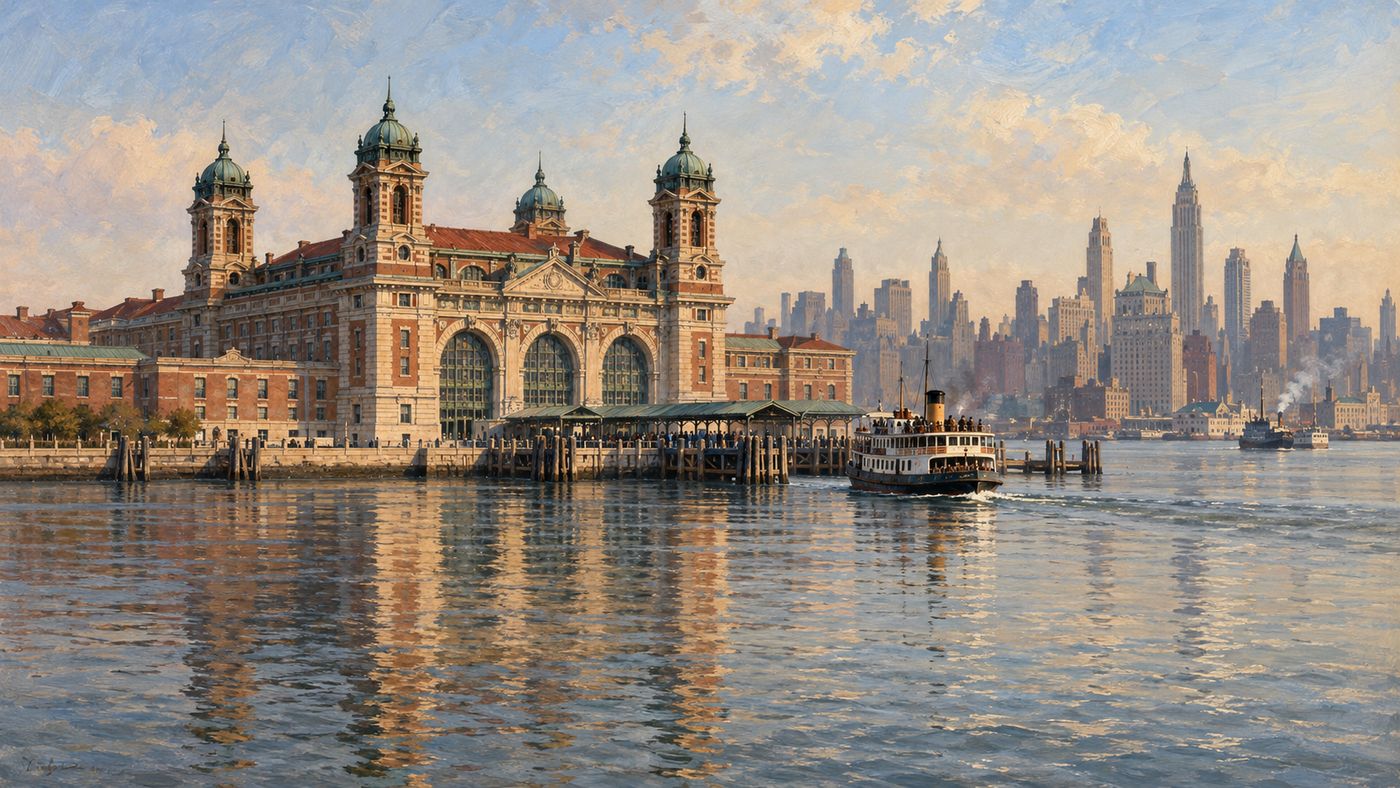
On November 12, 1954, a Norwegian merchant seaman named Arne Peterssen became the last person processed through Ellis Island before the federal immigration station in New York Harbor officially closed its doors after sixty-two years of operation. Between 1892 and 1954, Ellis Island had admitted more than twelve million immigrants — Italians, Jews, Poles, Russians, Greeks, Hungarians, and dozens of other nationalities — processing them through a system of medical inspections, legal reviews, and registration that could take hours or, for those who were detained for further examination, days or weeks. At its peak, in 1907, the island processed more than a million arrivals in a single year. The men, women, and children who passed through its Great Hall and emerged onto its ferry dock to Manhattan represented one of the largest voluntary human migrations in history.
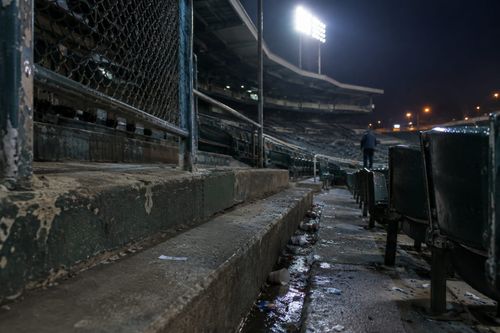
By 1954, the pattern of American immigration had changed so substantially — through the restrictive quota laws of the 1920s, the Depression, World War II, and the postwar shift to air travel and other ports of entry — that Ellis Island was processing only a few dozen arrivals a day, and was being used primarily as a detention center for people awaiting deportation hearings. Its closure was quiet, practical, and almost entirely unmarked at the time. The building fell into severe disrepair over the following decades before being designated a national monument and restored, reopening to visitors in 1990. Today Ellis Island receives more than two million visitors annually, many of them descendants of the people who passed through it — Americans whose names, and whose country, bear the imprint of what happened on that small island in New York Harbor between 1892 and the day the last ferry left.
Vague but Exciting
On November 12, 1990, Tim Berners-Lee, a British computer scientist working at CERN — the European Organization for Nuclear Research — in Geneva, Switzerland, published a formal proposal titled "WorldWideWeb: Proposal for a HyperText Project." His supervisor, Mike Sendall, returned it with a handwritten annotation in the margin: "Vague but exciting." The proposal described a system for managing information at CERN using hypertext — a method of linking documents so that a reader could navigate between them by clicking on embedded references, rather than having to know in advance where information was stored. Berners-Lee had been thinking about the problem since 1980, when he wrote a personal program called ENQUIRE to help him keep track of software projects and the people working on them. The 1990 proposal was the document that turned that personal tool into a public architecture.
The World Wide Web that Berners-Lee's proposal inaugurated was not the internet itself — the internet, as a network of connected computers, had existed since the late 1960s. What Berners-Lee invented was the system of hypertext documents, URLs, HTTP, and HTML that made the internet navigable by ordinary people without technical expertise. He built the first web server and the first web browser, both running on a NeXT computer at CERN in late 1990, and he made the crucial decision to release the Web's underlying standards without patent or royalty, making them freely available to anyone who wanted to use them. That decision — to give away what might have been the most valuable intellectual property in human history — is what made the Web what it became. Berners-Lee was knighted in 2004. He has since expressed concern about some of what the technology he invented has been used to do, and has spent recent years advocating for a more equitable and less exploitative version of the Web he gave the world for free.

The Expelled
On November 12, 1927, Leon Trotsky was expelled from the Soviet Communist Party — the organization he had helped found, the movement whose October Revolution he had organized, and the government whose Red Army he had built and led to victory in the Russian Civil War. His expulsion was the culmination of a power struggle with Joseph Stalin that had been building since Lenin's death in 1924, a struggle that Trotsky had consistently underestimated and that Stalin had prosecuted with a patience and ruthlessness that Trotsky's more open, theoretical style of politics was entirely unequipped to match. Trotsky believed the argument would be won on the merits of ideas. Stalin understood that in the Soviet system, the argument was won by controlling the party apparatus, the press, and the appointments — all of which he had methodically accumulated while Trotsky wrote pamphlets.
Expelled from the party in November 1927, Trotsky was exiled from the Soviet Union entirely in 1929, eventually settling in Mexico City after being refused entry by Britain, France, Norway, and several other countries. From exile he wrote prolifically — histories of the Russian Revolution, critiques of Stalinism, analyses of fascism, and the founding documents of the Fourth International, his attempt to build an alternative to the Stalinist Communist International. Stalin, who could not tolerate a living critic of his authority with Trotsky's intellectual stature and revolutionary credentials, dispatched agents to find him. On August 20, 1940, a Soviet agent named Ramón Mercader entered Trotsky's study in Coyoacán and struck him with an ice axe. Trotsky died the following day. The man who had helped make the Russian Revolution had been destroyed by it — thirteen years after the party that expelled him on November 12, 1927 made the first move.