History

Science

History

18 November 2026

Nov. 18, 2013: MAVEN Launches to Mars

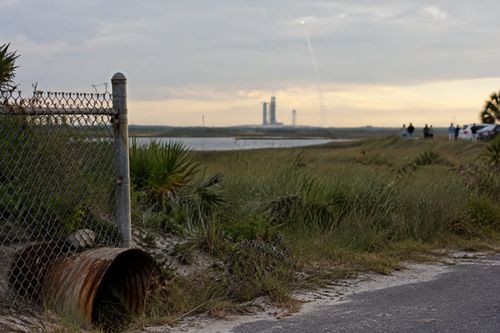
On Nov. 18, 2013, NASA's MAVEN Spacecraft Rocketed Toward Mars to Solve the Mystery of the Vanishing Atmosphere A single Atlas V launch from Florida set out to answer how a planet that once may have had rivers and lakes ended up cold, dry and nearly airless. On the afternoon of Nov. 18, 2013, an Atlas V rocket climbed off the pad at Cape Canaveral Air Force Station in Florida carrying a spacecraft with an unusual assignment. Most Mars missions had gone to look at the ground. MAVEN, short for Mars Atmosphere and Volatile EvolutioN, was built to look up, at the thin, tattered air that is all that remains of whatever Mars once had. The Missing Sky   Orbiters and rovers had already turned up channels, minerals and ancient lakebeds that pointed to a wetter, warmer Mars in the distant past. Water that flows on the surface needs a thicker atmosphere than the one the planet has now, so the obvious question was where that atmosphere went. MAVEN was NASA's attempt to measure the answer rather than guess at it. The spacecraft lifted off at 1:28 p.m. Eastern time aboard an Atlas V 401, on the first day of its launch period. Its plan was to settle into a looping orbit around Mars and sample the planet's upper atmosphere directly, while tracking the solar wind and ultraviolet light that strip gas away into space. Its instruments were designed to watch that process in action instead of inferring it from rocks. It was a small, focused mission built around a single big question, and its mission team knew that the answer might reveal as much about Earth's own long-term fate as about its neighbor's. It would be a ten-month trip before anyone could begin to find out. The trip ended on Sept. 21, 2014, when MAVEN fired its engines and slipped into orbit around Mars. It arrived just three days before India's Mars Orbiter Mission, which had left Earth two weeks before MAVEN, on Nov. 5, 2013. The two missions had set out in the same narrow launch window and finished the journey nearly together. Once MAVEN began its science work, it confirmed that the solar wind was a major force in eroding the Martian atmosphere, and NASA reported in 2015 that the loss was far greater during solar storms. The spacecraft that was built to look at what Mars had lost became, in effect, a witness to the loss still happening. Mars is not simply a planet that once had air. It is a planet whose air is, even now, still leaving.  
History

18 November 2026

November 18: Steamboat Willie Debuts, Breaking Dawn Opens

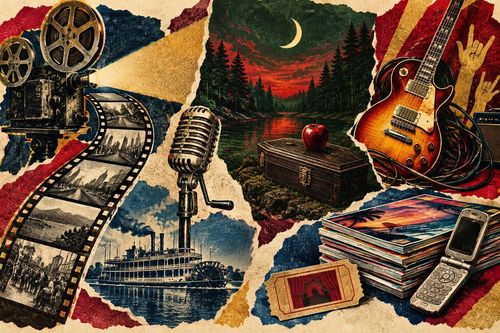
■  The Pop Edition November 18: Steamboat Willie Debuts, Breaking Dawn Opens A cartoon mouse whistled his way into sound-film history in 1928, Twilight split its finale in two in 2011, and Owen Wilson turns 58. Here is the full accounting of November 18. Mickey Mouse at the wheel in Steamboat Willie, the 1928 cartoon that premiered in New York. November 18 is a day with two very different kinds of staying power. In 1928, a short cartoon with a whistling mouse opened on Broadway and set the template for an entire studio. In 2011, a vampire romance began the first half of its last chapter. Add a Wes Anderson regular, a Metallica guitarist and a few film openings that still get rewatched, and this date has plenty to offer. THE MOMENT: Steamboat Willie   The mask in this story is really a mouse. On November 18, 1928, Steamboat Willie premiered at the Colony Theatre in New York, and it was not the first Mickey Mouse cartoon Walt Disney had made. Plane Crazy and The Gallopin’ Gaucho were finished earlier, but they were silent, and neither found a distributor. Willie was the one that audiences saw first, and the reason was sound. Disney had watched The Jazz Singer change the business and decided his mouse needed a soundtrack that matched the action. The short was synchronized to music and effects using Pat Powers’ Cinephone system. Pots, pans and a goat’s tail all became instruments, and the gags were timed to the beat. Disney himself supplied the few squeaks and whistles Mickey makes. New York critics noticed, and Disney had a character to build a studio around. Mickey later got his own voice, and the November 18 premiere is now treated as his birthday. The original short entered the US public domain on January 1, 2024, 95 years after it opened, which gave this old cartoon a second round of attention.   Born On This Day Owen Wilson BORN 1968 · TURNS 58 Wilson began as a screenwriter, co-writing Bottle Rocket with Wes Anderson and later earning an Oscar nomination for co-writing The Royal Tenenbaums. He became a comedy lead in Zoolander and Wedding Crashers, voiced Lightning McQueen in the Cars films, and played Mobius in the Marvel series Loki. Kirk Hammett BORN 1962 · TURNS 64 Hammett played in Exodus before joining Metallica in 1983, replacing Dave Mustaine. His lead work shaped albums from Ride the Lightning to the Black Album, and he went into the Rock and Roll Hall of Fame with the band in 2009. Chloë Sevigny BORN 1974 · TURNS 52 Sevigny went from downtown New York fashion fixture to film debut in Kids in 1995. She earned an Oscar nomination for Boys Don’t Cry and later won a Golden Globe for the HBO drama Big Love. Delroy Lindo BORN 1952 · TURNS 74 Lindo built a long stage and screen career with Spike Lee, appearing in Malcolm X and Clockers and later leading Da 5 Bloods. He has stayed busy, with a role in the 2025 film Sinners.   OPENING WEEKEND: The Twilight Saga: Breaking Dawn – Part 1 The fourth Twilight film opened in US theaters on Friday, November 18, 2011, and it was the first of two movies built from a single book. Bill Condon, who had won an Oscar for writing Gods and Monsters, directed both halves, and the two parts were shot back to back rather than separately. Splitting the final novel was a strategy the Harry Potter series had already used with Deathly Hallows, which came out the same month. Fans of Breaking Dawn got the wedding, the honeymoon and a dangerous pregnancy in Part 1, with the finale held for the following year. It opened to roughly $138 million in the US and Canada, and reviews were harsher than the grosses. Fifteen years on, the series has had a second life online and in streaming, and this installment is remembered for its wedding and some spirited fan debate.   Meanwhile… 1928On November 18, 1928, Steamboat Willie premiered at New York’s Colony Theatre, and Mickey Mouse’s birthday has been counted from that date ever since. 1963Bell System began commercial service of push-button Touch-Tone telephones on November 18, 1963, ending the rotary dial’s monopoly over how people called. 1985Bill Watterson’s Calvin and Hobbes debuted in newspapers on November 18, 1985, and ran for ten years. 2005Harry Potter and the Goblet of Fire opened in the US on November 18, 2005, the first film in the series rated PG-13. 2005The Johnny Cash biopic Walk the Line also opened on November 18, 2005, with Joaquin Phoenix and Reese Witherspoon doing their own singing. 2016Fantastic Beasts and Where to Find Them opened in the US on November 18, 2016, ten years ago, launching a new series set in the Harry Potter world. From a mouse at a ship’s wheel to a vampire wedding, November 18 has a way of turning small bets into long franchises. Tomorrow brings another date and another stack of premieres, birthdays and oddities worth a second look. Come back then, and bring a friend who loves this stuff.

History

18 November 2024

November 18: Courage, Creativity, and Catastrophe

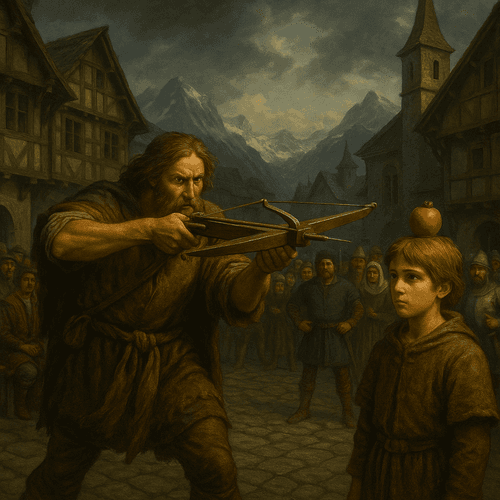
November 18: Courage, Creativity, and Catastrophe When courage inspires greatness and belief reveals its double edge November 18 captures the full spectrum of the human story—bravery in the face of tyranny, creativity that reshaped imagination, and tragedy born of blind devotion. From the legendary shot of William Tell to the joyful debut of Mickey Mouse and the haunting lessons of Jonestown, this day reminds us that courage and belief can inspire greatness—or lead to ruin. The Legend of William Tell According to legend, on November 18, 1307, Swiss hero William Tell performed one of history's most daring feats—shooting an apple off his son's head with a crossbow. The story takes place in Altdorf, where Tell defied the cruel Austrian bailiff Albrecht Gessler, who demanded submission to imperial rule. Refusing to bow, Tell was forced into a test of loyalty so cruel it bordered on execution. With steady hands and unshakable courage, he loosed his arrow—and split the apple clean in two, sparing his son's life. Though its historical accuracy remains debated, the tale of William Tell endures as a symbol of defiance and national pride. It became a rallying cry for Swiss independence and inspired generations to resist oppression. Beyond myth, the story reflects a universal truth: that one act of courage, even in the face of fear, can echo far beyond its moment in time.   William Tell's legendary shot becomes a timeless symbol of courage and defiance against tyranny. The Mouse That Changed the World More than six centuries later, on November 18, 1928, another arrow of destiny was released—not from a bow, but from the imagination of Walt Disney. That day, the animated short Steamboat Willie premiered in New York City, introducing audiences to a plucky new character named Mickey Mouse. With synchronized sound, expressive animation, and mischievous charm, Mickey became an instant sensation and changed the course of entertainment history. Mickey's debut was more than a cartoon; it was the birth of an empire. The cheerful mouse became a global icon, embodying optimism and creativity during some of America's darkest times, including the Great Depression. Steamboat Willie not only launched Disney's career but also helped usher in the golden age of animation. Nearly a century later, Mickey remains a timeless symbol of imagination's power to bring joy to the world. Mickey Mouse makes his debut, launching an entertainment empire and capturing hearts worldwide. ❦ The Tragedy of Jonestown On November 18, 1978, a far darker chapter was written deep in the Guyanese jungle. What began as a utopian vision ended in horror when over 900 members of the People's Temple died in what became known as the Jonestown Massacre. Led by the charismatic but increasingly paranoid Jim Jones, the group had fled the United States to escape scrutiny, seeking refuge in a commune meant to embody equality and peace. But beneath its surface, Jonestown became a prison of control, fear, and manipulation. When U.S. Congressman Leo Ryan arrived to investigate reports of abuse, violence erupted. Soon after, Jones ordered his followers to drink poison-laced punch, resulting in one of the largest mass deaths in modern history. The tragedy of Jonestown exposed the terrifying consequences of blind faith and unchecked authority. Its echoes continue to serve as a chilling reminder of how easily devotion can turn to destruction when reason is silenced.   The tragic aftermath of Jonestown stands as a stark warning about blind devotion and unchecked power.
…
logo
  • Introduction

  • Lessons From The Past

  • Cultural Awareness and Diversity

  • Appreciation for Progress

  • Understanding Political and Social Dynamics

  • Preserving Cultural Heritage

  • Conclusion

Terms and ConditionsDo Not Sell or Share My Personal InformationPrivacy PolicyPrivacy NoticeAccessibility NoticeUnsubscribe
Copyright © 2026 Day In History