November 13: Fantasia Premieres, Franklin Writes About Balloons, Augustine Is Born
Vision is the capacity to see what something could be before anyone else has decided what it is. Walt Disney saw it in a bag of mushrooms dancing to Tchaikovsky and a dinosaur dying to Stravinsky, and bet a studio's future on the idea that animation could do what no film had attempted. Benjamin Franklin saw it in a silk bag filled with hot air drifting over Paris, and immediately began calculating its scientific applications while the city around him was still simply staring upward in wonder. And in a provincial Roman city in fourth-century North Africa, a restless, brilliant, deeply contradictory man named Augustine saw, in his own tumultuous inner life, the raw material for a theology of the human condition that the Western world has been working with ever since. November 13 belongs to all three.
The Sorcerer's Apprentice
On November 13, 1940, Walt Disney's Fantasia premiered at the Broadway Theatre in New York City in a special roadshow engagement with live orchestra and a new stereophonic sound system called Fantasound — the first commercial use of multi-channel audio in a film. The audience encountered eight animated sequences set to classical music: Bach's Toccata and Fugue in D Minor rendered as pure abstract color and form; Tchaikovsky's Nutcracker Suite performed by dancing mushrooms, flowers, and fairies; Dukas's The Sorcerer's Apprentice featuring Mickey Mouse as a hapless magician's understudy; and Stravinsky's The Rite of Spring reimagined as a visualization of Earth's formation and the age of dinosaurs. Disney had conceived the film as a "concert feature" — a new genre that would be continuously updated with new sequences as the repertoire expanded. He believed it would change the relationship between classical music and popular audiences permanently.
It did not, at first, change anything except Disney's finances. Fantasia was an immediate commercial failure, losing money on its initial release and forcing Disney to abandon the roadshow format for a conventional theatrical run that stripped out the Fantasound system entirely. Critics were divided — some recognized its ambition, others found its interpretation of classical music presumptuous or its imagery kitsch. The concert feature sequels were never made. Disney himself was deeply wounded by its reception. But the film refused to disappear. Re-releases in the 1950s and 1960s — particularly at colleges, where it found a new audience who watched it in states of consciousness that Disney had not anticipated — rebuilt its reputation. It was added to the National Film Registry in 1990 and is now recognized as one of the most artistically ambitious films in the history of American cinema. The film that lost Disney's company money in 1940 has since grossed more than $76 million in domestic theatrical releases alone. The vision that seemed too strange to succeed turned out to be simply ahead of its time.

What Goes Up
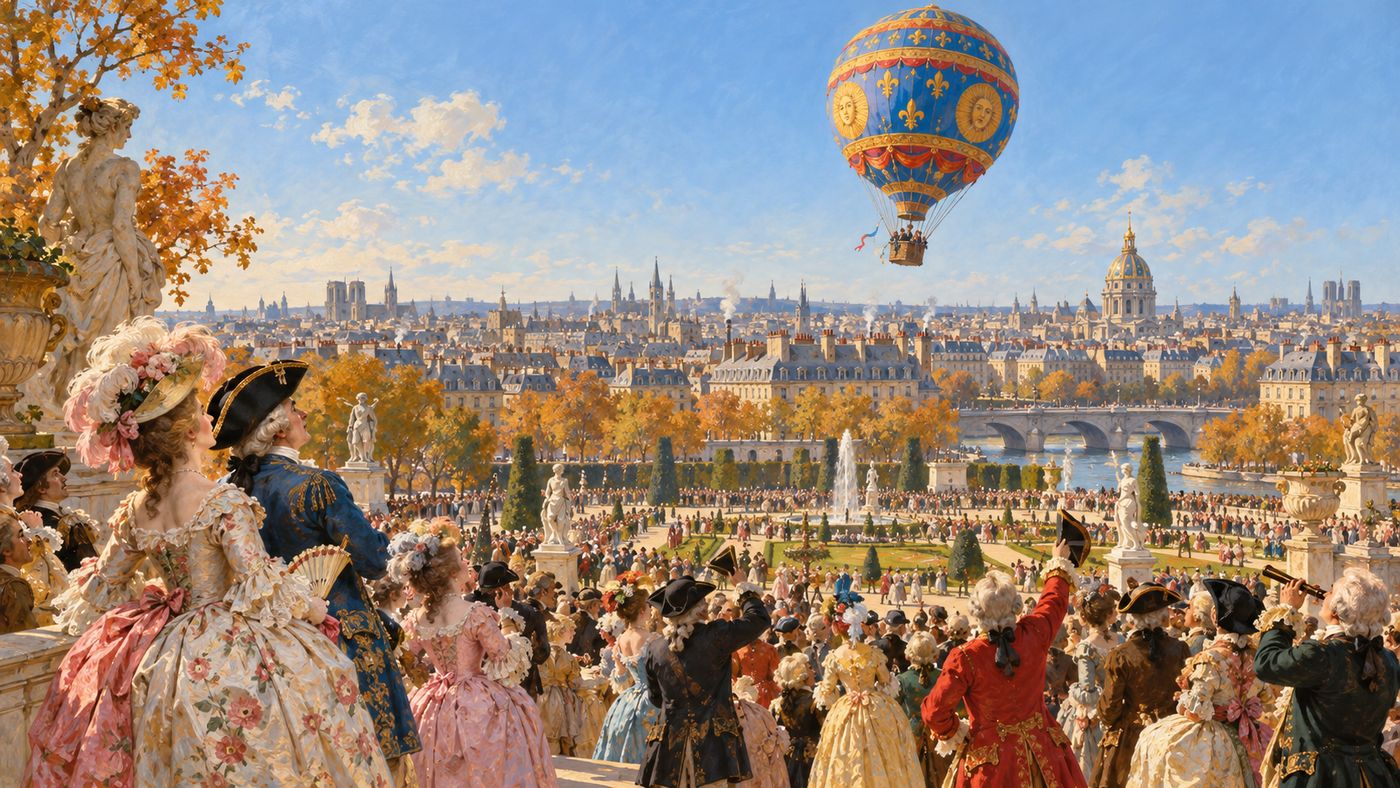
On November 13, 1783, Benjamin Franklin — seventy-seven years old, serving as American ambassador to France, already famous on two continents as a scientist, diplomat, writer, and founding father — sat down in Paris and wrote a letter to his friend Jean-Baptiste Le Roy describing the astonishing spectacle of balloon flight that had been electrifying the French capital for months. The Montgolfier brothers had demonstrated unmanned hot air balloon ascents that summer, and on November 21, just eight days after Franklin's letter, the first free flight carrying human passengers would take place over Paris. Franklin had watched the experiments closely and, characteristically, had moved past the spectacle to the implications. His letter catalogued potential scientific applications: measuring atmospheric conditions at altitude, studying wind patterns, making meteorological observations that were impossible from the ground. He saw, in a silk bag full of hot air, the beginning of systematic aerial science.
The letter also contained an exchange that has become one of science history's most quoted anecdotes. When a bystander at one of the balloon demonstrations asked what the invention was good for, Franklin replied — or is reported to have replied, since the attribution is not certain — "What is the use of a newborn baby?" The response perfectly captured his intellectual method: the recognition that the value of a new technology is not immediately legible, and that the question of use should be deferred until the technology has had time to demonstrate what it can become. Franklin was right about balloons in ways that took decades to fully manifest — weather balloons became essential to meteorology, military observation balloons changed warfare, and the understanding of atmospheric dynamics that balloon flights enabled laid groundwork for everything that followed in aviation. The old man watching silk bags drift over Paris understood, as he usually did, what he was actually looking at.
Thagaste, 354
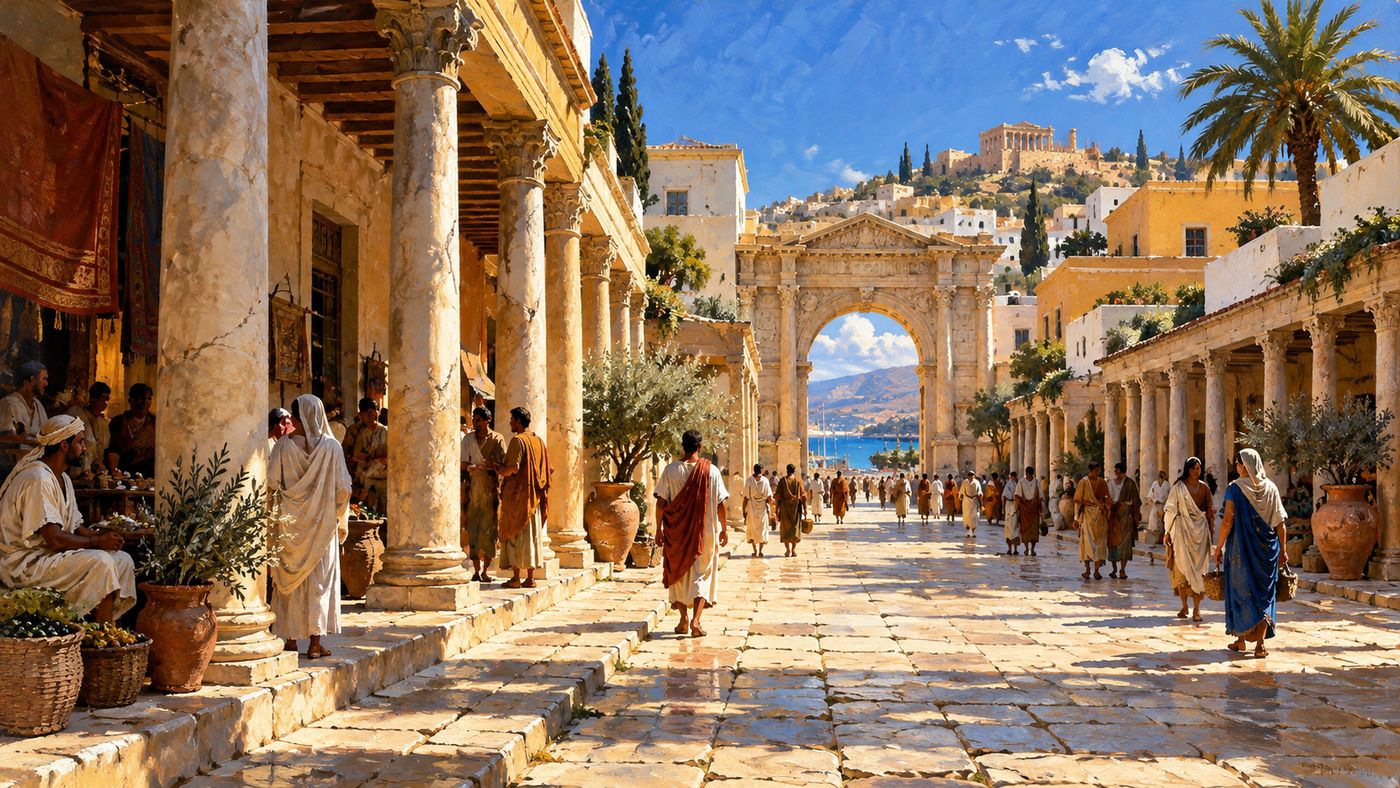
On November 13, 354 AD, in the Roman African city of Thagaste — in what is now northeastern Algeria — a boy was born to a pagan father named Patricius and a devoutly Christian mother named Monica. His name was Aurelius Augustinus, and he would become Augustine of Hippo: bishop, theologian, philosopher, and one of the most consequential thinkers in the history of Western civilization. The life he lived before arriving at that position was, by his own account, marked by intellectual restlessness, moral inconsistency, and a decade-long adherence to the dualist Manichaean sect before his dramatic conversion to Christianity in a garden in Milan in 386 AD — a conversion he described, in his Confessions, as the culmination of a long struggle between his will and his desires that he could not resolve by himself.
The Confessions Augustine wrote after his conversion is generally regarded as the first autobiography in the modern sense — a sustained, intimate account of an interior life, addressed directly to God but clearly also to the reader, tracing the psychological and spiritual arc of a self in the process of becoming. It introduced to Western literature and theology the concept of interiority — the idea that the self has an inner life as complex and as significant as its outward actions. His theological works — The City of God, his treatises on grace and free will, his elaboration of original sin — shaped Catholic doctrine for a thousand years and influenced Protestant theology through Calvin and Luther as directly as any ancient source. Augustine died in 430 AD as the Vandals besieged Hippo. He had spent his life trying to understand why human beings consistently fail to do what they know to be good — a question that has not become less relevant in the sixteen centuries since he first asked it.