November 11: The War Ends, the Unknown Soldier, Angola Free
November 11 carries more weight than most dates on the calendar. It was chosen — deliberately, precisely — as the moment a catastrophic war would end: the eleventh hour of the eleventh day of the eleventh month, a specificity that was less about practicality than about the human need to mark enormous things with memorable symmetry. Three years later, on the same date, a nation buried an unknown soldier and asked the question that every war eventually produces: what do we owe those who cannot be named? And in 1975, on another November 11, a country on the other side of the world concluded five centuries of colonial history and asked its own version of the same question. November 11 has been asking, across a century, what we owe the people who paid the highest price.
The Eleventh Hour
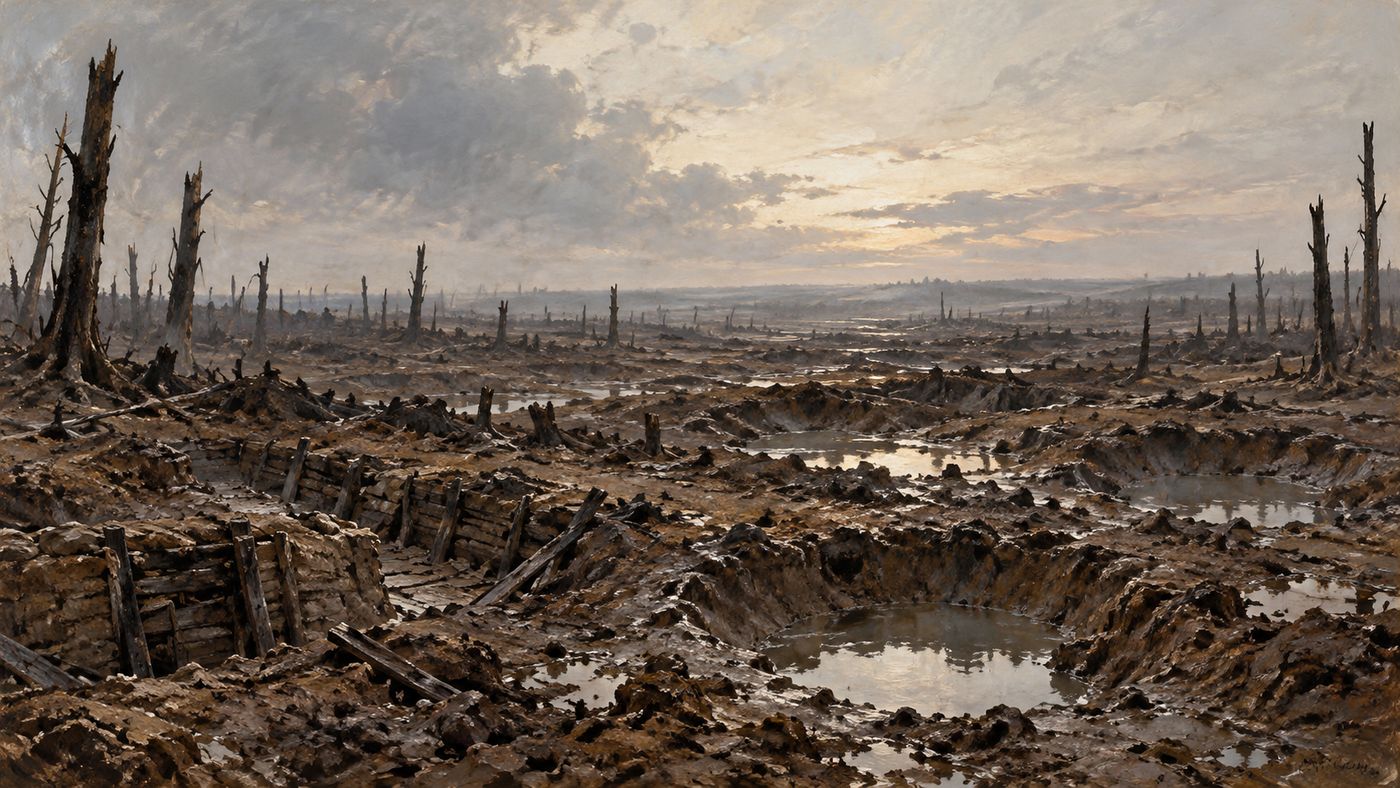
On November 11, 1918, at exactly 11 a.m., the guns of the Western Front fell silent after four years, three months, and fourteen days of the most destructive warfare in human history to that point. The armistice that ended World War I had been signed in a railway carriage in the Forest of Compiègne in northern France at 5:45 that morning, but its terms specified that hostilities would cease at the eleventh hour — giving both sides time to communicate the news to their forces in the field. In the hours between the signing and the ceasefire, the fighting continued. More than ten thousand men were killed, wounded, or reported missing on the final morning of the war, including 3,000 Americans — among them, Henry Gunther of Baltimore, killed at 10:59 a.m., sixty seconds before the guns stopped, making him the last known combat death of World War I.
The war that ended at 11 a.m. on November 11, 1918 had consumed an estimated seventeen million lives — military and civilian — across four years of industrial-scale slaughter that had introduced poison gas, aerial bombardment, and mechanized warfare to a world that had not understood what it was beginning when the first declarations were made in the summer of 1914. The armistice was not a peace treaty — it was a ceasefire, and the peace that followed it, negotiated at Versailles, was a settlement so punitive and so poorly constructed that historians have argued, with substantial evidence, that it made the Second World War almost inevitable. The eleventh hour of the eleventh day did not end anything cleanly. It ended the shooting. The dying continued in other forms for decades.
Known But to God
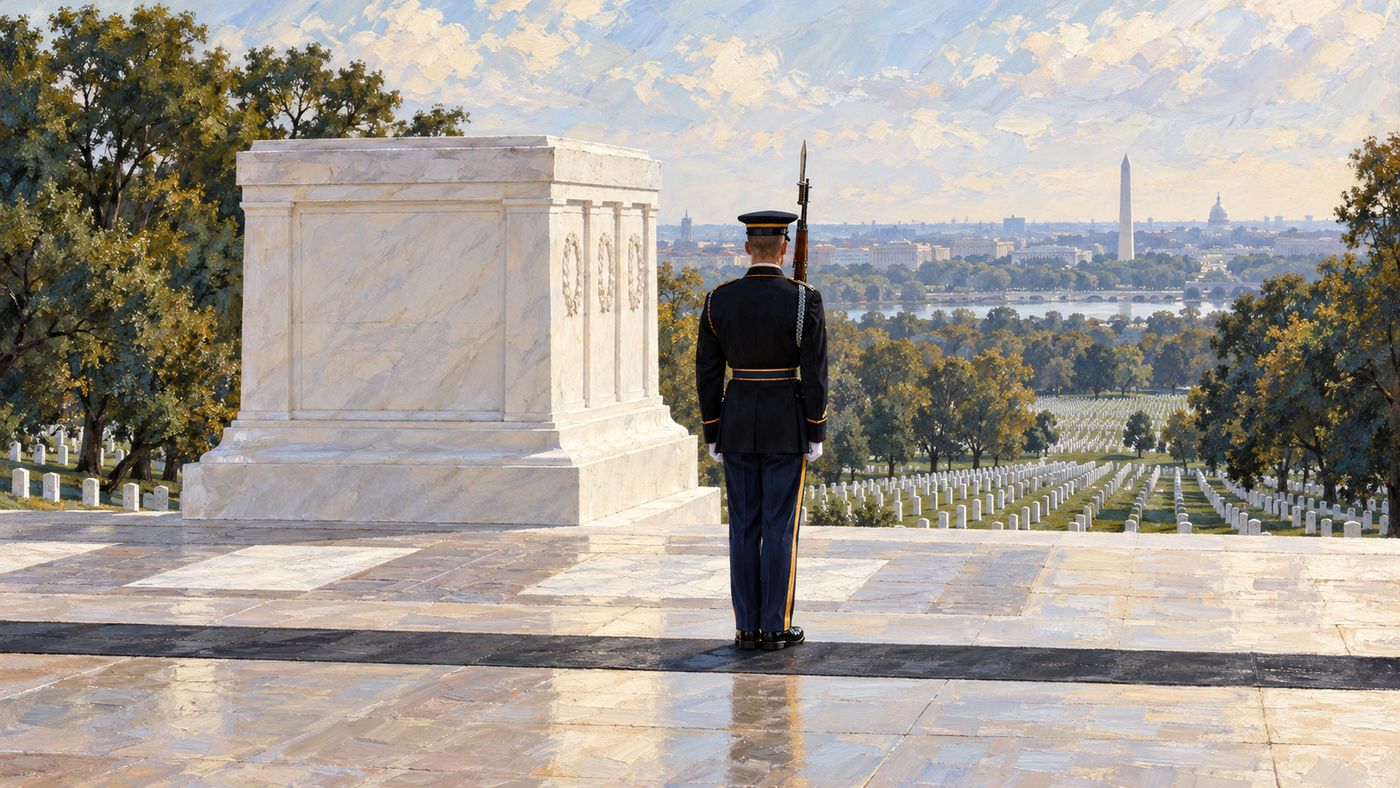
On November 11, 1921 — exactly three years after the armistice — the Tomb of the Unknown Soldier was dedicated at Arlington National Cemetery in Virginia, in a ceremony presided over by President Warren G. Harding. The tomb contains the remains of an unidentified American soldier from World War I, selected from among four unknowns exhumed from American military cemeteries in France. Sergeant Edward Younger, a decorated veteran, was asked to select one of the four identical caskets — he walked among them three times before placing white roses on the one he chose, and that soldier was brought to Arlington. The inscription on the tomb reads: "Here rests in honored glory an American soldier known but to God." The question it poses — how do you honor someone whose name you cannot speak? — is one the monument answers through its own permanence and its guarded presence.
The Tomb of the Unknown Soldier has been guarded continuously since July 2, 1937 — twenty-four hours a day, seven days a week, in every weather condition. The sentinels who guard it, drawn from the 3rd United States Infantry Regiment known as "The Old Guard," undergo one of the most demanding qualification processes in the American military and observe a precise ceremonial routine whose every step, pause, and movement has been exactly specified. The tomb has been expanded to include unknowns from World War II, the Korean War, and — briefly — Vietnam, though the Vietnam Unknown was subsequently identified through DNA testing in 1998 and returned to his family. The crypt designated for a Vietnam Unknown remains empty. The soldiers buried in the other crypts remain unnamed. The guard continues regardless.
Luanda, 1975
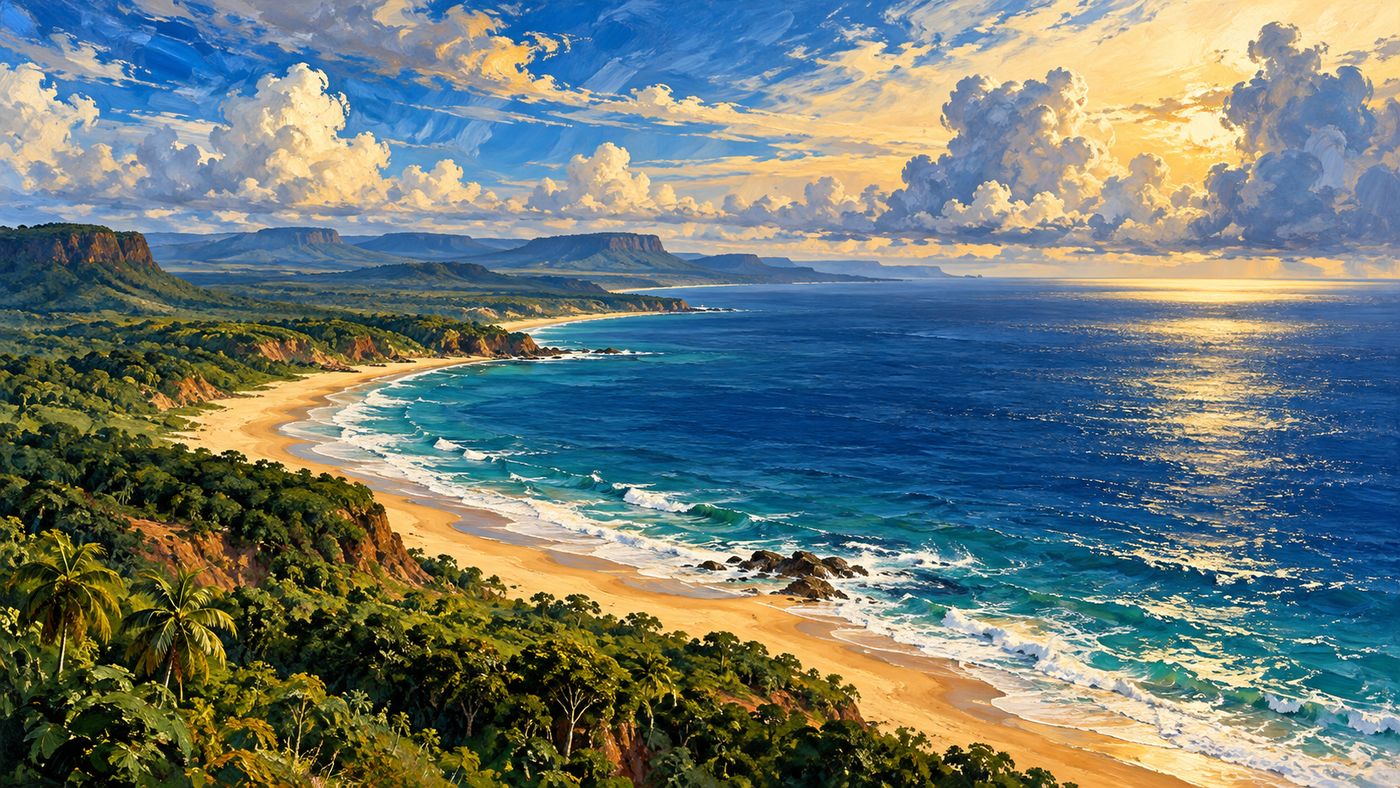
On November 11, 1975, Angola declared independence from Portugal — ending five centuries of colonial presence that had begun when Portuguese explorer Diogo Cão reached the Angolan coast in 1484, and concluding a thirteen-year armed liberation struggle that had finally succeeded when Portugal's own government was overthrown in the Carnation Revolution of April 1974. The new Portuguese government, exhausted by colonial wars it could no longer sustain, negotiated independence agreements with its African territories. Angola's independence was declared by the MPLA — the People's Movement for the Liberation of Angola — in the capital Luanda, though two rival factions, UNITA and the FNLA, simultaneously declared their own competing governments from other cities, making it clear that independence and peace were not the same thing.
The civil war that immediately followed Angolan independence was, in many ways, a Cold War proxy conflict — the MPLA received support from Cuba and the Soviet Union, while UNITA received support from the United States and apartheid South Africa. It lasted, with brief interruptions, until 2002 — twenty-seven years after independence — making it one of the longest civil wars of the twentieth century and one of its most destructive, claiming an estimated 500,000 lives and displacing millions more. Angola is today one of Africa's largest oil producers and has experienced substantial economic growth since the war's end, though the legacy of colonial extraction, civil war, and authoritarian governance has left deep structural challenges. The independence declared on November 11, 1975 was real and hard-won. The peace that should have accompanied it took another twenty-seven years to arrive.