November 10: Sesame Street Opens, Kevin's Home Alone, the Hope Diamond Arrives
Some things earn their place in the culture by being genuinely useful — by teaching children to read, or by keeping families company on a cold December afternoon, or by sitting in a museum case and silently insisting, through sheer improbability of color and size and history, that the person looking at it keep looking. November 10 has given us all three: a television street that changed how America thought about educating its youngest citizens, a film about an eight-year-old with a paint can and a plan that has outlasted every prediction about its staying power, and a blue diamond that arrived at the Smithsonian in a plain brown package and has been one of its most visited objects ever since.
Can You Tell Me How to Get
On November 10, 1969, the Children's Television Workshop debuted Sesame Street on PBS — and American children's television was permanently and immediately divided into before and after. The show had been conceived by television producer Joan Ganz Cooney following a 1966 study she conducted on the potential of television as an educational tool, and it was built on a then-radical premise: that the same techniques used to make advertising memorable — repetition, jingles, short segments, vivid characters — could be used to teach preschoolers letters, numbers, and social concepts. Jim Henson's Muppets provided the characters. A cast that included actors of multiple races, on a set that depicted an urban neighborhood rather than a sanitized suburb, provided something else: a mirror for the children the show was specifically designed to reach, many of whom had never seen themselves in this context on television before.
Sesame Street has now aired for more than fifty-five years, making it the longest-running children's television program in American history. It has been broadcast in more than 150 countries and adapted into local versions for dozens of cultures, with Muppet characters tailored to address specific educational and social needs — a South African version introduced an HIV-positive Muppet named Kami; an Afghan version featured a female character who modeled the importance of girls' education. More than eighty million Americans grew up watching it. Studies have consistently found that children who watch Sesame Street regularly enter school better prepared than those who don't. The show that premiered on November 10, 1969 has been, by any measure, one of the most effective educational interventions in American history — and one of the few things most Americans across every generation and political division still remember with uncomplicated warmth.

Merry Christmas, Ya Filthy Animal
On November 10, 1990, Home Alone opened in American theaters and immediately became the highest-grossing comedy of its era — eventually earning more than $476 million worldwide on a budget of $18 million, a return that remains one of the most remarkable in Hollywood history. Written by John Hughes and directed by Chris Columbus, the film starred eleven-year-old Macaulay Culkin as Kevin McCallister, an eight-year-old (aged up slightly in the film) accidentally left behind in suburban Chicago while his enormous family flies to Paris for Christmas. What followed — two increasingly inept burglars, an elaborate series of traps, and a child whose resourcefulness is matched only by his enthusiasm for room service and junk food television — produced a comedy of such perfect internal logic that it has been replayed every holiday season for more than three decades without losing its audience.
The film's longevity is the product of several things operating simultaneously: Culkin's performance, which manages to be both genuinely funny and surprisingly touching; Hughes's script, which takes its premise with complete seriousness rather than winking at the audience; and a holiday setting that anchors it to a time of year when families gather and comfort-viewing is exactly what is wanted. The booby trap sequences that occupy the film's third act have been analyzed by physicists, engineers, and personal injury lawyers — the consensus being that most of them would be significantly more lethal in reality than the film suggests. This has not diminished anyone's enjoyment. Home Alone has now been seen by multiple generations of children who have grown into adults who show it to their own children, making it one of the more reliably self-perpetuating artifacts of 1990s popular culture.

The Blue Diamond
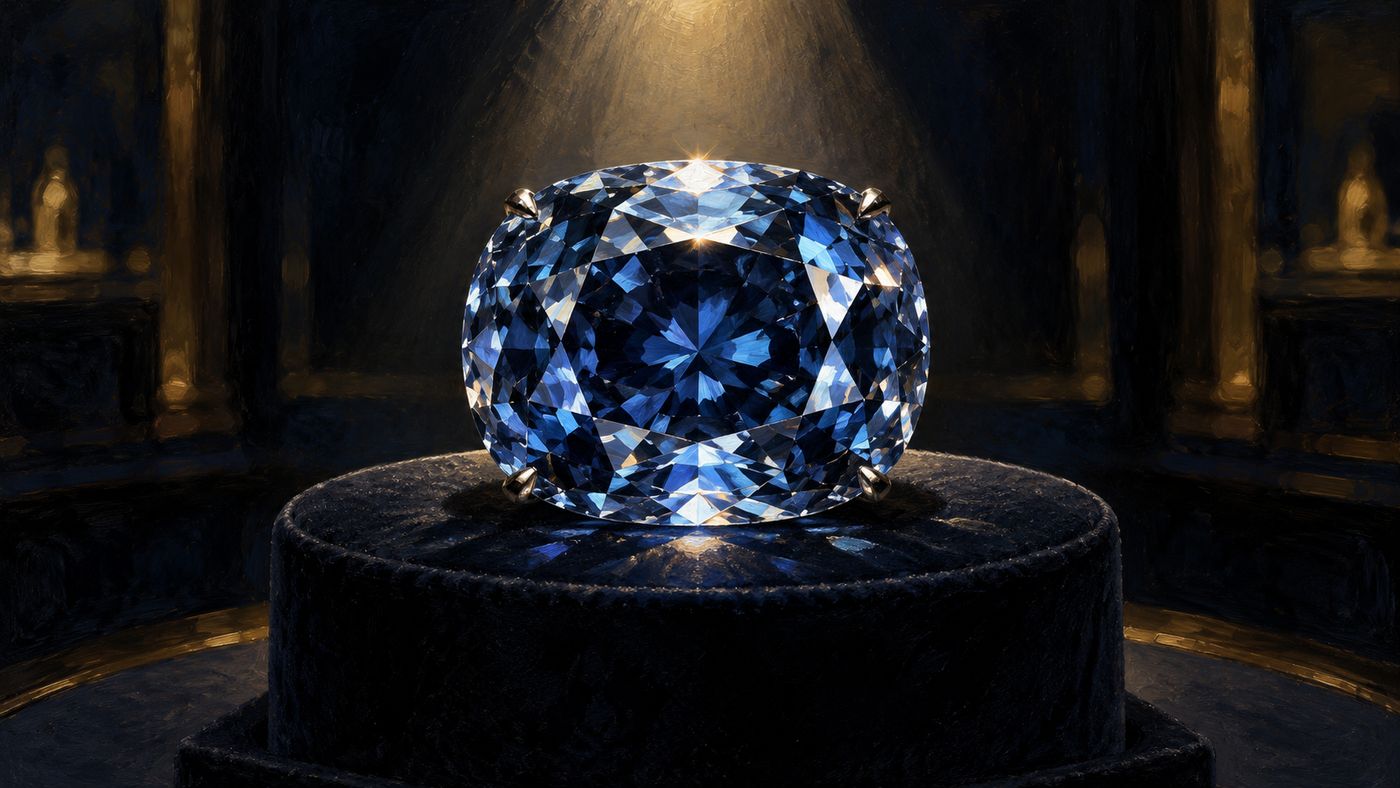
On November 10, 1958, New York gem dealer Harry Winston mailed the Hope Diamond to the Smithsonian Institution in Washington, D.C. — via registered first-class mail, insured for one million dollars, in a plain brown package. The postage cost $2.44. The diamond that arrived in that package is one of the largest blue diamonds in the world at 45.52 carats, a deep steel-blue stone of extraordinary clarity whose color comes from trace amounts of boron in its crystal structure. Its recorded history stretches back to 17th-century India, where it was reportedly purchased — possibly stolen — from a Hindu idol by a French merchant named Jean-Baptiste Tavernier, who sold it to Louis XIV of France. It has been cut and recut several times since, passed through the French crown jewels, survived the French Revolution, appeared in London, and eventually made its way to the United States through a series of owners whose collective misfortunes gave rise to its reputation as cursed.
The curse of the Hope Diamond is, by the consensus of historians, largely a confabulation — a story assembled retroactively from the misfortunes of its various owners, some of whom had those misfortunes because they were the kind of people who buy extremely expensive diamonds and live accordingly. Harry Winston, who had owned the stone since 1949 and had toured it around the country for charitable events, donated it to the Smithsonian with the straightforward explanation that he thought it belonged in a national collection where everyone could see it. He was right. The Hope Diamond is now the most visited museum object in the world — more than seven million people see it annually in the Janet Annenberg Hooker Hall of Geology, Gems, and Minerals at the National Museum of Natural History. The stone that arrived in a brown paper package on November 10, 1958 has been stared at by more people than any other object in any museum on earth. The curse, apparently, is that you cannot stop looking at it.