November 6: Lincoln Elected, Apartheid Condemned, a Senate First
The question of who belongs — who is counted, who is protected, whose dignity the law is willing to enforce — has driven more of history's turning points than any other. November 6 has asked that question three times, in three different centuries, in three very different arenas. A nation that had been arguing about slavery for decades elected a president whose position on the question made eleven states decide they would rather leave than accept the verdict. An international body looked at a government that had built an entire legal architecture around exclusion and said, formally and on the record, that it would not accept what it saw. And a senator from Wisconsin walked into the world's most exclusive legislative chamber and made it, for the first time, a little less exclusive.
The Election That Split a Nation
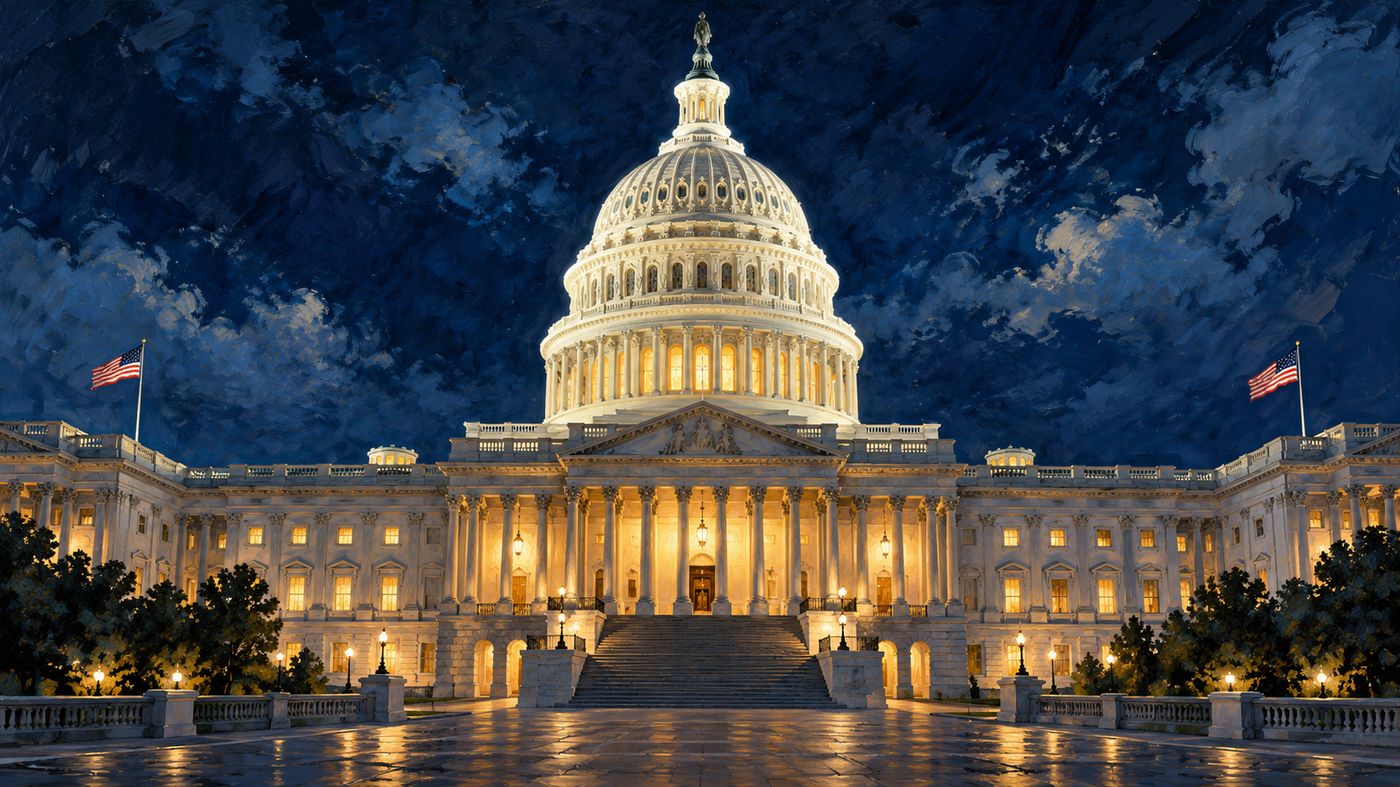
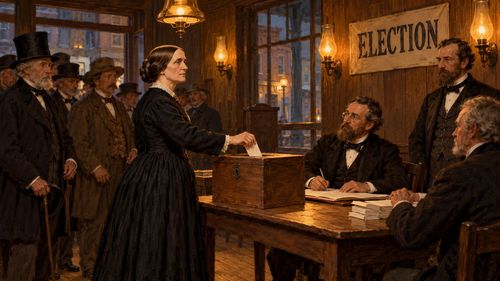
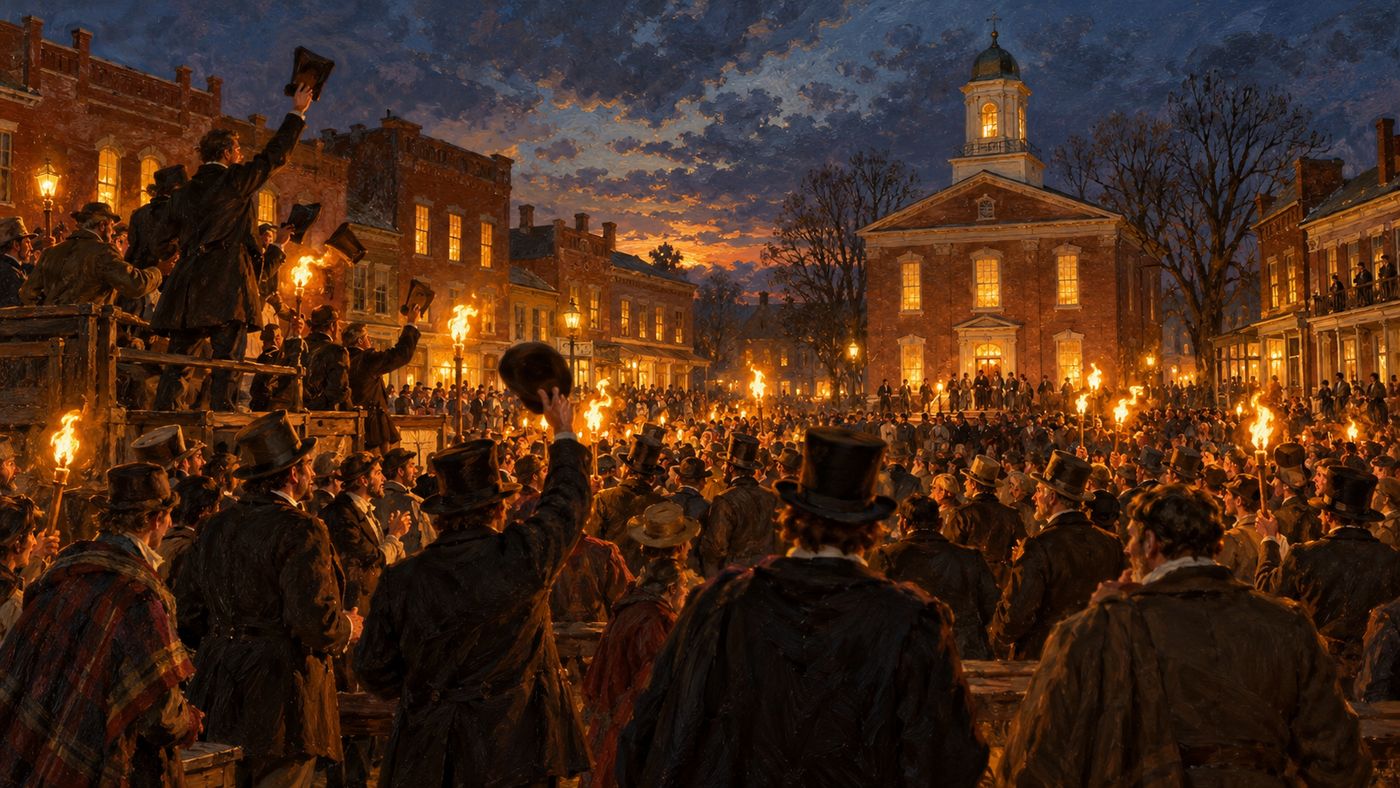
On November 6, 1860, Abraham Lincoln was elected the sixteenth President of the United States — and within weeks, the country he had been elected to lead began to come apart. Lincoln, a one-term Illinois congressman who had lost a Senate race to Stephen Douglas two years earlier, had won the Republican nomination in May and ran on a platform that opposed the expansion of slavery into new territories while stopping short of calling for its immediate abolition where it existed. It was enough. Southern states had made clear that Lincoln's election would be treated as cause for secession, and they were as good as their word: South Carolina voted to leave the Union in December 1860, followed by six more states before Lincoln was inaugurated in March 1861. The election that Lincoln won on November 6 set in motion the Civil War that would cost more than 600,000 lives.
Lincoln had won the electoral college with 180 votes but received less than forty percent of the popular vote — his name did not even appear on the ballot in ten Southern states. The result was the consequence of a Democratic Party that had split along sectional lines, running two separate candidates, and a Constitutional Union party that further divided the anti-Lincoln vote. His minority popular vote did not diminish the legitimacy of his victory, but it illustrated the depth of the division he was inheriting. What Lincoln would do with that inheritance — the Emancipation Proclamation, the prosecution of the war to its conclusion, the Gettysburg Address, the Second Inaugural — became the measure by which American presidents have been judged ever since. The man elected on November 6, 1860, is consistently ranked first among them.
The World Says No
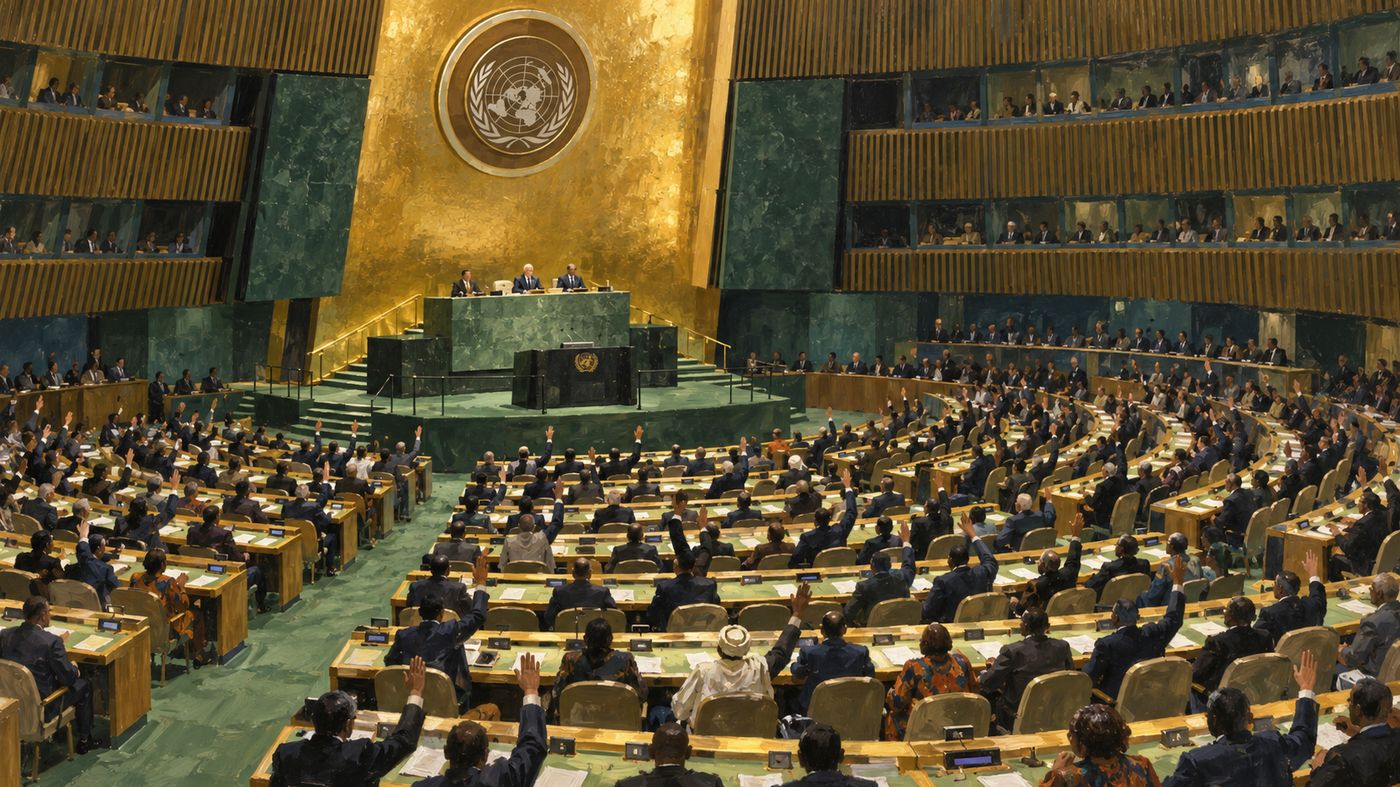
On November 6, 1962, the United Nations General Assembly passed Resolution 1761, calling on member states to impose diplomatic, economic, and transport sanctions against South Africa in response to the country's apartheid system — the comprehensive legal regime of racial segregation that the National Party government had been constructing since 1948. The resolution condemned apartheid as a violation of the UN Charter and the Universal Declaration of Human Rights, and created a Special Committee Against Apartheid to monitor the situation and coordinate international pressure. It was the first significant international institutional action against the South African government's racial policies, and it arrived at a moment when the domestic anti-apartheid movement — whose leaders included Nelson Mandela, then on trial and facing life imprisonment — was being subjected to increasingly brutal suppression.
The resolution did not end apartheid. The sanctions it called for were not immediately implemented by the major Western powers, many of which had significant economic interests in South Africa and were reluctant to act on principle at the cost of profit. The United States and Britain abstained from the vote. It would take more than two decades of sustained international pressure, escalating sanctions, and the internal resistance of the South African people before the apartheid government began to negotiate its own dismantlement in the early 1990s. What the 1962 resolution established was the international framework — the formal declaration that apartheid was a global concern rather than a domestic matter — that made those eventual sanctions morally and legally coherent. Nelson Mandela was released from prison in 1990 and elected president of a democratic South Africa in 1994. The road from November 6, 1962 to that outcome was long and the human cost was enormous. The resolution was the first step on it.
Wisconsin's Senator
On November 6, 2012, Tammy Baldwin won the Wisconsin Senate race against former governor Tommy Thompson, becoming the first openly gay person elected to the United States Senate. Baldwin had previously served seven terms in the House of Representatives, where she had been one of the first openly gay members of Congress and had built a legislative record focused on healthcare, workers' rights, and veterans' issues. Her Senate victory came on the same night that voters in three states — Maine, Maryland, and Washington — approved same-sex marriage by popular referendum for the first time, making November 6, 2012 one of the most significant single days in the history of LGBTQ civil rights in America. Baldwin won by nearly six percentage points in a state that had twice elected her Republican opponent to statewide office.
Baldwin's election to the Senate reflected a shift in American public opinion on LGBTQ equality that had been building for a decade and would accelerate dramatically in the years that followed — culminating in the Supreme Court's 2015 ruling in Obergefell v. Hodges that established a constitutional right to same-sex marriage nationwide. She has been reelected twice since 2012 and has continued to focus her Senate work on economic issues, healthcare access, and the concerns of working-class Wisconsin voters alongside her advocacy for LGBTQ rights. The barrier she broke on November 6, 2012 was real, but her Senate career has been defined less by the historic nature of her election than by the work she has done in the chamber she entered — which is, perhaps, exactly as it should be.