Recent Content

November 13: Fantasia Premieres, Franklin Writes About Balloons, Augustine Is Born

November 13: Fantasia Premieres, Franklin Writes About Balloons, Augustine Is Born

Read more
November 12: The Last Immigrant, the Web Is Born, Trotsky Cast Out

November 12: The Last Immigrant, the Web Is Born, Trotsky Cast Out

Read more
November 11: The War Ends, the Unknown Soldier, Angola Free

November 11: The War Ends, the Unknown Soldier, Angola Free

Read more
November 10: Sesame Street Opens, Kevin's Home Alone, the Hope Diamond Arrives

November 10: Sesame Street Opens, Kevin's Home Alone, the Hope Diamond Arrives

Read more
November 9: The Wall Falls, a Nation Freed, a Mystery Ends

November 9: The Wall Falls, a Nation Freed, a Mystery Ends

Read more
logo
  • Introduction

  • Lessons From The Past

  • Cultural Awareness and Diversity

  • Appreciation for Progress

  • Understanding Political and Social Dynamics

  • Preserving Cultural Heritage

  • Conclusion

November 8: The Invisible Light, the Survivor, the Typhoon

Three November 8ths defined by moments that revealed what was hidden — light through flesh and bone, a killer beneath a disguise, and the full force of what a warming ocean can build

November 8 has three times asked us to look at what had been concealed. A physicist in Würzburg noticed a strange fluorescence and spent six weeks confirming what it meant — that a new kind of ray could pass through human flesh and cast the shadow of bone onto a photographic plate, making the interior of the body visible for the first time in medical history. A young woman in a Utah shopping mall recognized, with a split-second clarity that saved her life, that the man beside her was not who he claimed to be — and fought her way out of his car. And an archipelago in the Pacific received a storm of such unprecedented power that it stripped entire communities from the coastline and forced the world to reckon with what the ocean is capable of when the atmosphere above it has been warming for decades.

A New Kind of Ray

On November 8, 1895, Wilhelm Conrad Röntgen was working late in his laboratory at the University of Würzburg in Bavaria, experimenting with cathode ray tubes — glass vacuum tubes that produced a beam of electrons when a current was passed through them — when he noticed something unexpected. A fluorescent screen across the room, which should not have been reacting to the cathode rays being contained within the tube, was glowing. Röntgen covered the tube with black cardboard. The screen still glowed. He moved it farther away. It still glowed. He was observing something that penetrated the cardboard and traveled across the room — something that no known ray or particle could do. He spent the next six weeks alone in his laboratory, barely eating or sleeping, confirming what he had found and ruling out every alternative explanation before announcing his discovery on December 28.

Röntgen called his discovery X-rays — the X denoting an unknown quantity, a name that stuck despite his own preference for "Röntgen rays," which is what they are called in German to this day. The first X-ray image he produced was of his wife Anna Bertha's hand, showing the bones of her fingers and the ring she wore — an image she reportedly found unsettling. Röntgen was awarded the first Nobel Prize in Physics in 1901. Within a year of his December 1895 announcement, X-ray machines were being used in hospitals across Europe and North America. Within a decade, they were standard in military medicine. The discovery he made by noticing a glowing screen on November 8, 1895 has since been used billions of times to look inside the human body — to find broken bones, tumors, tuberculosis, swallowed objects, and the structural causes of pain that would otherwise have remained invisible. Medicine before X-rays and medicine after them are, in a practical sense, two different disciplines.
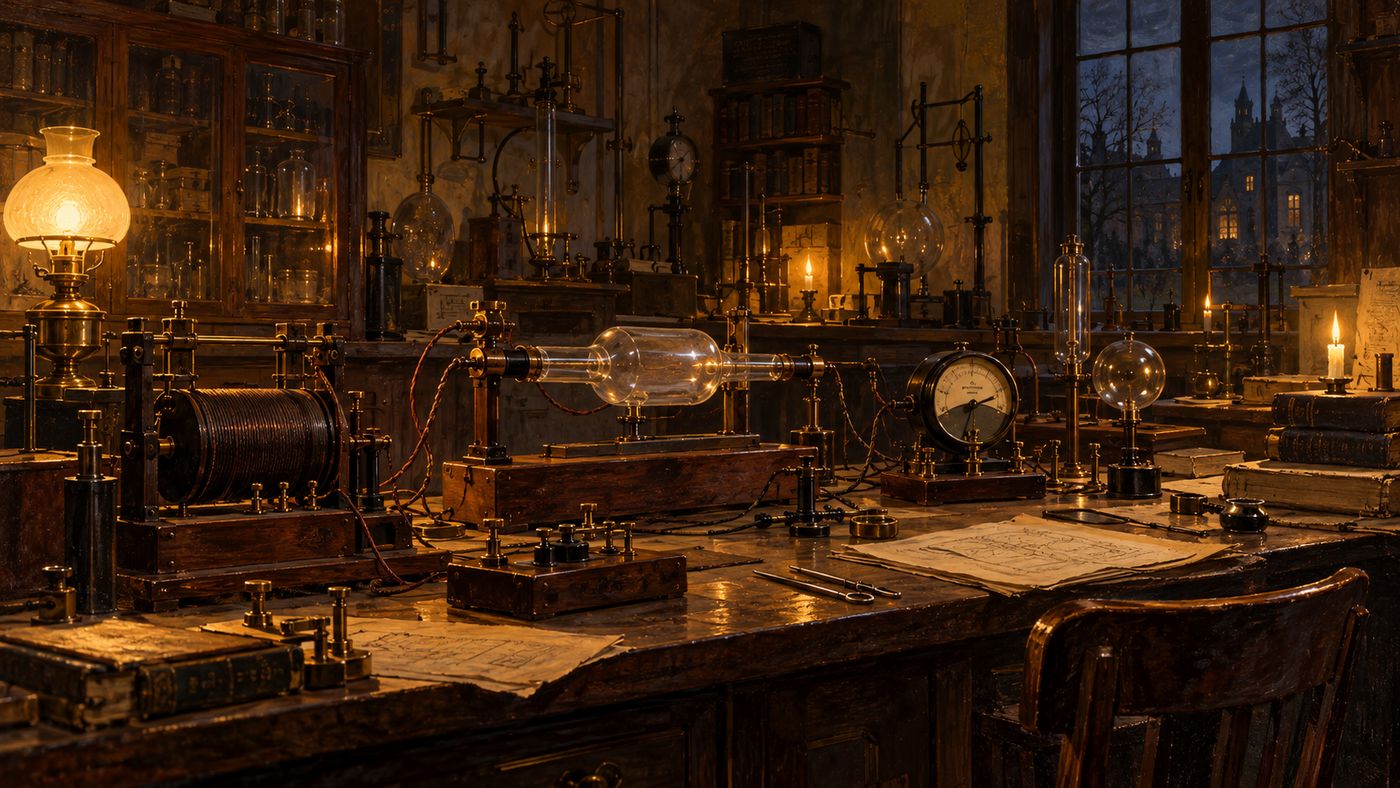
A painterly illustration of a late 19th-century physics laboratory — long wooden benches covered in glass tubes, electrical apparatus, and scientific instruments, warm lamplight illuminating the cluttered workspace of an experimental physicist
A late 19th-century physics laboratory — the kind of space where Wilhelm Röntgen spent six solitary weeks in 1895 confirming a discovery that would change medicine forever.

Murray, Utah

On the evening of November 8, 1974, eighteen-year-old Carol DaRonch was approached in the Fashion Place Mall parking lot in Murray, Utah, by a man who identified himself as a police officer and told her that her car had been broken into and she needed to come with him. DaRonch had not noticed anything wrong with her car, but she complied. The man drove her not to a police station but to a dark side street, where he stopped the car and attempted to handcuff her. In the struggle that followed — terrifying, brief, and decided by the young woman's refusal to stop fighting — DaRonch managed to open the car door and throw herself out onto the pavement. A passing couple stopped and drove her to safety. The man who had taken her was Ted Bundy, who would go on to confess to the murders of at least thirty women before his execution in 1989.

Carol DaRonch's escape was not simply a matter of survival — it became the legal cornerstone of the case against Bundy. She was the witness who could identify him, whose physical evidence connected him to an attempted kidnapping charge, and whose testimony at his 1976 Utah trial resulted in the conviction that placed him in prison for the first time. Bundy escaped from custody twice before being captured again in Florida, where he was ultimately tried and convicted for murders he committed after his escapes. DaRonch testified again at proceedings related to his case and has spoken publicly about her experience, including in Netflix's 2019 documentary series about Bundy. Her name belongs in the story not as a victim but as a survivor whose courage, presence of mind, and willingness to testify helped stop someone who might otherwise have continued indefinitely. November 8, 1974 is her night — not his.
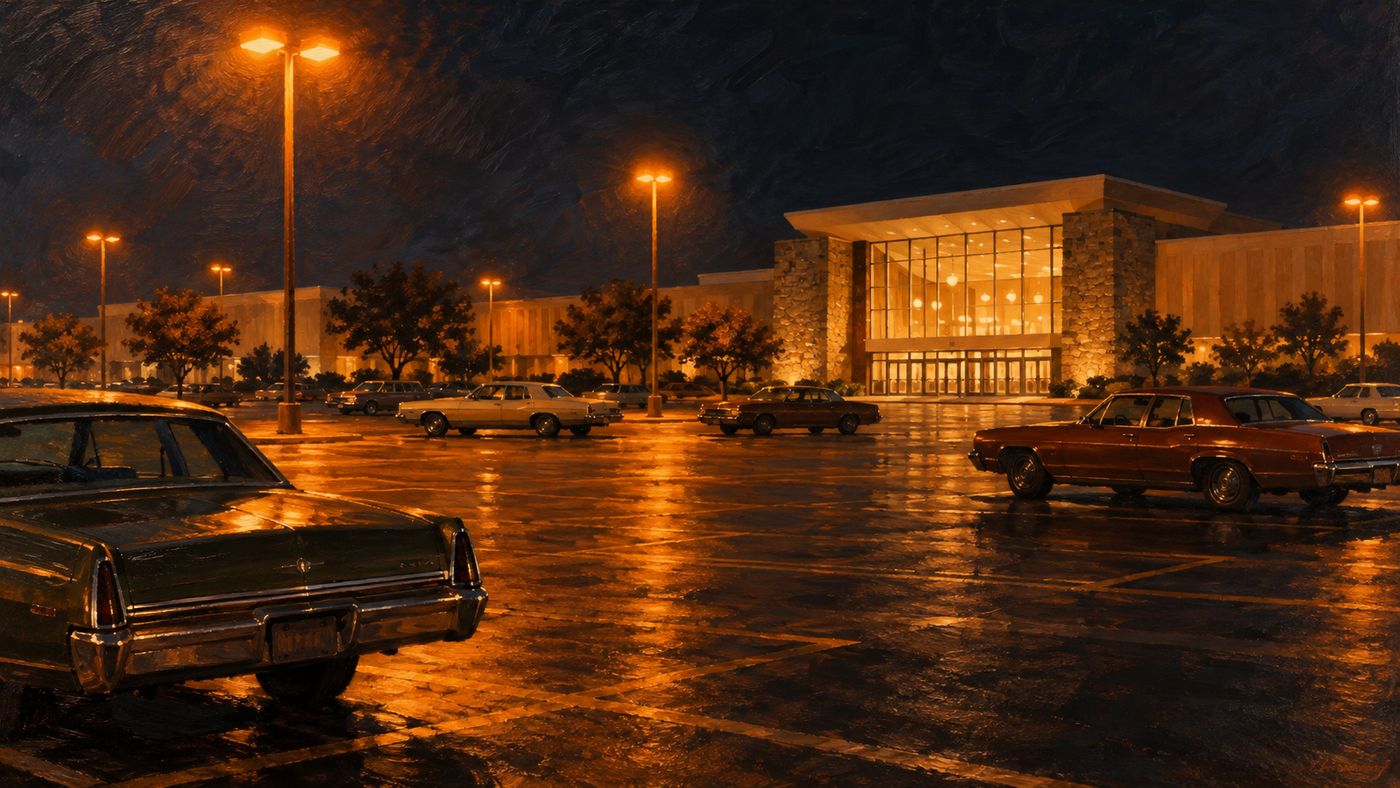
A painterly illustration of a 1970s American suburban shopping mall exterior at night — the parking lot under orange sodium vapor lights, a few cars scattered across the asphalt, the mall entrance glowing in the distance
A 1970s suburban shopping mall parking lot — the setting where Carol DaRonch's courage and presence of mind on November 8, 1974 made her one of the few people to escape Ted Bundy and live to testify against him.
❦

Yolanda

On November 8, 2013, Super Typhoon Haiyan — known in the Philippines as Typhoon Yolanda — made landfall on the island of Leyte with sustained winds of approximately 195 miles per hour, making it one of the most powerful tropical cyclones ever recorded at the time of landfall. The storm surge that accompanied the winds was catastrophic: walls of water up to twenty feet high swept inland across low-lying coastal communities, destroying everything in their path with a speed and force that left survivors with almost no time to reach high ground. The city of Tacloban, Leyte's largest urban center and home to more than 200,000 people, was among the worst affected — its coastal neighborhoods obliterated, its airport flooded, its streets filled with debris and the dead. The official death toll reached 6,300. More than four million people were displaced. The storm caused an estimated $2.86 billion in damage.

Haiyan arrived at a moment of particular scientific awareness about the relationship between warming ocean temperatures and the intensity of tropical storms — and it demonstrated, with devastating specificity, what that relationship means at human scale. The Philippines is among the world's most typhoon-prone nations, experiencing an average of twenty tropical cyclones per year, and its geography — a sprawling archipelago of more than seven thousand islands with long, low-lying coastlines — makes it acutely vulnerable to exactly the kind of storm surge that Haiyan produced. The international humanitarian response was substantial, with more than ninety countries contributing aid. Philippine officials delivered an impassioned plea for climate action at the UN Climate Conference that opened days after the typhoon. Haiyan has been cited in every major climate report since as a concrete example of what extreme weather intensification looks like when it arrives at a populated coast.
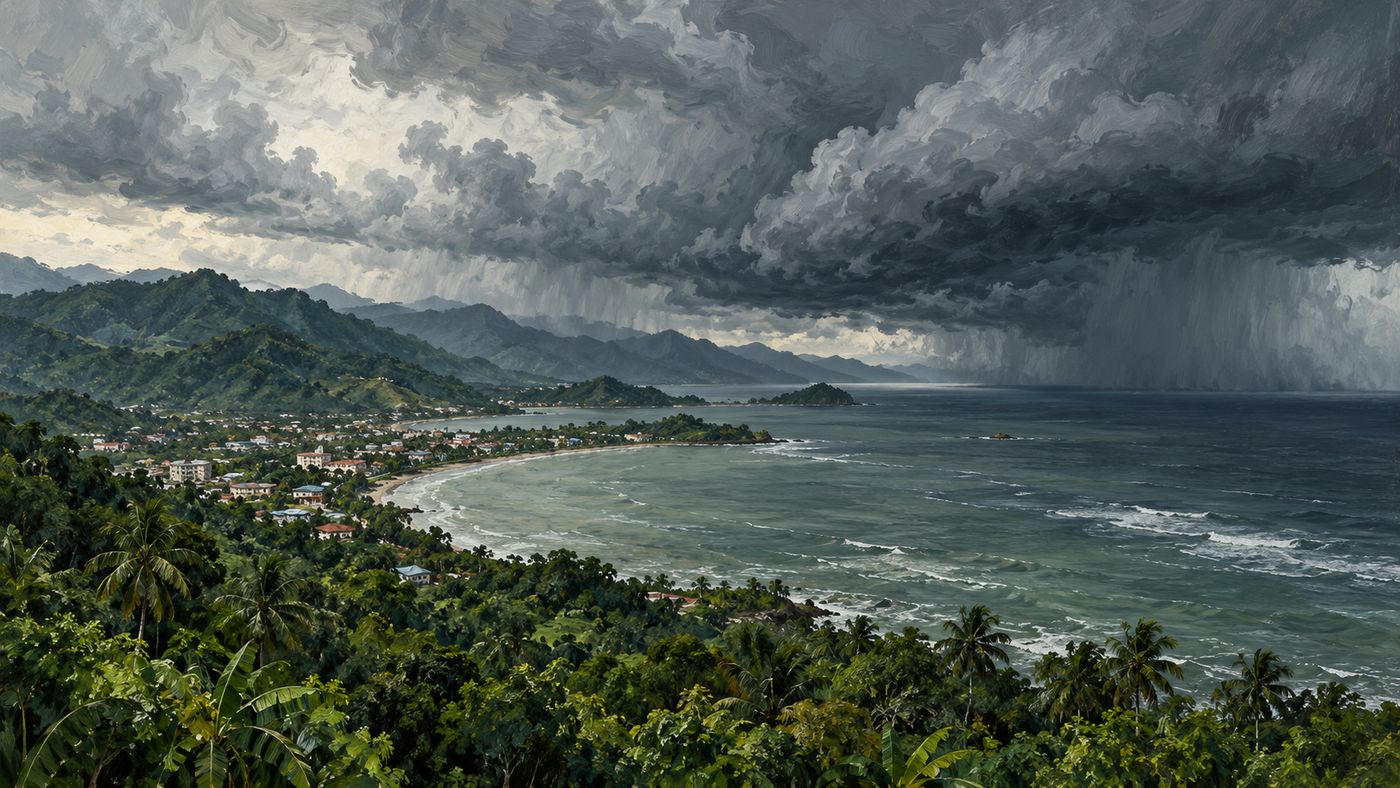
A sweeping painterly landscape of the Philippine coastline — a wide bay with a low-lying coastal town visible along the shore, dense tropical vegetation on the hillsides above, a dramatic sky building with the dark clouds of an approaching tropical storm
The Philippine coastline — one of the world's most typhoon-prone landscapes, where Haiyan's storm surge demonstrated on November 8, 2013 what a warming ocean can build and what it can take.

More History

19 October 2026

Post

November 13: Fantasia Premieres, Franklin Writes About Balloons, Augustine Is Born

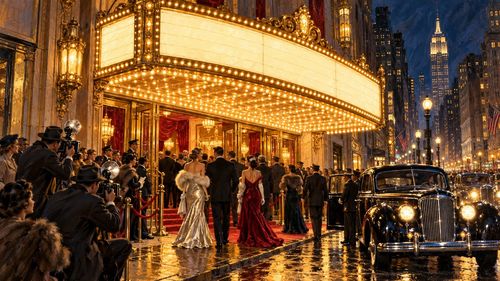
November 13: Fantasia Premieres, Franklin Writes About Balloons, Augustine Is Born Three November 13ths defined by visionaries who saw further than everyone around them — an animator who believed cartoons could carry high art, a polymath who recognized a new frontier before it had a name, and a theologian who mapped the interior of the human soul with a precision that still holds Vision is the capacity to see what something could be before anyone else has decided what it is. Walt Disney saw it in a bag of mushrooms dancing to Tchaikovsky and a dinosaur dying to Stravinsky, and bet a studio's future on the idea that animation could do what no film had attempted. Benjamin Franklin saw it in a silk bag filled with hot air drifting over Paris, and immediately began calculating its scientific applications while the city around him was still simply staring upward in wonder. And in a provincial Roman city in fourth-century North Africa, a restless, brilliant, deeply contradictory man named Augustine saw, in his own tumultuous inner life, the raw material for a theology of the human condition that the Western world has been working with ever since. November 13 belongs to all three. The Sorcerer's Apprentice   On November 13, 1940, Walt Disney's Fantasia premiered at the Broadway Theatre in New York City in a special roadshow engagement with live orchestra and a new stereophonic sound system called Fantasound — the first commercial use of multi-channel audio in a film. The audience encountered eight animated sequences set to classical music: Bach's Toccata and Fugue in D Minor rendered as pure abstract color and form; Tchaikovsky's Nutcracker Suite performed by dancing mushrooms, flowers, and fairies; Dukas's The Sorcerer's Apprentice featuring Mickey Mouse as a hapless magician's understudy; and Stravinsky's The Rite of Spring reimagined as a visualization of Earth's formation and the age of dinosaurs. Disney had conceived the film as a "concert feature" — a new genre that would be continuously updated with new sequences as the repertoire expanded. He believed it would change the relationship between classical music and popular audiences permanently. It did not, at first, change anything except Disney's finances. Fantasia was an immediate commercial failure, losing money on its initial release and forcing Disney to abandon the roadshow format for a conventional theatrical run that stripped out the Fantasound system entirely. Critics were divided — some recognized its ambition, others found its interpretation of classical music presumptuous or its imagery kitsch. The concert feature sequels were never made. Disney himself was deeply wounded by its reception. But the film refused to disappear. Re-releases in the 1950s and 1960s — particularly at colleges, where it found a new audience who watched it in states of consciousness that Disney had not anticipated — rebuilt its reputation. It was added to the National Film Registry in 1990 and is now recognized as one of the most artistically ambitious films in the history of American cinema. The film that lost Disney's company money in 1940 has since grossed more than $76 million in domestic theatrical releases alone. The vision that seemed too strange to succeed turned out to be simply ahead of its time.   The Broadway Theatre in New York on the night of November 13, 1940 — where Fantasia's premiere introduced an audience to something the film industry had never attempted before. What Goes Up On November 13, 1783, Benjamin Franklin — seventy-seven years old, serving as American ambassador to France, already famous on two continents as a scientist, diplomat, writer, and founding father — sat down in Paris and wrote a letter to his friend Jean-Baptiste Le Roy describing the astonishing spectacle of balloon flight that had been electrifying the French capital for months. The Montgolfier brothers had demonstrated unmanned hot air balloon ascents that summer, and on November 21, just eight days after Franklin's letter, the first free flight carrying human passengers would take place over Paris. Franklin had watched the experiments closely and, characteristically, had moved past the spectacle to the implications. His letter catalogued potential scientific applications: measuring atmospheric conditions at altitude, studying wind patterns, making meteorological observations that were impossible from the ground. He saw, in a silk bag full of hot air, the beginning of systematic aerial science. The letter also contained an exchange that has become one of science history's most quoted anecdotes. When a bystander at one of the balloon demonstrations asked what the invention was good for, Franklin replied — or is reported to have replied, since the attribution is not certain — "What is the use of a newborn baby?" The response perfectly captured his intellectual method: the recognition that the value of a new technology is not immediately legible, and that the question of use should be deferred until the technology has had time to demonstrate what it can become. Franklin was right about balloons in ways that took decades to fully manifest — weather balloons became essential to meteorology, military observation balloons changed warfare, and the understanding of atmospheric dynamics that balloon flights enabled laid groundwork for everything that followed in aviation. The old man watching silk bags drift over Paris understood, as he usually did, what he was actually looking at. Paris in the autumn of 1783, gripped by balloon fever — where Benjamin Franklin watched the Montgolfier demonstrations and saw, immediately, more than spectacle. ❦ Thagaste, 354   On November 13, 354 AD, in the Roman African city of Thagaste — in what is now northeastern Algeria — a boy was born to a pagan father named Patricius and a devoutly Christian mother named Monica. His name was Aurelius Augustinus, and he would become Augustine of Hippo: bishop, theologian, philosopher, and one of the most consequential thinkers in the history of Western civilization. The life he lived before arriving at that position was, by his own account, marked by intellectual restlessness, moral inconsistency, and a decade-long adherence to the dualist Manichaean sect before his dramatic conversion to Christianity in a garden in Milan in 386 AD — a conversion he described, in his Confessions, as the culmination of a long struggle between his will and his desires that he could not resolve by himself. The Confessions Augustine wrote after his conversion is generally regarded as the first autobiography in the modern sense — a sustained, intimate account of an interior life, addressed directly to God but clearly also to the reader, tracing the psychological and spiritual arc of a self in the process of becoming. It introduced to Western literature and theology the concept of interiority — the idea that the self has an inner life as complex and as significant as its outward actions. His theological works — The City of God, his treatises on grace and free will, his elaboration of original sin — shaped Catholic doctrine for a thousand years and influenced Protestant theology through Calvin and Luther as directly as any ancient source. Augustine died in 430 AD as the Vandals besieged Hippo. He had spent his life trying to understand why human beings consistently fail to do what they know to be good — a question that has not become less relevant in the sixteen centuries since he first asked it.   Roman North Africa — the world into which Augustine was born on November 13, 354 AD, and whose Mediterranean intellectual culture shaped the thinker who would reshape Western Christianity.

19 October 2026

Post

November 12: The Last Immigrant, the Web Is Born, Trotsky Cast Out

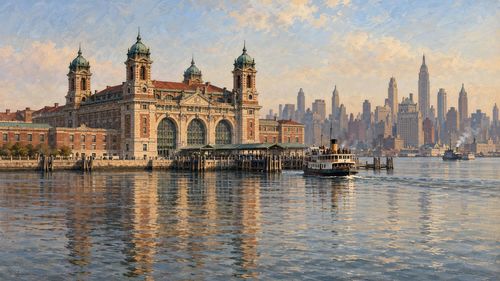
November 12: The Last Immigrant, the Web Is Born, Trotsky Cast Out Three November 12ths defined by thresholds — one closed after welcoming millions, one opened a door to a new kind of world, and one slammed shut on a man who had helped build the system that destroyed him Thresholds define us. The door you walk through, the proposal you submit, the party that expels you — each one marks the line between what came before and what comes after. November 12 has seen three of them close or open with consequences that echoed for generations. An immigration station that had processed more than twelve million people quietly shut its doors and sent its last detainee home. A computer scientist at a Swiss physics laboratory submitted a document his supervisor marked "vague but exciting" that would become the blueprint for the World Wide Web. And a revolutionary who had helped overthrow one Russian government and build the next was cast out of the party he had given his life to — the first step on a road that ended with an ice axe in Mexico City thirteen years later. The Last Ferry   On November 12, 1954, a Norwegian merchant seaman named Arne Peterssen became the last person processed through Ellis Island before the federal immigration station in New York Harbor officially closed its doors after sixty-two years of operation. Between 1892 and 1954, Ellis Island had admitted more than twelve million immigrants — Italians, Jews, Poles, Russians, Greeks, Hungarians, and dozens of other nationalities — processing them through a system of medical inspections, legal reviews, and registration that could take hours or, for those who were detained for further examination, days or weeks. At its peak, in 1907, the island processed more than a million arrivals in a single year. The men, women, and children who passed through its Great Hall and emerged onto its ferry dock to Manhattan represented one of the largest voluntary human migrations in history. By 1954, the pattern of American immigration had changed so substantially — through the restrictive quota laws of the 1920s, the Depression, World War II, and the postwar shift to air travel and other ports of entry — that Ellis Island was processing only a few dozen arrivals a day, and was being used primarily as a detention center for people awaiting deportation hearings. Its closure was quiet, practical, and almost entirely unmarked at the time. The building fell into severe disrepair over the following decades before being designated a national monument and restored, reopening to visitors in 1990. Today Ellis Island receives more than two million visitors annually, many of them descendants of the people who passed through it — Americans whose names, and whose country, bear the imprint of what happened on that small island in New York Harbor between 1892 and the day the last ferry left.   Ellis Island in New York Harbor — the threshold through which more than twelve million immigrants passed between 1892 and the day it quietly closed on November 12, 1954. Vague but Exciting On November 12, 1990, Tim Berners-Lee, a British computer scientist working at CERN — the European Organization for Nuclear Research — in Geneva, Switzerland, published a formal proposal titled "WorldWideWeb: Proposal for a HyperText Project." His supervisor, Mike Sendall, returned it with a handwritten annotation in the margin: "Vague but exciting." The proposal described a system for managing information at CERN using hypertext — a method of linking documents so that a reader could navigate between them by clicking on embedded references, rather than having to know in advance where information was stored. Berners-Lee had been thinking about the problem since 1980, when he wrote a personal program called ENQUIRE to help him keep track of software projects and the people working on them. The 1990 proposal was the document that turned that personal tool into a public architecture. The World Wide Web that Berners-Lee's proposal inaugurated was not the internet itself — the internet, as a network of connected computers, had existed since the late 1960s. What Berners-Lee invented was the system of hypertext documents, URLs, HTTP, and HTML that made the internet navigable by ordinary people without technical expertise. He built the first web server and the first web browser, both running on a NeXT computer at CERN in late 1990, and he made the crucial decision to release the Web's underlying standards without patent or royalty, making them freely available to anyone who wanted to use them. That decision — to give away what might have been the most valuable intellectual property in human history — is what made the Web what it became. Berners-Lee was knighted in 2004. He has since expressed concern about some of what the technology he invented has been used to do, and has spent recent years advocating for a more equitable and less exploitative version of the Web he gave the world for free. A 1990s computer science laboratory — the environment where Tim Berners-Lee developed the proposal his supervisor called "vague but exciting," and that became the blueprint for the World Wide Web. ❦ The Expelled   On November 12, 1927, Leon Trotsky was expelled from the Soviet Communist Party — the organization he had helped found, the movement whose October Revolution he had organized, and the government whose Red Army he had built and led to victory in the Russian Civil War. His expulsion was the culmination of a power struggle with Joseph Stalin that had been building since Lenin's death in 1924, a struggle that Trotsky had consistently underestimated and that Stalin had prosecuted with a patience and ruthlessness that Trotsky's more open, theoretical style of politics was entirely unequipped to match. Trotsky believed the argument would be won on the merits of ideas. Stalin understood that in the Soviet system, the argument was won by controlling the party apparatus, the press, and the appointments — all of which he had methodically accumulated while Trotsky wrote pamphlets. Expelled from the party in November 1927, Trotsky was exiled from the Soviet Union entirely in 1929, eventually settling in Mexico City after being refused entry by Britain, France, Norway, and several other countries. From exile he wrote prolifically — histories of the Russian Revolution, critiques of Stalinism, analyses of fascism, and the founding documents of the Fourth International, his attempt to build an alternative to the Stalinist Communist International. Stalin, who could not tolerate a living critic of his authority with Trotsky's intellectual stature and revolutionary credentials, dispatched agents to find him. On August 20, 1940, a Soviet agent named Ramón Mercader entered Trotsky's study in Coyoacán and struck him with an ice axe. Trotsky died the following day. The man who had helped make the Russian Revolution had been destroyed by it — thirteen years after the party that expelled him on November 12, 1927 made the first move.   Red Square in Moscow — the seat of the Soviet power that expelled Trotsky on November 12, 1927, and that would pursue him across three continents until 1940.

19 October 2026

Post

November 11: The War Ends, the Unknown Soldier, Angola Free

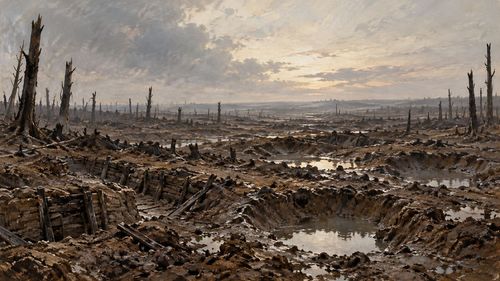
November 11: The War Ends, the Unknown Soldier, Angola Free Three November 11ths defined by the weight of sacrifice — the moment a war finally stopped, the monument built to honor those it consumed, and the independence of a nation that paid its own enormous price for the right to govern itself November 11 carries more weight than most dates on the calendar. It was chosen — deliberately, precisely — as the moment a catastrophic war would end: the eleventh hour of the eleventh day of the eleventh month, a specificity that was less about practicality than about the human need to mark enormous things with memorable symmetry. Three years later, on the same date, a nation buried an unknown soldier and asked the question that every war eventually produces: what do we owe those who cannot be named? And in 1975, on another November 11, a country on the other side of the world concluded five centuries of colonial history and asked its own version of the same question. November 11 has been asking, across a century, what we owe the people who paid the highest price. The Eleventh Hour   On November 11, 1918, at exactly 11 a.m., the guns of the Western Front fell silent after four years, three months, and fourteen days of the most destructive warfare in human history to that point. The armistice that ended World War I had been signed in a railway carriage in the Forest of Compiègne in northern France at 5:45 that morning, but its terms specified that hostilities would cease at the eleventh hour — giving both sides time to communicate the news to their forces in the field. In the hours between the signing and the ceasefire, the fighting continued. More than ten thousand men were killed, wounded, or reported missing on the final morning of the war, including 3,000 Americans — among them, Henry Gunther of Baltimore, killed at 10:59 a.m., sixty seconds before the guns stopped, making him the last known combat death of World War I. The war that ended at 11 a.m. on November 11, 1918 had consumed an estimated seventeen million lives — military and civilian — across four years of industrial-scale slaughter that had introduced poison gas, aerial bombardment, and mechanized warfare to a world that had not understood what it was beginning when the first declarations were made in the summer of 1914. The armistice was not a peace treaty — it was a ceasefire, and the peace that followed it, negotiated at Versailles, was a settlement so punitive and so poorly constructed that historians have argued, with substantial evidence, that it made the Second World War almost inevitable. The eleventh hour of the eleventh day did not end anything cleanly. It ended the shooting. The dying continued in other forms for decades.   The Western Front at the moment of the armistice — a landscape so thoroughly destroyed that silence itself felt strange, and that would take decades to heal. Known But to God On November 11, 1921 — exactly three years after the armistice — the Tomb of the Unknown Soldier was dedicated at Arlington National Cemetery in Virginia, in a ceremony presided over by President Warren G. Harding. The tomb contains the remains of an unidentified American soldier from World War I, selected from among four unknowns exhumed from American military cemeteries in France. Sergeant Edward Younger, a decorated veteran, was asked to select one of the four identical caskets — he walked among them three times before placing white roses on the one he chose, and that soldier was brought to Arlington. The inscription on the tomb reads: "Here rests in honored glory an American soldier known but to God." The question it poses — how do you honor someone whose name you cannot speak? — is one the monument answers through its own permanence and its guarded presence. The Tomb of the Unknown Soldier has been guarded continuously since July 2, 1937 — twenty-four hours a day, seven days a week, in every weather condition. The sentinels who guard it, drawn from the 3rd United States Infantry Regiment known as "The Old Guard," undergo one of the most demanding qualification processes in the American military and observe a precise ceremonial routine whose every step, pause, and movement has been exactly specified. The tomb has been expanded to include unknowns from World War II, the Korean War, and — briefly — Vietnam, though the Vietnam Unknown was subsequently identified through DNA testing in 1998 and returned to his family. The crypt designated for a Vietnam Unknown remains empty. The soldiers buried in the other crypts remain unnamed. The guard continues regardless. The Tomb of the Unknown Soldier at Arlington — guarded continuously since 1937, in every weather, at every hour, for soldiers who cannot be named. ❦ Luanda, 1975   On November 11, 1975, Angola declared independence from Portugal — ending five centuries of colonial presence that had begun when Portuguese explorer Diogo Cão reached the Angolan coast in 1484, and concluding a thirteen-year armed liberation struggle that had finally succeeded when Portugal's own government was overthrown in the Carnation Revolution of April 1974. The new Portuguese government, exhausted by colonial wars it could no longer sustain, negotiated independence agreements with its African territories. Angola's independence was declared by the MPLA — the People's Movement for the Liberation of Angola — in the capital Luanda, though two rival factions, UNITA and the FNLA, simultaneously declared their own competing governments from other cities, making it clear that independence and peace were not the same thing. The civil war that immediately followed Angolan independence was, in many ways, a Cold War proxy conflict — the MPLA received support from Cuba and the Soviet Union, while UNITA received support from the United States and apartheid South Africa. It lasted, with brief interruptions, until 2002 — twenty-seven years after independence — making it one of the longest civil wars of the twentieth century and one of its most destructive, claiming an estimated 500,000 lives and displacing millions more. Angola is today one of Africa's largest oil producers and has experienced substantial economic growth since the war's end, though the legacy of colonial extraction, civil war, and authoritarian governance has left deep structural challenges. The independence declared on November 11, 1975 was real and hard-won. The peace that should have accompanied it took another twenty-seven years to arrive.   The Angolan Atlantic coast — where five centuries of Portuguese colonial presence ended on November 11, 1975, and a nation whose future proved as complicated as its path to independence began.

19 October 2026

Post

November 10: Sesame Street Opens, Kevin's Home Alone, the Hope Diamond Arrives

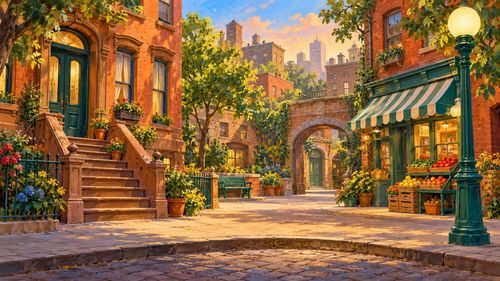
November 10: Sesame Street Opens, Kevin's Home Alone, the Hope Diamond Arrives Three November 10ths defined by things that captured the imagination — a street that taught a generation, a house that made a holiday, and a stone that has been making people stare for three centuries Some things earn their place in the culture by being genuinely useful — by teaching children to read, or by keeping families company on a cold December afternoon, or by sitting in a museum case and silently insisting, through sheer improbability of color and size and history, that the person looking at it keep looking. November 10 has given us all three: a television street that changed how America thought about educating its youngest citizens, a film about an eight-year-old with a paint can and a plan that has outlasted every prediction about its staying power, and a blue diamond that arrived at the Smithsonian in a plain brown package and has been one of its most visited objects ever since. Can You Tell Me How to Get   On November 10, 1969, the Children's Television Workshop debuted Sesame Street on PBS — and American children's television was permanently and immediately divided into before and after. The show had been conceived by television producer Joan Ganz Cooney following a 1966 study she conducted on the potential of television as an educational tool, and it was built on a then-radical premise: that the same techniques used to make advertising memorable — repetition, jingles, short segments, vivid characters — could be used to teach preschoolers letters, numbers, and social concepts. Jim Henson's Muppets provided the characters. A cast that included actors of multiple races, on a set that depicted an urban neighborhood rather than a sanitized suburb, provided something else: a mirror for the children the show was specifically designed to reach, many of whom had never seen themselves in this context on television before. Sesame Street has now aired for more than fifty-five years, making it the longest-running children's television program in American history. It has been broadcast in more than 150 countries and adapted into local versions for dozens of cultures, with Muppet characters tailored to address specific educational and social needs — a South African version introduced an HIV-positive Muppet named Kami; an Afghan version featured a female character who modeled the importance of girls' education. More than eighty million Americans grew up watching it. Studies have consistently found that children who watch Sesame Street regularly enter school better prepared than those who don't. The show that premiered on November 10, 1969 has been, by any measure, one of the most effective educational interventions in American history — and one of the few things most Americans across every generation and political division still remember with uncomplicated warmth.   The urban neighborhood street that became, for more than eighty million American children, the most familiar address in television — warm, diverse, and designed from the ground up to teach. Merry Christmas, Ya Filthy Animal On November 10, 1990, Home Alone opened in American theaters and immediately became the highest-grossing comedy of its era — eventually earning more than $476 million worldwide on a budget of $18 million, a return that remains one of the most remarkable in Hollywood history. Written by John Hughes and directed by Chris Columbus, the film starred eleven-year-old Macaulay Culkin as Kevin McCallister, an eight-year-old (aged up slightly in the film) accidentally left behind in suburban Chicago while his enormous family flies to Paris for Christmas. What followed — two increasingly inept burglars, an elaborate series of traps, and a child whose resourcefulness is matched only by his enthusiasm for room service and junk food television — produced a comedy of such perfect internal logic that it has been replayed every holiday season for more than three decades without losing its audience. The film's longevity is the product of several things operating simultaneously: Culkin's performance, which manages to be both genuinely funny and surprisingly touching; Hughes's script, which takes its premise with complete seriousness rather than winking at the audience; and a holiday setting that anchors it to a time of year when families gather and comfort-viewing is exactly what is wanted. The booby trap sequences that occupy the film's third act have been analyzed by physicists, engineers, and personal injury lawyers — the consensus being that most of them would be significantly more lethal in reality than the film suggests. This has not diminished anyone's enjoyment. Home Alone has now been seen by multiple generations of children who have grown into adults who show it to their own children, making it one of the more reliably self-perpetuating artifacts of 1990s popular culture. The kind of snow-covered suburban house that Home Alone made iconic — warm, festive, and defended by an eight-year-old whose trap-building skills have been debated by engineers ever since. ❦ The Blue Diamond   On November 10, 1958, New York gem dealer Harry Winston mailed the Hope Diamond to the Smithsonian Institution in Washington, D.C. — via registered first-class mail, insured for one million dollars, in a plain brown package. The postage cost $2.44. The diamond that arrived in that package is one of the largest blue diamonds in the world at 45.52 carats, a deep steel-blue stone of extraordinary clarity whose color comes from trace amounts of boron in its crystal structure. Its recorded history stretches back to 17th-century India, where it was reportedly purchased — possibly stolen — from a Hindu idol by a French merchant named Jean-Baptiste Tavernier, who sold it to Louis XIV of France. It has been cut and recut several times since, passed through the French crown jewels, survived the French Revolution, appeared in London, and eventually made its way to the United States through a series of owners whose collective misfortunes gave rise to its reputation as cursed. The curse of the Hope Diamond is, by the consensus of historians, largely a confabulation — a story assembled retroactively from the misfortunes of its various owners, some of whom had those misfortunes because they were the kind of people who buy extremely expensive diamonds and live accordingly. Harry Winston, who had owned the stone since 1949 and had toured it around the country for charitable events, donated it to the Smithsonian with the straightforward explanation that he thought it belonged in a national collection where everyone could see it. He was right. The Hope Diamond is now the most visited museum object in the world — more than seven million people see it annually in the Janet Annenberg Hooker Hall of Geology, Gems, and Minerals at the National Museum of Natural History. The stone that arrived in a brown paper package on November 10, 1958 has been stared at by more people than any other object in any museum on earth. The curse, apparently, is that you cannot stop looking at it.   The Hope Diamond on display at the Smithsonian — the most visited museum object in the world, mailed there in a plain brown package for $2.44 in postage on November 10, 1958.

19 October 2026

Post

November 9: The Wall Falls, a Nation Freed, a Mystery Ends

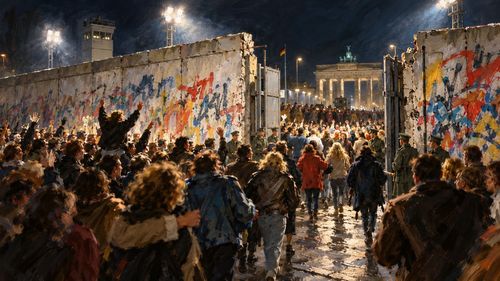
November 9: The Wall Falls, a Nation Freed, a Mystery Ends Three November 9ths defined by endings — of a wall that divided a continent, of a colonial relationship that had run its course, and of a terror in the London fog that stopped as inexplicably as it had begun Endings arrive in different ways. Some come as crowds surging toward a checkpoint, hammers raised, concrete giving way to the chisels of people who had waited twenty-eight years for this night. Some come in the formal language of treaties and declarations — a flag lowered, a handshake, a sovereignty transferred after decades of colonial administration. And some come in silence, with no explanation — a series of murders that had terrified a city for months, and then simply stopped, leaving behind only victims, theories, and one of history's most durable unsolved mysteries. November 9 holds all three kinds of ending: the jubilant, the dignified, and the unresolved. Mauerfall   On the evening of November 9, 1989, an East German Communist Party spokesman named Günter Schabowski held a press conference in East Berlin and, in response to a question from an Italian reporter, announced that new regulations allowing East Germans to travel freely to the West would take effect — he shuffled his papers — "immediately, without delay." Schabowski had not been in the meeting where the policy was discussed and did not know it was supposed to take effect the following morning after proper processing procedures were established. He had been handed the information minutes before the press conference. His answer was broadcast live across both East and West German television, and within hours, crowds had gathered at every checkpoint along the Berlin Wall, demanding passage. The guards, with no orders and no guidance, eventually stood aside. The wall was open. People poured through. The Berlin Wall had been built in August 1961 to stop the hemorrhage of East Germans — educated, skilled, and disillusioned — crossing to the West. In twenty-eight years it had killed an estimated 140 people attempting to cross it and had become the most potent physical symbol of the Iron Curtain, of the Cold War's division of Europe into two ideological blocs separated by wire and concrete and armed guards with orders to shoot. Its fall on November 9, 1989 was not a military defeat but a bureaucratic accident accelerated by the irresistible force of a population that had decided it was done. Within the year, Germany was reunified. Within two years, the Soviet Union had dissolved. The Cold War that the Wall had embodied for twenty-eight years ended, in practical terms, on the night a spokesman read from a piece of paper he didn't fully understand and changed the world.   The Berlin Wall on the night of November 9, 1989 — where twenty-eight years of division ended because a spokesman read from a piece of paper he hadn't been properly briefed on. Kingdom of Cambodia On November 9, 1953, Cambodia achieved full independence from France, completing a transition that King Norodom Sihanouk had pursued through a combination of diplomatic pressure, international appeals, and what he called his "Royal Crusade for Independence" — a personal campaign that included requesting asylum in Thailand and refusing to return until France agreed to full sovereignty. France had administered Cambodia as a protectorate since 1863 and as part of French Indochina since 1887, a colonial relationship that had disrupted traditional Khmer governance while leaving the country's agricultural economy largely underdeveloped and its population largely excluded from political power. The independence that arrived on November 9, 1953 came as part of the broader wave of decolonization that was transforming Asia and Africa in the years following World War II. The Cambodia that gained independence in 1953 faced an uncertain future. Sihanouk, who had maneuvered skillfully to achieve sovereignty, dominated the country's politics for the following two decades — navigating the Cold War's competing pressures with a neutralist policy that grew increasingly difficult to sustain as the Vietnam War intensified and American bombing campaigns targeted North Vietnamese supply routes through Cambodian territory. A 1970 coup removed Sihanouk while he was abroad. The civil war that followed drew Cambodia into the Vietnam conflict's vortex, and the Khmer Rouge — radical agrarian communists who would go on to commit one of the twentieth century's worst genocides — ultimately seized power in 1975. The independence that Cambodia gained on November 9, 1953 did not guarantee stability, peace, or the protection of its people from what came next. It guaranteed, at least, that what came next would be Cambodia's own reckoning to navigate. The Cambodian landscape — a country whose independence on November 9, 1953 came after ninety years of French colonial rule, and whose future would prove as complicated as its path to sovereignty. ❦ Whitechapel, 1888   On November 9, 1888, Mary Jane Kelly was murdered in her room at 13 Miller's Court in Whitechapel, East London — the most brutal of the killings attributed to the unidentified murderer known as Jack the Ripper, and the last. Kelly, twenty-five years old and an Irish-born sex worker, was killed in the early hours of the morning in the only indoor murder attributed to the Ripper, which allowed the killer substantially more time than the street murders had permitted. The Metropolitan Police's investigation, already under strain from the five preceding killings that began in August 1888, intensified after Kelly's death — and then, without explanation, the murders stopped. No further killings were attributed to the same perpetrator. The case was never solved. The investigation was formally closed in 1892. The five canonical Ripper victims — Mary Ann Nichols, Annie Chapman, Elizabeth Stride, Catherine Eddowes, and Mary Jane Kelly — were women living in extreme poverty in one of London's most destitute neighborhoods, surviving in conditions that the Victorian city's wealthier residents preferred not to think about. Their murders became a sensation, covered obsessively by a press that was simultaneously horrified and eager, and they have remained in public consciousness ever since — not primarily as the women they were, but as components of a mystery. More than a hundred suspects have been named over the following century and more, with theories ranging from the plausible to the baroque. The identity of Jack the Ripper has never been established to the satisfaction of any serious historical standard. What November 9, 1888 ended was not a case — it was a killing spree. The case, in the truest sense, never ended at all.   Whitechapel, East London in 1888 — where the murders attributed to Jack the Ripper ended on November 9, as inexplicably as they had begun, leaving behind victims, theories, and no answer.

19 October 2026

Post

November 7: Magic's Announcement, the Night That Wouldn't End

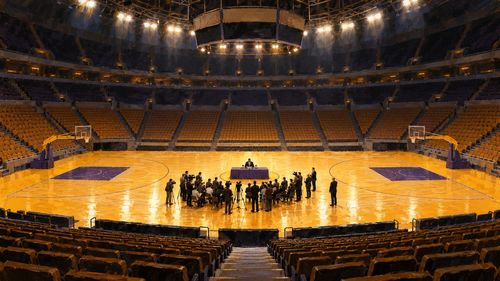
November 7: Magic's Announcement, the Night That Wouldn't End Two November 7ths defined by announcements that changed everything — a press conference that humanized a plague, and an election night that made history twice before anyone realized it wasn't over Some November 7ths ask more of us than others. In 1991, a man walked to a podium at the Forum in Inglewood, California, and said something that required enormous courage to say — and that changed, overnight, the way millions of Americans thought about a disease they had been encouraged to believe was someone else's problem. Nine years later, an election night that was supposed to deliver a verdict delivered something else entirely: a former First Lady walking into the Senate for the first time, and a presidential race that the networks called, uncalled, and called again before deciding they had no idea — a night that would stretch into thirty-six days and end in a Supreme Court chamber rather than a voting booth. The Press Conference   On November 7, 1991, Earvin "Magic" Johnson stood before reporters at the Great Western Forum in Inglewood, California, and announced that he had tested HIV-positive and would be retiring from professional basketball immediately. He was thirty-two years old, at the peak of his powers, a five-time NBA champion and three-time league MVP who had transformed the point guard position and, with his rival Larry Bird, rescued a league that had been struggling commercially in the late 1970s. The announcement was received with the particular shock of something that contradicts a fundamental assumption: HIV/AIDS had been framed, in the American public conversation of the 1980s, as a disease of gay men and intravenous drug users. Magic Johnson was neither. His diagnosis forced a reckoning with the reality that a virus does not sort by identity. Johnson's press conference did not simply inform — it transformed. Donations to AIDS research organizations surged in the days that followed. Calls to HIV testing hotlines increased dramatically. The conversation about AIDS in schools, workplaces, and homes that had been delayed for a decade by stigma and willful ignorance could no longer be avoided. Johnson himself became one of the most visible advocates for HIV awareness and safe sex education, serving briefly on President George H.W. Bush's AIDS commission before resigning in frustration over the administration's inadequate response. He returned to the NBA in 1992 for the All-Star Game and played on the United States Olympic "Dream Team" that summer. He attempted a full comeback with the Lakers in 1996 and played thirty-two games before retiring again at thirty-six. He has lived with HIV for more than three decades, his health sustained by the antiretroviral medications that the AIDS advocacy movement — in which his announcement played a galvanizing role — helped bring to wider availability. The press conference he gave on November 7, 1991 is credited by public health researchers with measurably changing American behavior around HIV prevention.   The Great Western Forum in Inglewood — where Magic Johnson's November 7, 1991 announcement forced a nation to confront what it had spent a decade choosing not to see about HIV/AIDS. Election Night, 2000 On November 7, 2000, Americans went to the polls to choose between Vice President Al Gore and Texas Governor George W. Bush — and the evening that followed became one of the most extraordinary nights in the history of American electoral politics. As results came in from across the country, it became clear that the race was historically close, with the outcome depending on Florida's twenty-five electoral votes. The networks called Florida for Gore early in the evening, then retracted the call. They called it for Bush after midnight, then retracted that call too. By the early hours of November 8, with the race still undecided and Florida too close to call, the nation went to sleep not knowing who its next president would be. It would not know for thirty-six days. What that same election night also produced, in the quieter register of a Senate race in New York, was a different kind of history. Hillary Rodham Clinton — former First Lady, Yale-trained attorney, and first-term political candidate who had moved to New York specifically to run for the seat being vacated by Daniel Patrick Moynihan — defeated Republican Rick Lazio by twelve percentage points to become the first former First Lady elected to the United States Senate. Clinton had entered the race as a celebrity candidate with no record of elected office and had faced predictable questions about her carpetbagging residency and the appropriateness of her ambitions. She won decisively. The race for the White House that night may have ended in legal chaos and a Supreme Court decision, but the race for a Senate seat in New York ended clearly, and with a result that would shape American politics for the following quarter century. The same evening that produced the most contested presidential election in modern history also produced, without quite as much fanfare, a senator who would run for president twice herself. Election night 2000 — the night the networks called Florida twice and retracted both calls, producing the most contested presidential result in modern American history and a Senate race that delivered its verdict clearly. ❦ Thirty-Six Days   The Florida recount that followed election night 2000 became a national obsession and a constitutional stress test. With Bush leading Gore by a margin that shrank with every recount — ultimately to 537 votes out of nearly six million cast in Florida — the question of which ballots to count, how to count them, and who had the authority to make those decisions wound through Florida's county canvassing boards, its state courts, its Supreme Court, and ultimately to the United States Supreme Court. Terms that had been the province of election administrators — hanging chad, butterfly ballot, undervote — entered the national vocabulary. Armies of lawyers descended on Florida. The world watched with a mixture of fascination and alarm as the most powerful democracy on earth appeared unable to determine who had won its most important election. On December 12, 2000 — thirty-six days after election night — the Supreme Court issued its 5-4 decision in Bush v. Gore, halting the Florida recount and effectively handing the presidency to George W. Bush. Al Gore, who had won the national popular vote by more than 500,000 votes, conceded the following day in a speech that called for unity and accepted the Court's ruling as final. The legal and political arguments about what happened in Florida in November and December of 2000 — about the butterfly ballot design that may have cost Gore thousands of votes in Palm Beach County, about the differing standards applied to ballots in different counties, about the Court's unprecedented intervention in an election dispute — have continued ever since. What is beyond dispute is that the night of November 7, 2000 produced an outcome that thirty-six days of lawyers, judges, and chad-examiners could not fully resolve — and that the presidency it ultimately awarded shaped the first decade of the twenty-first century.   The United States Supreme Court — where thirty-six days after election night, the 2000 presidential race found its ending in a 5-4 decision that legal scholars have debated ever since.

19 October 2026

Post

November 6: Lincoln Elected, Apartheid Condemned, a Senate First

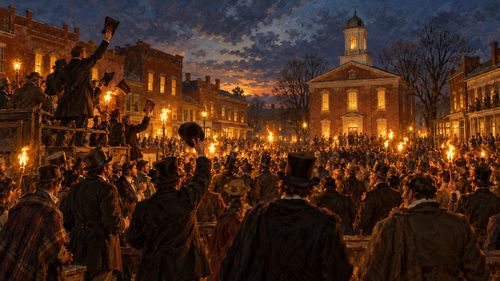
November 6: Lincoln Elected, Apartheid Condemned, a Senate First Three November 6ths defined by elections and verdicts that forced the question of who belongs — in the American experiment, in the international community, and in the halls of the Senate The question of who belongs — who is counted, who is protected, whose dignity the law is willing to enforce — has driven more of history's turning points than any other. November 6 has asked that question three times, in three different centuries, in three very different arenas. A nation that had been arguing about slavery for decades elected a president whose position on the question made eleven states decide they would rather leave than accept the verdict. An international body looked at a government that had built an entire legal architecture around exclusion and said, formally and on the record, that it would not accept what it saw. And a senator from Wisconsin walked into the world's most exclusive legislative chamber and made it, for the first time, a little less exclusive. The Election That Split a Nation   On November 6, 1860, Abraham Lincoln was elected the sixteenth President of the United States — and within weeks, the country he had been elected to lead began to come apart. Lincoln, a one-term Illinois congressman who had lost a Senate race to Stephen Douglas two years earlier, had won the Republican nomination in May and ran on a platform that opposed the expansion of slavery into new territories while stopping short of calling for its immediate abolition where it existed. It was enough. Southern states had made clear that Lincoln's election would be treated as cause for secession, and they were as good as their word: South Carolina voted to leave the Union in December 1860, followed by six more states before Lincoln was inaugurated in March 1861. The election that Lincoln won on November 6 set in motion the Civil War that would cost more than 600,000 lives. Lincoln had won the electoral college with 180 votes but received less than forty percent of the popular vote — his name did not even appear on the ballot in ten Southern states. The result was the consequence of a Democratic Party that had split along sectional lines, running two separate candidates, and a Constitutional Union party that further divided the anti-Lincoln vote. His minority popular vote did not diminish the legitimacy of his victory, but it illustrated the depth of the division he was inheriting. What Lincoln would do with that inheritance — the Emancipation Proclamation, the prosecution of the war to its conclusion, the Gettysburg Address, the Second Inaugural — became the measure by which American presidents have been judged ever since. The man elected on November 6, 1860, is consistently ranked first among them.   Springfield, Illinois on election night 1860 — where Abraham Lincoln learned he had won a presidency that would immediately begin pulling the nation it governed apart. The World Says No On November 6, 1962, the United Nations General Assembly passed Resolution 1761, calling on member states to impose diplomatic, economic, and transport sanctions against South Africa in response to the country's apartheid system — the comprehensive legal regime of racial segregation that the National Party government had been constructing since 1948. The resolution condemned apartheid as a violation of the UN Charter and the Universal Declaration of Human Rights, and created a Special Committee Against Apartheid to monitor the situation and coordinate international pressure. It was the first significant international institutional action against the South African government's racial policies, and it arrived at a moment when the domestic anti-apartheid movement — whose leaders included Nelson Mandela, then on trial and facing life imprisonment — was being subjected to increasingly brutal suppression. The resolution did not end apartheid. The sanctions it called for were not immediately implemented by the major Western powers, many of which had significant economic interests in South Africa and were reluctant to act on principle at the cost of profit. The United States and Britain abstained from the vote. It would take more than two decades of sustained international pressure, escalating sanctions, and the internal resistance of the South African people before the apartheid government began to negotiate its own dismantlement in the early 1990s. What the 1962 resolution established was the international framework — the formal declaration that apartheid was a global concern rather than a domestic matter — that made those eventual sanctions morally and legally coherent. Nelson Mandela was released from prison in 1990 and elected president of a democratic South Africa in 1994. The road from November 6, 1962 to that outcome was long and the human cost was enormous. The resolution was the first step on it. The United Nations General Assembly — where on November 6, 1962, the international community formally declared that apartheid was the world's business, not South Africa's alone. ❦ Wisconsin's Senator   On November 6, 2012, Tammy Baldwin won the Wisconsin Senate race against former governor Tommy Thompson, becoming the first openly gay person elected to the United States Senate. Baldwin had previously served seven terms in the House of Representatives, where she had been one of the first openly gay members of Congress and had built a legislative record focused on healthcare, workers' rights, and veterans' issues. Her Senate victory came on the same night that voters in three states — Maine, Maryland, and Washington — approved same-sex marriage by popular referendum for the first time, making November 6, 2012 one of the most significant single days in the history of LGBTQ civil rights in America. Baldwin won by nearly six percentage points in a state that had twice elected her Republican opponent to statewide office. Baldwin's election to the Senate reflected a shift in American public opinion on LGBTQ equality that had been building for a decade and would accelerate dramatically in the years that followed — culminating in the Supreme Court's 2015 ruling in Obergefell v. Hodges that established a constitutional right to same-sex marriage nationwide. She has been reelected twice since 2012 and has continued to focus her Senate work on economic issues, healthcare access, and the concerns of working-class Wisconsin voters alongside her advocacy for LGBTQ rights. The barrier she broke on November 6, 2012 was real, but her Senate career has been defined less by the historic nature of her election than by the work she has done in the chamber she entered — which is, perhaps, exactly as it should be.   The United States Capitol — the building Tammy Baldwin entered on November 6, 2012, as the first openly gay person elected to the Senate in American history.

19 October 2026

Post

November 5: The Illegal Vote, the Third Term, the Order to Strike

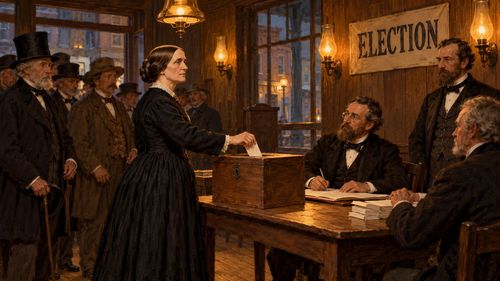
November 5: The Illegal Vote, the Third Term, the Order to Strike Three November 5ths defined by decisions that broke the rules — a woman who voted when the law said she couldn't, a president who ran when tradition said he shouldn't, and a military command that set in motion something the world would not survive unchanged Some rules exist to protect institutions. Others exist to protect the people who benefit from keeping others out. November 5 has witnessed both kinds being broken — by a woman who walked into a barbershop polling place in Rochester and cast a ballot she believed the Constitution already entitled her to cast, by a president who looked at Europe falling to fascism and decided that this was not the moment to honor a tradition, and by a military command that authorized a strike against an American naval base and set in motion a war that would cost fifty million lives. Three November 5ths. Three rule-breaking decisions. Three very different kinds of consequence. Rochester, 1872   On November 5, 1872, Susan B. Anthony walked into a barbershop on West Street in Rochester, New York — which served, as many businesses did in that era, as a polling place — and cast a ballot in the presidential election between Ulysses S. Grant and Horace Greeley. She was fifty-two years old, she had spent more than twenty years campaigning for women's suffrage, and she had convinced the election inspectors to register her two weeks earlier by arguing that the Fourteenth Amendment's guarantee of citizenship rights applied to women as much as men. Fourteen other women voted with her that day. Two weeks later, a deputy US marshal appeared at her Rochester home and placed her under arrest for "knowingly, wrongfully, and unlawfully" voting in a federal election. The trial that followed, in June 1873, became a national event — not least because the judge, Ward Hunt, had written his verdict before the trial began and refused to allow Anthony to testify on her own behalf or to submit the case to the jury, simply reading his prepared guilty verdict from the bench. He fined her $100. Anthony refused to pay it and never did. She also used every public moment the trial afforded her — the sentencing, the press coverage, the speaking tours she conducted while awaiting and during the proceedings — to advance the argument that the Constitution already guaranteed her the right she had exercised. It did not yet, legally. The Nineteenth Amendment that finally secured women's right to vote would not be ratified until 1920, fourteen years after Anthony's death. She had voted in 1872 knowing that the law might not protect her. She was right. She voted anyway.   A 19th-century American polling place — the kind of modest storefront space where Susan B. Anthony cast her illegal ballot on November 5, 1872, and where the long argument for women's suffrage took a decisive public turn. Four More Years On November 5, 1940, Franklin D. Roosevelt won the presidential election by the largest electoral margin in American history to that point, defeating Republican Wendell Willkie with 449 electoral votes to 82 and capturing fifty-five percent of the popular vote. The victory was remarkable not only for its scale but for what it required Roosevelt to break: the two-term tradition established by George Washington and honored, as a matter of democratic custom rather than constitutional requirement, by every president for 144 years. Roosevelt had decided to seek a third term as Nazi Germany consumed Western Europe and Britain stood alone against Hitler's forces — reasoning that changing the nation's leadership at the moment of maximum global peril was a risk the country could not afford to take. His Republican opponents called it a power grab. His supporters called it a necessity. The voters, by a margin of five million, called it an election. The tradition Roosevelt broke had been strong enough to feel, to many Americans, like a constitutional prohibition — but it was not one. The Twenty-Second Amendment, which formally limited presidents to two terms, was not ratified until 1951, six years after Roosevelt's death, enacted specifically in response to his four consecutive victories. Roosevelt would go on to win a fourth term in 1944, making him the only president in American history to be elected more than twice. He died in office on April 12, 1945, three weeks before Germany's surrender. The third term he won on November 5, 1940 — the one that broke Washington's tradition — would be followed by the wartime presidency that defined both his legacy and the twentieth century. An American living room on election night, 1940 — where families gathered around their radios to learn that Franklin Roosevelt had broken a 144-year tradition and won a third term. ❦ Tora, Tora, Tora   On November 5, 1941, Japanese Imperial Headquarters issued the final operational orders for the attack on Pearl Harbor — the decision that committed Japan to war with the United States at a moment when both nations were still formally engaged in diplomatic negotiations. The orders authorized the plan developed by Admiral Isoroku Yamamoto: a surprise air strike by carrier-based aircraft against the U.S. Pacific Fleet at anchor in Pearl Harbor, Hawaii, timed for early December and designed to cripple American naval power in the Pacific in a single blow. The strike was predicated on a calculated gamble — that destroying the American fleet before the United States could mobilize would give Japan time to consolidate control over Southeast Asian oil fields, rubber plantations, and other resources, and to establish a defensive perimeter strong enough to make reconquest too costly to attempt. The attack that followed on December 7, 1941 — thirty-two days after the orders were signed — killed 2,403 Americans, wounded nearly 1,200 more, and destroyed or damaged eighteen naval vessels and 188 aircraft. It brought the United States into World War II. Yamamoto, who had studied in the United States and understood American industrial capacity better than most of his colleagues, had opposed going to war and had argued against the Pearl Harbor plan on strategic grounds. He understood what the orders of November 5 had actually committed Japan to: not a crippling blow and a negotiated settlement, but a war against a nation whose productive power would eventually be brought to bear with overwhelming force. He is reported to have said, after the attack succeeded, that Japan had awakened a sleeping giant and filled it with a terrible resolve. Whether he said it or not, he knew it was true.   Pearl Harbor, Hawaii — the target of the orders signed on November 5, 1941, and the place where the world changed thirty-two days later.

19 October 2026

Post

November 4: History Made, a Chimp with a Twig, the Boy King Found

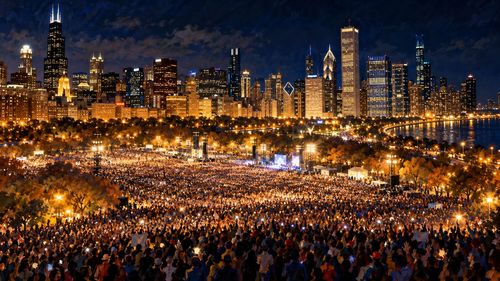
November 4: History Made, a Chimp with a Twig, the Boy King Found Three November 4ths defined by discoveries — of what a nation could be, of what separates us from our closest relatives, and of what three thousand years of desert sand had been keeping secret Discovery arrives in many forms. Sometimes it arrives as 365 electoral votes and a crowd of 240,000 people in a Chicago park, the weight of history visible in the faces of everyone watching. Sometimes it arrives as a chimpanzee in the Tanzanian forest, doing something with a stripped twig that nobody had seen before and that required the entire definition of humanity to be reconsidered. And sometimes it arrives as a stone step in the Valley of the Kings, the first of sixteen, leading down to a sealed door that had not been opened in more than three thousand years. November 4 has seen all three kinds — the discovery of a possible future, the discovery of an inconvenient past, and the discovery of a buried world that the desert had decided to keep for itself. Grant Park   On November 4, 2008, Barack Obama was elected the forty-fourth President of the United States, winning 365 electoral votes to John McCain's 173 and capturing fifty-three percent of the popular vote in a victory that carried states no Democratic presidential candidate had won in decades. Obama — a first-term senator from Illinois, the son of a Kenyan father and a white mother from Kansas, raised in Hawaii and Indonesia, educated at Columbia and Harvard Law — became the first African American to win the American presidency, in an election whose result was announced on networks and devices across the world with a simultaneity that the advent of the internet age had made possible. That night, more than 240,000 people gathered in Chicago's Grant Park to hear him speak. Millions more watched on screens in living rooms, bars, and public squares in cities on every continent. Obama's victory speech began with four words — "If there is anyone" — and built, over the following twenty minutes, into a meditation on what had just happened that was both celebratory and clear-eyed about what lay ahead. The country was in the early weeks of the worst financial crisis since the Great Depression. Two wars were ongoing. The divisions that would define the decade to come were already present, if not yet fully legible. Obama acknowledged all of it. He also acknowledged the person in that crowd he most wanted the world to see: Ann Nixon Cooper, a 106-year-old Black woman from Atlanta who had been born when neither her gender nor her race allowed her to vote, and who had lived long enough to cast a ballot that helped elect the first Black president. "Yes we can," he said. It has been translated into dozens of languages since. The phrase has been argued about, analyzed, and worn down by repetition, but the night it was spoken, in Grant Park in November, it carried everything the crowd needed it to carry.   Grant Park in Chicago on the night of November 4, 2008 — where 240,000 people gathered to witness a moment that carried the weight of everything the country had been and everything it had promised to become. David Greybeard On November 4, 1960, Jane Goodall — twenty-six years old, largely self-trained, working in the Tanzanian forest at the invitation of paleoanthropologist Louis Leakey — watched a chimpanzee she had named David Greybeard select a blade of grass, strip its leaves to make it more effective, and insert it into a termite mound to extract termites for eating. She watched him do it repeatedly, deliberately, with evident intent. What she had witnessed was not simply an animal using an object — it was an animal manufacturing a tool, modifying a natural material to make it better suited for a specific purpose. This had been understood, until that moment, to be exclusively human behavior. The definition of humanity that had stood for millennia — that tool use was the bright line between us and every other species — had just been erased by a chimpanzee with a piece of grass in Tanzania. When Goodall reported her observation to Leakey, his response became one of science's most quoted one-liners: "Now we must redefine tool, redefine man, or accept chimpanzees as humans." The scientific community's initial response to Goodall's work was skeptical — she had named her subjects rather than numbering them, a practice considered unscientific, and she lacked formal academic credentials. The observations proved impossible to dismiss. Goodall went on to earn a PhD from Cambridge and to conduct the longest continuous field study of any animal species in history, spending decades in the Gombe forest and building a body of knowledge about chimpanzee behavior, social structure, and emotional life that transformed primatology. The chimpanzee with a twig, watched by a young woman on a November morning in 1960, had redefined what it meant to be human — and Goodall spent the rest of her career asking what that redefinition required of us. The forests of Gombe, Tanzania — where Jane Goodall watched a chimpanzee use a tool on November 4, 1960, and the boundary between human and animal moved permanently. ❦ Step One   On November 4, 1922, a young water carrier working for Howard Carter's excavation team in Egypt's Valley of the Kings struck something with his foot while clearing rubble — a stone step, cut into the bedrock. Carter, who had been searching the valley for years with funding from his patron Lord Carnarvon and who had been on the verge of giving up entirely, was summoned. By the end of the day, sixteen steps had been uncovered, leading down to a sealed plastered door bearing the cartouches of royal necropolis officials. Carter had the stairs reburied, cabled Lord Carnarvon in England to come immediately, and waited. The door, when it was finally opened on November 26, revealed a second sealed door beyond a rubble-filled passageway. Carter made a small hole in this second door and held a candle up to it. When Carnarvon asked if he could see anything, Carter replied: "Yes, wonderful things." The tomb of Tutankhamun — the boy pharaoh who had died at approximately nineteen years of age around 1323 BC — was the only nearly intact royal tomb ever discovered in the Valley of the Kings. Every other royal burial had been plundered by grave robbers in antiquity; Tutankhamun's had been entered twice and resealed, and its outer chambers had been missed entirely by the robbers who had plundered the inner areas. The more than 5,000 objects Carter's team catalogued over the following ten years — furniture, chariots, weapons, food offerings, ritual objects, and the extraordinary golden death mask that has become the most recognized object from the ancient world — provided an unparalleled window into the material culture of dynastic Egypt at its height. Tutankhamun himself had been a minor king, his reign short and historically unremarkable. The accident of his tomb's survival made him, three thousand years later, the most famous pharaoh who ever lived.   The Valley of the Kings — the desert necropolis where Howard Carter's team found the first step on November 4, 1922, and began the excavation that revealed "wonderful things."

19 October 2026

Post

Nov. 4, 2001: Luis Gonzalez Stuns the Yankees

On November 4, 2001, Luis Gonzalez's Broken-Bat Blooper Beat Mariano Rivera and Won Arizona Its First World Series In a Game 7 for the ages, the upstart Diamondbacks solved baseball's most unhittable closer when it mattered most. On the night of November 4, 2001, Bank One Ballpark in Phoenix held its breath as the Arizona Diamondbacks, just four years into existence, faced the New York Yankees in a winner-take-all Game 7 of the World Series. The Yankees, chasing a fourth straight title in a season shadowed by the aftermath of 9/11, sent out Mariano Rivera, the most dominant postseason closer the sport had ever seen, to protect a one-run lead in the ninth. What followed would become one of the most replayed endings in World Series history. The Bloop Heard 'Round   Rivera entered with a career postseason ERA that bordered on untouchable, and New York led 2-1 heading into the bottom of the ninth. But Arizona chipped away: a leadoff single, a sacrifice bunt that Rivera himself threw away trying to force a runner at second, and a game-tying double from Tony Womack. With the bases loaded and one out, Luis Gonzalez stepped in against a pitcher who had barely been touched all October. Gonzalez choked up on his bat, anticipating Rivera's signature cutter jamming him inside, and got exactly that pitch. The bat shattered in his hands, but the ball looped just over a drawn-in Derek Jeter at short, dropping into shallow center field. Jay Bell trotted home with the winning run, and Arizona had its championship in just its fourth season of existence. The image of Gonzalez's broken bat and the ball drifting lazily over the infield became an instant piece of baseball iconography, a reminder that even the game's most mechanical closer could be undone by an accident of physics. For the Yankees, it snapped a dynastic run and marked Rivera's first blown save in a decisive World Series game of his career. For Arizona, built largely around the arms of Randy Johnson and Curt Schilling, who shared World Series MVP honors, it was validation that an expansion-era franchise could out-duel a juggernaut when the ball simply refused to go where anyone expected.  

19 October 2026

Post

November 4: Doctor Strange Opens, NYC Marathon at 25

■  The Pop Edition November 4: Doctor Strange Opens, NYC Marathon at 25 Marvel's sorcerer supreme hits theaters a decade ago, New York's marathon marks a quarter-century since its emotional post-9/11 run, and a handful of November 4 birthdays round things out. Benedict Cumberbatch's Doctor Strange opened ten years ago this week, reshaping the MCU's scope. Some days in pop culture history earn their keep through sheer contrast — a comic-book wizard opening in multiplexes, a city's marathon runners proving a point about resilience, and a slate of birthdays spanning soap-opera legends to Hollywood leading men. November 4 has all of that. Here's the full rundown of what happened on this date, how it landed at the time, and why it still matters. Matthew McConaugheyBORN 1969 · TURNS 57He spent the '90s and 2000s as the easygoing rom-com guy, then reinvented himself entirely with Dallas Buyers Club and True Detective, picking up an Oscar along the way. These days he splits time between acting, bourbon, and a University of Texas lecture hall.Ralph MacchioBORN 1961 · TURNS 65Daniel LaRusso made him a teenage icon in 1984, and he never really left the role behind — which turned out fine, since Cobra Kai gave him a third act four decades later that out-earned the original trilogy in cultural reach.Kathy GriffinBORN 1960 · TURNS 66She built a career on saying the thing nobody else would say, from Suddenly Susan through her own stand-up specials and years of red-carpet commentary on E!. The comedy never softened, even after the career took real hits along the way.Loretta SwitBORN 1937 · TURNS 89As Major Margaret 'Hot Lips' Houlihan on M*A*S*H, she turned a punchline nickname into one of television's most fully realized characters over eleven seasons, earning two Emmys for the trouble.Sean CombsBORN 1969 · TURNS 57He built Bad Boy Records into a hip-hop powerhouse in the '90s before stepping in front of the mic himself, and later expanded into fashion and spirits — a career defined by relentless reinvention under a string of stage names.  Marvel's gamble on a character most moviegoers had never heard of paid off on November 4, 2016, when Doctor Strange opened in US theaters. Benedict Cumberbatch played Stephen Strange, the arrogant neurosurgeon turned sorcerer, in a film that leaned hard on reality-bending visual effects — city blocks folding over themselves, the Mirror Dimension twisting like a Escher print come to life.At the time, it was a genuine question mark for Marvel Studios: a mid-budget origin story for a character with no built-in fanbase comparable to Spider-Man or the Avengers, going up against a crowded fall slate. It opened strong, became one of the year's bigger studio hits, and quietly set up Strange as one of the MCU's load-bearing characters heading into Infinity War and Endgame a few years later.Ten years on, the film reads as a hinge point for the franchise — proof that Marvel could sell audiences on cosmic weirdness, not just street-level heroes in spandex, and the template it built got reused for everything from Ant-Man's quantum realm to the multiverse chaos that followed.    The New York City Marathon almost didn't happen in 2001. With the city still raw less than two months after the September 11 attacks, organizers debated whether 26.2 miles of runners through five boroughs was even appropriate. They decided it was necessary, and on November 4, 2001, roughly 30,000 runners took to the Verrazzano-Narrows Bridge anyway.What made that race land differently than any marathon before or since was the crowd along the route — denser, louder, more emotional than usual, with firefighters and police running in uniform and spectators holding up photos of the missing. Kenya's Tesfaye Jifar won the men's race in what was then a course record, but the result mattered less than the fact that the race happened at all, a city reclaiming one of its signature public spectacles in real time.Twenty-five years later, the NYC Marathon remains one of the largest participatory sporting events on earth, but that 2001 edition is the one race organizers and longtime runners still bring up first — less a sporting story than a cultural one.   1963The Beatles play the Royal Variety Performance in London, where John Lennon tells the posh crowd to just rattle their jewelry instead of clapping — one of the first signs that these four weren't going to play it polite.1922Archaeologist Howard Carter's team finds the entrance to Tutankhamun's tomb in Egypt's Valley of the Kings, setting off a decades-long wave of Egyptomania in fashion, film, and design.1950Night Court actress Markie Post is born; she'd go on to become a sitcom and TV-movie staple for three decades before her death in 2021.2005Disney's Chicken Little opens in theaters, the studio's first fully computer-animated feature made without Pixar's involvement.2016Doctor Strange opens wide across the US, expanding the Marvel Cinematic Universe into cosmic and mystical territory for the first time.2001The New York City Marathon runs just weeks after 9/11, becoming one of the first large public gatherings in the city post-attack. A cloaked sorcerer, a marathon that refused to be canceled, and a Beatle telling royalty to rattle their jewelry — November 4 covers a wide stretch of pop culture ground. Check back tomorrow for the next date's full accounting.

19 October 2026

Post

November 3: 1,776 Feet, One Dog, and the Most Powerful Editor in Fashion

November 3: 1,776 Feet, One Dog, and the Most Powerful Editor in Fashion Three November 3rds defined by pioneers — a building that rose from the worst of days, a dog who went where no living creature had gone before, and a woman who built an empire from a chair at the center of the room Some pioneers build upward — steel and glass rising 1,776 feet above a site that once held catastrophe, the height itself a statement about what endures. Some are sent upward by others, small and trusting and entirely unaware of what they are making possible — and what it will cost them. And some build sideways and inward, constructing an empire of influence from a single office chair, using editorial judgment as the instrument by which culture is shaped one magazine cover at a time. November 3 belongs to all three kinds of pioneer: a tower, a dog, and a woman who turned fashion into power. 1,776   On November 3, 2014, Condé Nast employees rode the elevators of One World Trade Center to their new offices, becoming the first tenants of the tallest building in the Western Hemisphere and marking the moment the rebuilt World Trade Center site went from memorial and construction zone to functioning skyline. The building stands 1,776 feet tall — a deliberate encoding of 1776, the year of American independence, into a structure that had been conceived as a monument as much as an office tower. Construction had begun in 2006, five years after the September 11 attacks, on a site so charged with grief and civic meaning that every design decision and delay had been publicly scrutinized. The final structure — a tapered glass tower with chamfered corners that catch and reflect light differently at every hour — dominates the lower Manhattan skyline in a way the Twin Towers never quite did, visible from the outer boroughs and from New Jersey across the Hudson. One World Trade Center is not merely a building. It sits directly beside the September 11 Memorial — the two square reflecting pools that occupy the footprints of the original towers, their names inscribed in bronze around the edges — and the relationship between the two structures is deliberate and poignant: the new tower rising from the site of loss, the pools descending into it. The building has been criticized by some architects for its conventional floor plans, its relatively uninspiring interior spaces, and the compromise between symbolic aspiration and commercial necessity that defines every major office tower. What it represents — the decision to rebuild, to insist that the skyline would not remain broken, to encode the year of founding into the height of what rose — has proven more enduring than any architectural review. Thirteen years after the attacks, New York had its tower back.   One World Trade Center rising above lower Manhattan — 1,776 feet of glass and steel encoding the year of American independence into the skyline that grief had left incomplete. Good Dog On November 3, 1957 — just four weeks after Sputnik 1 had become the first artificial satellite — the Soviet Union launched Sputnik 2, carrying a small stray dog from the streets of Moscow named Laika into orbit. She was the first living creature to orbit the Earth, and her mission was designed from the beginning as one-way: the technology to return a spacecraft safely from orbit had not yet been developed, and Soviet scientists made the decision to send Laika knowing she would not come back. The official Soviet account held that she survived for days before being humanely euthanized when her oxygen supply ran low. In 2002, Russian scientists revealed what had long been suspected: Laika had died within hours of launch from overheating caused by a thermal control malfunction. The spacecraft that carried her orbited Earth 2,570 times before burning up in the atmosphere in April 1958. Laika's mission demonstrated that a living organism could survive the stresses of rocket launch and the conditions of orbital spaceflight — crucial data for the human missions that followed. She is, in the history of space exploration, both a pioneer and a sacrifice, and the ethical questions her mission raised have never been fully settled. Soviet scientists who worked on the program later expressed regret about her fate. Monuments to Laika have been erected in Russia. Her image appeared on postage stamps across the communist bloc. The dog who was scooped from Moscow's streets and sent to orbit — small, trusting, and entirely unaware of what she was doing — has become one of the most humanely mourned figures in the history of science, honored precisely because she could not choose what she was asked to give. Laika in orbit — the first living creature to circle the Earth, honored precisely because she could not choose what she was asked to give. ❦ Nuclear Wintour   On November 3, 1949, Anna Wintour was born in London to Charles Wintour, editor of the London Evening Standard, and Eleanor Baker, an American philanthropist. She grew up in a household where editorial authority was modeled daily and where the relationship between media, culture, and influence was not abstract but professional and immediate. She left school at sixteen, trained at a London fashion boutique, and worked her way through British fashion journalism before moving to New York, where she held positions at Harper's Bazaar and House & Garden before being appointed editor-in-chief of American Vogue in 1988. She has held that position ever since — thirty-six years in the chair that sits at the center of the most influential fashion magazine in the world, making her the longest-serving editor in Vogue's history. Wintour's influence extends far beyond the magazine's pages. She has been credited — and in some cases blamed — for transforming Vogue from a fashion publication into a cultural institution, placing politicians, athletes, and entertainers on its cover and expanding the definition of what a fashion magazine could address. Her nickname, "Nuclear Wintour," reflects the combination of reputation and reserve that has defined her public persona: the dark sunglasses, the precise bob, the studied unreadability in the front row. The 2003 book and subsequent film The Devil Wears Prada drew heavily on her reputation, though she has never confirmed the connection. She was appointed a Dame Commander of the Order of the British Empire in 2017. The girl born to a London newspaper editor on November 3, 1949 grew into the woman who decided, for more than three decades, what fashion meant — and who got to be on the cover.   The front row of a fashion week runway — the seat of cultural authority that Anna Wintour has occupied for more than three decades, shaping what the industry means and who it belongs to.

19 October 2026

Post

Nov. 3, 2016: Cubs End 108-Year Title Drought

In the Early Hours of November 3, 2016, the Chicago Cubs Finally Became World Champions A rain delay, extra innings, and 108 years of heartbreak all collided in one unforgettable night in Cleveland. The calendar had already flipped to November 3, 2016, by the time the Chicago Cubs recorded the final out of a World Series Game 7 that felt less like a baseball game than an exorcism. For the better part of a week, the Cubs and Cleveland Indians had traded blows in a series that pushed America's oldest sports curse to its absolute breaking point, and when it finally ended, it did so past midnight, fittingly, in extra innings. The Rain Delay   Game 7 at Cleveland's Progressive Field had everything a script could demand: the Cubs raced to an early lead, Cleveland clawed back to tie it in the eighth inning, and the game rolled into extra frames with the weight of 108 years pressing down on every pitch. Then, with the score knotted at six, the skies opened and play paused for a 17-minute rain delay. In the Cubs' cramped weight room, veteran outfielder Jason Heyward gathered his teammates for an impromptu talk, reminding them of who they were and what they had already survived together that season. It was an unscheduled timeout that, players later said, reset the entire tenor of the night. When play resumed, the Cubs scored twice in the top of the tenth, survived a nervy Cleveland rally that cut the lead to one, and finally retired the Indians to seal a 8-7 victory. The final out fell at 12:47 a.m. Eastern time on November 3, officially making it the first World Series title for the Cubs since 1908. Fans who had waited generations for the moment watched it arrive not at the dramatic close of a prime-time broadcast, but deep into the small hours of a Thursday morning — proof that history, when it finally comes due, rarely checks the clock first.  

19 October 2026

Post

November 3: Stranger Than Fiction at 20, Wintour 77

■  The Pop Edition November 3: Stranger Than Fiction at 20, Wintour 77 Will Ferrell's existential comedy hits a round anniversary, Vogue's editor turns 77, and a sitcom that redefined the 'very special episode' premiered on this date. A quiet November day that gave us a self-aware novelist, a fashion icon, and Arnold Jackson's skepticism. November 3rd doesn't announce itself the way some dates do, but dig in and it's a sneaky good one: a Will Ferrell movie that still gets name-checked in film-school classes, a sitcom that became a cultural touchstone for better and worse reasons, and a birthday that explains a few decades of fashion coverage. Add a kaiju's debut and a box office upset, and you've got a full afternoon of trivia ammunition. Born On This DayAnna WintourBORN 1949 · TURNS 77Wintour took over Vogue in 1988 and spent the next decades turning a fashion magazine into a cultural gatekeeping apparatus, the sunglasses-indoors silhouette now shorthand for editorial power itself. The Met Gala as a red-carpet spectacle is largely her invention.Roseanne BarrBORN 1952 · TURNS 74Barr built a stand-up persona into Roseanne, a sitcom that put a working-class family on primetime without softening the edges, and for years it ranked among the most-watched shows on television.Dolph LundgrenBORN 1957 · TURNS 69Before acting, Lundgren held a master's degree in chemical engineering and a Fulbright scholarship offer. He chose Ivan Drago instead, and Rocky IV turned him into the decade's defining movie villain.Adam AntBORN 1954 · TURNS 72Adam Ant fused new-wave pop with pirate-dandy theater, and for a stretch of the early '80s his face paint and tricorn hats were as recognizable as his hooks.Kendall JennerBORN 1995 · TURNS 31Jenner moved from reality TV into high fashion, walking for Chanel, Givenchy, and Marc Jacobs and becoming one of the most-booked models of her generation. Opening Weekend Stranger Than Fiction opened in US theaters on November 3, 2006, twenty years ago this day, and it was a genuine gamble on Will Ferrell going quiet. Marc Forster's film cast him as an IRS auditor who starts hearing a novelist's narration describing his own life, with Emma Thompson as the author and Dustin Hoffman as the literature professor trying to help him figure out if he's a tragedy or a comedy.It opened the same day as The Santa Clause 3, a far broader family comedy, and critics made a point of the contrast — one Ferrell vehicle leaning on a prat-fall legacy, the other asking him to underplay almost everything. Stranger Than Fiction didn't post blockbuster numbers, but reviews were kind, and it's the film critics still reach for when they want to argue Ferrell can do more than loud. Two decades on, it holds up as one of the better examples of a comic actor stepping sideways and sticking the landing, a lower-key cousin to Eternal Sunshine's structural playfulness without borrowing its tone.    Prime TimeDiff'rent Strokes premiered on NBC on November 3, 1978, built around two Harlem brothers, played by Todd Bridges and Gary Coleman, adopted by a wealthy Park Avenue widower after their housekeeper mother dies. The premise sounds like a culture-clash sitcom on paper, and for its early seasons that's mostly what it was, with Coleman's delivery of his signature line carrying most of the comic weight.What the show became, especially by its later seasons, was something stranger: a vehicle for PSA-style special episodes tackling kidnapping, drugs, and abuse, often delivered with a sincerity that aged oddly even at the time. It ran eight seasons and made Coleman one of the most recognizable child actors in television history, a status that came with a lifetime of complicated aftermath that's been well documented since. The show's reputation now sits somewhere between nostalgic touchstone and cautionary tale about how TV handled its young stars, but on the night it premiered, it was simply a hit sitcom finding its footing on NBC's Friday lineup.   Meanwhile…1954Godzilla premieres in Japanese theaters, launching a franchise that's still releasing new films seven decades later.2000Charlie's Angels, with Cameron Diaz, Drew Barrymore, and Lucy Liu, tops the US box office in its opening weekend.2006The Santa Clause 3: The Escape Clause opens the same day as Stranger Than Fiction, giving Tim Allen and Will Ferrell a quiet box office rematch.2017Thor: Ragnarok opens in US theaters, the Taika Waititi entry that reinvented the franchise's tone with more jokes and more color.1986Run-D.M.C.'s Raising Hell tour era keeps rap climbing toward the mainstream charts it would soon dominate. From a quietly subversive novelist-narrator to two brothers in a Park Avenue penthouse, November 3rd has a habit of mixing the understated with the loud. Both aged in their own way, and both are still worth a rewatch.

19 October 2026

Post

November 2: The First Broadcast, the Holiday Signed, the Archduchess Born

November 2: The First Broadcast, the Holiday Signed, the Archduchess Born Three November 2nds defined by beginnings — of a medium that changed everything, of a recognition fifteen years overdue, and of a life that would end on a scaffold in Paris and never stop being argued about Beginnings are deceptive. The first regular high-definition television broadcast reached a few hundred households in London and looked, to most of the world, like a curiosity. The signing ceremony in the White House Rose Garden was the culmination of fifteen years of effort and marked a recognition that had been withheld far too long. And in a palace in Vienna, a fifteenth child was born to an empress who had already produced fourteen, without any particular fanfare — a girl who would be sent to France at fourteen to marry a future king, and whose name would become one of the most debated in European history. Three November 2nds. Three beginnings that nobody present could fully see the end of. Alexandra Palace, 1936   On November 2, 1936, the British Broadcasting Corporation launched the world's first regular high-definition television service from the transmitter at Alexandra Palace in North London, initiating daily broadcasts to the roughly four hundred television sets then in existence in the greater London area. The opening program featured a variety of performances — a speech, some dancing, a comedy act — transmitted to an audience so small that the BBC could, in theory, have personally invited every viewer. The technology that made it possible, an electronic scanning system developed by engineer Isaac Shoenberg and his team at EMI, represented a decisive advance over the mechanical television systems that had preceded it and established the basic technical principles that would govern television broadcasting for decades. The BBC was broadcasting two hours a day. Within twenty years, television would be in the majority of British homes. The service was suspended in September 1939 when World War II began — the BBC cut transmission mid-Mickey Mouse cartoon when the decision was made, and resumed in 1946 with the same Mickey Mouse cartoon, a gesture that has become one of broadcasting's more charming pieces of institutional memory. What the BBC inaugurated on November 2, 1936 was not merely a new technology but a new relationship between a culture and its media — a daily, domestic, intimate form of mass communication that would reshape politics, entertainment, family life, and the shared experience of nationhood in ways that nobody gathered at Alexandra Palace that afternoon could have fully anticipated. The few hundred households that owned television sets in November 1936 were receiving something whose implications would take the rest of the century to fully unfold.   Alexandra Palace in North London — where the BBC launched the world's first regular high-definition television service on November 2, 1936, reaching approximately four hundred households. The Rose Garden On November 2, 1983, President Ronald Reagan signed the legislation establishing Martin Luther King Jr. Day as a federal holiday — making King the first African American and only the third individual American to be honored with a national holiday, after George Washington and Christopher Columbus. The ceremony in the White House Rose Garden was attended by Coretta Scott King, members of the Congressional Black Caucus, and civil rights leaders who had spent fifteen years campaigning for exactly this recognition. The bill had been introduced in Congress first in 1968, the year of King's assassination, and had been reintroduced in every subsequent session of Congress before finally passing with broad bipartisan support in 1983. Reagan had initially expressed reservations about the holiday and had suggested privately that questions remained about King's associations — a comment that drew significant criticism and that he later stepped back from. The holiday Reagan signed into law that November afternoon was designated for the third Monday in January, near King's January 15 birthday, beginning in 1986. It was not immediately observed by all states — some states combined it with existing holidays or gave it different names, and full uniform observance across all fifty states did not occur until 2000. The day that Congress eventually mandated — a federal holiday asking Americans to reflect on King's legacy and the ongoing work of racial justice — is now one of the most widely observed days in the American calendar, marked by volunteer service, commemorations, and the annual tradition of revisiting King's words in a country still measuring the distance between where it is and where he asked it to go. The White House Rose Garden — where, on November 2, 1983, a fifteen-year campaign for federal recognition of Martin Luther King Jr.'s legacy reached its conclusion. ❦ The Fifteenth Child   On November 2, 1755 — the same date, by coincidence, that the Lisbon earthquake was devastating Portugal — Maria Antonia Josepha Johanna was born at the Hofburg Palace in Vienna, the fifteenth of sixteen children of Empress Maria Theresa of Austria and Emperor Francis I of the Holy Roman Empire. She was given the names of saints and family members in the Habsburg tradition and raised in the most powerful dynasty in Europe, trained from infancy in the arts, languages, and social performances that royal children of the era were expected to master. She was also raised with the clear understanding that her primary value to the dynasty was diplomatic: as the youngest surviving daughter of the Habsburgs, she would eventually be deployed in a dynastic marriage designed to strengthen Austria's political alliances. The marriage that was arranged for her, to the Dauphin of France, was decided when she was ten years old. She arrived in France in 1770 at the age of fourteen — stripped at the border of everything Austrian, including her clothing, her dog, and her attendants, in a ceremony designed to emphasize that she now belonged entirely to her new country — and was married to the future Louis XVI within days of her arrival. As Queen of France she became one of the most scrutinized, caricatured, and mythologized women in European history, her name attached to extravagances both real and invented, her image deployed by revolutionary propagandists to embody everything the old regime had gotten wrong. She was executed on October 16, 1793 — a date we have already marked in this series — at the age of thirty-seven. The girl born at the Hofburg on November 2, 1755, had spent her entire life as an instrument of other people's political calculations, and history has been arguing about her ever since.   The Hofburg Palace in Vienna — where the fifteenth child of the Habsburg dynasty was born on November 2, 1755, into a life already plotted by European power politics long before she could understand it.

19 October 2026

Quiz

Cultured

Museum-lover? Art aficionado? Put your knowledge to the test!...

19 October 2026

Quiz

Civics Class

Hope you paid attention in civics class - it's your time to shine!...

19 October 2026

Quiz

Back in My Day

We walked uphill to school - both ways! How well do you know nostalgia?...

19 October 2026

Quiz

Couch Potato

See if your binge-watching has paid off!...

19 October 2026

Quiz

Armchair Quarterback

From the Olympics to the Gridiron - how well do you know your stuff?...

19 October 2026

Quiz

Smarty Pants

Do you know your beakers from your bunsen burners?...

19 October 2026

Quiz

Name That Era

How well do you know music history?...

19 October 2026

Quiz

How Well Do You Know American History?

Test your smarts with this history quiz!...
Terms and ConditionsDo Not Sell or Share My Personal InformationPrivacy PolicyPrivacy NoticeAccessibility NoticeUnsubscribe
Copyright © 2026 Day In History