September 24: Troops at a High School, a Court System Created, and Sixty Minutes of Truth
September 24 is a day for the American experiment being put to the test — sometimes by crisis, sometimes by legislation, sometimes by a news magazine that decided to ask the questions nobody else was asking. In 1957, President Eisenhower ordered the 101st Airborne Division to Little Rock, Arkansas, to escort nine Black students through a mob and into a public high school, in the first use of federal military force to protect civil rights since Reconstruction — an act that made visible, for the entire watching world, both the depth of American racial violence and the federal government's belated willingness to confront it. In 1789, George Washington signed into law the legislation that turned the Constitution's brief sketch of a federal judiciary into an actual court system — the institutional foundation that has governed American law ever since. And in 1968, a television news magazine debuted on CBS that would spend decades doing something American journalism had rarely attempted so consistently: confronting powerful people with evidence of what they had actually done. Three September twenty-fourths. Three tests of whether American institutions were equal to American ideals.
Central High School
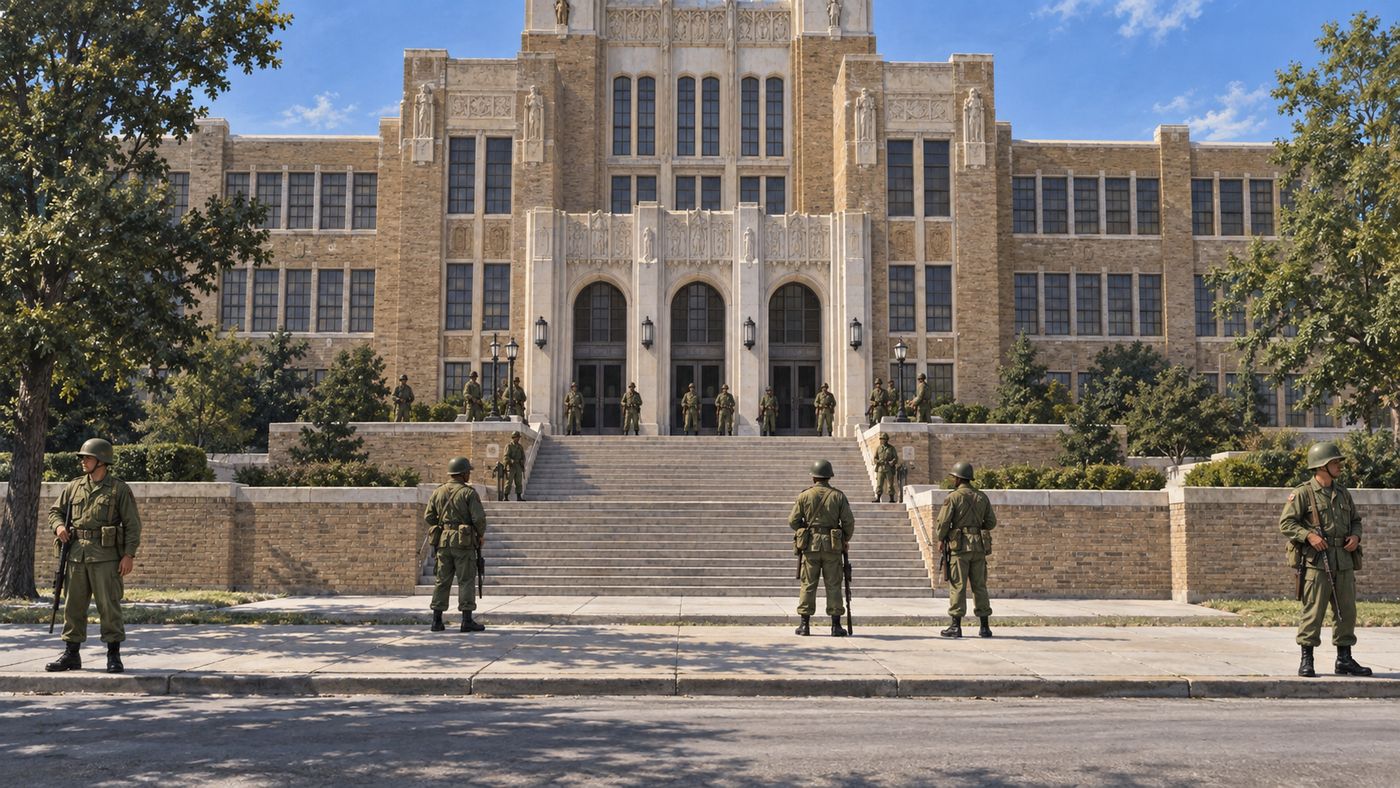
On September 24, 1957, President Dwight D. Eisenhower ordered approximately 1,200 soldiers of the 101st Airborne Division — the "Screaming Eagles" — to Little Rock, Arkansas, to enforce the federally mandated desegregation of Central High School and protect nine Black students who had been attempting to attend the school since the beginning of the academic year. The nine students — Ernest Green, Elizabeth Eckford, Jefferson Thomas, Terrence Roberts, Carlotta Walls LaNier, Minnijean Brown, Gloria Ray Karlmark, Thelma Mothershed, and Melba Pattillo Beals — had been prevented from entering the school on September 4 by the Arkansas National Guard, ordered to block them by Governor Orval Faubus in direct defiance of a federal court desegregation order. A subsequent attempt on September 23 had been turned back by an angry white mob. Eisenhower's order on September 24 federalized the Arkansas National Guard — removing it from Faubus's command — and deployed the 101st Airborne to ensure the students could enter and attend school.
The deployment ordered on September 24, 1957, marked one of the most significant federal interventions in American civil rights history — the first time since Reconstruction that a president had used military force to protect the constitutional rights of Black Americans against state-sanctioned resistance. The Little Rock Nine, as they became known, faced harassment, intimidation, and physical abuse throughout the school year — Minnijean Brown was suspended and ultimately expelled after responding to a student who poured soup on her; the others endured the year. Ernest Green became the first Black student to graduate from Central High School in May 1958. Governor Faubus responded by closing all Little Rock public high schools for the 1958-1959 school year to prevent integration — a measure the Supreme Court struck down in Cooper v. Aaron (1958), reaffirming that states could not nullify federal constitutional rulings. The courage of nine students who walked through a mob to attend a public school on September 24, 1957, and in the months that followed, represents one of the most direct and personal expressions of civil rights courage in the era's history.
The Third Branch
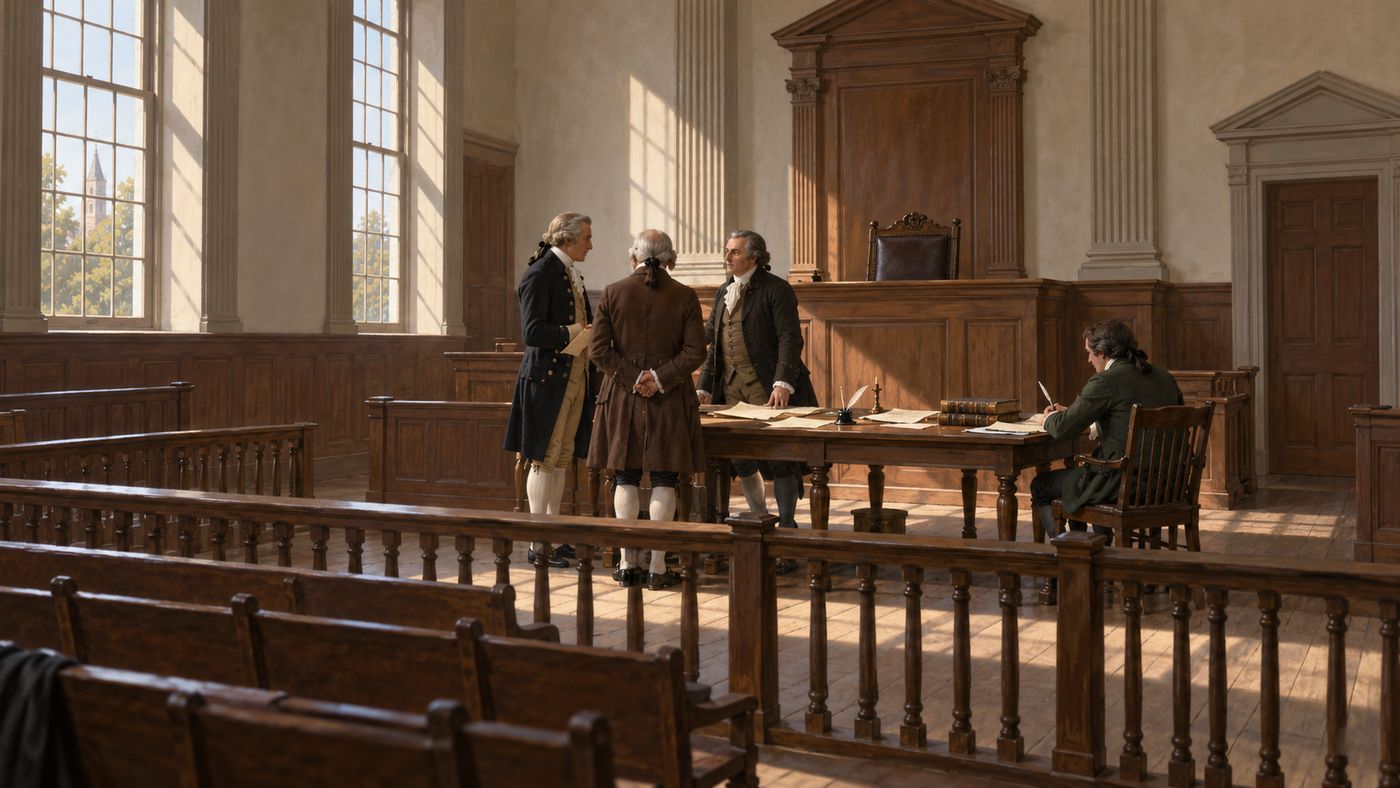
On September 24, 1789, President George Washington signed the Judiciary Act of 1789 into law — the legislation that translated the Constitution's brief provisions for a federal judiciary into a functioning court system. The Constitution had established the existence of a Supreme Court and authorized Congress to create lower federal courts, but it had left the specifics to be determined by legislation. The Judiciary Act filled in those specifics: it created a Supreme Court of six justices (one Chief Justice and five Associate Justices), established thirteen district courts corresponding to the eleven states then in the union plus Maine and Kentucky, created three circuit courts, and defined the jurisdiction and procedures of the federal judicial system. Washington appointed John Jay as the first Chief Justice and five Associate Justices, with the Senate confirming all six on the same day the act was signed — the beginning of a court that would issue its first rulings in 1790.
The federal court system established on September 24, 1789, has been modified repeatedly in the centuries since — the Supreme Court's size changed several times before settling at nine justices in 1869, the lower court structure was reorganized and expanded as the nation grew — but the basic architecture of the Judiciary Act has endured. The Supreme Court itself did not immediately become the powerful institution it would later be: in its first decade it decided few major cases and had difficulty attracting distinguished jurists willing to accept the arduous travel required of circuit riding. Its transformation into the coequal third branch of government was largely the work of John Marshall, who became Chief Justice in 1801 and served for thirty-four years, establishing in cases like Marbury v. Madison the doctrine of judicial review — the Supreme Court's authority to strike down legislation as unconstitutional — that had not been explicitly provided for in either the Constitution or the Judiciary Act. The court Washington established on September 24, 1789, became something its founders had imagined but not fully specified — an institution with the power to tell Congress and the president that what they had done was not, under the law, what they were allowed to do.
Tick. Tick. Tick.
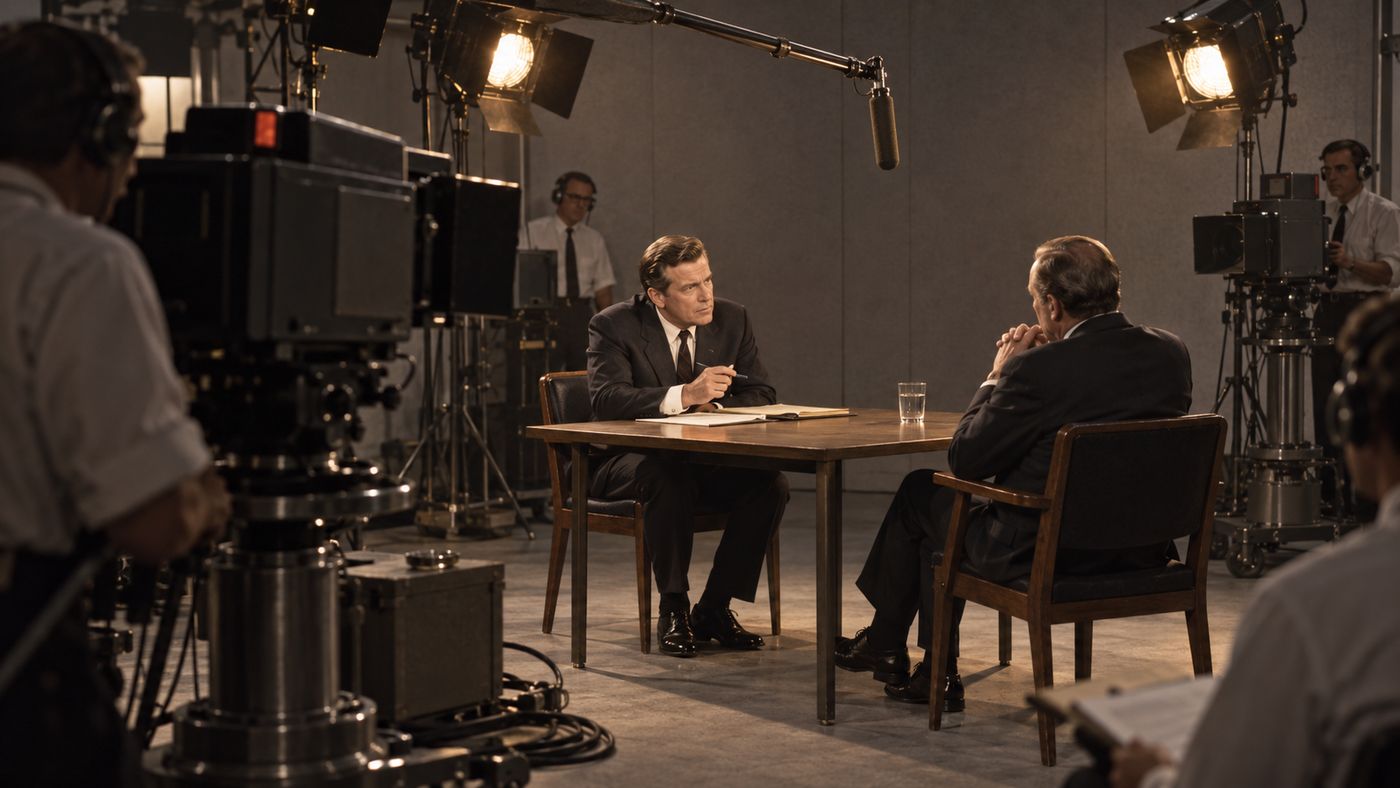
On September 24, 1968, CBS premiered 60 Minutes — a television news magazine created by producer Don Hewitt that combined investigative journalism with the narrative and visual techniques of documentary filmmaking, hosted initially by Mike Wallace and Harry Reasoner. The show was not an immediate ratings success; it struggled in its early seasons and was nearly canceled before finding its audience in the early 1970s, when it moved to the Sunday evening time slot it has occupied ever since. What distinguished 60 Minutes from the television journalism that preceded it was Hewitt's conviction that news stories, like all stories, required narrative structure, compelling characters, and the kind of confrontational tension that audiences had previously associated with entertainment programming rather than journalism. Mike Wallace's interviews — in which corporate executives, politicians, and public figures were presented with evidence of their conduct and asked to respond on camera — became one of the most effective tools in American investigative journalism.
60 Minutes became, in the 1970s and 1980s, the most watched program on American television — the first news program ever to top the Nielsen ratings — and it maintained that audience through stories that shaped public understanding of some of the era's most significant issues: the tobacco industry's concealment of its own research on cancer, corporate malfeasance, government failures, and the occasional human-interest story that showed viewers something about the world they had not known was there. The show's ticking stopwatch opening — its most recognized visual element — became synonymous in American culture with the arrival of accountability journalism: the sound of time running out for whoever was about to be interviewed. 60 Minutes is still in production, more than fifty-five years after its September 24, 1968 debut, making it the longest-running prime-time television news program in American history. The format Hewitt created on that first night — the correspondent, the subject, the camera, and the question that could not be avoided — has never been improved upon.