The World's Game Comes to America
This afternoon, at approximately 1 p.m. ET, the opening ceremony of the 2026 FIFA World Cup begins at the Estadio Azteca in Mexico City — and the planet, more or less, stops to watch. Forty-eight nations. Sixteen host cities across three countries. An estimated five billion viewers worldwide. The tournament that Jules Rimet dreamed into existence in 1930 with thirteen teams and a two-week boat ride from Europe has grown into the single largest sporting event in human history, and today it opens in its grandest form yet. When Mexico and South Africa kick off at 3 p.m. ET inside an 87,500-seat stadium draped in papel picado, it will mark the beginning of 39 days of football that will be remembered long after the final whistle blows on July 19.
From a Montevideo Boat Trip to Three Nations
The first FIFA World Cup was held in Uruguay in July 1930, born of a disagreement between FIFA and the International Olympic Committee over the status of amateur players that led football to be dropped from the 1932 Los Angeles Olympics. FIFA president Jules Rimet responded by organizing his own global tournament. The problem: getting anyone to show up. European nations, battered by the Great Depression and facing a two-week ocean crossing, largely refused the invitation. Rimet personally lobbied France, Belgium, Romania, and Yugoslavia to make the journey. Thirteen teams ultimately competed; Uruguay won on home soil before a crowd of 68,000. The trophy Rimet handed over that day was an Art Deco gold statuette that would be hidden from the Nazis in a shoebox during World War II, stolen in London before the 1966 tournament and recovered by a dog named Pickles, and stolen again in Brazil in 1983 — never to be found. The World Cup has never lacked for drama.
From 13 teams in Montevideo the tournament grew to 16, then 24, then 32 — and today, for the first time, to 48. The 2026 edition is the first World Cup co-hosted by three nations and the first ever to stage three separate opening ceremonies, one in each host country. Mexico City's ceremony at the Azteca today features Shakira and Burna Boy performing the official tournament song, Dai Dai, alongside J Balvin, Maná, and Tyla. Toronto follows on June 12 before Canada's first-ever home World Cup match. Later that same day, Los Angeles hosts a ceremony at SoFi Stadium ahead of the United States' opener against Paraguay. The Azteca itself makes history today as the only stadium ever to host World Cup matches across three separate tournaments — it staged the 1970 and 1986 finals, and now opens the 2026 competition. Defending champion Argentina arrives with Lionel Messi seeking an unprecedented back-to-back title. Cristiano Ronaldo, 41, takes what almost certainly will be his final shot at the only major trophy that has eluded him. The conversation about who is the greatest player in the history of the game may be settled, one way or another, before July is out.
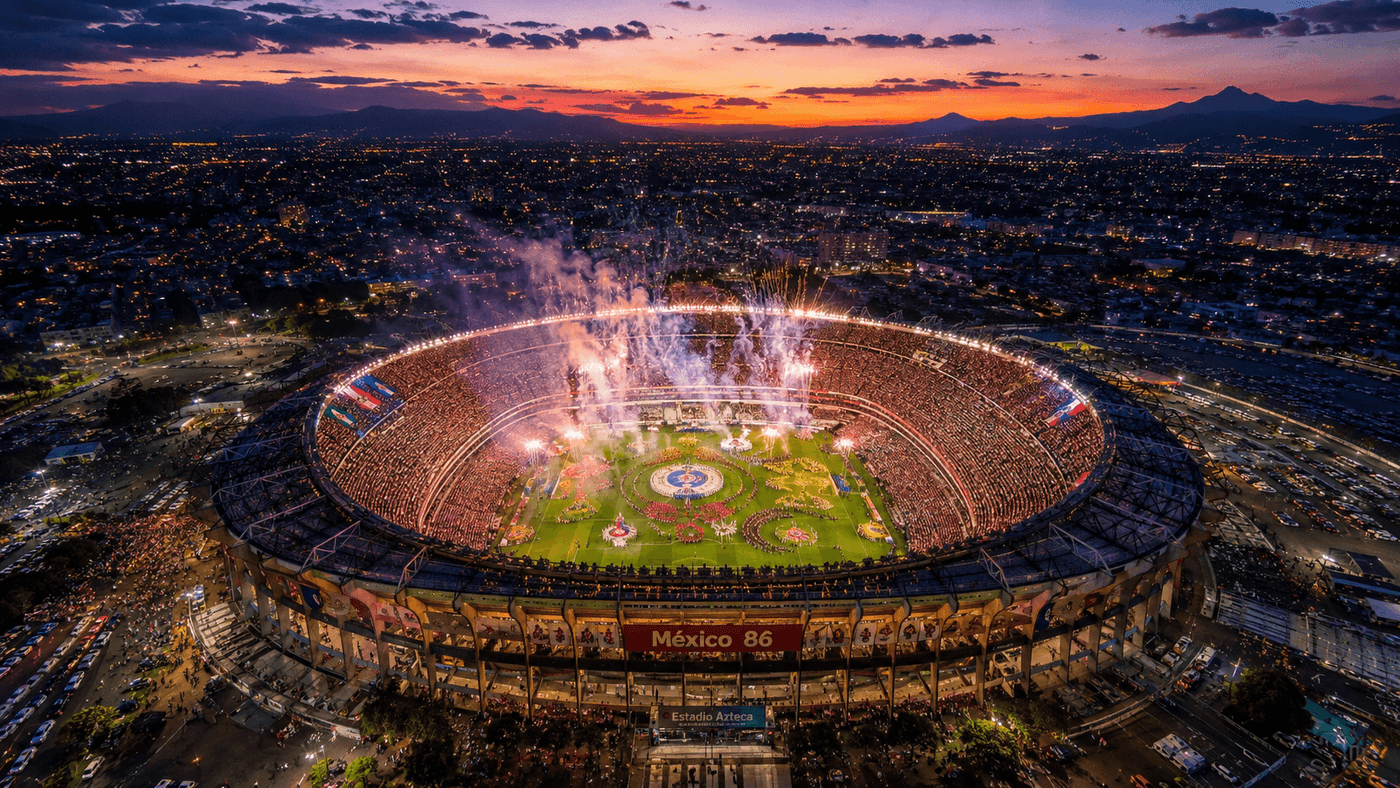
Today's opening match carries its own quiet poetry: Mexico vs. South Africa is a rematch of the 2010 World Cup opener, the tournament that made football history as the first held on African soil. Mexico City declared June 11 a public holiday, schools closed, employers encouraged to let workers watch from home. Kansas City, one of eleven American host cities, will host its first World Cup match in the days ahead — one of 104 games in all that will be played before a champion is crowned. Jules Rimet sailed for Montevideo 96 years ago with four European teams, a handmade trophy, and an idea. Today, five billion people are watching what that idea became.