The Doctor, the Senator, and Five Years of Reckoning
Anthony Fauci did not want to be here. In June, when Senator Rand Paul issued a subpoena compelling his appearance before the Senate Homeland Security and Governmental Affairs Committee, Fauci's lawyers wrote back that the request "arises within a context that cannot be ignored — the context of repeated public and absolutely baseless pronouncements by you, a sitting United States Senator," noting Paul's repeated public suggestions that Fauci should face criminal prosecution. Fauci is 85 years old, retired from federal service since 2022, and has already given extensive congressional testimony — including a closed-door session in 2024 where he told House investigators the government did not fund gain-of-function research under the relevant regulatory definition. He is here anyway. The hearing begins at 8:30 a.m. ET this morning in Washington, with Rand Paul in the chairman's seat and more than 1,000 pages of Fauci's private pandemic diaries — released by Paul's office over the weekend — already parsed by reporters, politicians, and a public that has never stopped arguing about what happened in 2020.
What the Diary Says — and What It Doesn't
The 1,141-page package released by Paul's office covers Fauci's near-daily notes from roughly December 2019 through December 2022 — the full arc of his most consequential years in public life. What has emerged from the reporting on those pages is a portrait of a man who was simultaneously managing a genuine public health emergency and navigating the peculiar pressures of celebrity during a crisis: privately complaining about Trump's "rambling," tracking his own media appearances with evident satisfaction, and wrestling in real time with the scientific uncertainties that he was simultaneously projecting confidence about in public. Paul has framed the diaries as proof that "what Fauci wrote privately and what he told the country are two different stories." Independent analysis of the released documents has been more measured. The diaries offer no proof that the pandemic originated from a lab or that Fauci worked to cover anything up, according to STAT News — the publication that has covered the COVID origins debate more rigorously than almost any other outlet. What they do reveal is the human texture of a bureaucrat under enormous pressure: the vanity, the irritation, the uncertainty, the exhaustion. Whether that human texture amounts to misconduct is the question the hearing is designed to answer — or, depending on one's view of Rand Paul's intentions, to perform.
The historical context in which today's hearing takes place is striking. The COVID-19 pandemic killed more than one million Americans — more than any conflict since the Civil War — and infected hundreds of millions worldwide. It remade the global economy, accelerated the shift to remote work, exposed the fragility of supply chains that had been optimized for efficiency rather than resilience, and produced, in the space of eleven months, the fastest vaccine development in human history. The mRNA vaccines developed by Moderna and Pfizer-BioNTech drew on decades of foundational research funded largely by the National Institutes of Health — the agency Fauci led for 38 years. The debate about COVID's origins — natural spillover from animals to humans, or a leak from the Wuhan Institute of Virology — remains, despite years of investigation by the FBI, the Department of Energy, and multiple congressional committees, genuinely unresolved. The FBI and Department of Energy have assessed, with low to moderate confidence, that a lab leak is the more likely origin. The CIA and other intelligence agencies have assessed the opposite, or assessed themselves unable to determine the answer. No smoking gun has been produced by any investigation, including this one. What Paul believes the diaries add to that picture, and what Fauci says they actually show, will be the substance of this morning's hearing.
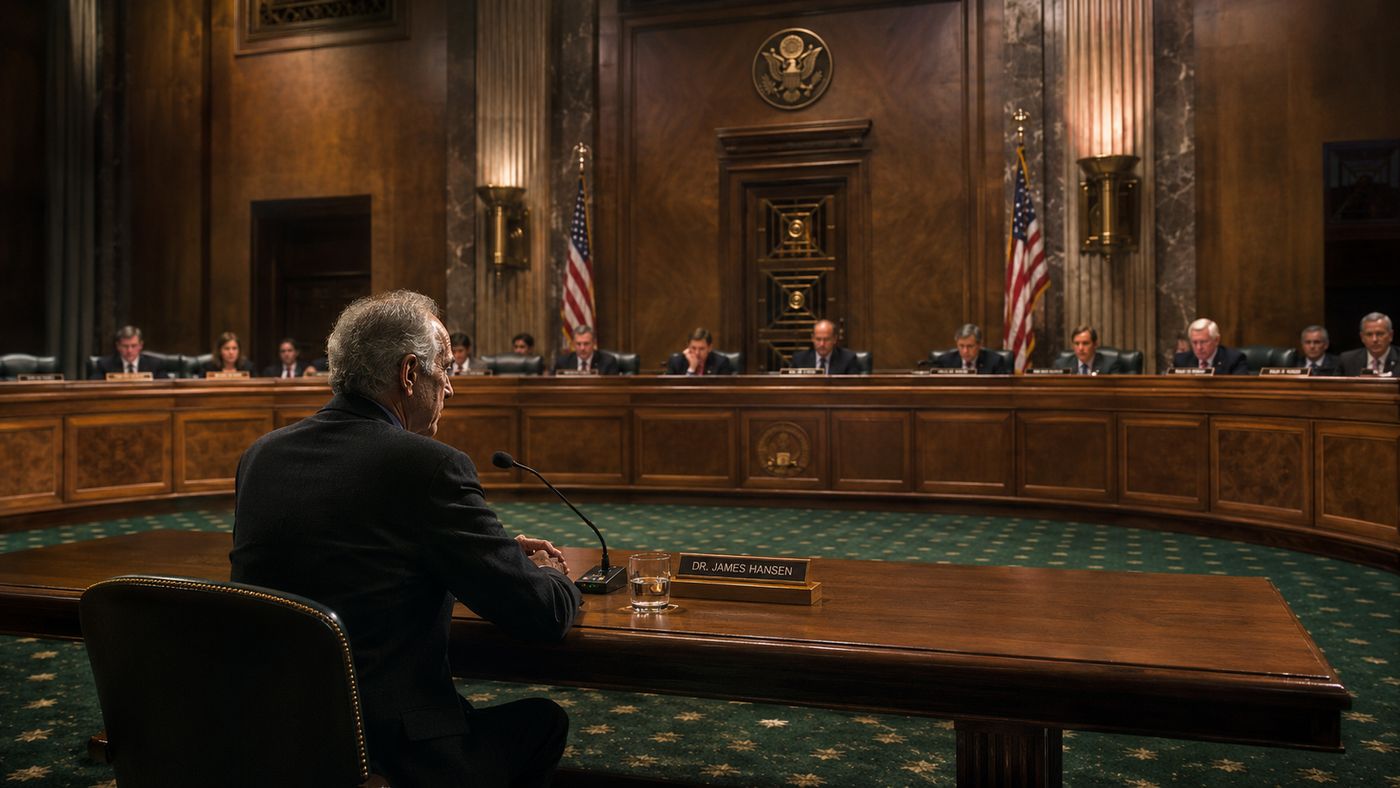
The broader reckoning with the pandemic era is still very much in progress. It is a peculiarity of this particular moment in history that today's hearing is happening while an active war — the Iran conflict, now in its sixth month — is simultaneously unfolding, while a ceasefire that was signed in June has collapsed, and while the memory of COVID-era supply chain disruptions has been revived by the disruption to global oil supplies through the Strait of Hormuz. The pandemic revealed the vulnerabilities of an interconnected world; the current geopolitical moment is stress-testing those same vulnerabilities in different ways. Fauci, for his part, has said that he has nothing to hide and that the diary entries will be seen in their proper context when the full picture is understood. "I have always acted in the best interest of public health," he told reporters last week. The hearing will determine, at least in the political sense, whether that assessment survives contact with Rand Paul for what may be the final time. Coverage begins on C-SPAN and major news networks at 8:30 a.m. ET.