The Attack That Silenced a Celebration
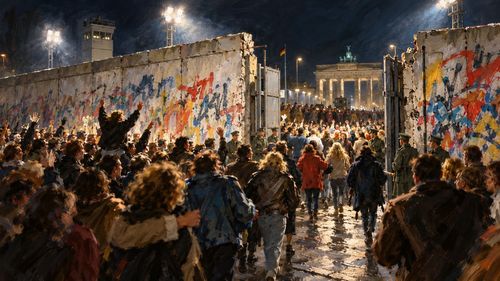
On Saturday evening, near the Brandenburg Gate, hundreds of thousands of people were celebrating Berlin's Christopher Street Day — Germany's largest annual Pride festival, drawing an estimated 500,000 attendees to the city's streets and parks. At approximately 10 p.m. local time, a rented van was driven into the crowd near the festival's closing party, killing one woman and injuring 29 others. A daylong manhunt ended on Sunday when the suspect, identified by German Interior Minister Alexander Dobrindt as 21-year-old Abdul Ballout, was located in an allotment garden complex in the Spandau district of Berlin. When police approached, Ballout reportedly charged at officers with a bladed weapon; members of Berlin's special police unit opened fire and he died at the scene. The attack is being investigated as a likely Islamist terror attack. The suspect had previously been sentenced to 22 months in prison for posting Islamic State propaganda on his Instagram account in 2024, was released on probation while prosecutors appealed for a longer non-probationary sentence, and had his home searched by police as recently as July 3 on suspicion of weapons offenses. Yesterday afternoon, hundreds of Berliners gathered at the Brandenburg Gate — placing flowers, rainbow flags, candles, and handwritten signs. One read: "the only thing more powerful than hate is love."
What Christopher Street Day Means — and Why It Was Targeted
Christopher Street Day — known by its initials CSD — takes its name from Christopher Street in New York City's Greenwich Village, where the Stonewall Inn uprising of June 28, 1969 became the defining moment of the modern LGBTQ+ rights movement. When patrons of the Stonewall Inn resisted a police raid in the early hours of that morning, the six days of protests that followed crystallized a community and launched a global movement that spread across the Atlantic. Berlin held its first Christopher Street Day parade in 1979, just ten years after Stonewall, at a moment when West Germany was still processing the legacy of Paragraph 175 — the law criminalizing homosexuality that had survived from the Prussian imperial era through the Nazi period and into the Federal Republic, not being fully repealed until 1994. Berlin's CSD became Europe's second-largest Pride event and one of the most significant demonstrations of LGBTQ+ visibility in the world. The city that had once imprisoned people for their sexual identity had transformed, across half a century, into one of the most openly LGBTQ+ welcoming capitals in the world. Saturday night's attack was aimed, by Germany's own assessment, at that transformation.
It is not the first time Germany has faced a vehicle attack on a public crowd. On December 19, 2016, a truck was driven into the Christmas market at Breitscheidplatz in Berlin, killing 12 people and injuring 56 in an attack claimed by the Islamic State. That attack prompted sweeping security changes across Germany's public event infrastructure — concrete barriers, reinforced perimeters, enhanced crowd-flow management — changes that have been credited with preventing worse outcomes in subsequent incidents. Germany has also faced the particular difficulty of prosecuting individuals for material support for extremist groups, a legal challenge that Saturday's attack has thrown into sharp relief: Ballout was known to authorities, sentenced, and released while his case was still being contested by prosecutors who wanted a longer custodial sentence. Interior Minister Dobrindt called directly for a review of Germany's laws governing the detention of individuals with demonstrated extremist ties. "Don't let yourselves be intimidated," he told Germany's LGBTQ+ community on Sunday. "These acts have only one purpose: They aim to divide our society."
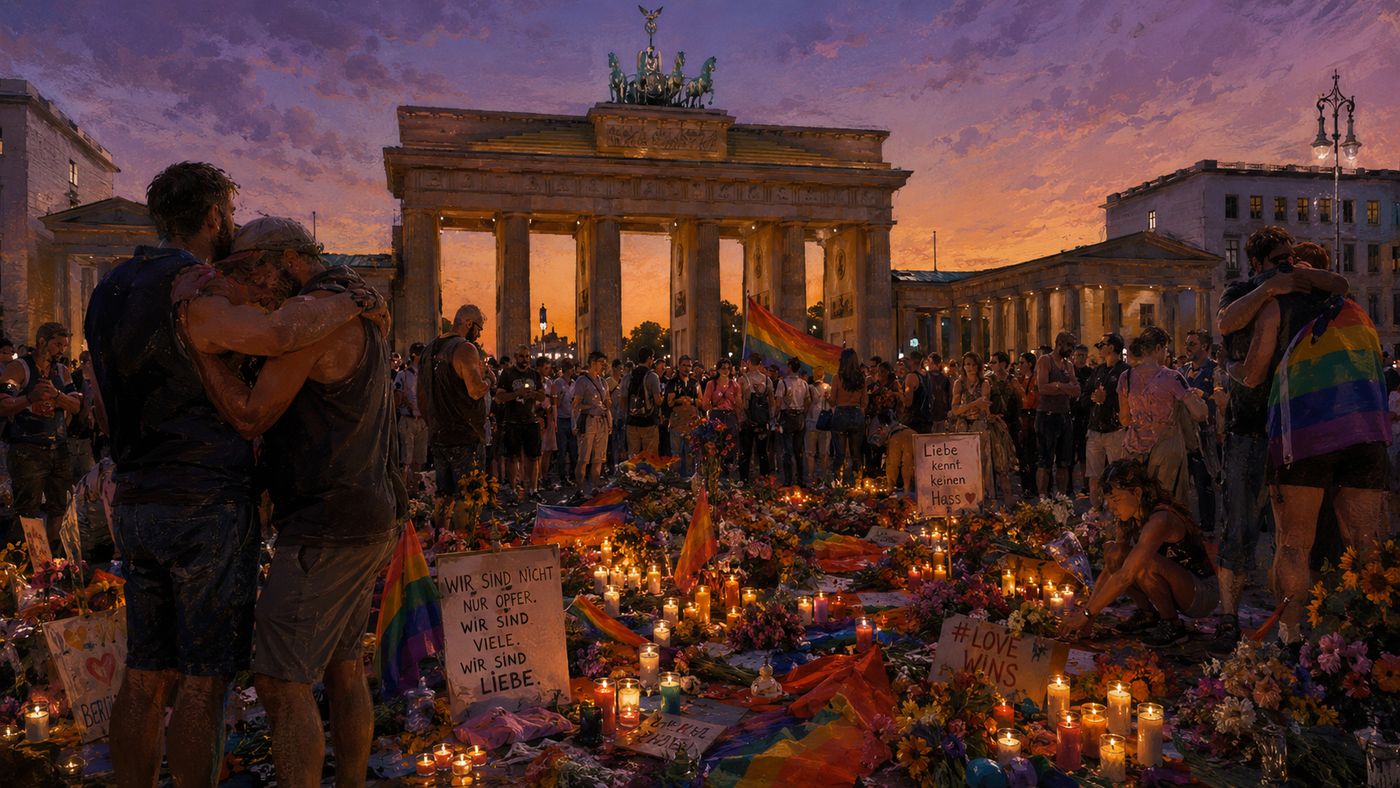
The history of LGBTQ+ rights in Germany is one of the 20th century's most dramatic moral arcs — from Paragraph 175's criminalization, through the Nazi persecution that sent an estimated 100,000 gay men to prison and as many as 15,000 to concentration camps, through the post-war silence and slow partial reform, to the full legal equality of the 21st century and Berlin's emergence as one of the world's great LGBTQ+ cities. Christopher Street Day was born out of that history — a refusal to be invisible, held each summer in the streets of a city that had once made visibility dangerous. The people who gathered at the Brandenburg Gate on Sunday, laying their flowers in the July heat, understood that history. "It's a dark day for the community," Julian Miethig, who had been at the festival when the attack happened, told the Associated Press. "But we will be back." The investigation continues. The questions about how a known suspect remained free to commit this attack will occupy German courts and politicians for months. What is already certain is that the community he targeted will not disappear from the streets of Berlin — or from any street in the world where people gather, as they have gathered every June and July since 1969, to be seen.