August 9: A Book About Living, a Bomb Over Nagasaki, and a Guitar Falls Silent
August 9 holds one of the calendar's more quietly devastating contrasts. In 1854, a book appeared in Boston bookstores that asked what it would mean to live slowly, intentionally, and in genuine contact with the natural world — a question that mid-nineteenth-century American materialism had made urgent and that twenty-first-century life has made more urgent still. Ninety-one years later, on the same date, the United States dropped a second atomic bomb on Japan, this time on Nagasaki, killing tens of thousands of people and completing the pair of strikes that ended the Second World War and opened the nuclear age. And in 1995, the guitarist who had spent thirty years leading one of American music's most devoted communities of listeners died in a rehabilitation facility in California, leaving behind a following that had no center to gather around and a music that had always resisted the idea of endings. Three August ninths. Three very different answers to the question of how a life ought to be spent.
Walden
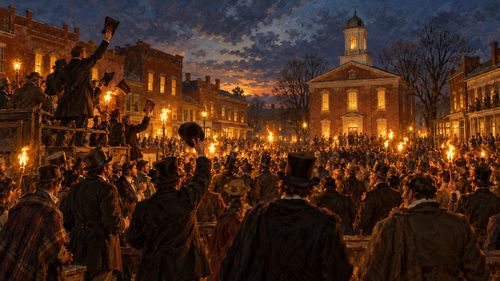
On August 9, 1854, Ticknor and Fields of Boston published Walden; or, Life in the Woods by Henry David Thoreau — a book that had been seven years in the making, eight drafts deep, and was based on the two years and two months Thoreau had spent living in a small cabin he built himself on the shore of Walden Pond near Concord, Massachusetts, beginning in July 1845. The experiment had been deliberate: Thoreau wanted to strip his life down to essentials, to "live deliberately," as he wrote in the book's most famous passage, and to discover what he actually needed and what had merely been imposed on him by the habits and expectations of the society around him. What he found, and what he recorded with a precision and humor that his reputation for solemnity has sometimes obscured, was that a great deal of what people believed they needed turned out to be optional — and that the optional things were costing them something irreplaceable.
Walden sold modestly in its time — the first edition of 2,000 copies took five years to sell out — and Thoreau died in 1862, at the age of forty-four, without knowing that the book would outlast virtually everything else produced by the American literary culture of his era. It has since become one of the most widely read works in the American canon, taught in high schools and universities and read by people who have never taken a class in literature, because the questions it asks are the ones that economic growth and technological acceleration keep making more rather than less urgent: What do you actually need? What are you trading your time for? What would it mean to pay attention to where you are? The cabin Thoreau built at Walden Pond was modest enough that he was able to carry the lumber himself. The book he wrote there has been in print for more than 170 years.

11:02 A.M.
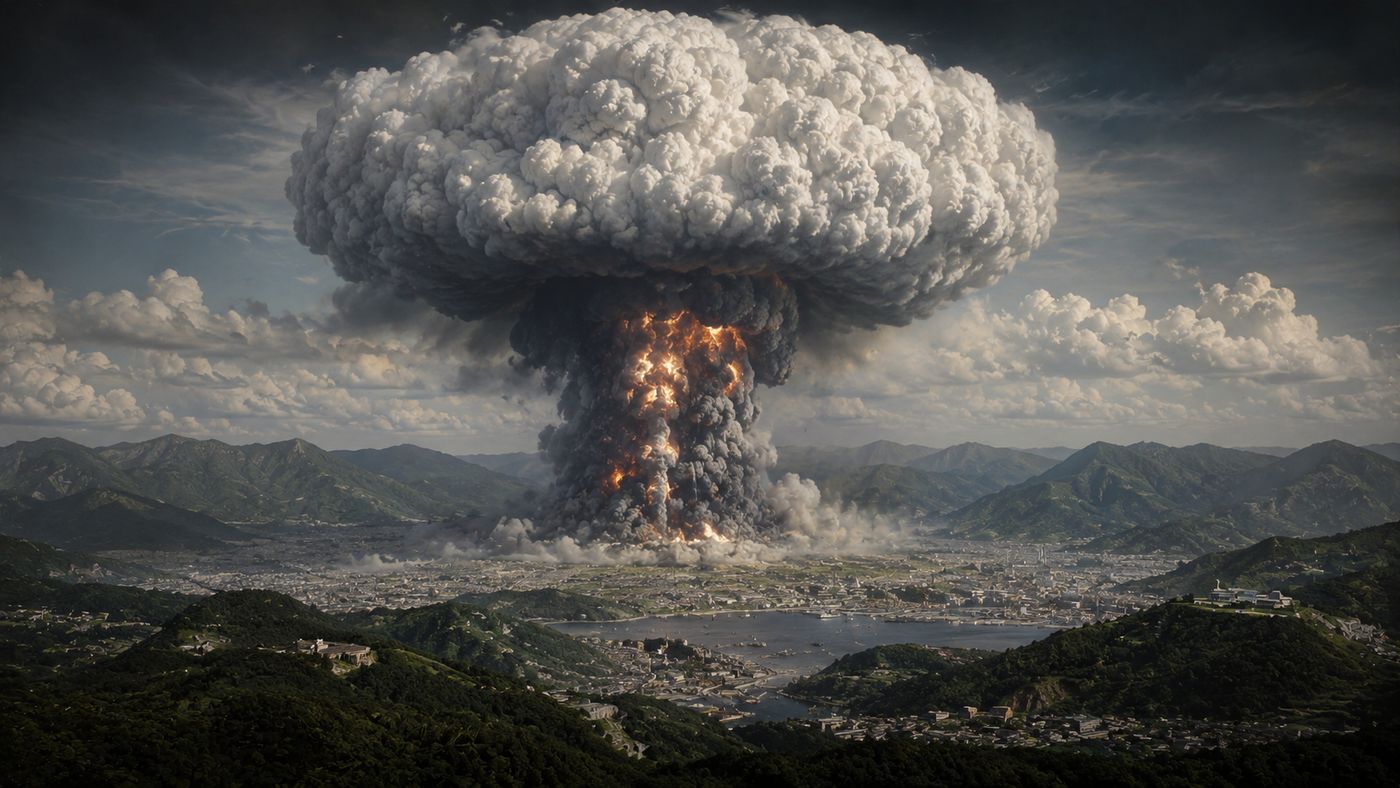
At 11:02 in the morning on August 9, 1945 — three days after the Hiroshima bombing — the B-29 bomber Bockscar, piloted by Major Charles Sweeney, released a plutonium bomb code-named Fat Man over the city of Nagasaki, Japan. The bomb detonated with a force equivalent to approximately 21,000 tons of TNT, more powerful than the Hiroshima device, but the geography of Nagasaki — a city set in a series of narrow valleys — contained the blast in ways that Hiroshima's flat terrain had not, limiting though not reducing the devastation. An estimated 40,000 people were killed immediately; approximately 70,000 had died by the end of 1945 from the combined effects of the blast, fire, and radiation. Nagasaki had not been the primary target for August 9: the city of Kokura had been designated first, but heavy cloud cover over Kokura caused the crew to divert to their secondary target.
Japan announced its intention to surrender on August 15, 1945, six days after the Nagasaki bombing and following the Soviet Union's declaration of war against Japan on August 8. The formal surrender was signed on September 2, aboard the USS Missouri in Tokyo Bay, ending the Second World War. The two atomic bombings and the question of whether they were necessary to achieve Japan's surrender — or whether the threat of the Soviet entry into the Pacific war might have been sufficient — have been debated by historians ever since without resolution. What is not in dispute is the scale of the destruction in both cities, the nature of the suffering caused by radiation sickness and burn injuries in the weeks and months that followed, or the magnitude of the precedent set by the use of nuclear weapons in warfare. Nagasaki remains, as of this writing, the last city in history to have been struck by a nuclear weapon used in combat. That record stands not because the weapons were destroyed, but because they were not used again. So far.
The Road Ends
On August 9, 1995, Jerry Garcia died of a heart attack at the Serenity Knolls drug rehabilitation facility in Forest Knolls, California. He was fifty-three years old. Garcia had been the lead guitarist, vocalist, and spiritual center of the Grateful Dead since the band's formation in San Francisco in 1965, and had spent three decades building one of the most unusual phenomena in American music history: a band with a devoted following — the Deadheads — who attended hundreds, sometimes thousands, of concerts over the course of a lifetime, following the band across the country on tours that functioned as something between a concert circuit and a traveling community. The Grateful Dead were not the most commercially successful band of their era, but they were perhaps the most durably present: a continuous, improvising musical organism that treated each performance as a unique event, never playing the same set twice, and that sustained itself on the loyalty of an audience that the mainstream music industry had largely given up trying to understand.
Garcia's death on August 9, 1995, effectively ended the Grateful Dead — the band announced it would not continue without him, and though various reunion projects and offshoots have maintained aspects of the tradition in the decades since, the original entity ceased on the day he died. The grief among Deadheads was genuine and widespread, carrying the particular intensity of mourning for someone whose music had been the organizing principle of a community rather than simply an entertainment. Garcia himself had spent his final years struggling with heroin addiction and deteriorating health, a dimension of his life that the Deadhead community had long known about and responded to with a complexity that reflected the band's own complicated relationship with the counterculture and its costs. He left behind an enormous musical archive — the Grateful Dead recorded nearly every performance — and a community of listeners that, thirty years after his death, has not entirely dispersed. The road the Grateful Dead traveled for thirty years ended on August 9, 1995. The music they made on it has never quite stopped playing.