August 6: The Bomb, the Boy from Pittsburgh, and the Chair
August 6 carries more weight than almost any date in the twentieth century's second half. In 1945, a single bomb dropped from a single aircraft over a single city killed tens of thousands of people in an instant and announced, to a world that had not yet absorbed what nuclear weapons actually meant, that the age of total war had reached its logical and terrifying terminus. Fifty-five years before that, in a state prison in upstate New York, a man convicted of murder became the first human being executed by electric chair — a technology that its advocates had promised would be more humane than hanging, and that its first application immediately complicated that claim. And in 1928, in a Pittsburgh immigrant household, the youngest son of a Slovak coal miner and his seamstress wife was born — a sickly, shy child who would grow up to become the most influential American artist of the postwar era. Three August sixths. Three moments that could not be undone.
8:15 A.M.
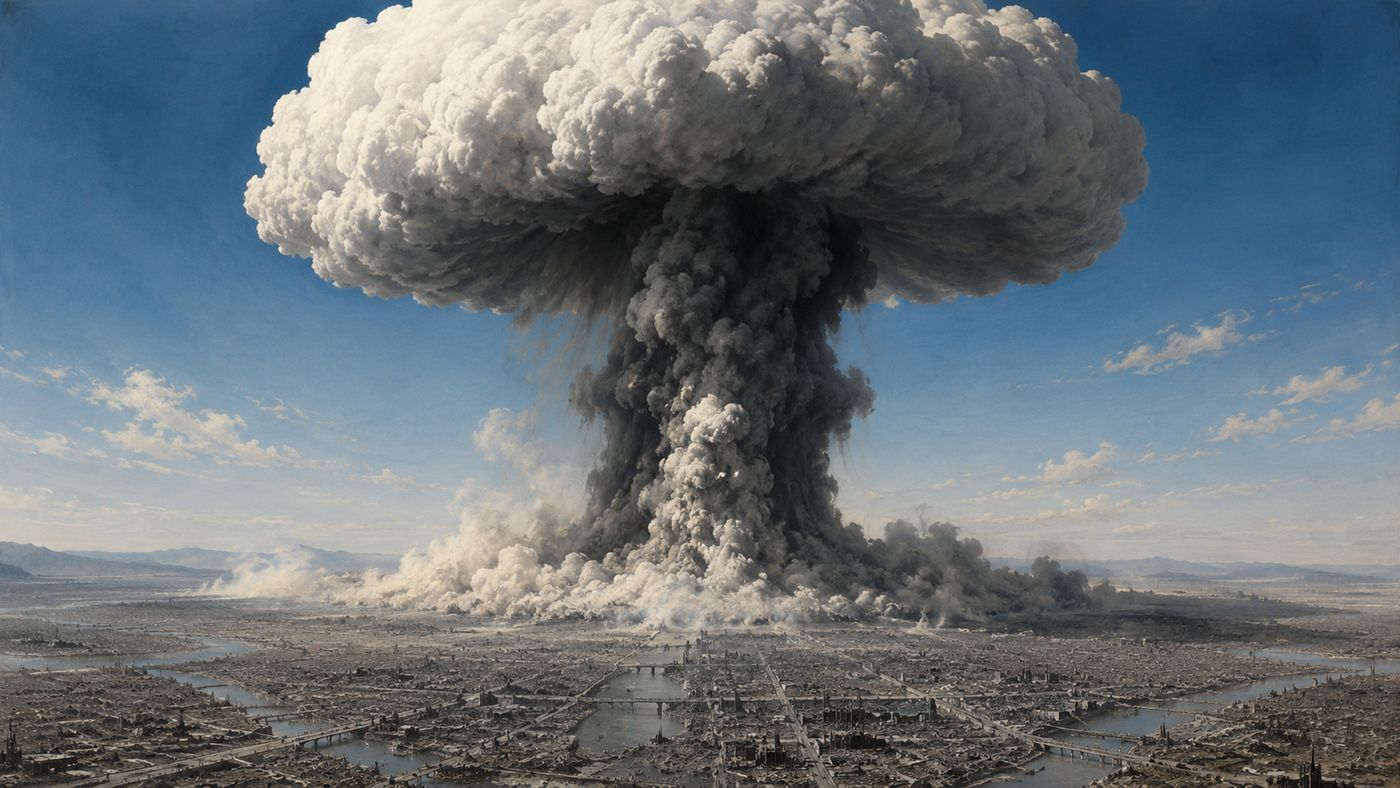
At 8:15 in the morning on August 6, 1945, the B-29 bomber Enola Gay, piloted by Colonel Paul Tibbets and named for his mother, released a uranium-235 bomb code-named Little Boy over the city of Hiroshima, Japan. The bomb detonated approximately 1,900 feet above the city, directly over a surgical clinic near the center of town, with an explosive force equivalent to approximately 15,000 tons of TNT. The fireball that resulted reached temperatures hotter than the surface of the sun. The shockwave that followed flattened nearly everything within a mile of the hypocenter. An estimated 70,000 to 80,000 people died in the initial blast and fires; an equal number or more died in the following weeks and months from radiation sickness, burns, and injuries. Hiroshima, a city of approximately 350,000 people, had been essentially erased from the map in a fraction of a second.
The bombing of Hiroshima on August 6, 1945, was followed three days later by a second atomic bomb dropped on Nagasaki, and Japan's formal surrender on August 15, ending the Second World War. The decision to use the bombs has been debated ever since — by historians who have weighed the projected casualty figures from an invasion of the Japanese home islands against the actual deaths caused by the bombings, by ethicists who have challenged the moral legitimacy of targeting civilian populations, and by Japanese survivors, known as hibakusha, whose testimony has shaped public understanding of what nuclear weapons actually do to human bodies. The bombs ended the war. They also inaugurated the nuclear age — a period of deterrence, proliferation, and the permanent possibility of civilizational annihilation that the world has been living with ever since. Hiroshima Peace Memorial Park was established at the hypocenter of the blast in 1954. Each year on August 6, a ceremony is held there at 8:15 in the morning, and a bell rings.
Pittsburgh, 1928
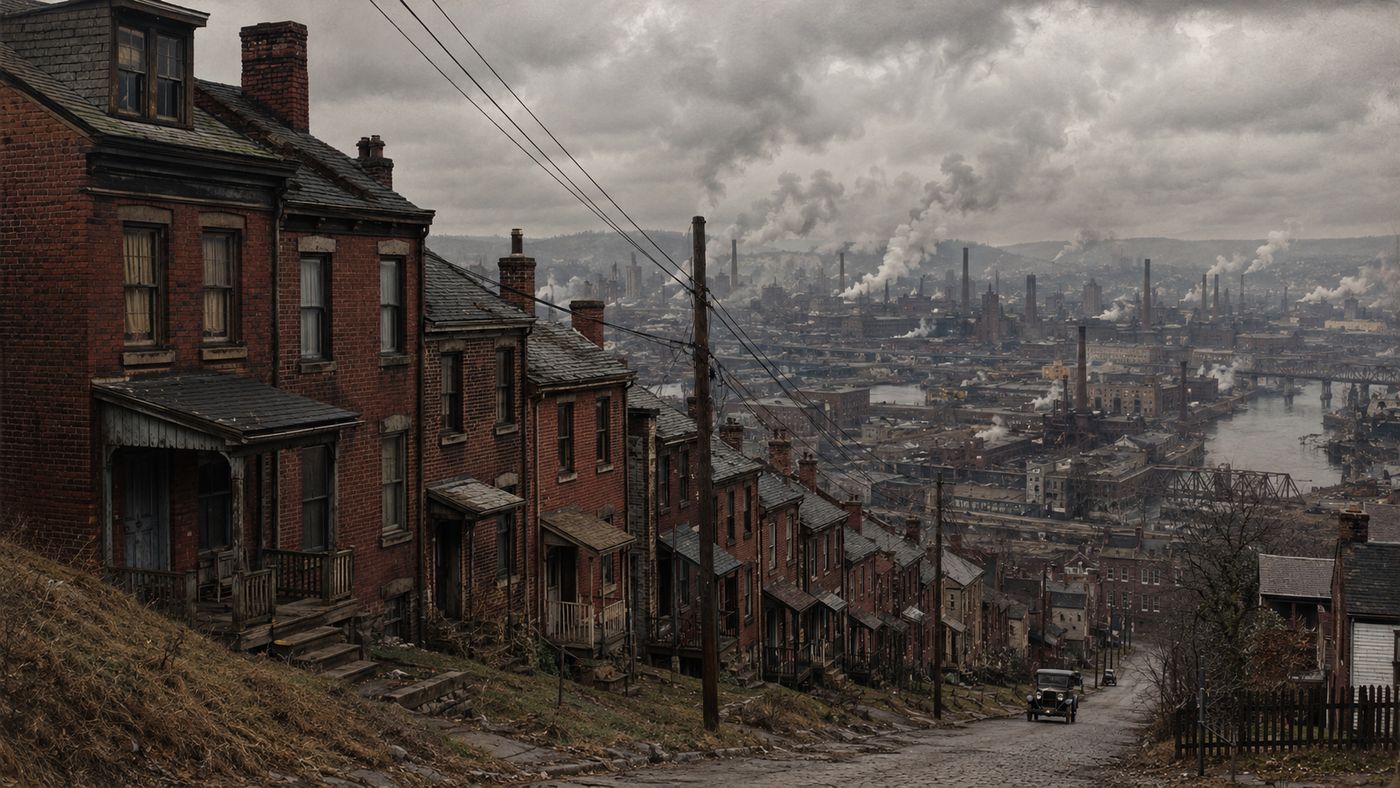
On August 6, 1928, Andrew Warhola was born in Pittsburgh, Pennsylvania, the third son of Andrej and Julia Warhola, Slovak immigrants who had arrived in the United States in the early years of the century. His father worked in the coal mines; his mother, a deeply religious woman with artistic gifts of her own, made and sold handmade flowers from tin cans to supplement the family's income. Andrew was a sickly child who spent long stretches bedridden with a neurological condition called Sydenham's chorea, during which his mother gave him movie magazines and comic books and he began drawing obsessively, developing an eye for popular imagery that would define everything he later did. He was also profoundly shy — a quality that would never entirely leave him and that would become, paradoxically, one of the most effective elements of his public persona. He left Pittsburgh for New York in 1949 and built a successful career as a commercial illustrator before turning, in the early 1960s, to fine art.
What Andy Warhol did to American art in the 1960s and beyond was simultaneously to collapse the distinction between high and popular culture and to create a new kind of celebrity — the artist as brand, as personality, as the organizing consciousness of a scene. His Campbell's Soup Cans, his Marilyn Monroe silkscreens, his Brillo Boxes, his films, his Factory, his magazine Interview, and his observation that in the future everyone would be famous for fifteen minutes were all expressions of a single sustained argument: that the things people actually looked at and consumed in contemporary American life were as worthy of serious artistic attention as anything in a museum. He was right, and the art world has never fully recovered from the admission. Warhol died in February 1987, following complications from gallbladder surgery, at the age of fifty-eight. The boy born in a Pittsburgh row house on August 6, 1928, became one of the most reproduced artists in the world — a figure whose work is so thoroughly embedded in visual culture that it is recognizable even to people who have never heard his name.
The Current
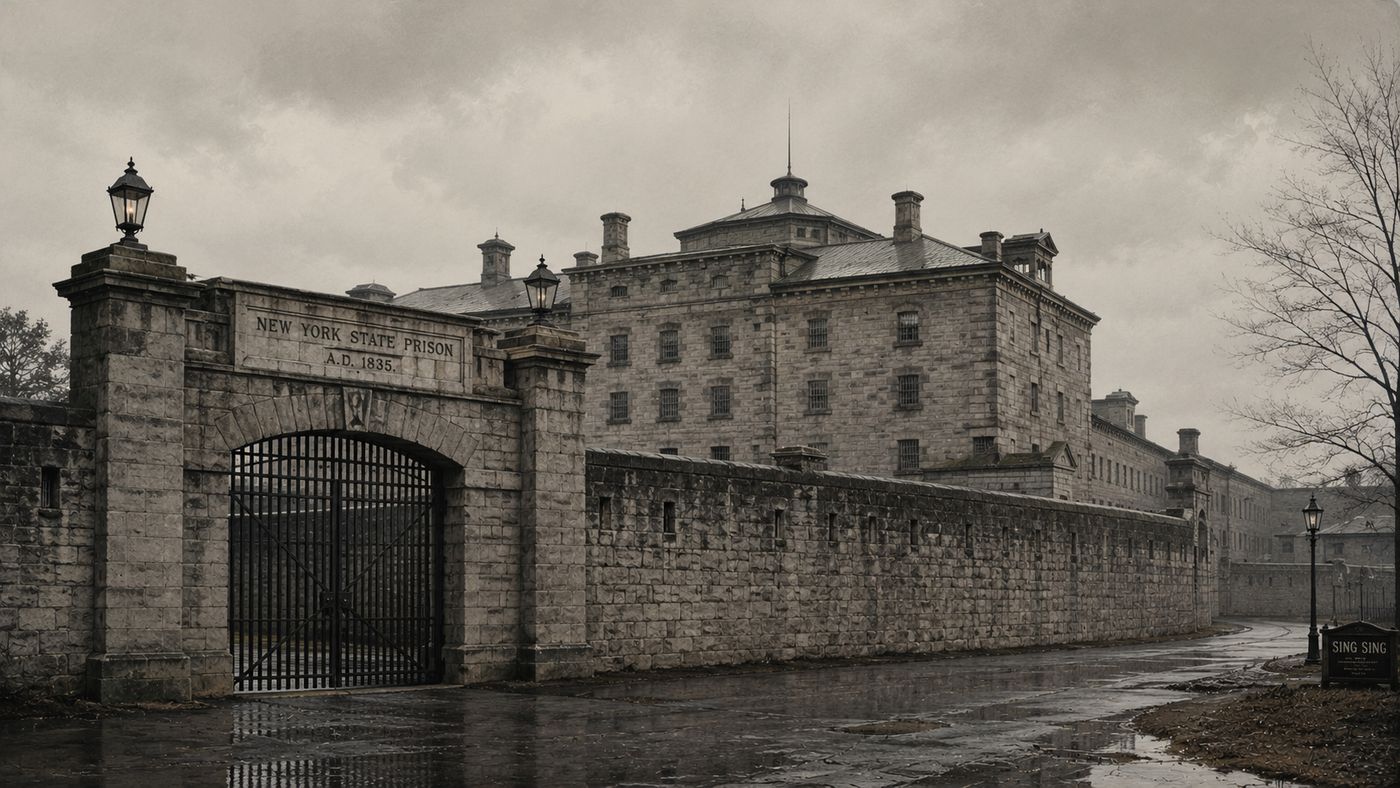
On August 6, 1890, William Kemmler was executed at Auburn Prison in New York, becoming the first person put to death by electric chair in history. Kemmler had been convicted of murdering his common-law wife, Tillie Ziegler, with an axe in 1889 in Buffalo, New York. The electric chair had been developed as an alternative to hanging, which reformers and prison officials had long criticized as unreliable — death was sometimes slow and visibly agonizing when the drop failed to break the neck cleanly. The new technology was championed by New York State officials and by Harold P. Brown and Arthur Kennelly, engineers working with Thomas Edison, who promoted alternating current — the system championed by Edison's rival George Westinghouse — as the appropriate power source for the chair, in a calculated attempt to associate Westinghouse's AC current with death and danger during the "War of Currents." Westinghouse himself opposed the use of his system for executions and refused to sell generators for the purpose; the state eventually obtained them through an intermediary.
The execution of August 6, 1890, did not go as planned. The first application of current failed to kill Kemmler, requiring a second, longer application that left witnesses horrified and the press deeply critical of the new method. George Westinghouse, upon hearing reports of the execution, remarked that they would have done better with an axe — a pointed response given the nature of Kemmler's own crime. The controversy over the first execution did not end the electric chair's use; the method was adopted by numerous states over the following decades and remained the primary form of execution in the United States for much of the twentieth century. It has since been largely displaced by lethal injection, though a small number of states retain it as an option. The execution on August 6, 1890, had promised to make capital punishment more scientific and humane — and managed, in its first application, to complicate both claims simultaneously.