August 18: A Colony Vanishes, a Coup Fails, and a River Takes Everything
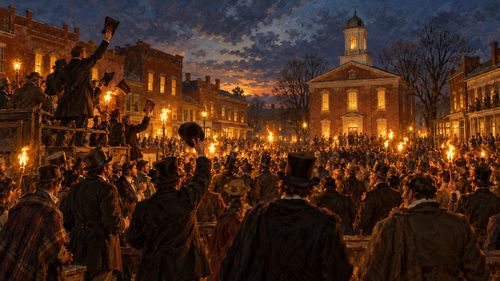
August 18 is a day for things that were there and then weren't. In 1590, a governor returned to an island off the North Carolina coast to find the colony he had left three years earlier entirely gone — 115 people, including his own daughter and granddaughter, vanished without explanation and leaving behind only two carved words that have never been definitively interpreted. In 1991, a group of Soviet hardliners placed their president under house arrest and declared a state of emergency, attempting to reverse the reforms that were loosening the Soviet Union's grip on itself — and failed so completely that their coup accelerated the very collapse they were trying to prevent. And in 1931, the Yangtze River in central China reached the peak of a flood that had been building for months, creating an inland sea across 180,000 square miles that would ultimately kill four million people — the deadliest natural disaster in the history of human civilization. Three August eighteenths. Three disappearances of very different kinds, each one leaving a silence that has never been entirely filled.
CROATOAN
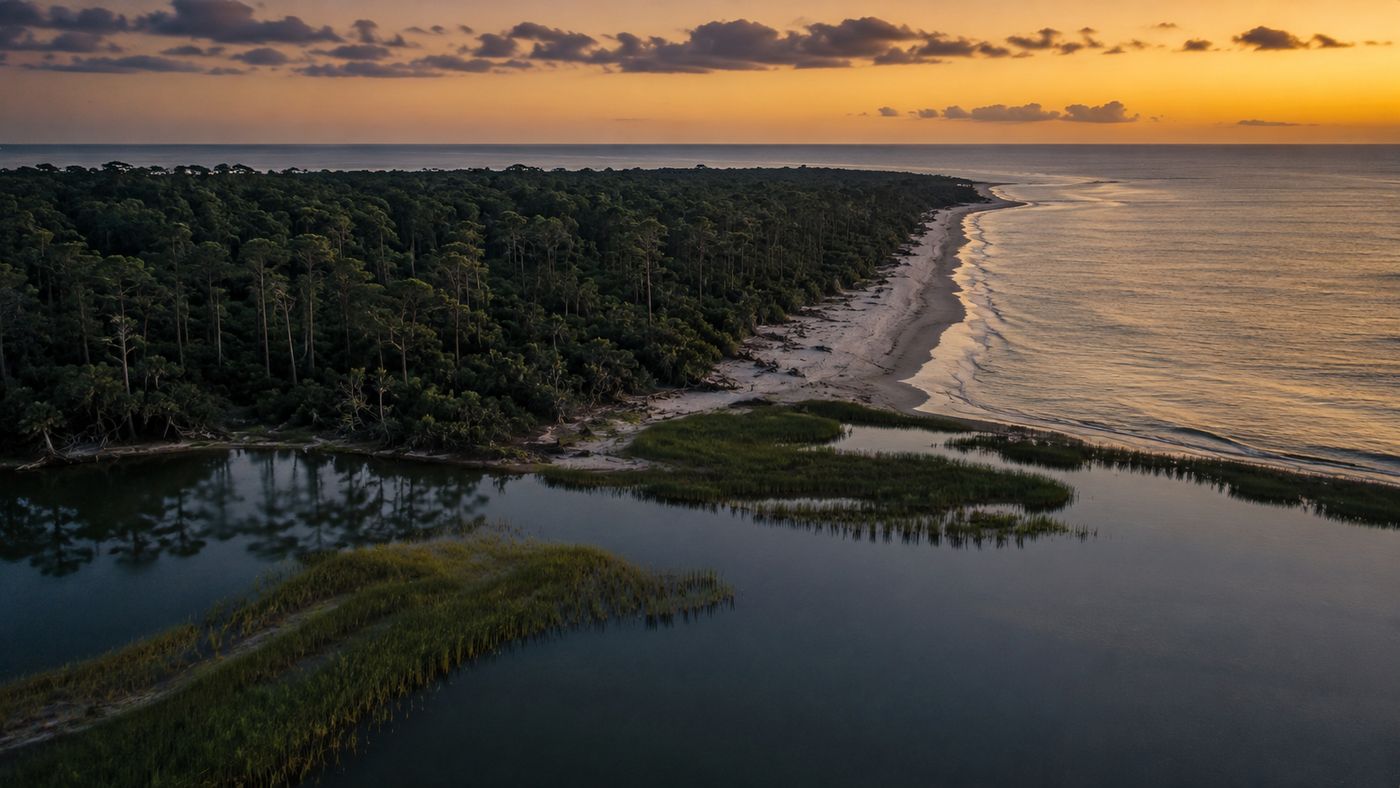
On August 18, 1590, Governor John White landed on Roanoke Island, off the coast of what is now North Carolina, to resupply the English colony he had established there three years earlier — and found it empty. The settlement of 115 men, women, and children, including White's own daughter Eleanor Dare and her infant Virginia Dare — the first English child born in the Americas — had disappeared without apparent sign of violence or catastrophe. The buildings had been dismantled rather than destroyed. On one of the fort's posts, the word "CROATOAN" had been carved; on a nearby tree, the letters "CRO." White had agreed with the colonists before departing for England in 1587 that if they were forced to relocate, they would carve their destination into a tree, and if they left under duress, they would carve a cross above it. There was no cross. What there was, was silence.
The Lost Colony of Roanoke is one of the oldest unsolved mysteries in American history — and one of the most thoroughly investigated. Croatoan was the name of a nearby island, now called Hatteras Island, home to the Croatoan people with whom the colonists had had generally positive relations. White was prevented by a storm from sailing to Croatoan to investigate; he never returned to Roanoke, and the colony's fate was never officially determined. Theories have accumulated for four centuries: that the colonists integrated with the Croatoan people, as genetic and linguistic evidence has occasionally suggested; that they attempted to sail south to the Chesapeake and were killed; that disease, starvation, or violence from other indigenous groups ended them. Archaeological investigations over the past several decades have found artifacts consistent with English colonial presence at sites on Hatteras Island and the mainland, suggesting movement and possible integration rather than sudden catastrophe. Virginia Dare, the first English-American, was one year old when her grandfather last saw her. What became of her has never been determined. The word carved into a post on Roanoke Island has been pointing toward an answer for 434 years.
The Coup That Ended the USSR
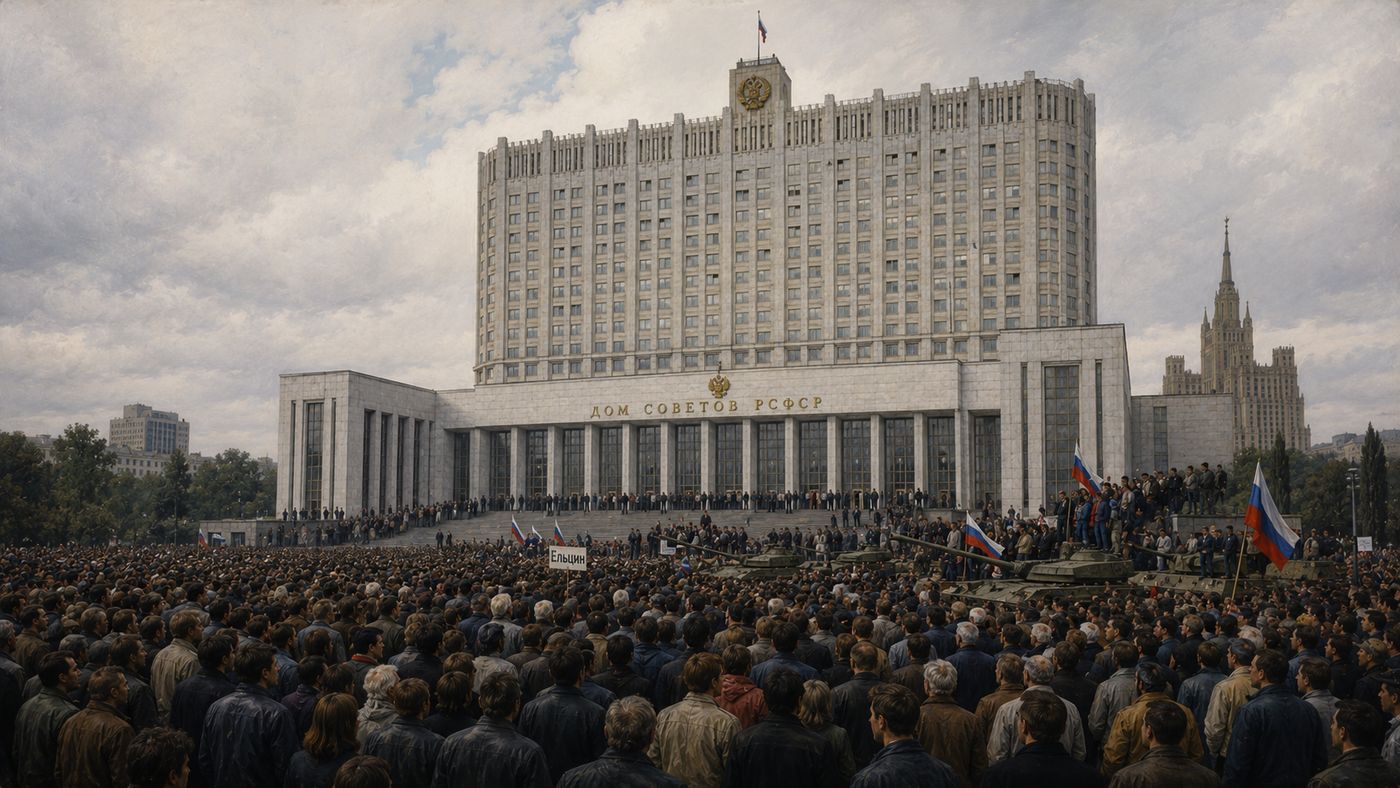
On August 18, 1991, a group of senior Soviet officials — including KGB Chairman Vladimir Kryuchkov, Defense Minister Dmitry Yazov, and Vice President Gennady Yanayev — placed President Mikhail Gorbachev under house arrest at his Crimean vacation dacha and declared a state of emergency, announcing that Gorbachev was ill and that power had been transferred to the State Committee on the State of Emergency. The coup plotters were alarmed by Gorbachev's reform program, by the accelerating demands for independence from Soviet republics, and above all by a new Union Treaty set to be signed the following day that would have dramatically reduced the central government's authority. They believed that by seizing control for a matter of days — restoring order, suspending reforms, and presenting the country with a fait accompli — they could reverse the forces pulling the Soviet Union apart. They were catastrophically wrong about almost every assumption underlying their plan.
The coup lasted seventy-two hours. Russian President Boris Yeltsin stood on a tank outside the Russian parliament building — the White House — and called on Russian citizens and soldiers to resist; his defiance became the defining image of the episode and destroyed whatever legitimacy the coup plotters had claimed. Soldiers refused to follow orders; crowds gathered to defend key buildings; the plotters, who had never secured control of Yeltsin or the communications infrastructure, found that the tools of Soviet power were no longer reliably in their hands. By August 21, the coup had collapsed, Gorbachev had returned to Moscow, and the coup leaders were under arrest. The outcome was the opposite of what the conspirators had intended: the coup attempt shattered the remaining authority of the Communist Party, accelerated the independence movements in the Soviet republics, and set in motion the formal dissolution of the Soviet Union, which was completed on December 25, 1991. The men who tried to save the USSR on August 18, 1991, ended it instead.
The Great Flood of 1931
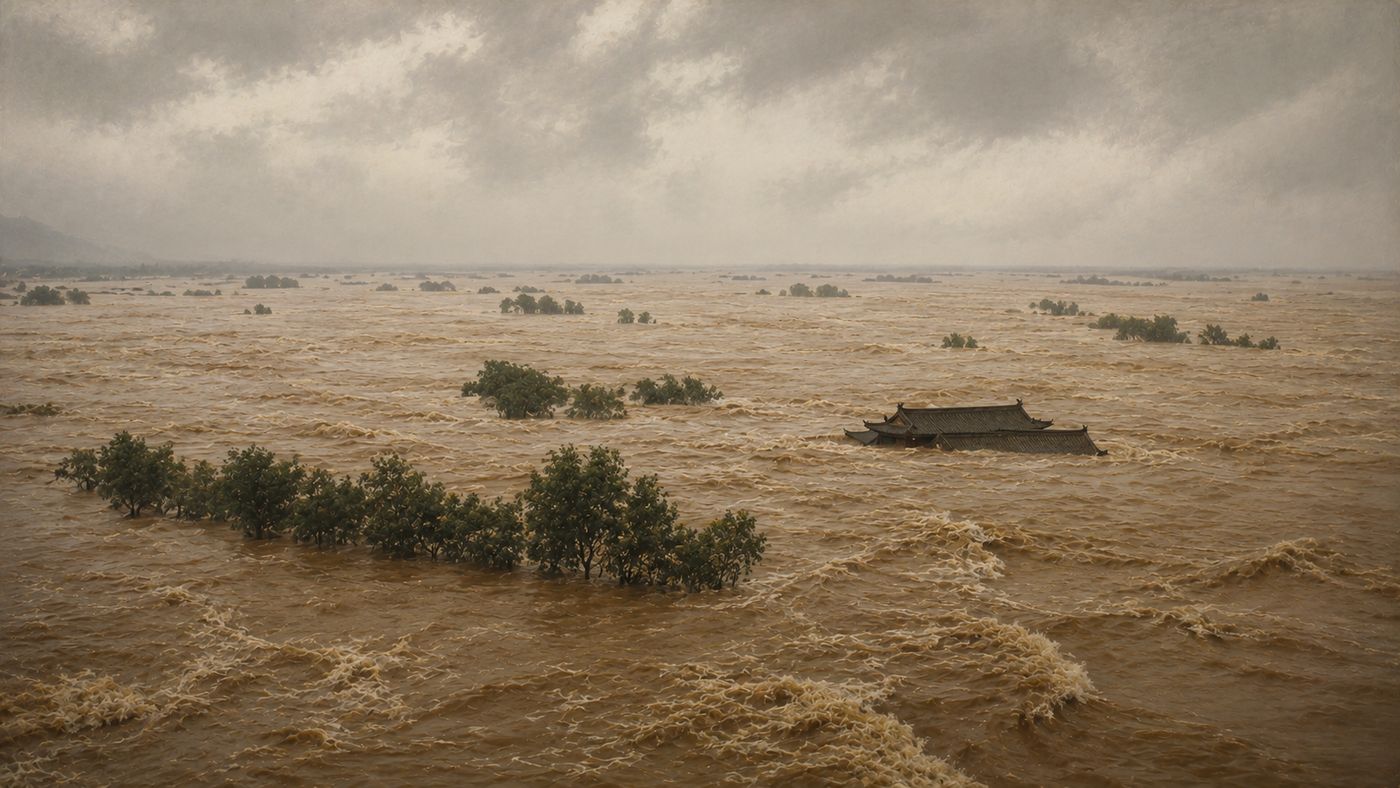
On August 18, 1931, the Yangtze River reached its catastrophic peak water level, at the height of a flooding disaster that had been building since the spring across the river systems of central and eastern China. The causes were multiple and compounding: a severe winter had produced abnormal snowpack in the mountains; an unusually active cyclone season had delivered heavy rainfall across the watershed; and decades of deforestation had eliminated much of the natural water retention capacity of the hillsides. The dike systems that had protected the floodplains for centuries could not contain what arrived in 1931. When they failed, an area of approximately 180,000 square miles — larger than California — was inundated, creating an inland sea across Hubei, Hunan, Jiangxi, and Anhui provinces. The city of Wuhan was submerged under several feet of water for months.
The death toll from the Great Flood of 1931 is estimated between 1 million and 4 million people — a range that reflects both the chaos of the disaster itself and the limited record-keeping capacity of the Chinese government at the time. Deaths came from drowning in the initial floods, from the diseases — cholera, typhoid, malaria — that followed the standing water, and from the famine produced when the flood destroyed crops across the affected region. The disaster unfolded in a China already destabilized by civil conflict between the Nationalist government and Communist forces, making organized relief difficult and incomplete. International aid organizations, including the Red Cross, mounted relief efforts, but the scale of the catastrophe exceeded any organized response. The Great Flood of 1931 remains the deadliest natural disaster in recorded human history — four times more deadly than the 2004 Indian Ocean tsunami, vastly more deadly than any earthquake, hurricane, or volcanic eruption in the historical record. It unfolded largely out of sight of the Western world, in a country whose internal communications were disrupted by the disaster itself, and has remained less known than its scale demands.