August 17: A People's Last Stand, a President Under Oath, and a Balloon Over the Atlantic
August 17 is a day for reckonings — for the moment when patience runs out or a story reaches the point where the consequences can no longer be deferred. In 1862, the Dakota people of Minnesota, driven by broken treaties, stolen land, and the deliberate withholding of food from a starving population, rose in armed resistance in what became the bloodiest conflict on American soil between the Civil War battles raging simultaneously in the East. One hundred and thirty-six years later, the sitting president of the United States sat in the White House Map Room and answered questions under oath about a relationship he had publicly denied — a testimony that would set in motion his impeachment and define the final years of his presidency. And in 1978, three Americans landed a helium balloon in a French barley field after six days in the air, completing the first successful balloon crossing of the Atlantic and achieving what the aviation world had considered essentially impossible. Three August seventeenths. Three reckoning points, each one a long time coming.
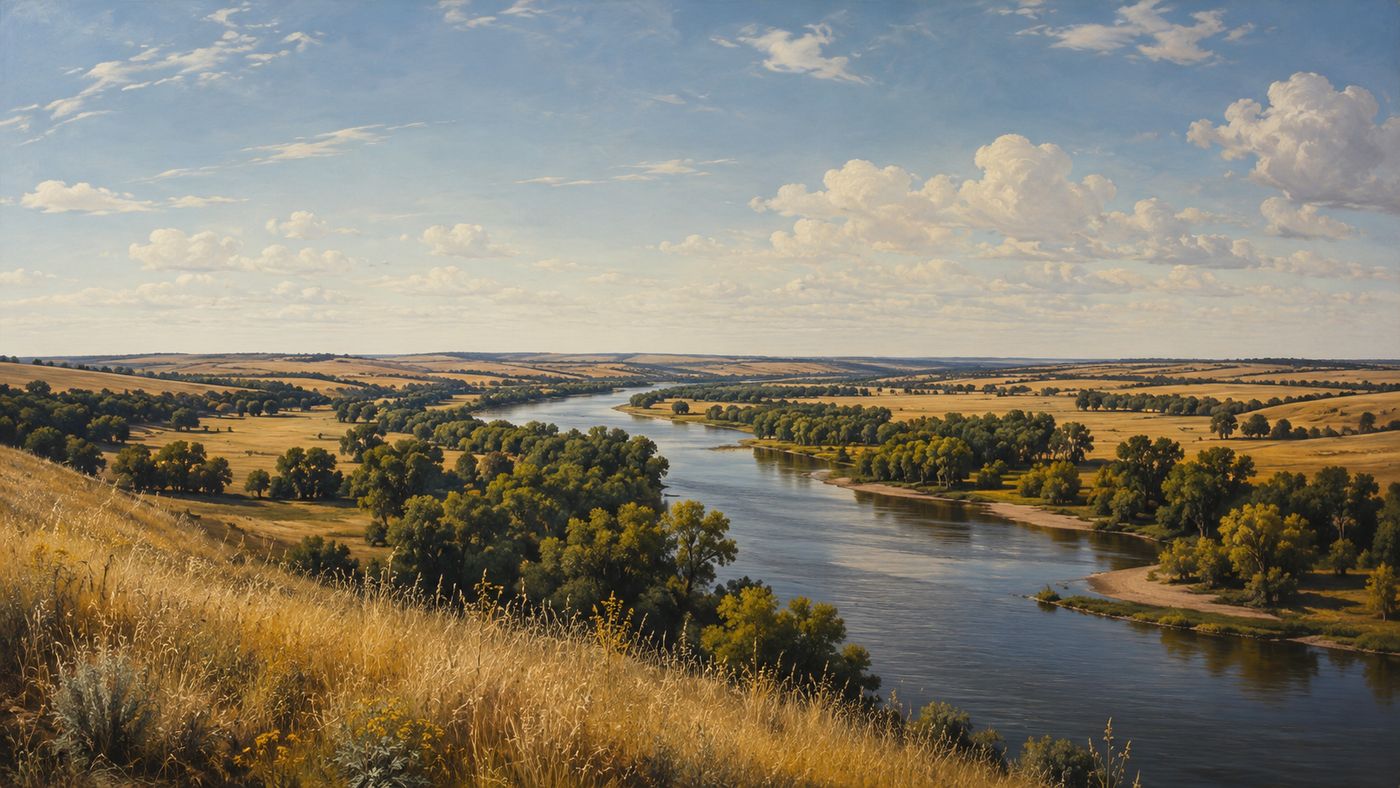
The Minnesota River Valley
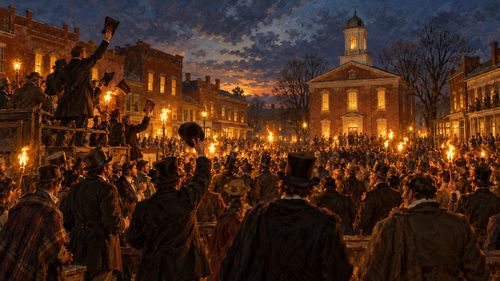
On August 17, 1862, four young Dakota men killed five white settlers near Acton Township in Minnesota — an incident that, within hours, had escalated into a coordinated armed uprising by the Dakota people against the United States government and the settler population of the Minnesota River Valley. The causes ran deep and had been building for years. The Dakota had been confined to a narrow reservation strip along the Minnesota River through a series of treaties signed in the 1850s, ceding millions of acres of their ancestral land in exchange for annuity payments that were frequently delayed, diverted, or simply not paid. By the summer of 1862, with the annuity payments months overdue and the government warehouses full of food that officials refused to distribute to a starving population, Dakota leader Little Crow was presented with a desperate choice by younger warriors who could no longer wait for legal remedies that had never arrived. He believed the uprising would fail. He led it anyway.
The Dakota War of 1862 lasted six weeks and resulted in the deaths of approximately 500 to 800 settlers and soldiers and an estimated 150 Dakota warriors. It was suppressed by U.S. Army forces under General John Pope, and its aftermath was among the most severe in the history of American Indian conflict: 303 Dakota men were sentenced to death by military tribunal following trials that in some cases lasted fewer than five minutes; President Lincoln reviewed the cases and reduced the number of executions to 38, but the mass hanging that took place in Mankato on December 26, 1862 — 38 men hanged simultaneously — remains the largest mass execution in American history. The remaining Dakota population was forcibly expelled from Minnesota, their reservation dissolved, their annuities cancelled. The uprising of August 17, 1862, was the last serious armed resistance to American settlement in the upper Midwest, and it ended in the near-complete displacement of the people who had initiated it — people who had been left, by policy and by neglect, with nothing left to lose.
The Map Room
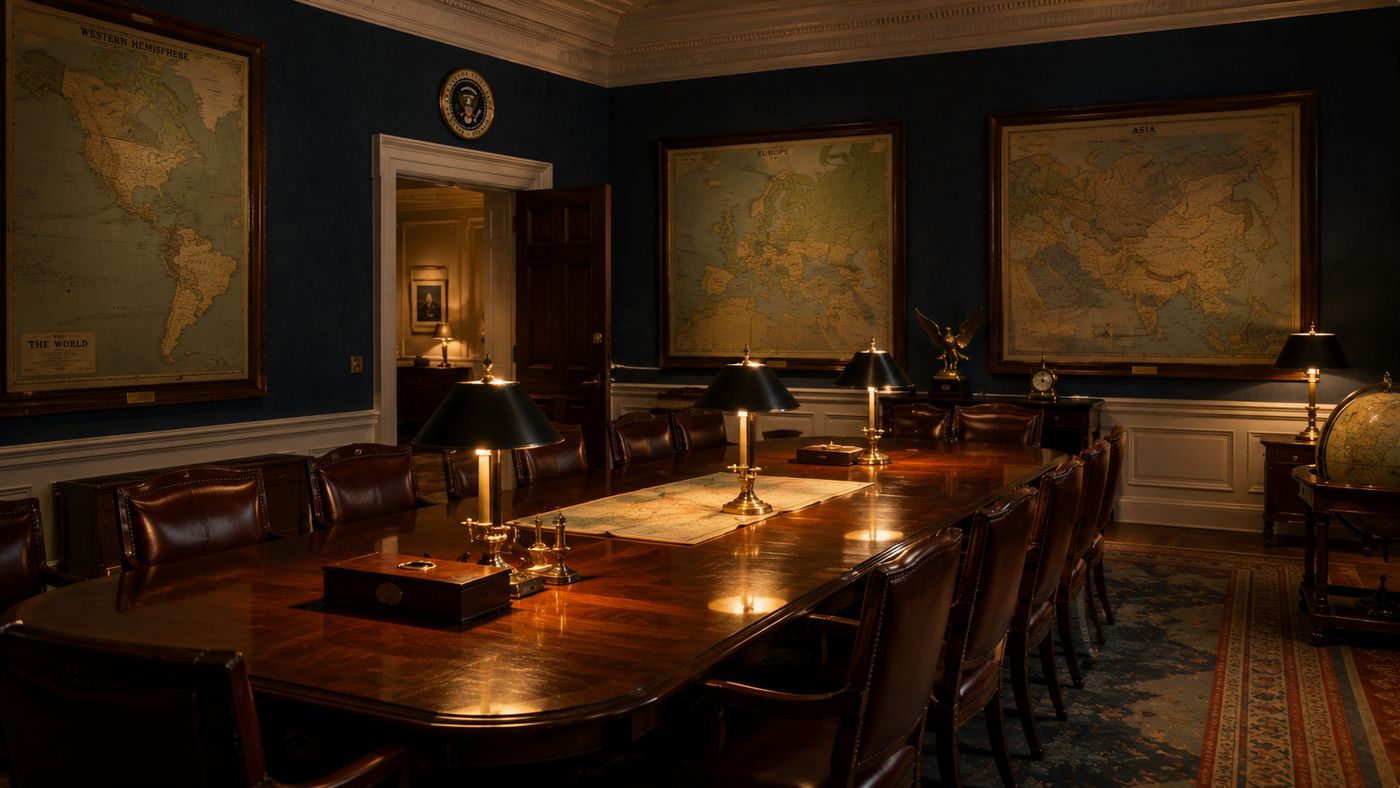
On August 17, 1998, President Bill Clinton sat in the Map Room of the White House and provided four hours of testimony via closed-circuit television to the federal grand jury investigating his relationship with White House intern Monica Lewinsky and allegations of perjury and obstruction of justice — becoming the first sitting president in American history to testify before a grand jury as the subject of a criminal investigation. The testimony came seven months after Clinton had looked directly into a television camera during a press conference and stated, with emphasis: "I did not have sexual relations with that woman, Miss Lewinsky." That statement, and the legal parsing that Clinton and his attorneys would employ in the months that followed to distinguish "sexual relations" from other forms of intimacy, would become the defining episode in an investigation that had begun as an inquiry into a real estate deal in Arkansas and had arrived, through a series of expansions of its scope, at the Oval Office.
The same evening as his grand jury testimony — in a nationally televised address — Clinton acknowledged for the first time that he had had an "improper relationship" with Lewinsky, stopped short of a full apology, and criticized the investigation itself. The political fallout was immediate. Independent Counsel Kenneth Starr submitted a report to Congress in September that detailed the relationship in explicit terms and identified eleven potentially impeachable offenses; the House of Representatives voted in December 1998 to impeach Clinton on charges of perjury before the grand jury and obstruction of justice. The Senate trial that followed in January 1999 ended with acquittal on both counts — neither charge receiving the two-thirds majority required for conviction and removal. Clinton served the remaining two years of his presidency. His approval ratings, remarkably, remained high throughout the impeachment proceedings, suggesting that the public's assessment of the scandal diverged significantly from the House majority's. The testimony of August 17, 1998, is remembered as the day the facade that had held for seven months finally came down — not entirely voluntarily, and not entirely gracefully.
137 Hours
On August 17, 1978, the helium balloon Double Eagle II, carrying three American aeronauts — Ben Abruzzo, Maxie Anderson, and Larry Newman — touched down in a barley field near Miserey, France, completing the first successful crossing of the Atlantic Ocean by balloon. The flight had begun on August 11 in Presque Isle, Maine, and had lasted 137 hours and 6 minutes — nearly six days of continuous flight across approximately 3,100 miles of open ocean, through weather conditions that included fog, ice accumulation, and the constant threat of altitude loss that had defeated every previous attempt. The three men had spent the crossing in an open gondola, exposed to temperatures well below freezing at altitude, managing ballast and altitude by hand and navigating by dead reckoning and radio contact with ground crews. When they landed, they had been awake for most of the journey.
The successful crossing of August 17, 1978, fulfilled a dream that aviation enthusiasts had pursued since the earliest days of balloon flight — the same Atlantic that Charles Lindbergh had crossed by airplane in 1927 had defeated numerous balloon attempts, the most recent being Abruzzo and Anderson's own failed effort the previous year on a balloon called Double Eagle I. The achievement required not just the physical endurance of the three pilots but a level of meteorological planning and real-time decision-making that the previous generation's technology could not have supported. The Double Eagle II gondola is now on display at the National Air and Space Museum in Washington, D.C., alongside the Spirit of St. Louis and other landmarks of aviation history. The barley field in Miserey where it landed has a small memorial. The French farmer whose field received three Americans from the sky reportedly took the intrusion with considerable grace.