August 14: The Lights Go Out, a Daughter's Poison, and China Joins the War
August 14 is a day for systems failing and nations asserting themselves and families concealing the worst of what they are capable of. In 2003, a transmission line fault in Ohio cascaded through the interconnected electrical grid of the northeastern United States and Ontario in a matter of minutes, plunging fifty million people into darkness on a sweltering summer afternoon and revealing just how fragile the infrastructure of modern civilization actually is beneath its dependable exterior. Two hundred and fifty-two years earlier, in a prosperous English household in Henley-on-Thames, a father died of arsenic poisoning administered by his own daughter — a crime of such domestic intimacy that it became one of the great scandals of Georgian England. And in 1917, in the middle of the First World War, the Republic of China made a declaration of war against Germany that was as much about China's future as about the conflict it was joining. Three August fourteenths. Three moments when something hidden finally became impossible to ignore.
4:10 P.M.
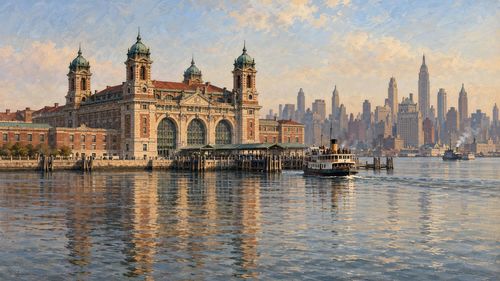
At approximately 4:10 in the afternoon on August 14, 2003, the northeastern United States and the Canadian province of Ontario went dark. The cascade had begun earlier in the day in Ohio, where a software bug in an alarm system operated by FirstEnergy Corporation had failed to alert operators to a series of transmission line failures, allowing an imbalance to build in the regional grid that could not be corrected in time. When the system finally failed, it did so with extraordinary speed — within minutes, the cascade spread across interconnected grids from Detroit to New York City, leaving eight U.S. states and Ontario without power. Fifty-five million people lost electricity on a sweltering August afternoon. Traffic lights went dark, elevators stopped between floors, subway trains halted in tunnels, and the ordinary functioning of dozens of cities simply ceased. The blackout affected an area with a GDP of approximately $2 trillion.
The blackout of August 14, 2003, lasted for hours in most affected areas and days in some. New York City, which had experienced a blackout in 1977 that had been accompanied by widespread looting and disorder, was largely peaceful this time — crowds gathered on the streets, restaurants gave away food before it spoiled, and the city demonstrated a communal resilience that observers noted with some surprise. The investigation that followed identified a combination of software failure, inadequate training, and structural weaknesses in the deregulated electricity market that had allowed the interconnected grid to become dangerously interdependent without corresponding investments in monitoring and safety. The U.S.-Canada Power System Outage Task Force recommended a series of regulatory changes that were implemented over the following years, strengthening the grid against similar cascades. The blackout that revealed those vulnerabilities was the most widespread in North American history — caused not by weather or attack but by a software bug that nobody noticed until fifty million people were sitting in the dark.

The Blandy Affair
On August 14, 1751, Francis Blandy, a sixty-one-year-old attorney and town clerk of Henley-on-Thames in Oxfordshire, died after weeks of illness marked by burning sensations in his throat and stomach. The cause of his death — arsenic poisoning — was determined shortly afterward, and suspicion fell almost immediately on his daughter Mary, who had been administering a powder given to her by her lover, Captain William Henry Cranstoun, under the pretense that it would soften her father's opposition to their relationship. Cranstoun was a Scottish officer who was, inconveniently, already married — a fact that Francis Blandy had discovered and that had made him firmly resistant to the match. Mary, apparently convinced that the powder was a harmless love potion that would change her father's mind, had been adding it to his food and drink for some months before his death. Whether she knew it was arsenic has been debated ever since.
Mary Blandy was tried for murder at the Oxford Assizes in February 1752, in a trial that drew enormous public attention and generated a stream of pamphlets, ballads, and commentary that made it one of the most discussed criminal cases of the Georgian era. She maintained throughout that she had not known the powder was poison and had intended only to make her father more amenable to her relationship. The jury was unconvinced and convicted her after a deliberation of five minutes. She was hanged on April 6, 1752, at Oxford Castle, reportedly making a dignified exit and expressing concern that the height of the gallows would expose her ankles to the crowd — a detail that the popular press recorded with the mixture of sympathy and prurience that has characterized coverage of female criminals in every era. Cranstoun, who had fled to France upon learning of the investigation, died there later in 1752. The Blandy case entered English legal history as one of the foundational poisoning cases, influencing how courts subsequently approached toxicological evidence and the question of intent in poisoning prosecutions.

China Enters the War
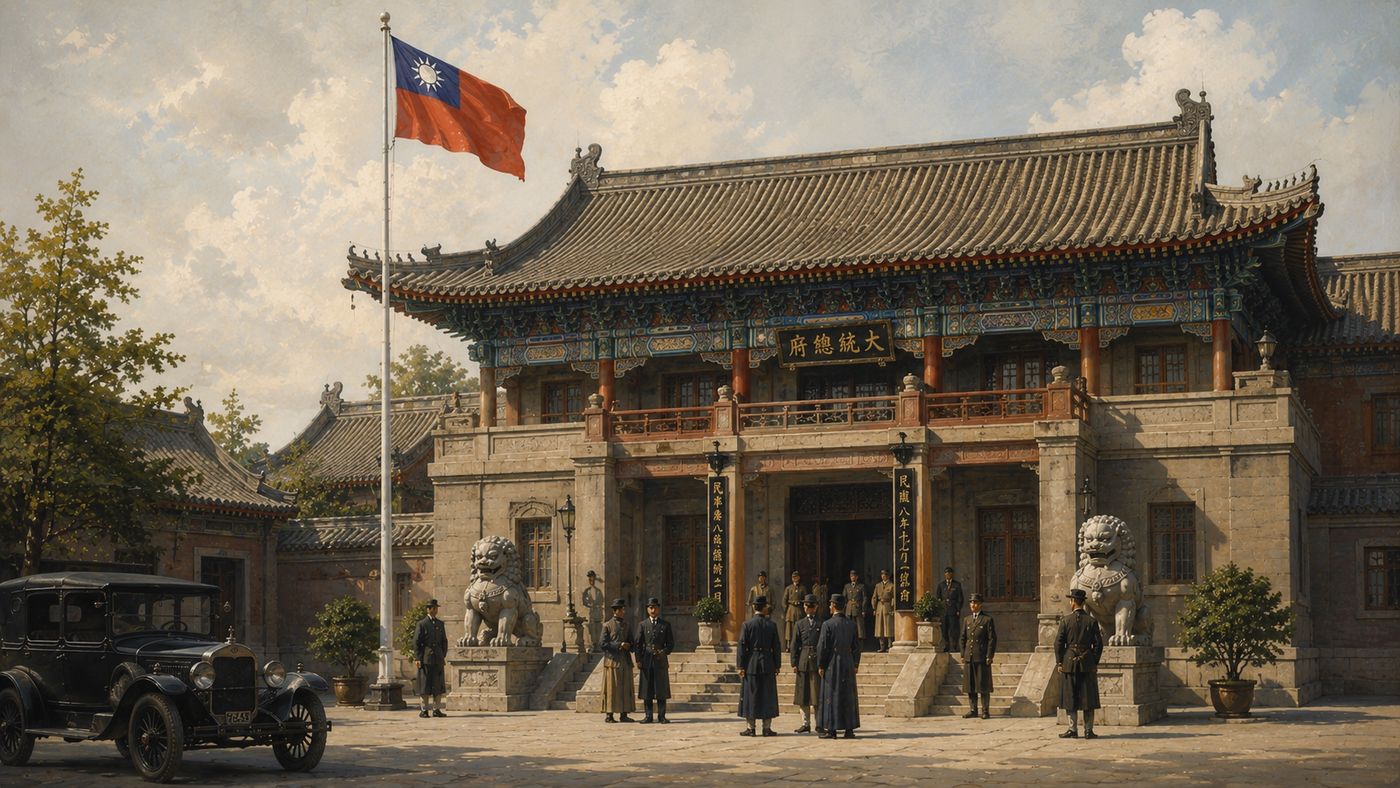
On August 14, 1917, the Republic of China formally declared war on Germany and Austria-Hungary, joining the Allied side in the First World War after months of internal political debate and careful diplomatic calculation. China had been watching the war from a complicated position: a young republic, barely six years old, struggling to consolidate its authority against regional warlords and still operating under the shadow of the unequal treaties that had defined its relationship with foreign powers since the nineteenth century. Joining the Allies offered a strategic opportunity — a chance to claim a seat at the eventual peace conference, to renegotiate the terms of those treaties, and to press for the return of German-controlled territories in Shandong Province that Japan had seized in 1914 with Allied approval. The declaration was also driven by the practical calculation that China's large population and territory would carry weight in any postwar settlement if the country was formally on the winning side.
China's hopes for the peace conference were disappointed bitterly. The Treaty of Versailles in 1919 awarded the German concessions in Shandong to Japan rather than returning them to China — a decision that generated the May Fourth Movement, a wave of student protest and nationalist ferment that became one of the most significant intellectual and political movements in modern Chinese history. China refused to sign the Versailles Treaty. The episode is remembered in China as the beginning of a century of national humiliation that the People's Republic has since defined itself against — the moment when a young republic that had joined the winning side of a global war was nonetheless denied the equal treatment it had sought and been promised. The declaration of August 14, 1917, was an assertion of sovereignty that the international order of the time was not prepared to honor. The consequences of that failure have shaped Chinese foreign policy for more than a century.