August 13: A Wall Goes Up, a City Falls, and a Voice That Started Everything
August 13 is a day for walls and endings and beginnings that came too late. In 1961, East German workers began stringing barbed wire across a city while its residents slept, creating overnight what would become the defining physical symbol of the Cold War — a barrier that separated families, ended lives at its crossings, and stood for twenty-eight years as concrete proof that an ideology could only be maintained by force. Four hundred and forty years earlier, the greatest city in the pre-Columbian Americas fell to a Spanish force that had no right to be there, ending a civilization and beginning a colonial era whose consequences are still being reckoned with. And in 1952, a blues singer in a Los Angeles recording studio recorded a song with such authority and ferocity that it established a template for rock and roll — a template that was borrowed, cleaned up, and made famous by someone else, while the woman who created it largely went without the recognition she deserved. Three August thirteenths. Three lines drawn between before and after.
The Wire Goes Up
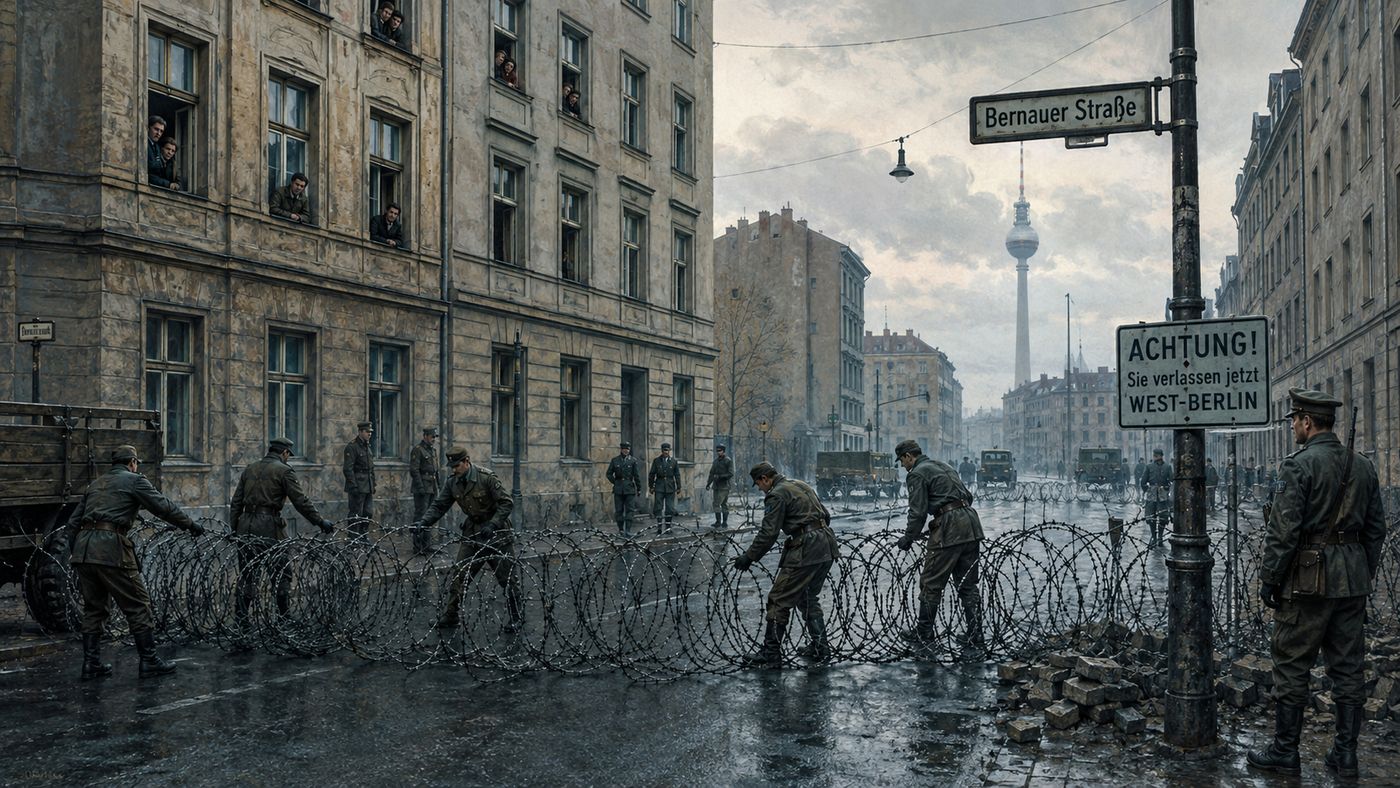
In the early hours of August 13, 1961, while most Berliners slept, East German soldiers and construction workers began laying barbed wire along the border between East and West Berlin — the first physical barrier in what would become the Berlin Wall. The action had been planned in secret and was executed with a speed that caught Western intelligence agencies almost entirely off guard. By morning, the wire stretched for miles through the city, cutting across streets and neighborhoods, separating families who had gone to sleep on one side of Berlin and woken up on another. The crossing points that had allowed relatively free movement between East and West — and through which approximately 2.5 million East Germans had fled to the West since 1949 — were closed. East Germany was sealing its own population inside its borders because the alternative, as the leadership recognized, was the continued hemorrhage of educated and skilled workers that was hollowing out the country's economy and threatening the regime's survival.
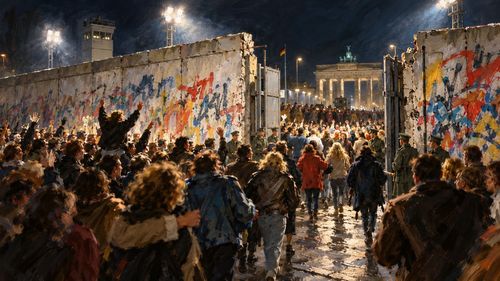
The barbed wire of August 13, 1961, was replaced over the following months and years with an increasingly elaborate system of concrete walls, guard towers, trip-wire fences, death strips, and searchlights that became, in its final form, one of the most heavily fortified borders in human history — running not just through Berlin but across the entire length of the German-German border. At least 140 people died attempting to cross it, shot by East German border guards operating under orders to prevent escape at any cost. President Kennedy, who had been warned by Nikita Khrushchev that the East German situation required resolution, responded to the construction with relative restraint — accepting the wall as a preferable alternative to war over Berlin while making clear that the Western sectors would be defended. When the wall came down on November 9, 1989, it did so not through Western military pressure but through a cascade of popular protest and regime miscommunication that no one had planned. It had stood for twenty-eight years, four months, and one week. Berliners dismantled it with hammers and their bare hands.
Tenochtitlan, 1521
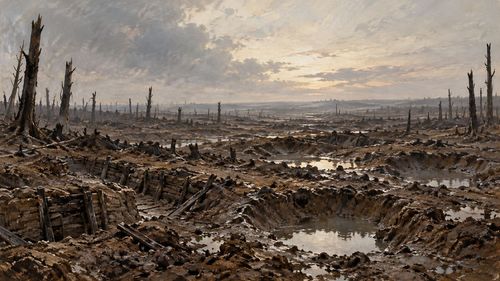
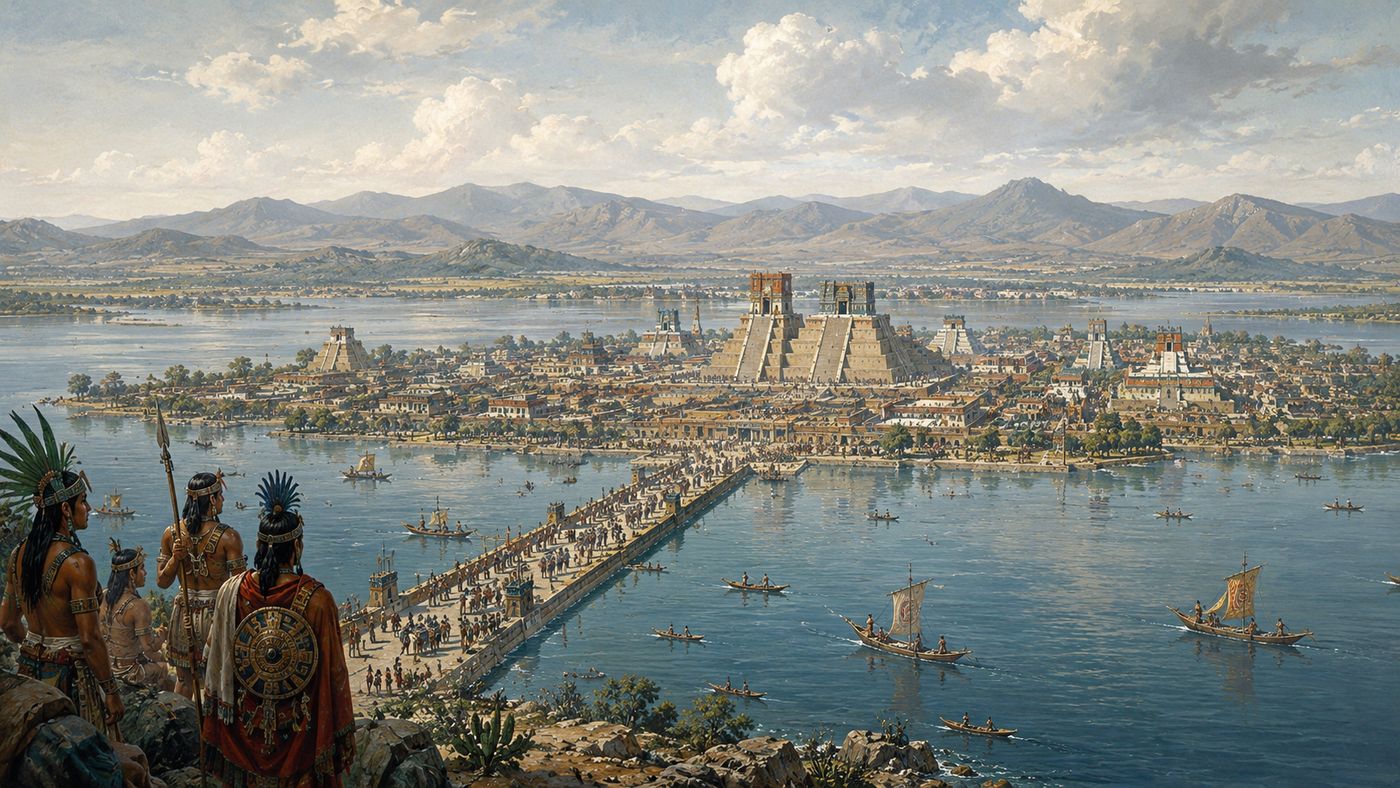
On August 13, 1521, the last Aztec emperor, Cuauhtémoc, was captured by Spanish forces under Hernán Cortés, marking the definitive fall of Tenochtitlan — the island capital of the Aztec Empire, built in the middle of Lake Texcoco and home to an estimated 200,000 to 300,000 people, making it one of the largest cities in the world at the time. The siege that ended that day had lasted seventy-five days, following the destruction of the city's causeways and the systematic reduction of its neighborhoods block by block. Cortés had returned from the disastrous retreat of La Noche Triste in June 1520 with a rebuilt force that included a large fleet of brigantines constructed in pieces and carried over the mountains, assembled on the lake, and used to control the waters surrounding the island. What he found when the city finally fell was a population devastated by smallpox — introduced by the Spanish, with no immunity existing among the indigenous population — and by the siege itself.
The fall of Tenochtitlan on August 13, 1521, marked the end of the Aztec Empire and the beginning of three centuries of Spanish colonial rule over what became New Spain. The city itself was razed — its temples demolished, its canals filled, its urban fabric destroyed — and the colonial capital of Mexico City was built on the ruins, a process so thorough that the physical traces of Tenochtitlan remained largely hidden beneath the modern city until construction and excavation in the twentieth century began revealing the extent of what had been buried. The human cost of the conquest was catastrophic: the indigenous population of central Mexico, estimated at between 15 and 25 million at the time of contact, had fallen to approximately one million by 1600, reduced by disease, violence, forced labor, and the destruction of the social and agricultural systems that had sustained the civilization. Cuauhtémoc, captured on August 13, was tortured in an attempt to reveal the location of hidden Aztec gold and later executed by Cortés in 1525. He is remembered in Mexico as a national hero — the leader who refused to surrender voluntarily, the last defender of a civilization the conquest erased.
The Original
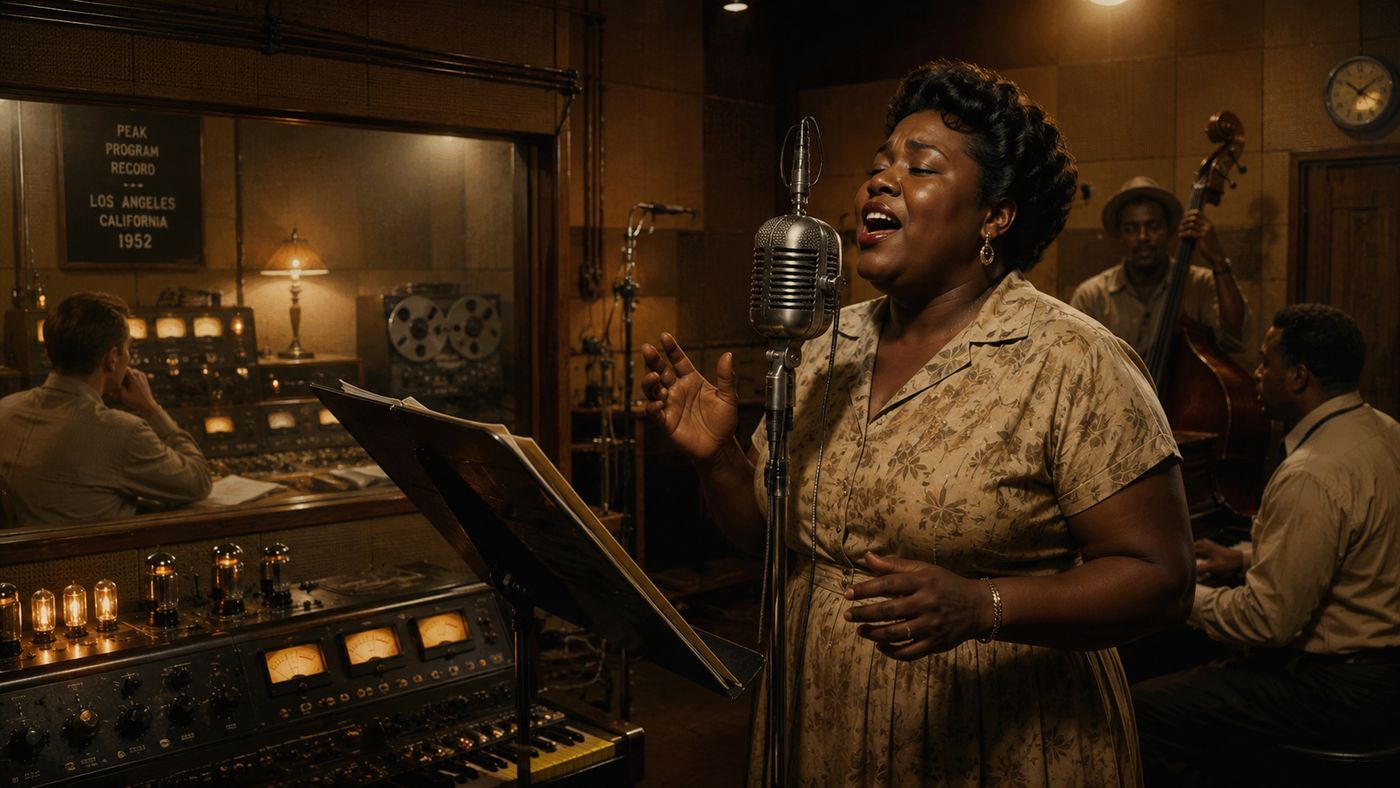
On August 13, 1952, Willie Mae "Big Mama" Thornton walked into Radio Recorders studio in Los Angeles and recorded "Hound Dog" — a song written for her by Jerry Leiber and Mike Stoller, two Jewish teenagers from Los Angeles who had grown up listening to Black blues and R&B and who had composed the song in fifteen minutes, specifically for Thornton's voice and personality. What she did with it in that recording session was extraordinary: a vocal performance of commanding authority, fierce humor, and raw physical presence that made the song about a cheating man who was "ain't no friend of mine" into something that reached beyond its immediate subject to announce a new kind of attitude in American popular music. Released in February 1953, the song reached number one on the R&B charts and stayed there for seven weeks. It sold nearly two million copies. Thornton received a flat fee of $500 and no royalties.
Four years later, in 1956, Elvis Presley recorded a significantly altered version of "Hound Dog" — faster, with different lyrics, configured for a white pop-rock audience — and sold ten million copies, making it one of the best-selling singles in the history of American music to that point. Presley's version is the one most people know. Thornton's recording is the one that established what the song could be. The story of "Hound Dog" is, in miniature, the story of a great deal of American popular music in the postwar era: a Black artist created something, received almost nothing for it, and watched a white artist receive wealth and fame for a version that could not have existed without the original. Thornton continued performing and recording throughout her life, and is recognized by musicologists and blues historians as one of the defining figures of the genre. She died in 1984, in a boarding house in Los Angeles, with little to her name. The song she recorded on August 13, 1952, outlived its exploitation — which is the best that can be said, and also not enough.