August 11: Watts Erupts, the Rock Opens, and the World Loses Robin Williams
August 11 is a day for reckonings that arrived at different speeds. In 1965, a traffic stop in South Los Angeles triggered six days of uprising that forced the country to confront the depth of the inequalities it had built into its cities — a reckoning that had been building for decades and that would continue in one form or another for decades more. Thirty-one years before that, the first federal prisoners were ferried across San Francisco Bay to a converted military island whose reputation as inescapable and inhumane would outlast its operating years by half a century. And in 2014, a man who had spent sixty-three years making people laugh died in his home in Marin County, leaving behind a grief that was both personal — for the person — and something larger, about what we ask of people who perform joy for the rest of us, and what we fail to see. Three August elevenths. Three things that were always more complicated than they first appeared.
Watts, 1965
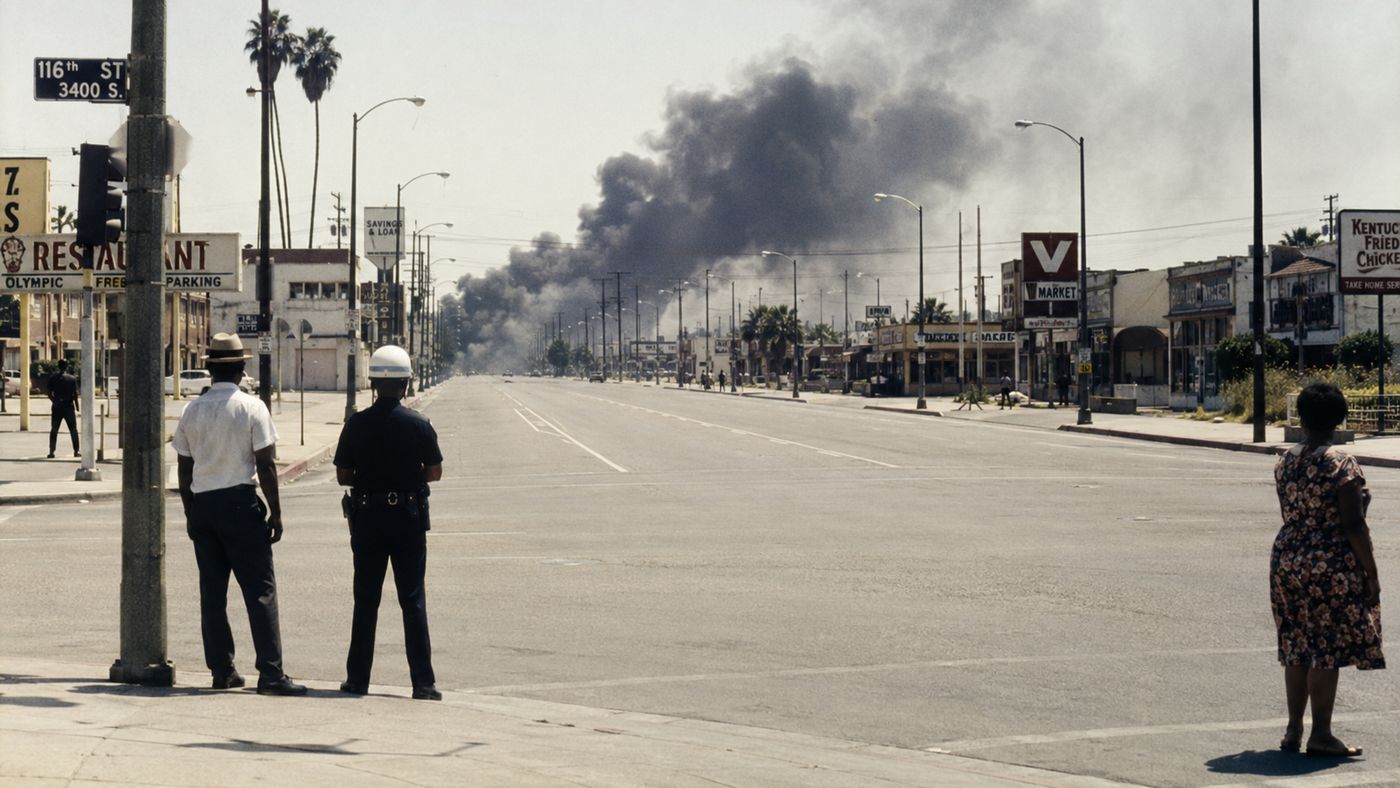
On the evening of August 11, 1965, California Highway Patrol officer Lee Minikus stopped twenty-one-year-old Marquette Frye near the intersection of 116th Street and Avalon Boulevard in the Watts neighborhood of Los Angeles on suspicion of drunk driving. The stop itself was unremarkable — Frye failed a sobriety test and was going to be arrested, his car impounded. But a crowd gathered as the arrest proceeded, Frye's mother arrived and confronted the officers, additional police were called, and what had been a routine stop tipped into a physical confrontation that the watching crowd read as a continuation of a pattern they had been living inside for years. Within hours, rocks and bottles were being thrown at police vehicles. By the following day, Watts was burning. Over six days, the uprising spread across an area of approximately fifty square miles, resulting in 34 deaths, more than 1,000 injuries, nearly 4,000 arrests, and an estimated $40 million in property damage.
The Watts uprising of August 1965 was not a random explosion. It was the consequence of decades of discriminatory housing policies that had concentrated Black Angelenos in specific neighborhoods, a police department with a documented pattern of brutal and racially discriminatory enforcement, chronic unemployment and poverty, inadequate schools, and the specific humiliation of living in a city that presented itself as a paradise of opportunity in which Black residents were systematically denied access to that opportunity. The McCone Commission, appointed by Governor Pat Brown to investigate the causes of the uprising, produced a report that acknowledged many of these underlying conditions — and whose recommendations were largely not implemented. The federal government's Kerner Commission, appointed after the Detroit uprising two years later, reached similar conclusions and arrived at similar levels of inaction. The intersection where Marquette Frye was stopped is now marked with a historical plaque. The conditions that produced what happened there have been addressed only partially in the six decades since.
The Rock
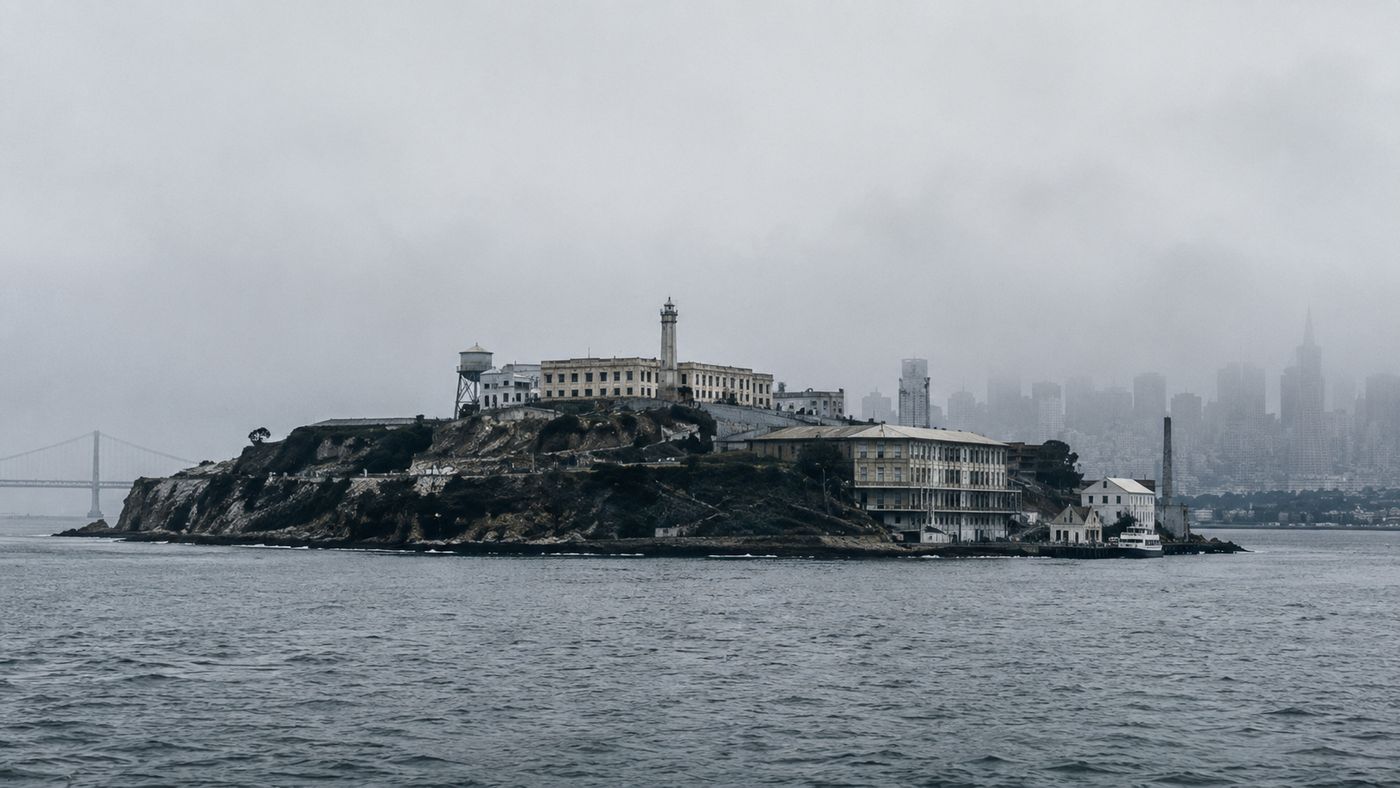
On August 11, 1934, a ferry carrying 137 federal prisoners arrived at Alcatraz Island in San Francisco Bay, inaugurating the federal penitentiary that would become the most famous — and most mythologized — prison in American history. The island had been a military fortification and then a military prison for decades before the federal Bureau of Prisons converted it into a maximum-security federal penitentiary designed to hold inmates who had proved unmanageable at other federal institutions. Its location — 1.25 miles from the San Francisco waterfront, surrounded by cold, fast-moving currents — made escape by swimming extremely difficult, and its design was intended to eliminate virtually all privileges and amenities, operating on the theory that the prospect of transfer to Alcatraz would serve as a deterrent to bad behavior at other federal prisons. The first inmates arrived to find single-occupancy cells, strict rules of silence during meals and work, and almost no contact with the outside world.
Alcatraz housed some of the most notorious figures in American criminal history during its twenty-nine years of federal operation — including Al Capone, who arrived in 1934, and Robert Stroud, the "Birdman of Alcatraz," who was a convicted murderer rather than the gentle avian enthusiast of the 1962 film. The prison was closed in 1963 by Attorney General Robert Kennedy, who cited the high cost of operating an island facility and the deterioration of the buildings. No inmate ever successfully escaped, though thirty-six men attempted it — fourteen of them on a single occasion in 1946 that became known as the Battle of Alcatraz, resulting in the deaths of two guards and three inmates. The island was briefly occupied by Native American activists in 1969 in a protest that drew national attention. It is now a national park and one of the most visited historic sites in the United States, receiving more than a million visitors a year who come to see the cells where America kept its most difficult prisoners and to stand on the shore and look back at a city that was always just out of reach.
O Captain
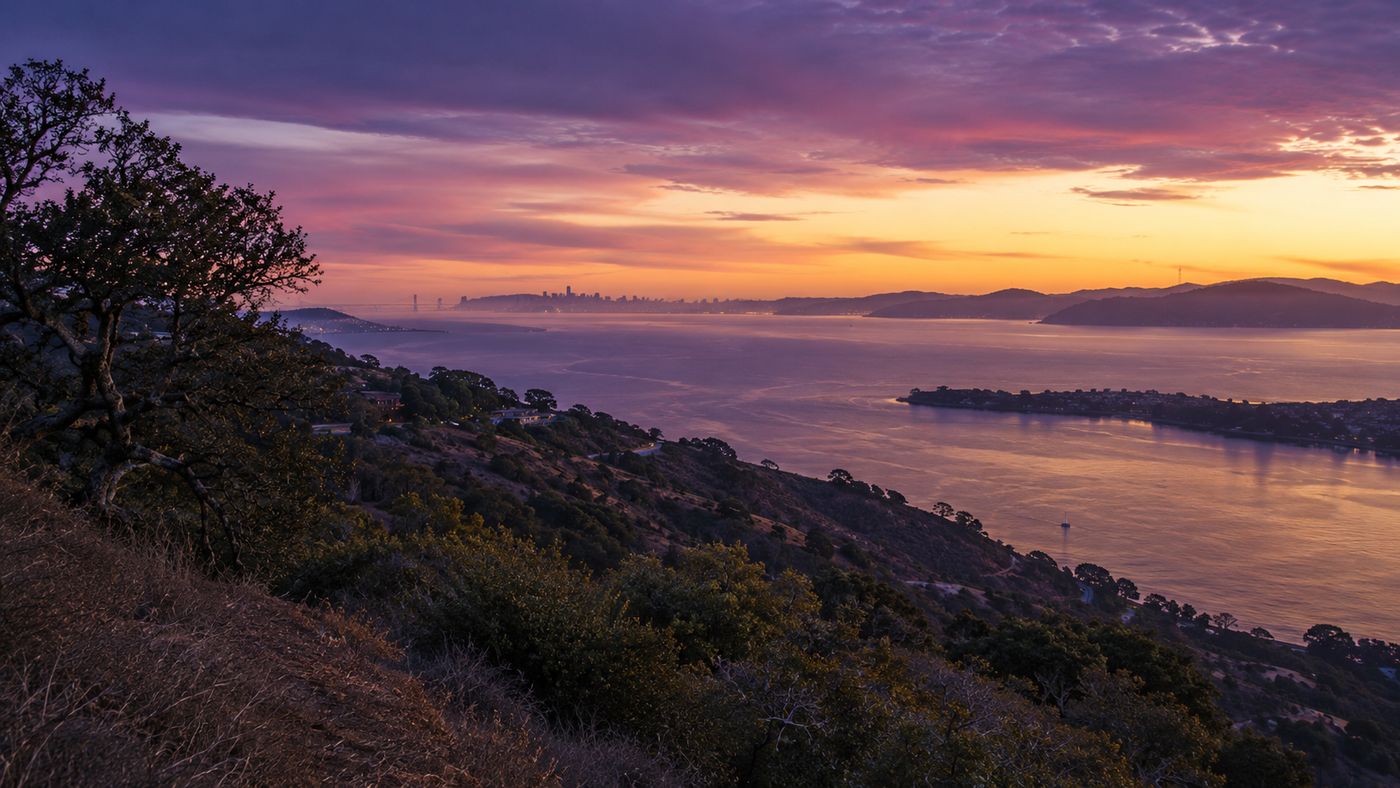
On August 11, 2014, Robin Williams was found dead at his home in Paradise Cay, California, at the age of sixty-three. A coroner's investigation determined he had died by suicide. The news broke on a Monday afternoon and spread with unusual speed and force — the grief was immediate, global, and seemed to carry a quality of personal bereavement that celebrity deaths rarely generate, as if millions of people were losing someone they had actually known rather than someone they had watched. Williams had been present in American popular culture for so long and in so many forms — as a stand-up comedian of extraordinary improvisational range, as the alien Mork in a 1970s sitcom, as the genie in a Disney animated film, as a therapist in an Academy Award-winning drama, as a DJ in Vietnam, as a cross-dressing father, as a literature teacher who told his students to seize the day — that his absence felt like the removal of something that had always been there.
In the months following Williams's death, his widow Susan Schneider Williams revealed that he had been suffering from Lewy body dementia — a progressive neurodegenerative disease that, she wrote in a medical journal, had been producing symptoms that neither Williams nor his doctors had been able to identify or treat. The diagnosis illuminated aspects of his final months — the anxiety, confusion, and physical decline — that had been attributed to depression alone. The case became significant in the medical community as an example of how devastating and misdiagnosed Lewy body dementia can be, and Schneider Williams has since become an advocate for research into the disease. What Williams's death made visible was a dissonance that his career had always contained but that celebrity culture had no good tools for acknowledging: a man who had given more joy to more people than almost anyone alive in his era had been living, in private, with a suffering that joy could not reach. The tributes that arrived on August 11, 2014, and in the days that followed were not wrong. They were just incomplete — as tributes always are, and as Robin Williams never allowed himself to be, even when it cost him.