August 10: The Palace Opens, the Bequest Lands, and the Rating Debuts
August 10 is a day for institutions — for the moment when something that had served the powerful few was opened to everyone, or when a stranger's improbable generosity created something that would outlast every expectation attached to it. In 1793, the Louvre — a fortress become palace become the repository of centuries of royal collecting — threw open its doors to the citizens of a France that had just executed its king, declaring that what had belonged to the crown now belonged to all. Fifty-three years later, in Washington, a president signed the papers creating an institution funded entirely by a British scientist who had never visited America but believed in what America was trying to be. And in 1984, a film about Soviet teenagers invading Colorado became the first movie to carry a new rating that Hollywood had invented to fill a gap — and that would eventually become the most commercially dominant classification in cinema. Three August tenths. Three beginnings dressed as paperwork.
The Palace Unlocked
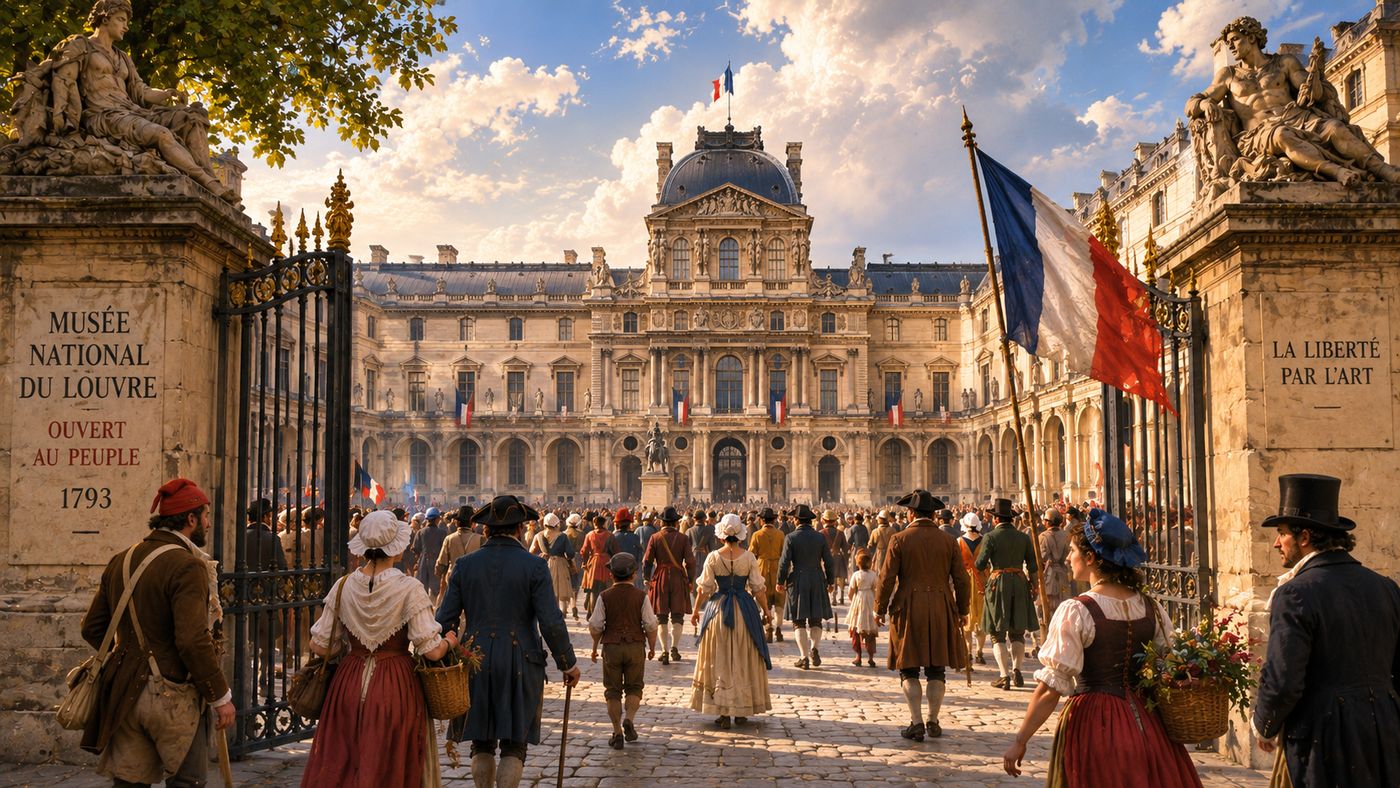
On August 10, 1793, the Louvre opened its doors to the public for the first time — a date chosen with deliberate symbolism, being the first anniversary of the storming of the Tuileries Palace that had led to the arrest of Louis XVI and the effective end of the French monarchy. The building that opened as the Musée Central des Arts had begun as a medieval fortress in the twelfth century, been transformed into a royal palace over the following centuries, and accumulated, through royal patronage and conquest and confiscation, one of the most extraordinary collections of art, antiquity, and objects of cultural significance in the world. When the Revolution abolished the monarchy, the question of what to do with the royal collections became, unexpectedly, one of the most consequential cultural decisions in European history. The answer — make them public — was simple and radical simultaneously.
The Louvre that opened on August 10, 1793, has grown into the most visited art museum in the world — receiving approximately nine million visitors per year before the COVID-19 pandemic and recovering to similar numbers since. Its collection spans more than 380,000 objects, of which roughly 35,000 are on display at any given time, ranging from ancient Egyptian artifacts and Greek and Roman antiquities to the paintings of the Italian Renaissance and the French Baroque. Napoleon enriched it aggressively during his campaigns, stripping conquered nations of their artistic treasures in ways that continue to generate repatriation disputes. The Louvre has itself become a symbol — of Western cultural ambition, of the accumulated weight of centuries of collecting, and of the revolutionary idea that the masterpieces of human civilization belong not to kings but to the people who come, on any given Tuesday, to stand in front of them. The palace that opened on August 10, 1793, has never closed again.
The Stranger's Gift
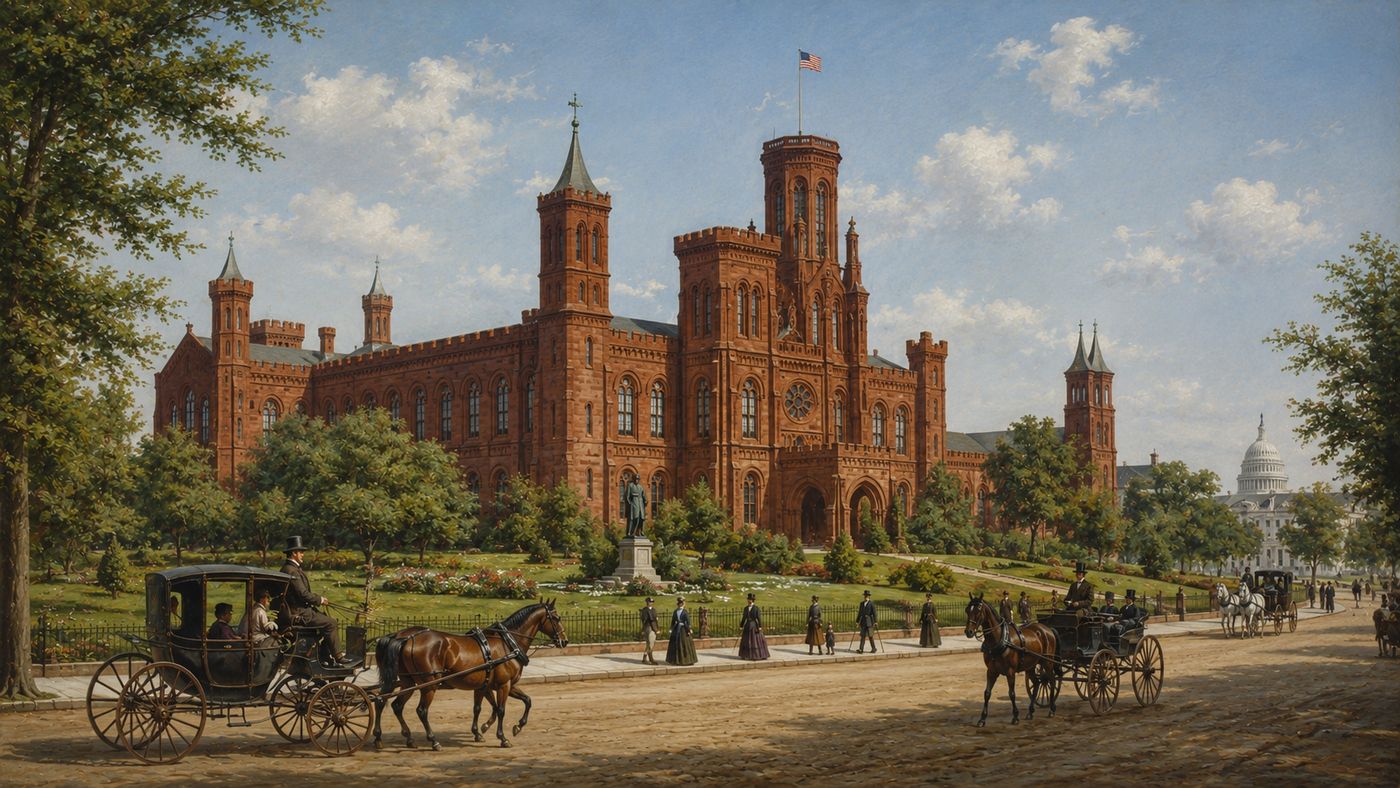
On August 10, 1846, President James K. Polk signed the act of Congress establishing the Smithsonian Institution in Washington, D.C. — creating what would become the world's largest museum and research complex from the most improbable of foundations: the bequest of a British scientist named James Smithson who had never set foot in the United States and left no explanation for why he chose to leave his entire estate to a country he had never visited. Smithson was a Fellow of the Royal Society, a mineralogist of some distinction, and an illegitimate son of the first Duke of Northumberland. He died in Genoa in 1829, leaving his fortune — approximately $500,000, or more than $11 million in today's terms — to a nephew, with the provision that if the nephew died without heirs, the money should go to the United States government "for the increase and diffusion of knowledge among men." The nephew died childless in 1835. The money crossed the Atlantic in 105 bags of gold sovereigns.
Congress debated for nearly a decade what to do with Smithson's bequest — proposals ranged from a university to an observatory to a library — before settling on the institution that Polk signed into existence on August 10, 1846. What the Smithsonian has become in the century and three-quarters since is almost impossible to summarize: nineteen museums and galleries on and around the National Mall, twenty-one libraries, nine research centers, a zoo, and collections totaling more than 154 million objects, specimens, and artifacts. Admission to all Smithsonian museums is free, a policy that honors the spirit, if not the specific intent, of Smithson's bequest for the diffusion of knowledge. Smithson himself is buried in a crypt at the Smithsonian Institution Building — the original red sandstone castle on the Mall — having been exhumed from his Genoa grave and brought to Washington in 1904 by institution regent Alexander Graham Bell, who felt it was appropriate that the man whose money had built the place should rest within it. The stranger who never came to America gave it one of its greatest institutions. His reasons remain a mystery.
Wolverines
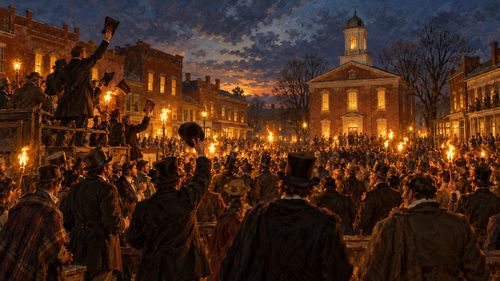
On August 10, 1984, Red Dawn — a Cold War thriller directed by John Milius and depicting a fictional Soviet and Cuban invasion of a small Colorado town, resisted by a group of teenagers who name themselves the Wolverines after their high school mascot — opened in American theaters as the first film in history to carry the Motion Picture Association of America's new PG-13 rating. The rating had been officially introduced on July 1, 1984, created to fill the gap between PG and R following parental complaints about the content of several PG-rated summer films. Red Dawn had been in production before the rating existed and was submitted for classification as part of the new system's rollout. The film starred Patrick Swayze, C. Thomas Howell, and Charlie Sheen in his film debut, and was notable for being, at the time of its release, the most violent film ever to receive a PG-13 rating — a distinction that said something useful about where the new classification's boundaries actually sat.
Red Dawn was a commercial success and a critical curiosity — a film whose politics divided reviewers sharply but whose action sequences and teenage-resistance premise found an audience that kept it in theaters long after its opening weekend. Its place in film history rests less on its artistic merit than on its administrative distinction: the first film to carry the rating that would become, in the decades following its introduction, the dominant classification for the most commercially successful films in Hollywood. Every superhero blockbuster, every franchise tentpole, every summer event film marketed simultaneously to teenagers and adults carries the same two characters that Red Dawn bore first on August 10, 1984. The film has been remade — a 2012 version updated the invading force from Soviets to North Koreans — but it is the original that holds the distinction of introducing a rating that reshaped how an industry thought about its audience.