The Workers Who Don't Come Home
Every 99 minutes, approximately one American worker suffers a fatal injury on the job and does not return home. That figure — roughly 15 deaths per working day, more than 5,000 per year — is both a tragedy and, viewed against the full sweep of American labor history, a hard-won improvement. When the nation first observed Workers Memorial Day on April 28, 1970, an estimated 38 workers died on the job every single day. The reduction represents decades of struggle, legislation, and the accumulated sacrifice of workers and advocates who refused to accept that dying at work was simply the cost of doing business. Today, on April 28, 2026 — the 55th anniversary of OSHA's founding — America pauses to remember those the numbers represent, and to reckon with how far the country has come, and how far it has yet to go.
From the Asch Building to the OSH Act
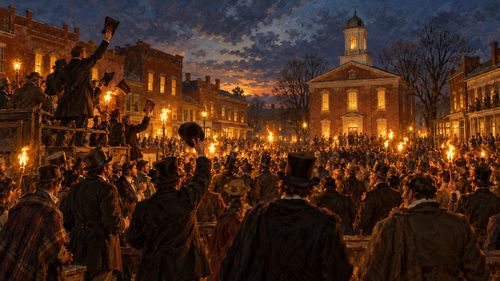
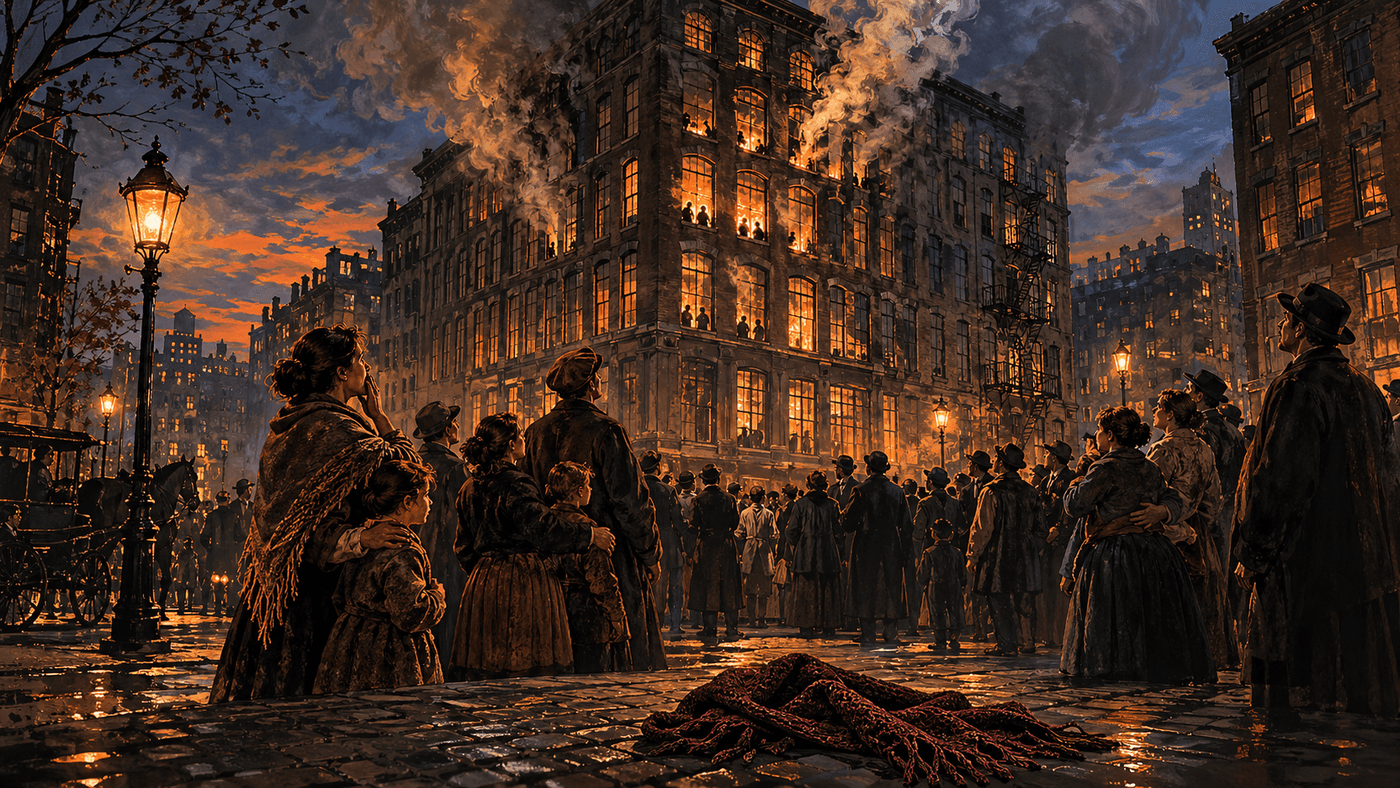
The story of worker safety in America has always moved the same way: catastrophe, outrage, reform. On March 25, 1911, a fire broke out on the eighth floor of the Asch Building in Manhattan's Greenwich Village, where the Triangle Shirtwaist Factory occupied the top three floors. The workrooms were packed with sewing machines, tables, and piles of highly flammable fabric. Young immigrant women — many of them teenagers, most of them earning $6 a week for shifts of twelve hours or more — ran for the exits and found the stairwell doors locked. Some fell into the flames. Others leaped from the windows in twos and threes, falling nine stories to the pavement below. In less than thirty minutes, 146 workers were dead. It remains one of the deadliest industrial disasters in American history, and it shocked the conscience of the country in ways that earlier disasters had not. Within three years, New York had passed more than 30 new labor laws — mandatory sprinkler systems, fire drills, improved ventilation, child labor restrictions. Frances Perkins, who witnessed the fire from the street and never forgot the sight of the falling bodies, would go on to become Franklin Roosevelt's Secretary of Labor and the principal architect of the New Deal's worker protections. She later said the New Deal began at the corner of Washington Place and Greene Street, the moment the Triangle factory burned.
The national framework that Triangle demanded took another six decades to fully arrive. In December 1970, with American industry still claiming 38 workers a day, President Richard Nixon signed the Occupational Safety and Health Act into law. OSHA opened its doors on April 28, 1971 — the date now commemorated as Workers Memorial Day — with a mandate to assure safe and healthful working conditions for every American worker. The agency immediately adopted hundreds of existing safety standards and began setting exposure limits for toxic chemicals. It was not a perfect law and it was not a perfect agency, but it was the first time the federal government had made workplace safety a national, enforceable obligation rather than a matter of individual employer conscience. In the 55 years since, workplace fatality rates have fallen by more than 60 percent. The work has never been finished — construction sites, warehouses, farms, and healthcare settings still claim lives every week — but the direction of travel, measured in the right units, has always been toward fewer families receiving the call that their person is not coming home.
The slogan of Workers Memorial Day is simple and has not changed since the AFL-CIO first declared the observance in 1989: Remember the dead — fight for the living. It is a charge that carries particular weight in a year when the United States is navigating the economic disruptions of the Iran war, when supply chains are strained and industries are under pressure and the temptation to cut corners — on safety, on oversight, on the unglamorous work of inspection and enforcement — is always greatest precisely when times are hardest. The 146 workers who died at the Triangle factory had no federal agency looking out for them. The 38 workers who died every day in 1970 had very little. Today's 15 are protected — imperfectly, incompletely, but measurably — by the generations who came before them and refused to accept that going to work should mean risking your life. Workers Memorial Day is not only a day of mourning. It is a day of reckoning with what was built, what was lost, and what still must be done.