Recent Content

Dec. 23, 2003: First U.S. Mad Cow Case Found

Dec. 23, 2003: First U.S. Mad Cow Case Found

Read more
December 23: St. Nick Poem Debuts, We Bought a Zoo Opens

December 23: St. Nick Poem Debuts, We Bought a Zoo Opens

Read more
Dec. 22, 2010: The Don't Ask, Don't Tell Repeal

Dec. 22, 2010: The Don't Ask, Don't Tell Repeal

Read more
December 22: Cast Away Opens, Christmas Lights Glow

December 22: Cast Away Opens, Christmas Lights Glow

Read more
Dec. 21, 2008: Bucks Fire Back at Owens Dream

Dec. 21, 2008: Bucks Fire Back at Owens Dream

Read more
logo
  • Introduction

  • Lessons From The Past

  • Cultural Awareness and Diversity

  • Appreciation for Progress

  • Understanding Political and Social Dynamics

  • Preserving Cultural Heritage

  • Conclusion

Politics History

On October 10, 2014, Malala Yousafzai Became the Youngest Nobel Peace Prize Laureate in History

A teenager shot for demanding an education was honored by the world's highest peace award, shared with a lifelong crusader against child labor.

On the morning of October 10, 2014, the Norwegian Nobel Committee in Oslo announced that the Nobel Peace Prize would be split between two unlikely allies: 17-year-old Pakistani education activist Malala Yousafzai and 60-year-old Indian children's rights campaigner Kailash Satyarthi. The pairing, the committee said, was meant to underline a shared struggle — one waged across a generational and national divide — against the oppression of children and young people and for the right of all children to education.

The Youngest Laureate

Malala had been a public figure since age 11, blogging anonymously for the BBC about life under Taliban rule in Pakistan's Swat Valley, where the group had banned girls from attending school. In October 2012, gunmen boarded her school bus and shot her in the head in an attempted assassination meant to silence her. She survived after emergency treatment in Birmingham, England, and used her recovery as a launching point, addressing the United Nations on her sixteenth birthday and co-founding the Malala Fund to expand girls' access to education worldwide. When the Nobel Committee called her name two years after the shooting, she was still a teenager finishing high school in England, suddenly the youngest person ever to receive a Nobel Prize in any category — a record that remains unbroken.

Kailash Satyarthi had spent more than three decades running the Bachpan Bachao Andolan, or Save the Childhood Movement, conducting raids that freed tens of thousands of Indian children from forced labor and trafficking, often at personal risk. The Nobel Committee's decision to unite him with Malala was deliberate: a Hindu man from India and a Muslim girl from Pakistan, two nations with a long history of conflict, standing together for a single cause. Malala accepted the honor with characteristic understatement, saying she wanted to be remembered not as 'the girl who was shot' but as the girl who fought for education — a distinction the world, for once, seemed ready to grant her.

[#~image_alt_1~#]

More History

22 December 2026

Post

Dec. 22, 2010: The Don't Ask, Don't Tell Repeal

On Dec. 22, 2010, President Barack Obama signed a law ending 'Don't Ask, Don't Tell,' closing a 17-year chapter of U.S. military policy At a packed Interior Department ceremony, a signature turned a contested compromise into history and set the stage for gay and lesbian troops to serve openly. On Dec. 22, 2010, President Barack Obama sat down at the Department of the Interior auditorium in Washington and signed the Don't Ask, Don't Tell Repeal Act of 2010. The law set in motion the end of a policy that had governed gay and lesbian service members since 1993, and it did so after a lame-duck congressional session that few had expected to deliver it. The Signature   Don't Ask, Don't Tell had been introduced under President Bill Clinton as a compromise: commanders would not ask about service members' sexual orientation, and gay troops would not disclose it. Instead of ending the ban on gay service, the policy wrote it into a new routine, and thousands of service members were discharged under it over the years. By late 2010, the debate had moved from the cloakroom to the Pentagon. The Senate voted 65 to 31 on Dec. 18 to clear the repeal bill, after the House had passed it earlier that week. Supporters, including Defense Secretary Robert Gates and Joint Chiefs Chairman Adm. Mike Mullen, had argued the military could carry out the change. The bill arrived on the president's desk just before the holiday recess, a narrow window in a Congress about to change hands. Few measures of that session had to beat the clock so closely, and fewer still had been fought over for so long by so many people who simply wanted to stop lying about who they were. The signing itself was crowded and emotional, with service members, lawmakers and advocates filling the room. The repeal did not take effect that day. The law required the president, the defense secretary and the chairman of the Joint Chiefs to certify that the military was ready, followed by a 60-day waiting period. That certification came on July 22, 2011, and the policy formally ended on Sept. 20, 2011. So the ceremony marked a beginning rather than an end: a law signed in December, a policy that lingered through most of the next year, and a ban that vanished not with a dramatic gesture but with a calendar date on which the rule simply stopped applying.  

19 December 2026

Post

Dec. 19, 1998: Clinton Impeached by the House

On December 19, 1998, the House of Representatives impeached President Bill Clinton, making him only the second president in American history to face a Senate trial A Saturday vote on the House floor split along party lines and sent a sitting president to the Senate for trial. On Saturday, December 19, 1998, the House of Representatives voted to impeach President Bill Clinton. Only Andrew Johnson, in 1868, had been impeached before him. The vote capped a scandal that began with a private affair and ended in a constitutional showdown. The Vote   The House approved two of four proposed articles of impeachment against Clinton. The first charged perjury before a federal grand jury, and the second charged obstruction of justice. The votes were largely partisan: Republicans, who held the majority, supplied nearly all the support, while most Democrats opposed both articles. Two other articles, one on perjury in the Paula Jones civil case and one on abuse of power, failed. The debate itself unfolded on a Saturday, a rare weekend session, and it came just days after Clinton ordered airstrikes on Iraq, which had briefly delayed proceedings. Speaker-designate Bob Livingston, who was set to succeed Newt Gingrich, announced during the debate that he would resign from Congress after revelations about his own personal life. A chamber assembled to judge one man's conduct ended the day losing the man poised to lead it. The impeachment did not remove Clinton. The Senate opened its trial in January 1999 and, on February 12, voted to acquit him on both articles. Neither article came close to the two-thirds majority needed for conviction: the perjury charge drew 45 votes to convict, and the obstruction charge drew 50. Clinton finished his term in January 2001, and his public approval ratings stayed high through much of the ordeal. The episode left behind a precedent that later Congresses would revisit, and it showed that a president could be impeached and still remain in office. For all the drama of the House floor, the verdict that mattered most to the public seemed to come from outside the chamber.  

17 December 2026

Post

Dec. 17, 2014: Obama and Castro Thaw Cold War Ties

On Dec. 17, 2014, Barack Obama and Raúl Castro Announced at the Same Hour That the U.S. and Cuba Would End Half a Century of Estrangement Months of secret talks, a papal assist and a prisoner swap ended with two presidents speaking at once, one in Washington and one in Havana. On Dec. 17, 2014, two leaders who had never been expected to share a news cycle addressed their nations at the same time. At midday in Washington, President Barack Obama stood in the White House and said the United States would begin normalizing relations with Cuba. In Havana, President Raúl Castro delivered a parallel announcement. The two countries had been separated by ninety miles of water and more than five decades of hostility. The Secret Thaw   The announcement was the product of months of quiet diplomacy. Officials from both governments had negotiated in secret, with meetings hosted in Canada and the Vatican, and Pope Francis had encouraged the effort. The immediate centerpiece was a prisoner exchange. Cuba released Alan Gross, an American contractor who had been jailed since December 2009, on humanitarian grounds. In return, the United States freed three members of the so-called Cuban Five, Gerardo Hernández, Ramón Labañino and Antonio Guerrero, who had been convicted in the U.S. Cuba also released an American intelligence asset it had held for years. Obama said the old approach, built on isolation, had failed to advance American interests, and he promised to reopen an embassy in Havana and review Cuba's place on the list of state sponsors of terrorism. After fifty years of Cold War standoff, the breakthrough arrived as a handful of freed prisoners and a pair of coordinated speeches. The diplomatic follow-through moved quickly. Washington and Havana formally restored relations in July 2015, and the embassies reopened. Obama traveled to Cuba in March 2016, the first visit there by a sitting U.S. president in nearly ninety years. Yet the sweeping trade embargo, which only Congress can repeal, stayed in place, and later administrations reversed or tightened parts of the opening. The breakthrough that two presidents announced in unison proved far easier to declare than to make permanent, and the decades of quiet planning behind it outran the policy it created.  

14 December 2026

Post

Dec. 14, 2003: Saddam Hussein Is Captured

On Dec. 14, 2003, a U.S. administrator in Baghdad announced that Saddam Hussein, Iraq's fugitive former ruler, had been captured outside Tikrit Eight months after Baghdad fell, the hunt for America's most wanted man ended not in a palace but in a hole in a farmyard. For eight months after U.S. troops entered Baghdad in April 2003, Saddam Hussein had been a rumor: a voice on tapes, a face on a deck of cards, a question mark over the occupation. On Dec. 14, 2003, a Sunday in Baghdad, the question got an answer, delivered to a packed room of reporters and Iraqi officials. The Spider Hole   The operation, code-named Red Dawn, centered on a farm near ad-Dawr, a town close to Tikrit, Saddam's home region. Soldiers of the U.S. 4th Infantry Division, working with special operations forces, moved in on the evening of Dec. 13 after intelligence pointed to the compound. They found nothing obvious at first. Then they uncovered a concealed entrance, and below it a narrow hole in the ground, roughly eight feet deep, fitted with a ventilation pipe. The man inside surrendered without firing a shot. He was bearded, disheveled and, according to U.S. officials at the time, identified himself and was confirmed by DNA testing. The contrast was hard to miss: a leader who had built palaces across Iraq was taken from a cramped shelter in the dirt, a short drive from the town where his rise had begun. The raid itself was over quickly, and the detainee was flown out for questioning before most of the world knew anything had happened at all. The announcement came the next day from Paul Bremer, the U.S. civilian administrator in Iraq, who opened with the words, 'Ladies and gentlemen, we got him.' Applause broke out in the room. Video of Saddam undergoing a medical exam, shown to Iraqis and the world, replaced the myth of an invincible fugitive with a tired detainee. In Washington, President George W. Bush addressed the nation that day, calling the capture a good day for the people of Iraq. Yet the moment carried an irony that would only sharpen with time. The man whose hiding had fueled so much speculation was finally in custody, but the insurgency he was widely expected to be leading showed no sign of ending. Saddam would go on trial in Iraq and be executed in December 2006. The war that his capture was supposed to help close would run on for years.  

12 December 2026

Post

Dec. 12, 2015: The Paris Climate Agreement

On Dec. 12, 2015, delegates from 195 countries and the European Union adopted the Paris Agreement, the first global climate pact to draw in both rich and poor nations After two weeks of talks outside Paris and two decades of failed attempts, the world's governments settled on a deal built on promises each country wrote for itself. It was a Saturday evening at Le Bourget, a former airfield northeast of Paris, when negotiators at the 21st U.N. climate conference finally ran out of things to argue about. After years of stalemate, including the bruising collapse of the 2009 Copenhagen summit, the delegates were asked to approve a single text. They did. The Gavel Falls   The agreement's design was its central bargain. Earlier efforts, most notably the 1997 Kyoto Protocol, had imposed binding targets mainly on wealthy countries, and the United States never ratified it. Paris took a different route. Each nation would submit its own national pledge for cutting emissions, and the pledges would be reviewed and ratcheted up over time. The text committed governments to holding the rise in average global temperature to well below 2 degrees Celsius above pre-industrial levels and to pursuing efforts to limit it to 1.5 degrees. Laurent Fabius, France's foreign minister and president of the conference, guided the final text to adoption, and Christiana Figueres, the U.N.'s climate chief, had spent years preparing the ground. Delegates in the hall rose in applause. The deal got its unanimity partly by leaving the hardest part, the actual cuts, up to the countries themselves. The agreement moved faster than almost anyone expected afterward. It entered into force on Nov. 4, 2016, less than eleven months after adoption, once enough countries representing enough emissions had formally joined. Then came a twist in the story of a pact that had succeeded by including everyone. In 2017, President Donald Trump announced that the United States would withdraw, and the exit became effective in November 2020. The U.S. rejoined in early 2021 under President Joe Biden. The pledges that countries submitted in Paris, scientists noted, were not enough on their own to reach the stated goals, which is why the agreement required the promises to be renewed. The deal had been designed to be revisited, and it has been, repeatedly.  

10 December 2026

Post

Dec. 10, 2009: Obama's Nobel Peace Prize Speech

On Dec. 10, 2009, Barack Obama Accepted the Nobel Peace Prize in Oslo and Spent Much of His Speech Defending War A president less than a year into office, with two wars under way, took the world's most famous peace award and used the occasion to argue about force. On Dec. 10, 2009, in Oslo City Hall, Barack Obama received the Nobel Peace Prize before an audience of Norwegian dignitaries and international guests. He was the third sitting U.S. president to receive the award, and he arrived in Norway as commander in chief of a country fighting in Afghanistan and Iraq. The Acceptance   The Norwegian Nobel Committee announced the award in October 2009, citing Obama's efforts to strengthen international diplomacy and cooperation between peoples. The choice came only months after his inauguration, and it drew surprise and criticism, including from commentators who thought it premature. Obama himself said at the ceremony that he did not feel he deserved to be in the company of many of the transformative figures who had received the prize before him. Days earlier, he had announced a decision to send 30,000 additional U.S. troops to Afghanistan, so the timing placed a wartime leader in a ceremony devoted to peace. The speech did not sidestep that tension. It was widely noted as a rare Nobel lecture that spent so much time on the necessity of military force. The setting made the contrast hard to miss: a hall built for celebrating reconciliation, hosting a commander in chief who was fighting two wars. In his remarks, Obama said that war sometimes may be necessary and that it is not a contradiction to say so. He argued that nonviolence would not have stopped Hitler's armies, and he invoked the examples of Martin Luther King Jr. and Gandhi while acknowledging that, as head of state, he was bound to protect and defend his nation. He also called for rules governing how wars are fought and for a peace built on human rights and economic security, not only on the absence of conflict. Critics and admirers alike read the speech as an unusually candid reckoning with the limits of idealism. Its central irony was plain: a man honored for hopes of peace used the most prestigious platform available to explain why he would keep a war going.  

09 December 2026

Post

Dec. 9, 2008: Blagojevich Arrested by the FBI

Dec. 9, 2008: FBI Agents Arrest Illinois Governor Rod Blagojevich on Charges Tied to Barack Obama's Vacant Senate Seat A dawn arrest at a governor's front door turned a routine Senate appointment into one of the most notorious political scandals of the era. On Dec. 9, 2008, the political world was still absorbed by the presidential transition when federal agents appeared at the Chicago home of Illinois Governor Rod Blagojevich. Weeks after Barack Obama's election, the governor held something unusual and valuable: the power to appoint Obama's successor in the U.S. Senate. Prosecutors said he had treated that power as a commodity. The Arrest   FBI agents arrested Blagojevich, a Democrat then in his second term, at his home on the morning of Dec. 9, 2008. His chief of staff, John Harris, was arrested too. A federal criminal complaint brought by U.S. Attorney Patrick Fitzgerald's office alleged that Blagojevich had sought to trade the appointment to the Senate seat Obama had vacated for personal benefit, and that he had pursued other schemes involving state actions. The case rested heavily on wiretapped conversations gathered during a long-running investigation into the governor's administration. The seat itself had been open since Obama resigned from the Senate in November, so the timing put the scandal squarely beside the incoming administration, though prosecutors did not accuse Obama of wrongdoing. Blagojevich was released on bond the same day. He had won office promising to clean up Illinois politics, and now he was the subject of a federal complaint describing exactly the kind of dealing he had campaigned against. The fallout was swift. The Illinois House voted to impeach Blagojevich on Jan. 9, 2009, and the state Senate removed him from office on Jan. 29, ending his tenure. A first federal trial in 2010 ended with a conviction on a single count of lying to the FBI; a retrial in 2011 produced convictions on 17 counts, including attempted extortion and wire fraud. He was sentenced to 14 years in prison and reported to a Colorado facility in 2012. In February 2020, President Donald Trump commuted the sentence, freeing him after about eight years. The Senate seat he allegedly tried to sell went to Roland Burris, whom Blagojevich appointed anyway, and who served out the remaining term. The man who had the power to choose a senator had instead lost his own job first.  

07 December 2026

Post

Dec. 7, 2004: Karzai Is Sworn In as President

On Dec. 7, 2004, Hamid Karzai was sworn in as Afghanistan's first popularly elected president in a Kabul ceremony that marked a hopeful break from decades of war Three years after the Taliban lost power, an inauguration in Kabul promised a new kind of Afghan government, and began a presidency that would last a decade. On Dec. 7, 2004, Hamid Karzai stood in Kabul and took the oath of office as president of Afghanistan. It was the country's first presidency won at the ballot box, and the ceremony drew Afghan dignitaries and foreign guests, including U.S. Vice President Dick Cheney and Defense Secretary Donald Rumsfeld. The Oath in Kabul   Karzai had led Afghanistan since December 2001, first as head of an interim administration chosen at a conference in Bonn, Germany, and then as head of a transitional government. That earlier authority came from negotiation among Afghan factions and international backers, not from voters. The October 2004 presidential election changed that. Millions of Afghans cast ballots despite threats of violence, and Karzai was declared the winner with a little over half the vote, avoiding a runoff against a crowded field of challengers. The inauguration in Kabul was meant to turn that result into a visible national moment. Karzai took the oath before an audience that mixed Afghan officials with foreign dignitaries, among them the two senior American officials whose government had helped bring down the Taliban. For a country that had seen monarchy, coups, communist rule, civil war and Taliban rule within a single generation, the sight of a leader assuming office after a national vote was a sharp contrast, and for many observers it was proof that the political process could take root. The ceremony also carried a quieter tension. Karzai's legitimacy now rested on voters, yet his government still depended heavily on foreign troops and money, and much of the country lay beyond Kabul's day-to-day control. He would be re-elected in 2009, in a vote clouded by fraud allegations, and he left office in 2014 after the country's first democratic transfer of power. But on that December day in 2004, the questions were mostly deferred. The new president's mandate was real, the guest list was impressive, and the hard business of governing had barely begun. The country had finally held an election, which proved far easier than building a state that could survive the one it was meant to produce.  

04 December 2026

Post

Dec. 4, 2017: Trump Shrinks Bears Ears

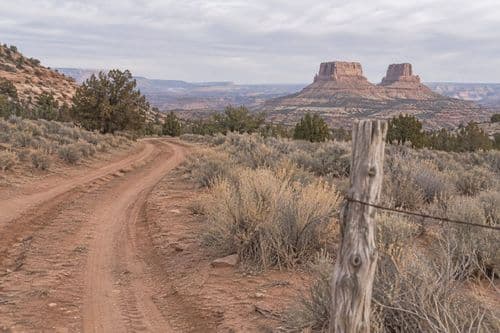
On Dec. 4, 2017, President Donald Trump Signed Proclamations Shrinking Two Utah National Monuments, Opening a Fight Over Public Land With two signatures, a president redrew the map of the American West, and a legal and political tug-of-war over the Antiquities Act began. On Dec. 4, 2017, President Donald Trump traveled to Salt Lake City and signed proclamations that sharply reduced Bears Ears National Monument and Grand Staircase-Escalante National Monument in Utah. It was the largest rollback of a national monument designation in modern U.S. history, and it turned a century-old law into the center of a very modern argument. The Great Rollback   Bears Ears had been designated only a year earlier, when President Barack Obama set aside about 1.35 million acres of red-rock canyon country in southeastern Utah, land sacred to many Native American tribes and dense with archaeological sites. Trump's proclamation cut it by roughly 85 percent, to about 200,000 acres, and split what remained into two separate units. Grand Staircase-Escalante, created by President Bill Clinton in 1996, was reduced by nearly half, from about 1.9 million acres to roughly one million. Supporters, including much of Utah's Republican leadership, said the designations had been federal overreach that locked up land local communities wanted managed closer to home. Opponents, including a coalition of tribes that had pushed for Bears Ears, said the president lacked the power to undo what his predecessors had created. The law at the heart of it, the Antiquities Act of 1906, lets presidents create monuments. It says nothing explicit about shrinking them, a silence that suddenly mattered enormously. Lawsuits were filed almost immediately by tribes, conservation groups and outdoor-gear companies, and the question of whether a president can shrink a monument sat unresolved in court for years. It never reached a final ruling. In October 2021, President Joe Biden issued proclamations restoring both monuments to their earlier boundaries, making the lands' status dependent on who held the White House rather than on a verdict. The outcome carried its own irony: a law written to protect places for the ages had become one of the most reversible instruments in American politics. The red-rock canyons themselves, indifferent to the paperwork, stayed exactly where they were.  

01 December 2026

Post

Dec. 1, 2009: The Lisbon Treaty Takes Effect

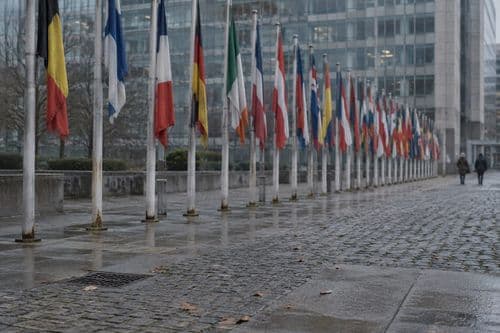
Dec. 1, 2009: After Years of Rejection and Delay, the Lisbon Treaty Takes Effect and the European Union Gets a New Set of Rules A treaty once left for dead after an Irish "no" quietly became law, handing the EU a permanent president and a new foreign-policy chief. On Dec. 1, 2009, the Treaty of Lisbon entered into force, closing out a decade of institutional wrangling inside the European Union. There were no parades. The change arrived as a calendar turnover, and it rewired how 27 member states made decisions. The Long Road   The treaty had been signed in Lisbon on Dec. 13, 2007, after the failure of a more ambitious EU constitution that French and Dutch voters had rejected in 2005. Lisbon was meant to be the leaner replacement, a set of amendments to existing treaties rather than a grand founding document. It still needed ratification in every member state, and Ireland, the only country to put it to a popular vote, rejected it in June 2008. Brussels was left with a treaty that could not take effect. Ireland held a second referendum in October 2009, after securing assurances on issues such as taxation and neutrality, and voters approved it by a wide margin. The Czech Republic was the last holdout. President Václav Klaus, a prominent critic of the treaty, signed it on Nov. 3, 2009, only after the Czech Constitutional Court cleared it. After more than two years of stalling, the final obstacle was a signature. With the treaty in force, the EU created two new jobs. Belgian Prime Minister Herman Van Rompuy, chosen by national leaders at a Brussels dinner on Nov. 19, became the first full-time President of the European Council. Britain's Catherine Ashton became the High Representative for foreign affairs and security policy. Both appointments surprised many observers, who had expected bigger names. The treaty also expanded the European Parliament's powers and changed voting rules among governments. Its most famous provision may be Article 50, which set out for the first time how a member state could leave the Union. It looked like a procedural footnote in 2009. Seven years later, the United Kingdom would invoke it.  

27 November 2026

Post

Nov. 27, 2007: The Annapolis Peace Conference

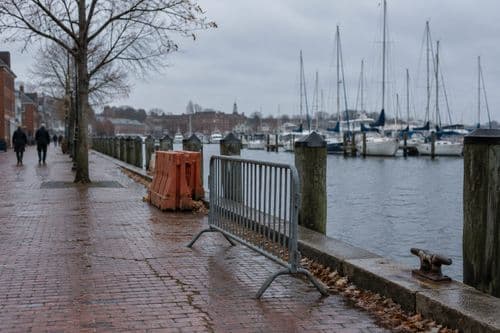
On Nov. 27, 2007, a Naval Academy town in Maryland hosted Israeli and Palestinian leaders for a summit meant to restart a peace process that had been dormant for years The Annapolis Conference gathered dozens of governments and set a one-year deadline for a deal that history would not deliver. Annapolis, Maryland, is better known for sailors than for Middle East diplomacy. On Nov. 27, 2007, it became the stage for one of the most ambitious American-led peace efforts of the decade. President George W. Bush welcomed Israeli Prime Minister Ehud Olmert and Palestinian Authority President Mahmoud Abbas, along with representatives from dozens of countries and international organizations, including Arab states that had long avoided such gatherings. The Handshake Year   The conference's centerpiece was a short document called the Joint Understanding. Bush read it aloud with Olmert and Abbas at his side. In it, the two sides agreed to begin bilateral negotiations on Dec. 12, 2007, and to make every effort to conclude a peace treaty by the end of 2008. The deadline was the boldest part of the plan, and it was written into the record in front of the cameras. The guest list was nearly as notable as the text. Delegations from across the Arab world sat in the same rooms as Israeli officials, a sign that regional capitals were at least willing to be seen at the table. The summit came after years in which American attention had been consumed by Iraq and Afghanistan, and the Israeli-Palestinian track had stalled. Annapolis was meant to prove it could move again. For one day, with flags lined up and leaders posed together, it looked as though it might. The talks did begin, as promised, and they continued through 2008 in a series of closed-door sessions. But the deadline arrived without a treaty. Olmert left office in 2009, Bush's presidency ended in January of that year, and the conflict's hardest questions remained exactly where they had been. Annapolis is now remembered less for what it produced than for what it promised. The summit's most concrete achievement was a calendar, and the calendar ran out. It stands as a reminder that in diplomacy, setting a date is the easy part.  

24 November 2026

Post

Nov. 24, 2013: The Geneva Iran Nuclear Deal

On Nov. 24, 2013, Iran and Six World Powers Reached a Pre-Dawn Interim Nuclear Deal in Geneva After four days of marathon talks, diplomats struck a six-month bargain that froze parts of Iran's nuclear program and set off a fierce debate that outlasted the deal itself. In the small hours of Sunday, Nov. 24, 2013, in a Geneva hotel, negotiators finished a document few had expected to see. The Joint Plan of Action, agreed by Iran and the P5+1 (the United States, United Kingdom, France, Russia, China and Germany), was the first formal agreement between Tehran and Washington on its nuclear program in more than three decades of hostility. The Geneva Bargain   The talks had stalled earlier in November, and a first attempt to close a deal had fallen short. This round pulled in foreign ministers from the participating powers, with Secretary of State John Kerry and Iranian Foreign Minister Mohammad Javad Zarif at the center. European Union foreign policy chief Catherine Ashton, who coordinated the talks for the six powers, announced the agreement alongside Zarif. The terms were narrow by design. Iran agreed to stop enriching uranium beyond 5 percent, to dilute or convert its stockpile of 20 percent enriched material, to add no new centrifuges, and to halt progress at its Arak reactor. International inspectors would gain more frequent access. In exchange, the powers offered limited relief from sanctions, valued by the White House at roughly $7 billion, and promised no new nuclear-related sanctions during the six-month period. Nothing in the text resolved the larger question of what Iran's program would look like in the long run. The deal was explicitly a pause meant to buy time for a permanent agreement, a bargain whose whole purpose was to make room for another bargain. President Barack Obama addressed the nation from the White House that evening, calling the agreement a first step that made the world safer. The reaction was anything but unified. Israeli Prime Minister Benjamin Netanyahu called it a historic mistake, and critics in Congress argued that sanctions relief came too early. Supporters countered that the freeze would extend the time Iran would need to build a weapon, and that talking was better than the alternatives. The interim terms took effect in January 2014 and were extended while negotiators worked toward a comprehensive deal, which arrived in July 2015 as the Joint Comprehensive Plan of Action. The agreement that was supposed to be temporary became the opening chapter of a diplomatic saga that was still being argued over years later.  

22 November 2026

Post

Nov. 22, 2005: Merkel Becomes Germany's Chancellor

On Nov. 22, 2005, Angela Merkel Won the Bundestag's Vote and Became the First Woman to Lead Germany A physicist raised in East Germany took the chancellery on a day when dozens of lawmakers in her own coalition held back their votes. On Nov. 22, 2005, in Berlin, the Bundestag voted on who would succeed Gerhard Schröder as chancellor. The result put a 51-year-old Christian Democrat in the job, and she held it far longer than almost anyone in that chamber could have predicted. The Chancellor   Angela Merkel arrived at the vote after an inconclusive September election that left Germany's two biggest parties nearly tied. Weeks of negotiation produced a grand coalition between her Christian Democratic Union and its Bavarian sister party, and the Social Democrats Schröder had led. Merkel, born in Hamburg but raised in East Germany, held a doctorate in physics and had entered politics only after the Berlin Wall fell. On the day of the vote she needed 308 votes for a majority in the 614-seat chamber. She received 397. The coalition held 448 seats, so dozens of its own members had not backed her. It was a quiet reminder that even a historic win can come with a visible shortfall. Still, the arithmetic was settled, and she became both the first woman and the first chancellor from the former East to hold the office. After the vote she was sworn in the same day, and the long run of her chancellery began with a coalition of rivals. She would remain in office until December 2021, serving through four terms and a series of crises, including the global financial collapse and the eurozone debt emergency. The scientist who once measured the behavior of molecules came to be known for patient, methodical politics. Many of the lawmakers who withheld their support on that November afternoon later served under her for years. The same chamber that hesitated at her debut ended up guiding its country through the longest stretch of continuous leadership in modern German democracy.  

18 November 2026

Post

Nov. 18, 2013: MAVEN Launches to Mars

On Nov. 18, 2013, NASA's MAVEN Spacecraft Rocketed Toward Mars to Solve the Mystery of the Vanishing Atmosphere A single Atlas V launch from Florida set out to answer how a planet that once may have had rivers and lakes ended up cold, dry and nearly airless. On the afternoon of Nov. 18, 2013, an Atlas V rocket climbed off the pad at Cape Canaveral Air Force Station in Florida carrying a spacecraft with an unusual assignment. Most Mars missions had gone to look at the ground. MAVEN, short for Mars Atmosphere and Volatile EvolutioN, was built to look up, at the thin, tattered air that is all that remains of whatever Mars once had. The Missing Sky   Orbiters and rovers had already turned up channels, minerals and ancient lakebeds that pointed to a wetter, warmer Mars in the distant past. Water that flows on the surface needs a thicker atmosphere than the one the planet has now, so the obvious question was where that atmosphere went. MAVEN was NASA's attempt to measure the answer rather than guess at it. The spacecraft lifted off at 1:28 p.m. Eastern time aboard an Atlas V 401, on the first day of its launch period. Its plan was to settle into a looping orbit around Mars and sample the planet's upper atmosphere directly, while tracking the solar wind and ultraviolet light that strip gas away into space. Its instruments were designed to watch that process in action instead of inferring it from rocks. It was a small, focused mission built around a single big question, and its mission team knew that the answer might reveal as much about Earth's own long-term fate as about its neighbor's. It would be a ten-month trip before anyone could begin to find out. The trip ended on Sept. 21, 2014, when MAVEN fired its engines and slipped into orbit around Mars. It arrived just three days before India's Mars Orbiter Mission, which had left Earth two weeks before MAVEN, on Nov. 5, 2013. The two missions had set out in the same narrow launch window and finished the journey nearly together. Once MAVEN began its science work, it confirmed that the solar wind was a major force in eroding the Martian atmosphere, and NASA reported in 2015 that the loss was far greater during solar storms. The spacecraft that was built to look at what Mars had lost became, in effect, a witness to the loss still happening. Mars is not simply a planet that once had air. It is a planet whose air is, even now, still leaving.  

18 November 2026

Post

November 18: Steamboat Willie Debuts, Breaking Dawn Opens

■  The Pop Edition November 18: Steamboat Willie Debuts, Breaking Dawn Opens A cartoon mouse whistled his way into sound-film history in 1928, Twilight split its finale in two in 2011, and Owen Wilson turns 58. Here is the full accounting of November 18. Mickey Mouse at the wheel in Steamboat Willie, the 1928 cartoon that premiered in New York. November 18 is a day with two very different kinds of staying power. In 1928, a short cartoon with a whistling mouse opened on Broadway and set the template for an entire studio. In 2011, a vampire romance began the first half of its last chapter. Add a Wes Anderson regular, a Metallica guitarist and a few film openings that still get rewatched, and this date has plenty to offer. THE MOMENT: Steamboat Willie   The mask in this story is really a mouse. On November 18, 1928, Steamboat Willie premiered at the Colony Theatre in New York, and it was not the first Mickey Mouse cartoon Walt Disney had made. Plane Crazy and The Gallopin’ Gaucho were finished earlier, but they were silent, and neither found a distributor. Willie was the one that audiences saw first, and the reason was sound. Disney had watched The Jazz Singer change the business and decided his mouse needed a soundtrack that matched the action. The short was synchronized to music and effects using Pat Powers’ Cinephone system. Pots, pans and a goat’s tail all became instruments, and the gags were timed to the beat. Disney himself supplied the few squeaks and whistles Mickey makes. New York critics noticed, and Disney had a character to build a studio around. Mickey later got his own voice, and the November 18 premiere is now treated as his birthday. The original short entered the US public domain on January 1, 2024, 95 years after it opened, which gave this old cartoon a second round of attention.   Born On This Day Owen Wilson BORN 1968 · TURNS 58 Wilson began as a screenwriter, co-writing Bottle Rocket with Wes Anderson and later earning an Oscar nomination for co-writing The Royal Tenenbaums. He became a comedy lead in Zoolander and Wedding Crashers, voiced Lightning McQueen in the Cars films, and played Mobius in the Marvel series Loki. Kirk Hammett BORN 1962 · TURNS 64 Hammett played in Exodus before joining Metallica in 1983, replacing Dave Mustaine. His lead work shaped albums from Ride the Lightning to the Black Album, and he went into the Rock and Roll Hall of Fame with the band in 2009. Chloë Sevigny BORN 1974 · TURNS 52 Sevigny went from downtown New York fashion fixture to film debut in Kids in 1995. She earned an Oscar nomination for Boys Don’t Cry and later won a Golden Globe for the HBO drama Big Love. Delroy Lindo BORN 1952 · TURNS 74 Lindo built a long stage and screen career with Spike Lee, appearing in Malcolm X and Clockers and later leading Da 5 Bloods. He has stayed busy, with a role in the 2025 film Sinners.   OPENING WEEKEND: The Twilight Saga: Breaking Dawn – Part 1 The fourth Twilight film opened in US theaters on Friday, November 18, 2011, and it was the first of two movies built from a single book. Bill Condon, who had won an Oscar for writing Gods and Monsters, directed both halves, and the two parts were shot back to back rather than separately. Splitting the final novel was a strategy the Harry Potter series had already used with Deathly Hallows, which came out the same month. Fans of Breaking Dawn got the wedding, the honeymoon and a dangerous pregnancy in Part 1, with the finale held for the following year. It opened to roughly $138 million in the US and Canada, and reviews were harsher than the grosses. Fifteen years on, the series has had a second life online and in streaming, and this installment is remembered for its wedding and some spirited fan debate.   Meanwhile… 1928On November 18, 1928, Steamboat Willie premiered at New York’s Colony Theatre, and Mickey Mouse’s birthday has been counted from that date ever since. 1963Bell System began commercial service of push-button Touch-Tone telephones on November 18, 1963, ending the rotary dial’s monopoly over how people called. 1985Bill Watterson’s Calvin and Hobbes debuted in newspapers on November 18, 1985, and ran for ten years. 2005Harry Potter and the Goblet of Fire opened in the US on November 18, 2005, the first film in the series rated PG-13. 2005The Johnny Cash biopic Walk the Line also opened on November 18, 2005, with Joaquin Phoenix and Reese Witherspoon doing their own singing. 2016Fantastic Beasts and Where to Find Them opened in the US on November 18, 2016, ten years ago, launching a new series set in the Harry Potter world. From a mouse at a ship’s wheel to a vampire wedding, November 18 has a way of turning small bets into long franchises. Tomorrow brings another date and another stack of premieres, birthdays and oddities worth a second look. Come back then, and bring a friend who loves this stuff.
Terms and ConditionsDo Not Sell or Share My Personal InformationPrivacy PolicyPrivacy NoticeAccessibility NoticeUnsubscribe
Copyright © 2026 Day In History