Politics

Recent Content

Dec. 2, 2020: UK Approves the Pfizer Vaccine

Dec. 2, 2020: UK Approves the Pfizer Vaccine

Read more
December 2: One Sweet Day Debuts, Versace Is Born

December 2: One Sweet Day Debuts, Versace Is Born

Read more
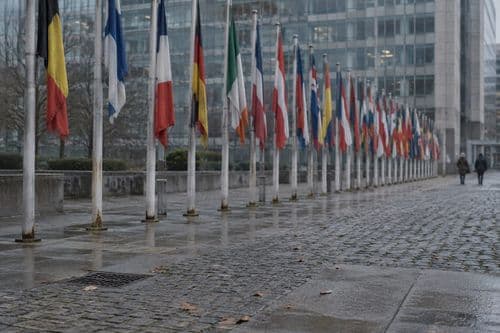
Dec. 1, 2009: The Lisbon Treaty Takes Effect

Dec. 1, 2009: The Lisbon Treaty Takes Effect

Read more
December 1: Pistols Hit Live TV, Jorgensen Makes News

December 1: Pistols Hit Live TV, Jorgensen Makes News

Read more
Nov. 30, 2004: Ken Jennings's Jeopardy! Streak Ends

Nov. 30, 2004: Ken Jennings's Jeopardy! Streak Ends

Read more
logo
  • Introduction

  • Lessons From The Past

  • Cultural Awareness and Diversity

  • Appreciation for Progress

  • Understanding Political and Social Dynamics

  • Preserving Cultural Heritage

  • Conclusion

Nov. 22, 2005: Merkel Becomes Germany's Chancellor

On Nov. 22, 2005, Angela Merkel Won the Bundestag's Vote and Became the First Woman to Lead Germany

A physicist raised in East Germany took the chancellery on a day when dozens of lawmakers in her own coalition held back their votes.

On Nov. 22, 2005, in Berlin, the Bundestag voted on who would succeed Gerhard Schröder as chancellor. The result put a 51-year-old Christian Democrat in the job, and she held it far longer than almost anyone in that chamber could have predicted.

The Chancellor

Angela Merkel arrived at the vote after an inconclusive September election that left Germany's two biggest parties nearly tied. Weeks of negotiation produced a grand coalition between her Christian Democratic Union and its Bavarian sister party, and the Social Democrats Schröder had led. Merkel, born in Hamburg but raised in East Germany, held a doctorate in physics and had entered politics only after the Berlin Wall fell. On the day of the vote she needed 308 votes for a majority in the 614-seat chamber. She received 397. The coalition held 448 seats, so dozens of its own members had not backed her. It was a quiet reminder that even a historic win can come with a visible shortfall. Still, the arithmetic was settled, and she became both the first woman and the first chancellor from the former East to hold the office.

After the vote she was sworn in the same day, and the long run of her chancellery began with a coalition of rivals. She would remain in office until December 2021, serving through four terms and a series of crises, including the global financial collapse and the eurozone debt emergency. The scientist who once measured the behavior of molecules came to be known for patient, methodical politics. Many of the lawmakers who withheld their support on that November afternoon later served under her for years. The same chamber that hesitated at her debut ended up guiding its country through the longest stretch of continuous leadership in modern German democracy.

[#~image_alt_1~#]

More History

01 December 2026

Post

Dec. 1, 2009: The Lisbon Treaty Takes Effect

Dec. 1, 2009: After Years of Rejection and Delay, the Lisbon Treaty Takes Effect and the European Union Gets a New Set of Rules A treaty once left for dead after an Irish "no" quietly became law, handing the EU a permanent president and a new foreign-policy chief. On Dec. 1, 2009, the Treaty of Lisbon entered into force, closing out a decade of institutional wrangling inside the European Union. There were no parades. The change arrived as a calendar turnover, and it rewired how 27 member states made decisions. The Long Road   The treaty had been signed in Lisbon on Dec. 13, 2007, after the failure of a more ambitious EU constitution that French and Dutch voters had rejected in 2005. Lisbon was meant to be the leaner replacement, a set of amendments to existing treaties rather than a grand founding document. It still needed ratification in every member state, and Ireland, the only country to put it to a popular vote, rejected it in June 2008. Brussels was left with a treaty that could not take effect. Ireland held a second referendum in October 2009, after securing assurances on issues such as taxation and neutrality, and voters approved it by a wide margin. The Czech Republic was the last holdout. President Václav Klaus, a prominent critic of the treaty, signed it on Nov. 3, 2009, only after the Czech Constitutional Court cleared it. After more than two years of stalling, the final obstacle was a signature. With the treaty in force, the EU created two new jobs. Belgian Prime Minister Herman Van Rompuy, chosen by national leaders at a Brussels dinner on Nov. 19, became the first full-time President of the European Council. Britain's Catherine Ashton became the High Representative for foreign affairs and security policy. Both appointments surprised many observers, who had expected bigger names. The treaty also expanded the European Parliament's powers and changed voting rules among governments. Its most famous provision may be Article 50, which set out for the first time how a member state could leave the Union. It looked like a procedural footnote in 2009. Seven years later, the United Kingdom would invoke it.  

27 November 2026

Post

Nov. 27, 2007: The Annapolis Peace Conference

On Nov. 27, 2007, a Naval Academy town in Maryland hosted Israeli and Palestinian leaders for a summit meant to restart a peace process that had been dormant for years The Annapolis Conference gathered dozens of governments and set a one-year deadline for a deal that history would not deliver. Annapolis, Maryland, is better known for sailors than for Middle East diplomacy. On Nov. 27, 2007, it became the stage for one of the most ambitious American-led peace efforts of the decade. President George W. Bush welcomed Israeli Prime Minister Ehud Olmert and Palestinian Authority President Mahmoud Abbas, along with representatives from dozens of countries and international organizations, including Arab states that had long avoided such gatherings. The Handshake Year   The conference's centerpiece was a short document called the Joint Understanding. Bush read it aloud with Olmert and Abbas at his side. In it, the two sides agreed to begin bilateral negotiations on Dec. 12, 2007, and to make every effort to conclude a peace treaty by the end of 2008. The deadline was the boldest part of the plan, and it was written into the record in front of the cameras. The guest list was nearly as notable as the text. Delegations from across the Arab world sat in the same rooms as Israeli officials, a sign that regional capitals were at least willing to be seen at the table. The summit came after years in which American attention had been consumed by Iraq and Afghanistan, and the Israeli-Palestinian track had stalled. Annapolis was meant to prove it could move again. For one day, with flags lined up and leaders posed together, it looked as though it might. The talks did begin, as promised, and they continued through 2008 in a series of closed-door sessions. But the deadline arrived without a treaty. Olmert left office in 2009, Bush's presidency ended in January of that year, and the conflict's hardest questions remained exactly where they had been. Annapolis is now remembered less for what it produced than for what it promised. The summit's most concrete achievement was a calendar, and the calendar ran out. It stands as a reminder that in diplomacy, setting a date is the easy part.  

24 November 2026

Post

Nov. 24, 2013: The Geneva Iran Nuclear Deal

On Nov. 24, 2013, Iran and Six World Powers Reached a Pre-Dawn Interim Nuclear Deal in Geneva After four days of marathon talks, diplomats struck a six-month bargain that froze parts of Iran's nuclear program and set off a fierce debate that outlasted the deal itself. In the small hours of Sunday, Nov. 24, 2013, in a Geneva hotel, negotiators finished a document few had expected to see. The Joint Plan of Action, agreed by Iran and the P5+1 (the United States, United Kingdom, France, Russia, China and Germany), was the first formal agreement between Tehran and Washington on its nuclear program in more than three decades of hostility. The Geneva Bargain   The talks had stalled earlier in November, and a first attempt to close a deal had fallen short. This round pulled in foreign ministers from the participating powers, with Secretary of State John Kerry and Iranian Foreign Minister Mohammad Javad Zarif at the center. European Union foreign policy chief Catherine Ashton, who coordinated the talks for the six powers, announced the agreement alongside Zarif. The terms were narrow by design. Iran agreed to stop enriching uranium beyond 5 percent, to dilute or convert its stockpile of 20 percent enriched material, to add no new centrifuges, and to halt progress at its Arak reactor. International inspectors would gain more frequent access. In exchange, the powers offered limited relief from sanctions, valued by the White House at roughly $7 billion, and promised no new nuclear-related sanctions during the six-month period. Nothing in the text resolved the larger question of what Iran's program would look like in the long run. The deal was explicitly a pause meant to buy time for a permanent agreement, a bargain whose whole purpose was to make room for another bargain. President Barack Obama addressed the nation from the White House that evening, calling the agreement a first step that made the world safer. The reaction was anything but unified. Israeli Prime Minister Benjamin Netanyahu called it a historic mistake, and critics in Congress argued that sanctions relief came too early. Supporters countered that the freeze would extend the time Iran would need to build a weapon, and that talking was better than the alternatives. The interim terms took effect in January 2014 and were extended while negotiators worked toward a comprehensive deal, which arrived in July 2015 as the Joint Comprehensive Plan of Action. The agreement that was supposed to be temporary became the opening chapter of a diplomatic saga that was still being argued over years later.  

17 November 2026

Post

Nov. 17, 2003: Schwarzenegger Becomes Governor

On Nov. 17, 2003, Arnold Schwarzenegger Was Sworn In as Governor of California, Completing a Recall Election Unlike Any the State Had Seen Six weeks after voters threw out Gray Davis, the action star took the oath in Sacramento and began the job he had campaigned for. On Nov. 17, 2003, Arnold Schwarzenegger stood on the steps of the California State Capitol and took the oath of office as the state's 38th governor. It was the finish of one of the strangest campaigns in American political history, a sprint that went from a late-night talk show announcement to the governor's office in barely three months. The Recall Governor   The path to that day began on Oct. 7, 2003, when California voters recalled Democratic Gov. Gray Davis, who had won re-election less than a year earlier. Davis became only the second governor in American history to be removed by recall, after North Dakota's Lynn Frazier in 1921. The ballot had two parts: whether to remove Davis, and who should replace him. The replacement field was enormous, packed with politicians, entertainers and private citizens. Schwarzenegger had announced his candidacy on The Tonight Show with Jay Leno in August, choosing a late-night couch over a press conference. When the votes were counted, a majority had voted to recall Davis, and Schwarzenegger won the replacement contest with a plurality of the vote. The man best known for playing a machine in The Terminator had beaten the entire political establishment of the nation's largest state, and he had done it by running against the idea of the establishment itself. The swearing-in took place outdoors in Sacramento, where Schwarzenegger took the oath from California Chief Justice Ronald George and became governor of a state grappling with a serious budget crisis. He moved quickly on his signature campaign promise, signing an executive order to roll back an increase in the state's vehicle license fee. It was a fitting first act for a candidate who had promised to clean house. His time in office would be defined by deals with the same legislators he had once vowed to overpower, and by the compromises that governing demands. A man who built a career on playing someone who needed no negotiation spent seven years learning how much of California politics runs on exactly that.  

31 October 2026

Post

Oct. 31, 2001: SEC Opens Formal Enron Probe

October 31, 2001: The SEC Turns Its Formal Gaze on Enron A routine inquiry became a full federal investigation, and the countdown to one of corporate America's greatest collapses began in earnest. On October 31, 2001, the Securities and Exchange Commission upgraded its informal inquiry into Enron Corporation into a formal investigation, a bureaucratic shift that carried subpoena power and signaled to Wall Street that the Houston energy giant's troubles were far from a passing accounting hiccup. Just weeks earlier, Enron had stunned investors by disclosing a $1.2 billion reduction in shareholder equity tied to murky off-the-books partnerships. The SEC's move on Halloween transformed vague unease into an official reckoning. The Paper Trail   The formal investigation gave federal regulators the legal teeth to demand documents, compel testimony, and trace the labyrinth of special-purpose entities that Enron's finance team, led by CFO Andrew Fastow, had used to hide debt and inflate profits. Within days, Enron's stock, which had traded above $90 a share a year earlier, was in free fall toward single digits. Arthur Andersen, the company's auditor, began shredding Enron-related documents that same week, an act that would later cost the accounting firm its existence. What began as a quiet regulatory filing on an otherwise ordinary autumn Wednesday had, almost overnight, become the opening chapter of the largest corporate fraud case America had ever seen. By December, Enron had filed for what was then the largest bankruptcy in U.S. history, wiping out thousands of employee pensions invested heavily in company stock. The formal SEC probe launched on October 31 eventually fed into criminal prosecutions of top executives, including CEO Jeffrey Skilling and founder Kenneth Lay, and directly inspired the Sarbanes-Oxley Act of 2002, which rewrote the rules of corporate accounting oversight. A single procedural upgrade, filed on Halloween in a nondescript federal office, had set in motion reforms that still govern how publicly traded companies report their books today.  

19 October 2026

Post

Oct. 19, 2005: Saddam Hussein's Trial Begins

On October 19, 2005, Saddam Hussein Stood Trial in a Baghdad Courtroom He Once Ruled Over The deposed Iraqi dictator faced a tribunal of his own countrymen, a scene almost unimaginable just two years earlier. On October 19, 2005, Saddam Hussein appeared before the Iraqi Special Tribunal in Baghdad, marking the start of his trial on charges stemming from the 1982 massacre of 148 Shiite men in the town of Dujail. It was the first time a former head of state had been tried in his own country's courts for crimes committed while in power, and the proceedings unfolded under extraordinary security in a nation still reeling from his ouster. The Defendant   Saddam entered the courtroom defiant, refusing at first to confirm his identity to the presiding judge and repeatedly interrupting proceedings to declare he remained the president of Iraq. Flanked by seven co-defendants, including former Vice President Taha Yassin Ramadan, he wore a dark suit rather than prison garb, a deliberate choice that underscored his refusal to accept the tribunal's legitimacy. Outside the fortified Green Zone courtroom, Iraq remained gripped by insurgent violence, a grim backdrop to a legal process meant to symbolize a break from decades of autocratic rule. The trial was adjourned after only three hours, a brief first session that nonetheless became a defining image of the post-invasion era. The Dujail case was chosen as a manageable starting point among the many atrocities attributed to Saddam's government, including the Anfal campaign against Kurds and the suppression of the 1991 uprisings. Human rights observers and legal scholars debated whether the tribunal, established under an occupation-era legal framework, could deliver justice seen as credible both domestically and internationally. Saddam would be convicted in the Dujail case in November 2006 and executed the following month, closing a trial that began with a man insisting he still held the office he had lost in the war's opening days.  

15 October 2026

Post

Oct. 15, 2008: 'Joe the Plumber' Debate Night

On October 15, 2008, Barack Obama and John McCain Met for Their Final, Fiercest Debate A town-hall-style showdown at Hofstra University turned a plumber's name into a household phrase and sharpened the closing arguments of a historic race. With the financial crisis still rattling markets and early voting already underway in several states, Barack Obama and John McCain arrived at Hofstra University on October 15, 2008, for their third and final presidential debate. Moderated by Bob Schieffer of CBS News, the encounter was sharper and more personal than the two that preceded it, with both candidates fighting to define the campaign's final three weeks. Meet Joe   McCain, trailing in most national polls, came out aggressive from the opening exchange, pressing Obama on taxes, spending, and his association with William Ayers. But the moment that outlasted the news cycle arrived when McCain invoked Joe Wurzelbacher, an Ohio man who had confronted Obama days earlier about his small-business tax plan. McCain repeated 'Joe the Plumber' more than twenty times over the ninety minutes, turning a campaign-trail encounter into a debate-stage mascot. Obama, for his part, addressed Wurzelbacher directly on camera, defending his proposal to raise taxes on incomes above $250,000 while insisting most small businesses would see cuts. By the next morning, Wurzelbacher — who was not, in fact, a licensed plumber — was the most talked-about man in America who wasn't actually running for anything. Beyond the Joe the Plumber theatrics, the debate covered ground that would define the final stretch: the $700 billion financial bailout passed weeks earlier, health care mandates, education spending, and the candidates' sharply different temperaments under pressure. Snap polls from CBS News and CNN both showed Obama winning the exchange, continuing a pattern from the first two debates that left McCain's campaign searching for a turning point that never quite arrived. Three weeks later, Obama would be elected the 44th president, while Wurzelbacher briefly parlayed his newfound fame into a country single and a congressional run of his own — a footnote of an economic crisis that outlived the debate stage that made him famous.  

10 October 2026

Post

Oct. 10, 2014: Malala Wins the Nobel Peace Prize

On October 10, 2014, Malala Yousafzai Became the Youngest Nobel Peace Prize Laureate in History A teenager shot for demanding an education was honored by the world's highest peace award, shared with a lifelong crusader against child labor. On the morning of October 10, 2014, the Norwegian Nobel Committee in Oslo announced that the Nobel Peace Prize would be split between two unlikely allies: 17-year-old Pakistani education activist Malala Yousafzai and 60-year-old Indian children's rights campaigner Kailash Satyarthi. The pairing, the committee said, was meant to underline a shared struggle — one waged across a generational and national divide — against the oppression of children and young people and for the right of all children to education. The Youngest Laureate   Malala had been a public figure since age 11, blogging anonymously for the BBC about life under Taliban rule in Pakistan's Swat Valley, where the group had banned girls from attending school. In October 2012, gunmen boarded her school bus and shot her in the head in an attempted assassination meant to silence her. She survived after emergency treatment in Birmingham, England, and used her recovery as a launching point, addressing the United Nations on her sixteenth birthday and co-founding the Malala Fund to expand girls' access to education worldwide. When the Nobel Committee called her name two years after the shooting, she was still a teenager finishing high school in England, suddenly the youngest person ever to receive a Nobel Prize in any category — a record that remains unbroken. Kailash Satyarthi had spent more than three decades running the Bachpan Bachao Andolan, or Save the Childhood Movement, conducting raids that freed tens of thousands of Indian children from forced labor and trafficking, often at personal risk. The Nobel Committee's decision to unite him with Malala was deliberate: a Hindu man from India and a Muslim girl from Pakistan, two nations with a long history of conflict, standing together for a single cause. Malala accepted the honor with characteristic understatement, saying she wanted to be remembered not as 'the girl who was shot' but as the girl who fought for education — a distinction the world, for once, seemed ready to grant her.  

07 October 2026

Post

Oct. 7, 2008: Obama-McCain Town Hall Debate

October 7, 2008: Obama and McCain Meet the Voters as Wall Street Burns In the shadow of a collapsing economy, two presidential candidates traded questions with undecided voters in a Nashville gymnasium. On October 7, 2008, Barack Obama and John McCain walked onto a town-hall-style stage at Belmont University in Nashville, Tennessee, for the second of three presidential debates. Moderated by NBC's Tom Brokaw, the format put ordinary citizens and a live studio audience in charge of the questions, just weeks after the collapse of Lehman Brothers had sent the U.S. financial system into freefall. The Town Hall   The debate arrived at a moment of genuine national panic. Congress had just passed a $700 billion bank bailout days earlier, and both candidates were forced to answer for a crisis neither had caused but both now had to fix. Obama, still a first-term senator, argued for targeted relief tied to Wall Street accountability, while McCain, leaning on decades in the Senate, floated a plan to have the government buy up bad home mortgages directly. Brokaw kept both men tethered to a strict two-minute clock, occasionally scolding them for wandering. Voters in the hall, chosen by Gallup for their undecided status, asked plainly about jobs, healthcare, and whether their savings were safe, a reminder that the abstractions of policy were, for them, entirely personal. Physically, the two candidates could not have contrasted more sharply: McCain paced deliberately across the stage between questions, while Obama tended to answer from a stool, leaning toward audience members as if in conversation rather than combat. Snap polls afterward, including one from CNN, gave Obama a modest edge, continuing a trend that had begun after the first debate in Mississippi. Neither man landed a knockout blow, but the split-screen imagery of the two of them circling a shared microphone endured as a visual shorthand for a race being decided less by rhetoric than by a stock ticker no one on that stage could actually control.  

02 October 2026

Post

Oct. 2, 2008: Palin-Biden Face Off in VP Debate

On October 2, 2008, Sarah Palin and Joe Biden Met for the Year's Only Vice Presidential Debate At Washington University in St. Louis, a first-term Alaska governor and a six-term senator squared off in front of the largest audience in vice presidential debate history. On the night of October 2, 2008, with the country reeling from a collapsing financial system and a presidential race entering its final stretch, Republican vice presidential nominee Sarah Palin and Democratic nominee Joe Biden took the stage at Washington University in St. Louis for their one and only debate. Moderated by PBS journalist Gwen Ifill, the 90-minute face-off drew roughly 70 million television viewers, a record for a vice presidential debate, fueled in part by weeks of intense scrutiny over Palin's readiness for national office. The Showdown   Palin, the little-known governor of Alaska tapped just weeks earlier by John McCain, arrived under enormous pressure after a string of halting network interviews had raised doubts about her preparedness. She opened by asking Ifill for permission to skip some questions and speak directly to voters, a move that set an informal, folksy tone she maintained throughout the night, repeatedly invoking phrases like "you betcha" and referring to herself as a hockey mom taking on Washington insiders. Biden, a fixture of the Senate since 1973 and chairman of the Foreign Relations Committee, leaned on decades of policy experience, walking through detailed positions on the Iraq War, healthcare, and the unfolding Wall Street crisis. The contrast in styles was immediate and stark, and it became the defining storyline of the night, overshadowing much of the actual substance exchanged on stage. Both campaigns claimed victory afterward, but the debate's real legacy proved less about scorecards than survival: Palin had avoided the kind of on-camera stumble that critics feared, while Biden had kept his famous propensity for gaffes in check, at one point growing visibly emotional while discussing raising his sons alone after his first wife and daughter died in a car accident. Polls in the following days showed no dramatic shift in the presidential race, which Barack Obama and Biden would go on to win that November. Yet the debate remained a cultural touchstone for years afterward, remembered less for policy detail than for Tina Fey's uncanny impressions of Palin on Saturday Night Live, a reminder that in modern politics, performance can eclipse substance in the public memory.  

01 October 2026

Post

Oct. 1, 2013: The Federal Government Shuts Down

On October 1, 2013, Washington Gridlock Shuts Down the Federal Government A budget standoff over the Affordable Care Act froze federal agencies and furloughed hundreds of thousands of workers overnight. At the stroke of midnight on October 1, 2013, the United States government ran out of money. Congress had failed to pass a funding bill, and for the first time in 17 years, federal agencies from national parks to passport offices went dark, leaving roughly 800,000 workers furloughed and a nation wondering how basic governance had broken down so completely. The Standoff   The shutdown was the culmination of months of brinkmanship between House Republicans, led by Speaker John Boehner, and the Obama administration over funding the government while defunding or delaying the Affordable Care Act. Ted Cruz had staged a 21-hour Senate floor speech against the health law days earlier, rallying conservative resistance to any budget deal that left it intact. As midnight passed with no agreement, the Office of Management and Budget formally ordered agencies to execute shutdown plans. National parks closed their gates, the Smithsonian museums went dark, and NASA reduced staffing to a skeleton crew, even as the health insurance marketplaces at the center of the fight opened for enrollment that very same morning, an irony lost on no one in Washington. The shutdown stretched sixteen days, rattling markets and costing the economy an estimated $24 billion in lost output, according to Standard & Poor's. Tourists were turned away from Yellowstone and the Statue of Liberty, veterans groups stormed barricades at war memorials in protest, and federal contractors watched paychecks vanish. It finally ended on October 17, 2013, when Congress passed a last-minute deal reopening the government and raising the debt ceiling, with the Affordable Care Act left fully intact. The fight Republicans had waged to stop had changed nothing about the law it targeted, only the balance in the country's checkbook.  

29 September 2026

Post

Sept. 29, 2008: The Dow's Historic 777-Point Fall

September 29, 2008: The House Rejects the Bailout and Wall Street Falls Off a Cliff A single vote in Washington triggered the largest single-day point drop in Dow Jones history, laying bare the fragility of the global financial system. On September 29, 2008, the U.S. House of Representatives voted down a $700 billion emergency plan to rescue the nation's teetering banks, and within hours the New York Stock Exchange delivered its verdict: the Dow Jones Industrial Average cratered 777.68 points, the steepest one-day point loss the index had ever recorded. The financial crisis, already simmering for over a year through subprime mortgage failures and the collapse of Lehman Brothers weeks earlier, had suddenly become impossible for anyone—lawmaker or investor—to ignore. The Vote That Broke the Market   The Emergency Economic Stabilization Act, hastily drafted by Treasury Secretary Henry Paulson and congressional leaders, was meant to authorize the government to buy toxic mortgage-backed assets off bank balance sheets and stop the bleeding. Instead, it collapsed on the House floor by a vote of 228 to 205, as a bipartisan coalition of lawmakers balked at the price tag and the optics of bailing out Wall Street while their constituents faced foreclosure and job losses. Televised trading floors caught the moment live, with traders visibly reacting as the vote total flashed across financial news tickers. The rejection sent an unmistakable signal that Washington itself was uncertain how to contain the crisis, and markets abhor nothing more than uncertainty. By the closing bell, the Dow had shed $1.2 trillion in market value in a single session—more than the entire bailout package under debate. Credit markets seized further, banks grew even warier of lending to one another, and the panic rippled from Wall Street to Main Street almost instantly. Congress would return days later with a revised bill, sweetened with tax provisions and higher deposit insurance limits, and this time it passed. But the memory of that single afternoon lingered: the moment lawmakers said no, and the market answered with the loudest crash in its history.  

18 September 2026

Post

Sept. 18, 2014: Scotland Votes No on Independence

On September 18, 2014, Scotland Went to the Polls to Decide Whether to Leave the United Kingdom A record turnout of Scottish voters faced a single, deceptively simple question that would determine the fate of a 307-year-old union. On September 18, 2014, more than 4.2 million registered voters across Scotland lined up at polling stations to answer one question: 'Should Scotland be an independent country?' It was the culmination of years of political maneuvering, a referendum granted by Westminster and negotiated between Prime Minister David Cameron and Scotland's First Minister Alex Salmond, and it drew a turnout of 84.6 percent—the highest for any election in the UK since the introduction of universal suffrage. The Question   The referendum campaign had consumed Scotland for the better part of two years, splitting families, workplaces, and pubs into camps of 'Yes' and 'Better Together.' Salmond's Scottish National Party argued that full sovereignty would let Scotland control its own oil revenues, welfare policy, and foreign affairs. Opponents, including leaders from all three major UK parties, warned of economic uncertainty, a currency crisis, and the loss of Scotland's automatic EU membership. Polls in the campaign's final weeks showed the race tightening dramatically, prompting a last-minute scramble by Westminster leaders who traveled north pledging greater devolved powers if voters chose to stay. By the time ballots opened, the outcome felt genuinely uncertain for the first time in the campaign—a rarity for a union many had assumed was settled business. When the results came in overnight and into the morning of September 19, 'No' had won with 55.3 percent of the vote against 44.7 percent for 'Yes,' with 28 of Scotland's 32 council areas rejecting independence. Alex Salmond conceded and announced his resignation as First Minister the following day, while Prime Minister Cameron pledged to honor promises of expanded devolved powers for the Scottish Parliament. The vote settled the immediate question but not the underlying one—within two years, Britain's Brexit referendum would reopen the very fault lines the Scottish vote had seemed to close, as a majority of Scots voted to remain in the EU while England pulled the rest of the UK out.  
Terms and ConditionsDo Not Sell or Share My Personal InformationPrivacy PolicyPrivacy NoticeAccessibility NoticeUnsubscribe
Copyright © 2026 Day In History