Politics

Politics

17 November 2026

Nov. 17, 2003: Schwarzenegger Becomes Governor

On Nov. 17, 2003, Arnold Schwarzenegger Was Sworn In as Governor of California, Completing a Recall Election Unlike Any the State Had Seen Six weeks after voters threw out Gray Davis, the action star took the oath in Sacramento and began the job he had campaigned for. On Nov. 17, 2003, Arnold Schwarzenegger stood on the steps of the California State Capitol and took the oath of office as the state's 38th governor. It was the finish of one of the strangest campaigns in American political history, a sprint that went from a late-night talk show announcement to the governor's office in barely three months. The Recall Governor   The path to that day began on Oct. 7, 2003, when California voters recalled Democratic Gov. Gray Davis, who had won re-election less than a year earlier. Davis became only the second governor in American history to be removed by recall, after North Dakota's Lynn Frazier in 1921. The ballot had two parts: whether to remove Davis, and who should replace him. The replacement field was enormous, packed with politicians, entertainers and private citizens. Schwarzenegger had announced his candidacy on The Tonight Show with Jay Leno in August, choosing a late-night couch over a press conference. When the votes were counted, a majority had voted to recall Davis, and Schwarzenegger won the replacement contest with a plurality of the vote. The man best known for playing a machine in The Terminator had beaten the entire political establishment of the nation's largest state, and he had done it by running against the idea of the establishment itself. The swearing-in took place outdoors in Sacramento, where Schwarzenegger took the oath from California Chief Justice Ronald George and became governor of a state grappling with a serious budget crisis. He moved quickly on his signature campaign promise, signing an executive order to roll back an increase in the state's vehicle license fee. It was a fitting first act for a candidate who had promised to clean house. His time in office would be defined by deals with the same legislators he had once vowed to overpower, and by the compromises that governing demands. A man who built a career on playing someone who needed no negotiation spent seven years learning how much of California politics runs on exactly that.  
Politics

31 October 2026

Oct. 31, 2001: SEC Opens Formal Enron Probe

October 31, 2001: The SEC Turns Its Formal Gaze on Enron A routine inquiry became a full federal investigation, and the countdown to one of corporate America's greatest collapses began in earnest. On October 31, 2001, the Securities and Exchange Commission upgraded its informal inquiry into Enron Corporation into a formal investigation, a bureaucratic shift that carried subpoena power and signaled to Wall Street that the Houston energy giant's troubles were far from a passing accounting hiccup. Just weeks earlier, Enron had stunned investors by disclosing a $1.2 billion reduction in shareholder equity tied to murky off-the-books partnerships. The SEC's move on Halloween transformed vague unease into an official reckoning. The Paper Trail   The formal investigation gave federal regulators the legal teeth to demand documents, compel testimony, and trace the labyrinth of special-purpose entities that Enron's finance team, led by CFO Andrew Fastow, had used to hide debt and inflate profits. Within days, Enron's stock, which had traded above $90 a share a year earlier, was in free fall toward single digits. Arthur Andersen, the company's auditor, began shredding Enron-related documents that same week, an act that would later cost the accounting firm its existence. What began as a quiet regulatory filing on an otherwise ordinary autumn Wednesday had, almost overnight, become the opening chapter of the largest corporate fraud case America had ever seen. By December, Enron had filed for what was then the largest bankruptcy in U.S. history, wiping out thousands of employee pensions invested heavily in company stock. The formal SEC probe launched on October 31 eventually fed into criminal prosecutions of top executives, including CEO Jeffrey Skilling and founder Kenneth Lay, and directly inspired the Sarbanes-Oxley Act of 2002, which rewrote the rules of corporate accounting oversight. A single procedural upgrade, filed on Halloween in a nondescript federal office, had set in motion reforms that still govern how publicly traded companies report their books today.  

Politics

19 October 2026

Oct. 19, 2005: Saddam Hussein's Trial Begins

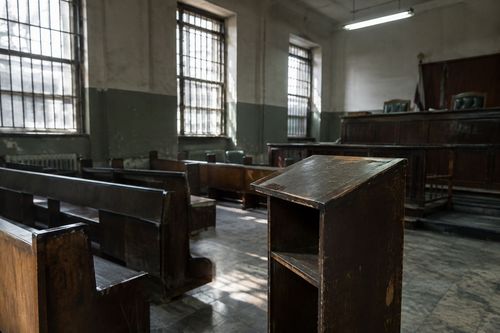
On October 19, 2005, Saddam Hussein Stood Trial in a Baghdad Courtroom He Once Ruled Over The deposed Iraqi dictator faced a tribunal of his own countrymen, a scene almost unimaginable just two years earlier. On October 19, 2005, Saddam Hussein appeared before the Iraqi Special Tribunal in Baghdad, marking the start of his trial on charges stemming from the 1982 massacre of 148 Shiite men in the town of Dujail. It was the first time a former head of state had been tried in his own country's courts for crimes committed while in power, and the proceedings unfolded under extraordinary security in a nation still reeling from his ouster. The Defendant   Saddam entered the courtroom defiant, refusing at first to confirm his identity to the presiding judge and repeatedly interrupting proceedings to declare he remained the president of Iraq. Flanked by seven co-defendants, including former Vice President Taha Yassin Ramadan, he wore a dark suit rather than prison garb, a deliberate choice that underscored his refusal to accept the tribunal's legitimacy. Outside the fortified Green Zone courtroom, Iraq remained gripped by insurgent violence, a grim backdrop to a legal process meant to symbolize a break from decades of autocratic rule. The trial was adjourned after only three hours, a brief first session that nonetheless became a defining image of the post-invasion era. The Dujail case was chosen as a manageable starting point among the many atrocities attributed to Saddam's government, including the Anfal campaign against Kurds and the suppression of the 1991 uprisings. Human rights observers and legal scholars debated whether the tribunal, established under an occupation-era legal framework, could deliver justice seen as credible both domestically and internationally. Saddam would be convicted in the Dujail case in November 2006 and executed the following month, closing a trial that began with a man insisting he still held the office he had lost in the war's opening days.  
logo
  • Introduction

  • Lessons From The Past

  • Cultural Awareness and Diversity

  • Appreciation for Progress

  • Understanding Political and Social Dynamics

  • Preserving Cultural Heritage

  • Conclusion

Terms and ConditionsDo Not Sell or Share My Personal InformationPrivacy PolicyPrivacy NoticeAccessibility NoticeUnsubscribe
Copyright © 2026 Day In History