June 29: Docking, Decisions, and a Theatre on Fire
June 29 is a day of improbable transformations. In 1995, two spacecraft built by former Cold War adversaries locked together in orbit 245 miles above the earth — a handshake in space that neither nation could have imagined forty years earlier. In 1972, the Supreme Court handed down a ruling that halted executions across the country overnight, forcing a reckoning with one of the most contested questions in American law. And in 1613, a cannon misfired during a London performance and burned the most famous theatre in the English-speaking world to the ground — only for the Globe to be rebuilt, remembered, and eventually reconstructed as a monument to the plays that have outlasted every stage they were ever performed on. Three June days. Three moments when what seemed like an ending turned out to be something else entirely.
The Handshake in Orbit
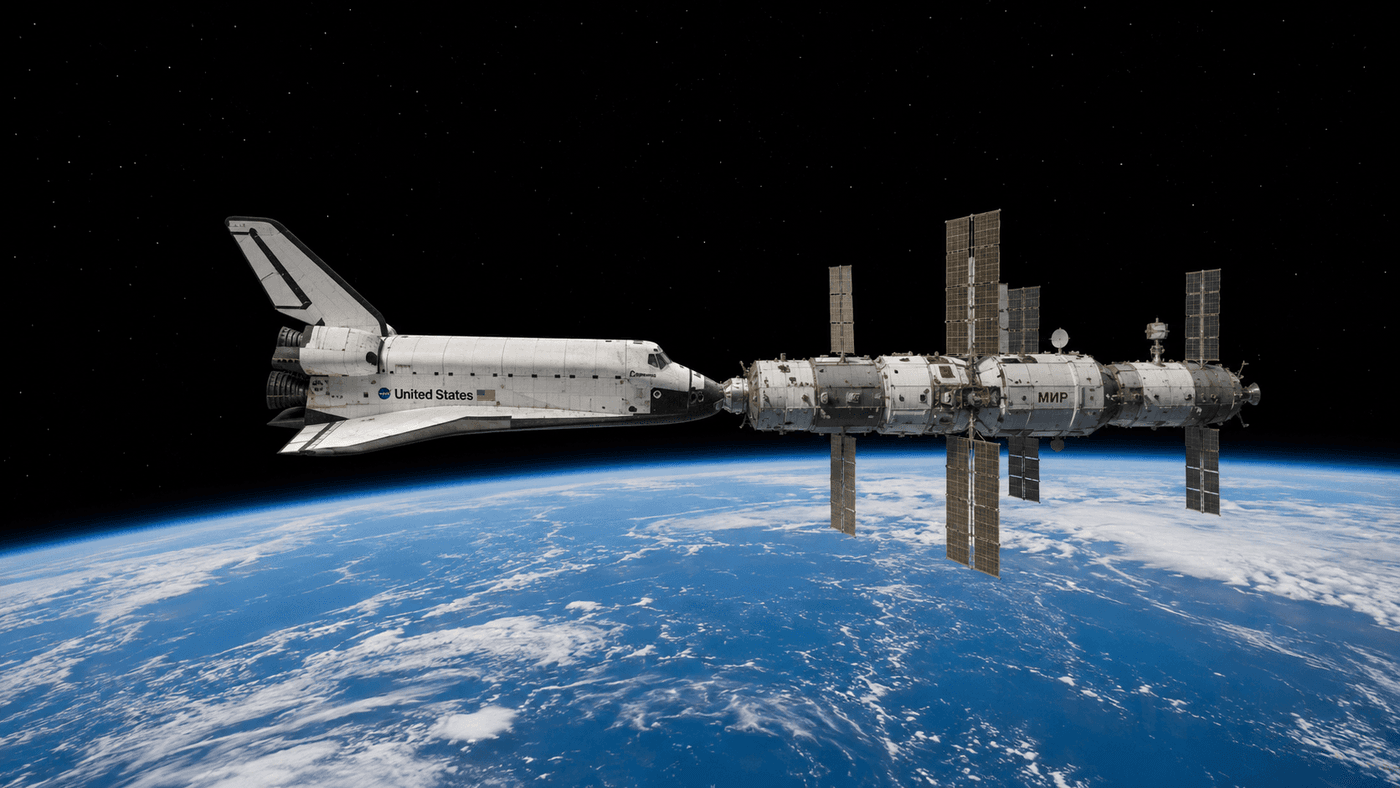
On June 29, 1995, the U.S. Space Shuttle Atlantis completed a slow, precise approach and docked with the Russian space station Mir, creating for the first time a single joined spacecraft crewed by both American astronauts and Russian cosmonauts. The docking took place 245 miles above the earth, over the Russian steppe, at a closing speed of about one foot per second — a feat of engineering and coordination that required months of joint training between two space agencies that had spent the previous four decades competing to outdo each other. When the hatch between Atlantis and Mir swung open and the crews embraced, it was, quite literally, the closest the United States and Russia had ever been. The mission, designated STS-71, carried seven American astronauts and cosmonauts and brought home three crew members who had been living on Mir since March.
The Shuttle-Mir program, of which this docking was the centerpiece, was conceived in the early 1990s as a way to build the operational and diplomatic foundations for a much larger project: the International Space Station. The two nations had entirely different spacecraft designs, communication systems, life-support architectures, and institutional cultures — learning to work together in orbit required solving problems that no amount of diplomatic negotiation alone could address. The nine docking missions that followed STS-71 between 1995 and 1998 gave both agencies the shared experience, mutual trust, and technical vocabulary they needed to begin constructing the ISS, which has been continuously inhabited since November 2000. The moment on June 29, 1995, when two spacecraft built in Houston and Moscow clicked together in the silence of low Earth orbit, was not just a scientific milestone — it was a demonstration that the most intractable human rivalries are not beyond transformation.
The Court Pulls the Switch
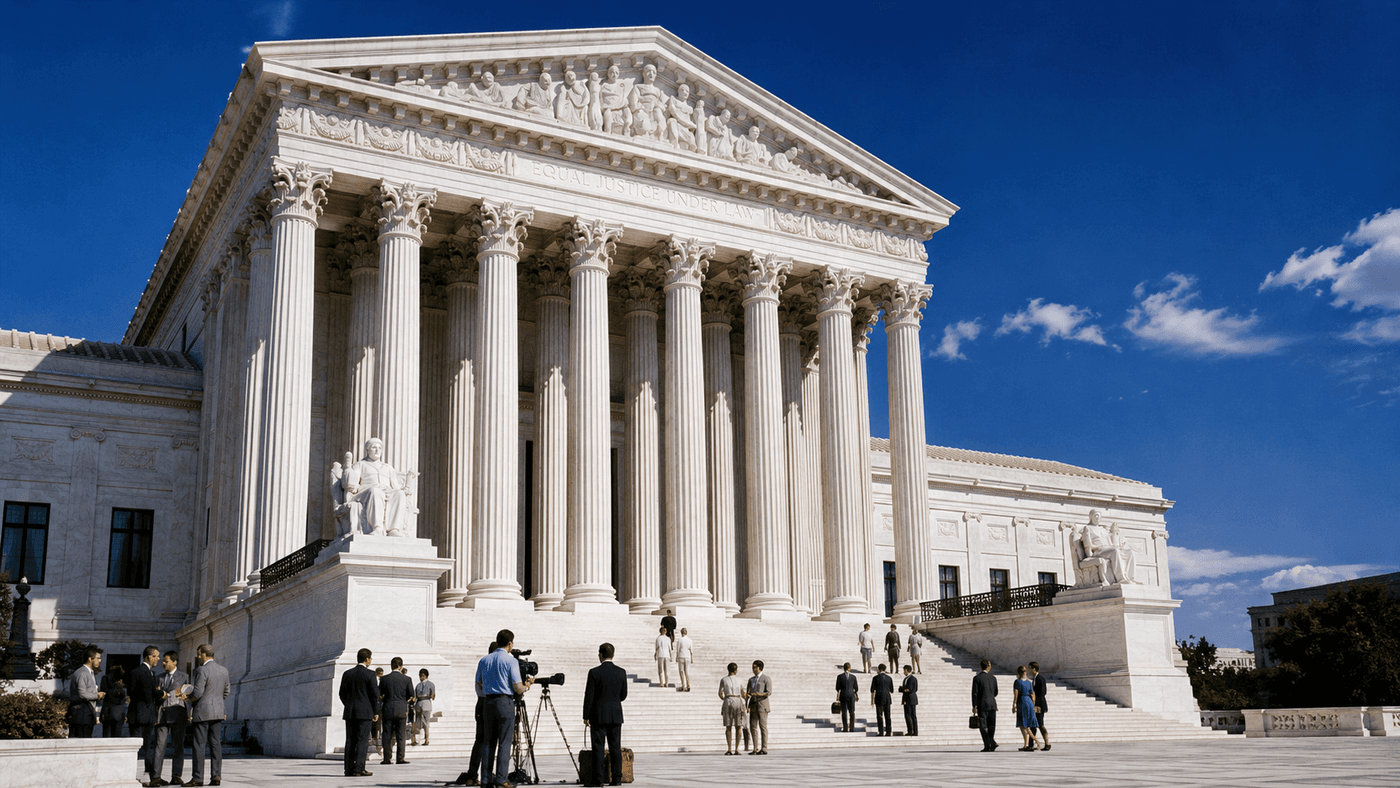
On June 29, 1972, the Supreme Court of the United States issued its ruling in Furman v. Georgia — one of the most consequential and fractured decisions in the Court's history. By a five-to-four margin, the justices held that the death penalty as currently applied violated the Eighth Amendment's prohibition on cruel and unusual punishment, and the Fourteenth Amendment's guarantee of equal protection. The ruling was notable for its unusual structure: each of the nine justices wrote a separate opinion, with no majority rationale agreed upon — only the outcome. What united the five-justice majority was the finding that capital punishment was being administered in an arbitrary and racially discriminatory manner, falling disproportionately on Black defendants and the poor. The ruling effectively invalidated the death sentences of the more than 600 people then on death row across the United States.
Furman did not permanently abolish the death penalty — the Court left open the possibility that a more carefully constructed sentencing framework could survive constitutional scrutiny. Several states moved quickly to rewrite their capital punishment statutes, and in 1976 the Court upheld revised death penalty laws in Gregg v. Georgia, allowing executions to resume. But the four-year moratorium that Furman imposed gave the country time to confront questions about the administration of capital punishment that had long been suppressed: Who receives the death penalty, and why? Is it applied equally across race and class? Does it deter crime? Does the state have the moral authority to take a life? Those questions remain fiercely contested more than fifty years later, with the United States standing as one of the few wealthy democracies to retain capital punishment at all. The decision issued on June 29, 1972, did not resolve them — but it forced them, permanently, into the open.
The Globe Burns
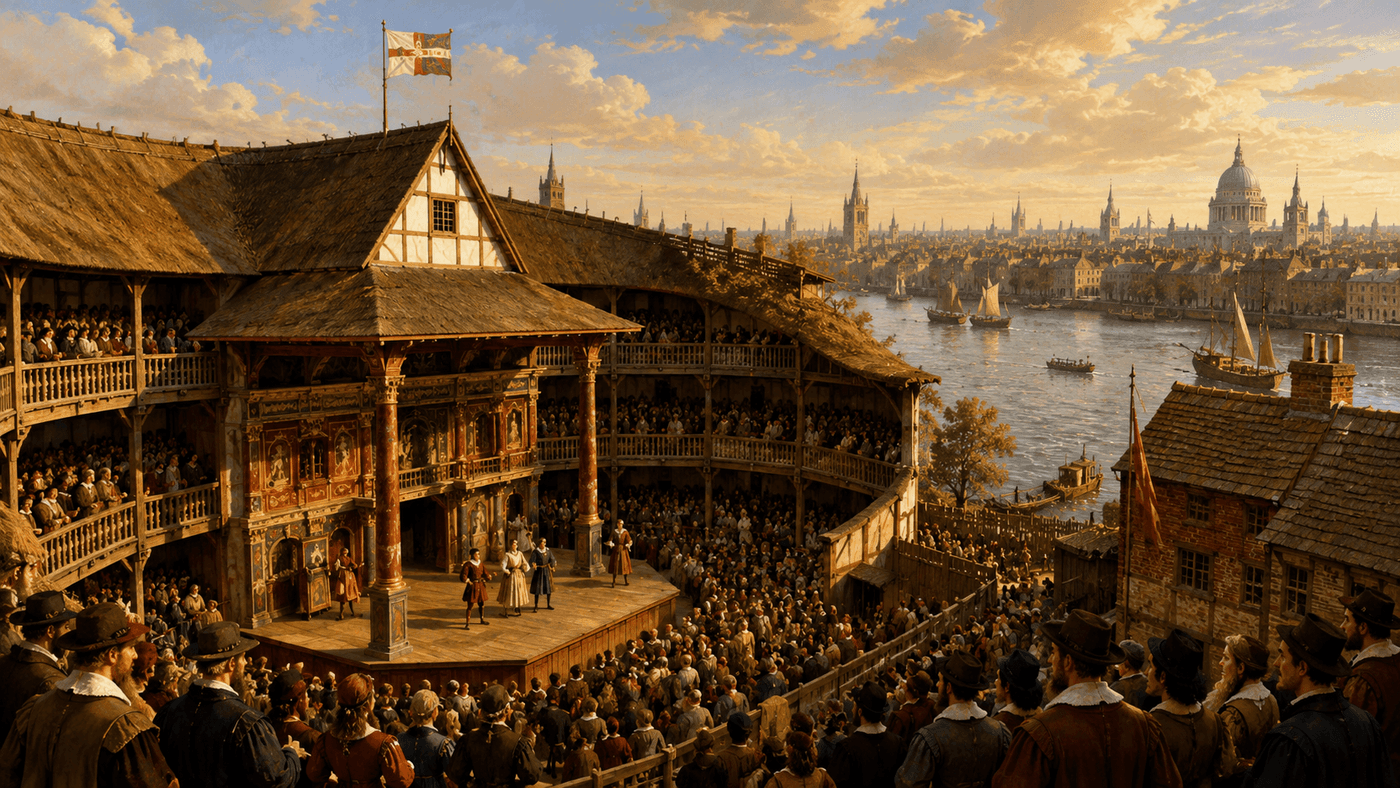
On June 29, 1613, during an afternoon performance of Henry VIII at the Globe Theatre on the south bank of the Thames in London, a stage cannon used for a sound effect misfired and sent a spark into the building's thatched roof. The fire spread quickly. Within two hours, the most famous playhouse in the English-speaking world had burned to the ground. Contemporary accounts note that the disaster was remarkably free of casualties — one man's breeches reportedly caught fire, but were doused with ale before any serious harm was done — and that the audience evacuated in good order. What was lost was the building itself: the open-air wooden amphitheatre that had been home since 1599 to the plays of William Shakespeare and his company, the King's Men, and where works including Hamlet, Othello, King Lear, and Macbeth had been performed before audiences of up to three thousand.
The Globe was rebuilt on the same site within a year, this time with a tiled roof — a small but consequential fire-safety upgrade. Shakespeare himself retired to Stratford-upon-Avon around the same time, though the exact relationship between the fire and his departure from London is a matter of scholarly speculation. The second Globe stood until 1644, when it was demolished during the Puritan-led suppression of public theatre. For more than three centuries, no Globe stood in London at all. The reconstruction that opened in 1997, just 230 yards from the original site, was the culmination of a decades-long campaign by American actor and director Sam Wanamaker, who had been scandalized on a visit to London in 1949 to find no monument marking where the theatre had stood. The cannon that destroyed the original Globe on June 29, 1613, inadvertently created a legend — and the legend proved more durable than any building could have been.