October 31: The Theses, the First, the Final Escape
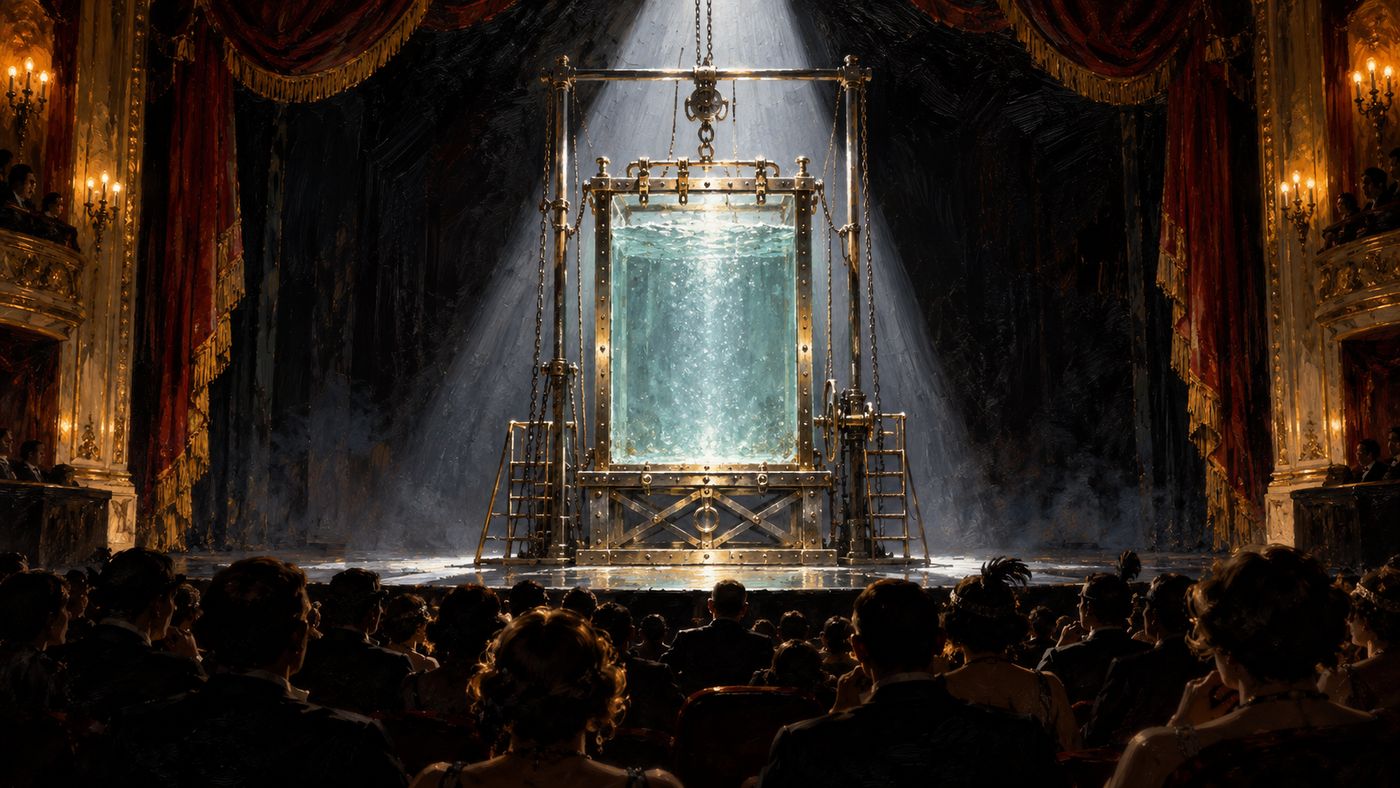
October 31 has always known something about the unexpected. A theology professor nailed a document to a church door intending to start a debate and instead started a reformation that split the Christian world in two. A basketball player stepped onto a court for seven minutes and became, by the accident of scheduling, the first African American in NBA history — a distinction he shared with two others whose games came a day later, making him first by the calendar rather than by design. And a man who had spent his entire career escaping from everything — handcuffs, water tanks, straitjackets, locked trunks thrown into rivers — died of a ruptured appendix on Halloween, unable, at last, to escape the one thing that had always been waiting. Three October 31ths. Three things nobody saw coming.
Wittenberg, 1517
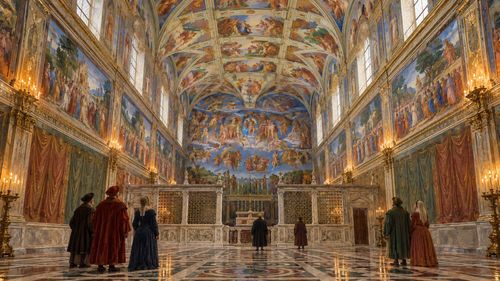
On October 31, 1517, Martin Luther, an Augustinian monk and professor of theology at the University of Wittenberg, posted his Ninety-Five Theses on the door of the Castle Church — a standard academic practice of the time for inviting scholarly debate — and inadvertently launched the Protestant Reformation. The document, formally titled "Disputation on the Power and Efficacy of Indulgences," targeted a specific practice: the sale of indulgences, certificates issued by the Catholic Church that were claimed to reduce the time souls spent in purgatory. Luther's objections were initially theological rather than revolutionary. He was a loyal Catholic who believed the Church had gotten something importantly wrong and wanted to discuss it through the normal channels of academic disputation. What he had not accounted for was the printing press.
The Ninety-Five Theses were translated from Latin into German and printed across Europe within weeks — a distribution that would have been impossible a century earlier and that transformed what Luther had intended as a local academic challenge into a continent-wide religious crisis. Pope Leo X initially dismissed Luther as "a drunken German who wrote the Theses" and assumed he would recant when pressured. He did not. Excommunicated in 1521, Luther translated the Bible into German, giving ordinary people access to scripture in their own language for the first time, and continued to develop a theology that insisted on faith alone, scripture alone, and the priesthood of all believers. The Protestant Reformation that Luther's October 31 act set in motion produced the Lutheran, Reformed, Anglican, and eventually hundreds of other Protestant traditions — fracturing Western Christianity in a way that has never been repaired, and reshaping European politics, culture, and warfare for the following two centuries.
Seven Minutes
On October 31, 1950, Earl Lloyd stepped onto the court for the Washington Capitols in a game against the Rochester Royals and became the first African American player in NBA history — a distinction secured not by plan but by the accident of the league's scheduling. Lloyd was one of three Black players to enter the NBA that season: Chuck Cooper had been drafted by the Boston Celtics and Nat "Sweetwater" Clifton had been signed by the New York Knicks, but the schedule placed Lloyd's game one day ahead of theirs, making him, by the calendar, the first. He played seven minutes, scored six points, and returned to the bench. The moment was historic by the measure of what came after it, not by the fanfare that accompanied it. There was no announcement, no ceremony. The game went on.
Lloyd went on to play nine seasons in the NBA, winning a championship with the Syracuse Nationals in 1955, and later became one of the first Black assistant coaches in the league. The integration of the NBA in 1950 — three years after Jackie Robinson's debut with the Brooklyn Dodgers — was quieter and less nationally celebrated than baseball's, which itself says something about how differently the two sports were regarded at the time. Lloyd, Cooper, and Clifton faced the full weight of the segregation-era treatment that Black athletes endured: separate hotels, separate restaurants, the constant negotiation of a public world that had not yet decided to include them. What Earl Lloyd did on October 31, 1950 was less an event than an opening — seven minutes that created space for everyone who came after him, in a league that has, since those seven minutes, become the most racially diverse major professional sports league in America.

The Last Trick
On October 31, 1926, Harry Houdini died at Grace Hospital in Detroit from peritonitis caused by a ruptured appendix, on the one day of the year that the culture he had spent his career mystifying associated most strongly with death and the supernatural. He was fifty-two years old. The circumstances of his final days have been disputed and mythologized ever since. Ten days before his death, a McGill University student named J. Gordon Whitehead had punched Houdini in the abdomen multiple times backstage after a performance in Montreal — testing, he claimed, Houdini's famous claim that he could withstand any blow to the midsection if given advance warning. Houdini had not had advance warning, and the blows may have ruptured an already-inflamed appendix. The medical details are unresolved. What is not disputed is that Houdini delayed seeking treatment, performed several more shows in worsening condition, and died on Halloween.
Houdini had been, in his lifetime, two contradictory things simultaneously: the world's most famous purveyor of mystery and illusion, and one of the most rigorous debunkers of supernatural claims in America. He had spent years investigating and exposing fraudulent spiritualist mediums, offering a standing prize — never claimed — to any psychic who could demonstrate genuine supernatural ability under controlled conditions. He had also made a pact with his wife Bess: if it were possible to communicate from beyond death, he would send her a coded message. Bess held annual séances on Halloween for ten years after his death, waiting for a signal that never came. She stopped in 1936 and stated simply that ten years was long enough to wait for any man. The greatest escape artist in history had, it seemed, made his final escape from the one performance his audience most wanted him to give.