October 30: The Broadcast, the Crown, the Last Chance Gulch
Last chances have a particular energy. The prospector who decides this is the final pan before heading home. The young director who bets everything on a format no one has tried before. The military commander who has spent thirty years watching his country tear itself apart and sees, at the end of a battle in a field in Leicestershire, a chance to make it stop. October 30 has seen all three kinds of last chance pay off — in a radio studio in New York, on a field near Bosworth, and in a Montana gulch that four exhausted men named for the desperation they felt when they made the decision to try it one more time.
We Interrupt This Program
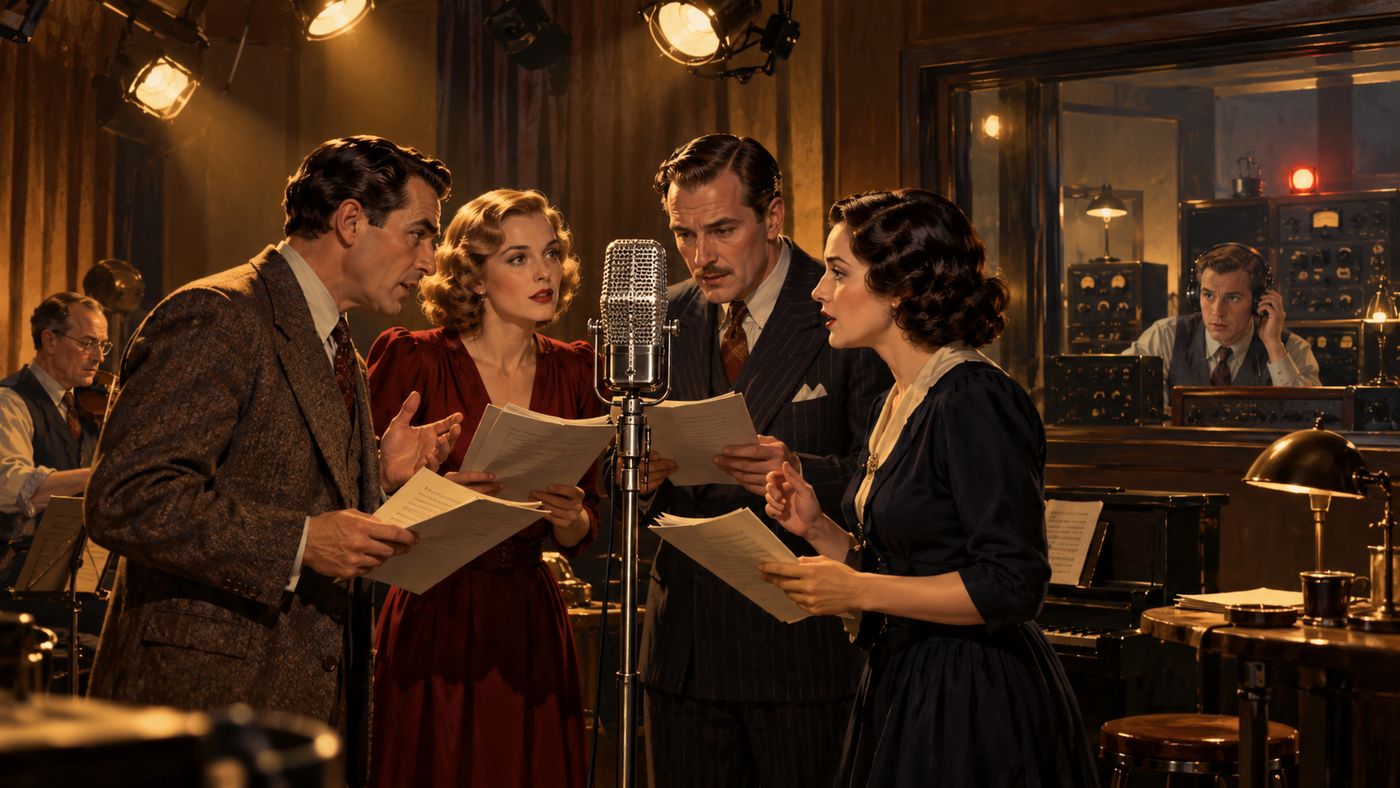
On October 30, 1938, at 8 p.m. Eastern time, CBS Radio aired Orson Welles and the Mercury Theatre on the Air's adaptation of H.G. Wells's The War of the Worlds — and produced one of the most discussed hours in broadcasting history. The program opened with a standard announcer's introduction identifying it as a radio drama, then pivoted to what sounded exactly like a live music broadcast being interrupted by increasingly urgent news bulletins: a meteor strike in Grover's Mill, New Jersey, reports of strange cylindrical objects, the emergence of Martian war machines, the collapse of the American military's defenses, the fall of New York. Welles, as the narrator, played it with the grave authority of a man delivering actual news. The sound design was meticulous. The pacing was that of genuine crisis coverage. For listeners who tuned in after the opening disclaimer, what they heard was indistinguishable from an emergency broadcast.
The extent of the panic the broadcast produced has been substantially revised by historians since the original newspaper reports — which were, it should be noted, published by newspapers that had a financial interest in discrediting radio as a news medium. Subsequent research suggests that the mass hysteria was considerably less widespread than the press claimed, and that most listeners understood they were hearing fiction. What is not disputed is that the broadcast was a landmark in the history of media — a demonstration of radio's power to simulate reality so completely that the simulation became indistinguishable from the thing itself. Welles, twenty-three years old, became famous overnight. The Federal Communications Commission conducted an investigation. CBS issued an apology. And the question the broadcast raised — about the relationship between realistic media and public trust — has been asked, in one form or another, every time a new communications technology has arrived since.
The First Tudor
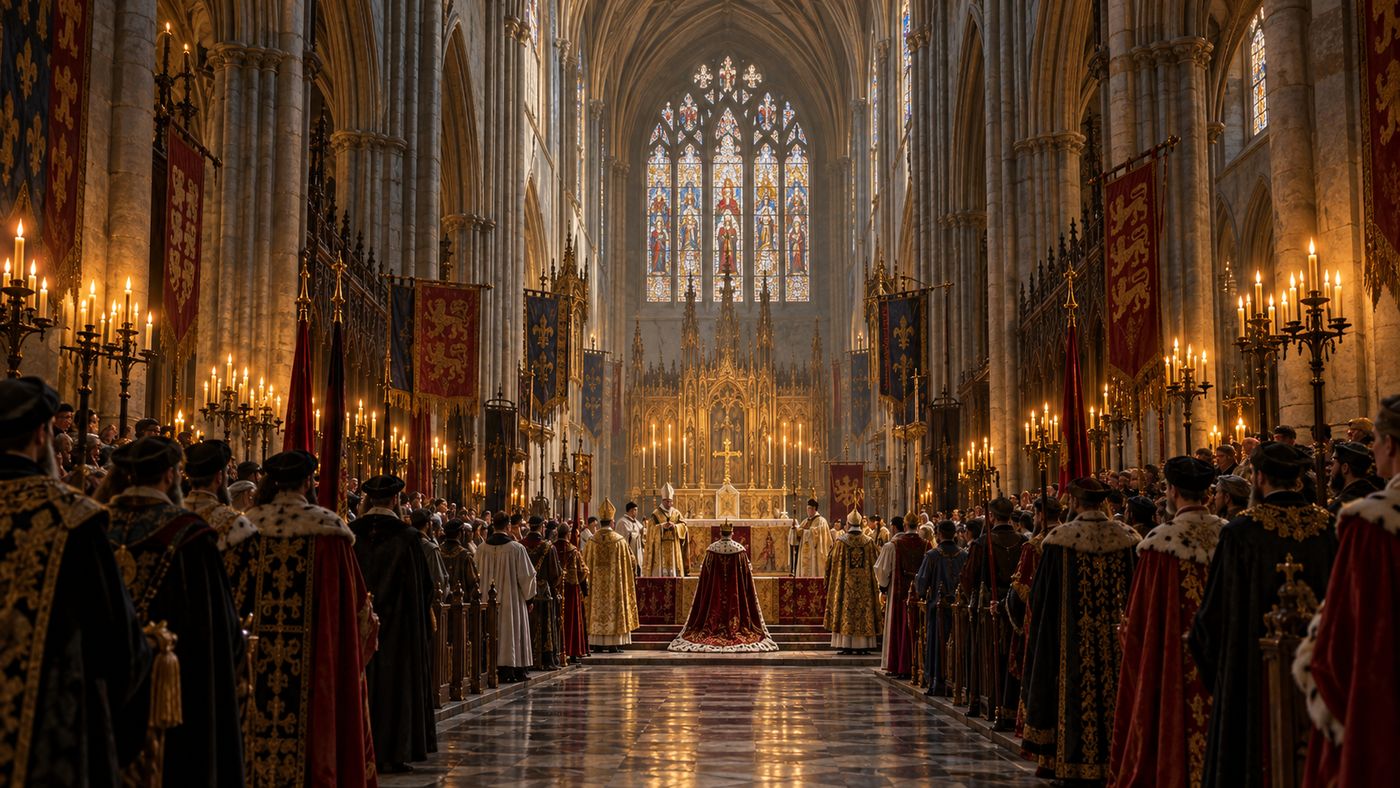
On October 30, 1485, Henry Tudor was crowned King Henry VII at Westminster Abbey, bringing to a close the Wars of the Roses — thirty years of intermittent civil war between the Houses of Lancaster and York that had cost England several kings, thousands of lives, and the political stability of a kingdom that had been tearing itself apart since 1455. Henry had won his crown just ten weeks earlier at the Battle of Bosworth Field, where his forces had defeated and killed Richard III in a battle whose outcome remained uncertain until the moment Richard charged Henry's position directly and was cut down. Richard was the last English king to die in battle. Henry, whose claim to the throne was genealogically tortured and politically fragile, understood that his hold on power required both military consolidation and symbolic legitimacy — and the coronation at Westminster Abbey, with all its ancient ceremonial weight, provided the latter.
The Tudor dynasty that Henry VII inaugurated on October 30, 1485 would last 118 years and produce some of the most consequential reigns in English history: Henry VIII's break with Rome and the English Reformation; the brief, brutal reign of Mary I; the long, transformative reign of Elizabeth I, under whom English literature, exploration, and national identity reached heights that defined the nation's self-conception for centuries to come. Henry VII himself was a careful, cautious, financially disciplined ruler who spent his reign building the institutional foundations that made his descendants' ambitions possible. He was not the most dramatic Tudor. He was the one who made all the drama possible. The crown placed on his head on October 30, 1485 began a dynasty that remade England — and, through England, much of the world.
Last Chance
On October 30, 1864, the mining camp that would become Helena, Montana was officially established — though its origin lay three months earlier, in the July afternoon when four prospectors from Georgia, having failed to find gold across months of searching, made one final attempt in a gulch in the foothills of the Rocky Mountains. They called it their last chance. The gold they found there turned out to be among the richest strikes in the history of the Montana Territory, and within months the Last Chance Gulch had transformed from a quiet valley into a roaring mining camp of thousands. By the time the camp was formally organized as a town in October 1864 and renamed Helena — after Helena, Minnesota, the hometown of one of the original prospectors — it was already one of the most economically significant settlements in the northern Rockies.
The gold that flowed from Last Chance Gulch over the following decades would amount, in today's dollars, to more than $3.6 billion — making Helena one of the wealthiest per-capita cities in the United States during its boom years. The fortunes built there funded the magnificent mansions that still line its historic district, earning Helena the nickname "the Queen City of the Rockies." The city became the capital of Montana Territory in 1875 and remained the state capital when Montana was admitted to the Union in 1889. The main street of modern Helena still follows the original path of the gulch — a winding, irregular course through the city center that refuses to conform to the grid because it was never planned, only discovered. The four prospectors who named it for desperation rather than triumph built something that outlasted every doubt they carried into that last attempt.