Recent Content

Nov. 4, 2001: Luis Gonzalez Stuns the Yankees

Nov. 4, 2001: Luis Gonzalez Stuns the Yankees

Read more
November 4: Doctor Strange Opens, NYC Marathon at 25

November 4: Doctor Strange Opens, NYC Marathon at 25

Read more
Nov. 3, 2016: Cubs End 108-Year Title Drought

Nov. 3, 2016: Cubs End 108-Year Title Drought

Read more
November 3: Stranger Than Fiction at 20, Wintour 77

November 3: Stranger Than Fiction at 20, Wintour 77

Read more
Nov. 2, 2004: Bush Beats Kerry in Ohio Nail-Biter

Nov. 2, 2004: Bush Beats Kerry in Ohio Nail-Biter

Read more
logo
  • Introduction

  • Lessons From The Past

  • Cultural Awareness and Diversity

  • Appreciation for Progress

  • Understanding Political and Social Dynamics

  • Preserving Cultural Heritage

  • Conclusion

■  The Pop Edition

November 2: No Diggity Hits #1, Monsters Inc at 25
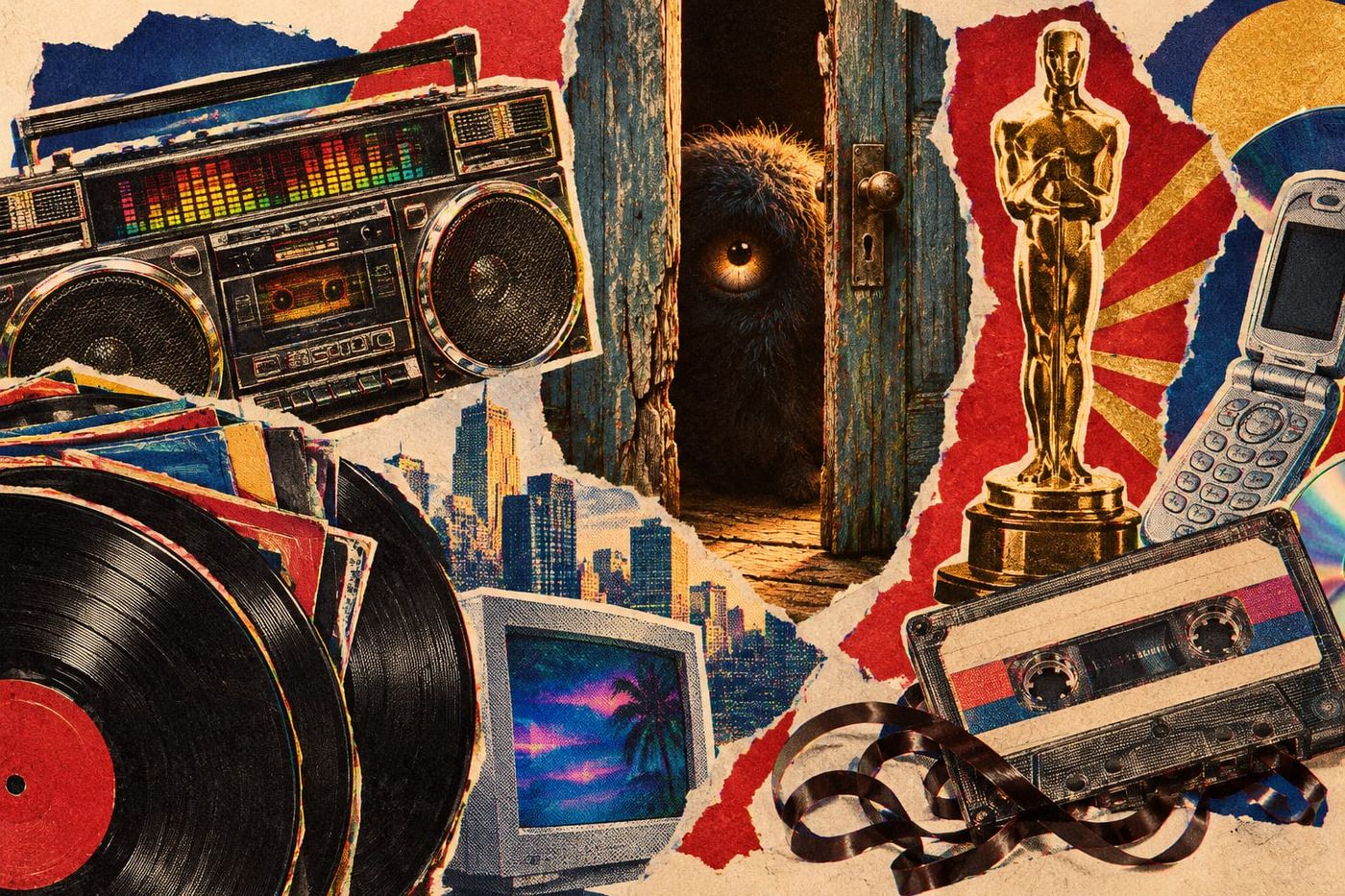
Blackstreet dethrones the Macarena, Pixar scares up a hit, and a handful of birthdays round out a quietly loaded November 2 in pop culture.
November 2: No Diggity Hits #1, Monsters Inc at 25
The week Macarena finally lost its grip on the Hot 100 — and Monsters, Inc. opened wide 25 years ago.
Some days in pop culture history sneak up on you. November 2 doesn't have a single headline-grabbing anniversary, but stack up a chart upset, a Pixar milestone, and a run of notable birthdays, and it adds up to a solid afternoon's worth of trivia. Today we've got a 30-year-old chart flip, a quarter-century-old animated hit, and the day radio first went commercial.

k.d. lang

BORN 1961 · TURNS 65

The Canadian singer broke out of country music with her androgynous style and that voice, then crossed into pop with 1992's Ingenue and its hit single Constant Craving. She's spent decades since refusing to stay in any one genre's lane.

David Schwimmer

BORN 1966 · TURNS 60

Ross Geller made him a household name for ten seasons of Friends, a role so dominant it briefly overshadowed his theater credentials and his directing work. He's since carved out a steady career in both, including a memorable turn as Robert Kardashian in American Crime Story.

Nelly

BORN 1974 · TURNS 52

The St. Louis rapper turned Country Grammar into a multiplatinum phenomenon in 2000 and kept the hits coming with Hot in Herre and Dilemma. He later became one of the first rappers to successfully cross into mainstream country collaborations.

Shah Rukh Khan

BORN 1965 · TURNS 61

Bollywood's biggest leading man for three decades, he built his stardom on romances like Dilwale Dulhania Le Jayenge before branching into production and television. His global fan base rivals anything Hollywood can claim.

Willow Shields

BORN 2000 · TURNS 26

She played Primrose Everdeen, the little sister whose reaping sets off The Hunger Games, in all four films. She's since worked to build a career beyond the franchise that made her a teenage star.

ON THE CHARTS

It wasn't a scandal or a lawsuit that finally knocked Los Del Rio's Macarena off the Billboard Hot 100 summit. It was simply a better song. On November 2, 1996, Blackstreet's No Diggity, featuring a then-rising Dr. Dre and built around a sample of Bill Withers' Grandma's Hands, took over the #1 spot after Macarena's absurd 14-week reign.

No Diggity held on for four weeks and became one of the defining R&B singles of the decade — smooth, minimal, and built around Teddy Riley's new jack swing production sensibility rather than the maximalist pop that had dominated radio all summer. It's the song that introduced Queen Pen's guest verse to mainstream audiences and gave Dr. Dre one of his most recognizable guest spots outside his own catalog.

Thirty years later, it's aged better than almost anything else on that chart — sampled, covered, and referenced constantly, while Macarena remains a wedding-reception relic. Sometimes the chart turnover tells you exactly which song was going to last.

OPENING WEEKEND

Pixar's fourth feature wasn't a sure thing going in. Toy Story 2 had set a high bar the year before, and a movie about monsters who harvest children's screams for energy was a stranger pitch than a cowboy doll or a clownfish. Monsters, Inc. opened wide on November 2, 2001, and quickly proved the studio's instincts right again.

John Goodman and Billy Crystal voiced Sulley and Mike Wazowski, a mismatched pair of monster coworkers whose entire professional world gets upended by a toddler named Boo who wanders through a closet door. The film's emotional pivot — the revelation that children's laughter generates more power than their screams — gave Pixar one of its gentlest, most quietly moving endings.

It won the first-ever Academy Award for Best Animated Feature the following year, part of a stretch where Pixar simply didn't miss. Twenty-five years on, the door-vault warehouse sequence still holds up as one of the studio's most inventive set pieces, and Boo's giggling remains instantly recognizable to anyone who grew up with the film.

MEANWHILE…

1920KDKA in Pittsburgh signs on with election returns, often cited as the first commercial radio broadcast in the US.

1959Charles Van Doren testifies before Congress and admits his wins on the quiz show Twenty-One were rigged, blowing open the quiz show scandals.

1985Stevie Wonder's Part-Time Lover reaches #1 on the Hot 100.

2007American Gangster and Bee Movie both open in theaters on the same Friday.

2012Disney's Wreck-It Ralph opens, kicking off a franchise that would outlast most of its arcade-cabinet source material.


That's November 2 — a chart flip that aged into a classic, a Pixar monster movie turning 25, and a radio broadcast that started it all 106 years ago. Come back tomorrow for the next page of the calendar.

More History

13 October 2026

Post

Nov. 4, 2001: Luis Gonzalez Stuns the Yankees

On November 4, 2001, Luis Gonzalez's Broken-Bat Blooper Beat Mariano Rivera and Won Arizona Its First World Series In a Game 7 for the ages, the upstart Diamondbacks solved baseball's most unhittable closer when it mattered most. On the night of November 4, 2001, Bank One Ballpark in Phoenix held its breath as the Arizona Diamondbacks, just four years into existence, faced the New York Yankees in a winner-take-all Game 7 of the World Series. The Yankees, chasing a fourth straight title in a season shadowed by the aftermath of 9/11, sent out Mariano Rivera, the most dominant postseason closer the sport had ever seen, to protect a one-run lead in the ninth. What followed would become one of the most replayed endings in World Series history. The Bloop Heard 'Round   Rivera entered with a career postseason ERA that bordered on untouchable, and New York led 2-1 heading into the bottom of the ninth. But Arizona chipped away: a leadoff single, a sacrifice bunt that Rivera himself threw away trying to force a runner at second, and a game-tying double from Tony Womack. With the bases loaded and one out, Luis Gonzalez stepped in against a pitcher who had barely been touched all October. Gonzalez choked up on his bat, anticipating Rivera's signature cutter jamming him inside, and got exactly that pitch. The bat shattered in his hands, but the ball looped just over a drawn-in Derek Jeter at short, dropping into shallow center field. Jay Bell trotted home with the winning run, and Arizona had its championship in just its fourth season of existence. The image of Gonzalez's broken bat and the ball drifting lazily over the infield became an instant piece of baseball iconography, a reminder that even the game's most mechanical closer could be undone by an accident of physics. For the Yankees, it snapped a dynastic run and marked Rivera's first blown save in a decisive World Series game of his career. For Arizona, built largely around the arms of Randy Johnson and Curt Schilling, who shared World Series MVP honors, it was validation that an expansion-era franchise could out-duel a juggernaut when the ball simply refused to go where anyone expected.  

13 October 2026

Post

November 4: Doctor Strange Opens, NYC Marathon at 25

■  The Pop Edition November 4: Doctor Strange Opens, NYC Marathon at 25 Marvel's sorcerer supreme hits theaters a decade ago, New York's marathon marks a quarter-century since its emotional post-9/11 run, and a handful of November 4 birthdays round things out. Benedict Cumberbatch's Doctor Strange opened ten years ago this week, reshaping the MCU's scope. Some days in pop culture history earn their keep through sheer contrast — a comic-book wizard opening in multiplexes, a city's marathon runners proving a point about resilience, and a slate of birthdays spanning soap-opera legends to Hollywood leading men. November 4 has all of that. Here's the full rundown of what happened on this date, how it landed at the time, and why it still matters. Matthew McConaugheyBORN 1969 · TURNS 57He spent the '90s and 2000s as the easygoing rom-com guy, then reinvented himself entirely with Dallas Buyers Club and True Detective, picking up an Oscar along the way. These days he splits time between acting, bourbon, and a University of Texas lecture hall.Ralph MacchioBORN 1961 · TURNS 65Daniel LaRusso made him a teenage icon in 1984, and he never really left the role behind — which turned out fine, since Cobra Kai gave him a third act four decades later that out-earned the original trilogy in cultural reach.Kathy GriffinBORN 1960 · TURNS 66She built a career on saying the thing nobody else would say, from Suddenly Susan through her own stand-up specials and years of red-carpet commentary on E!. The comedy never softened, even after the career took real hits along the way.Loretta SwitBORN 1937 · TURNS 89As Major Margaret 'Hot Lips' Houlihan on M*A*S*H, she turned a punchline nickname into one of television's most fully realized characters over eleven seasons, earning two Emmys for the trouble.Sean CombsBORN 1969 · TURNS 57He built Bad Boy Records into a hip-hop powerhouse in the '90s before stepping in front of the mic himself, and later expanded into fashion and spirits — a career defined by relentless reinvention under a string of stage names.  Marvel's gamble on a character most moviegoers had never heard of paid off on November 4, 2016, when Doctor Strange opened in US theaters. Benedict Cumberbatch played Stephen Strange, the arrogant neurosurgeon turned sorcerer, in a film that leaned hard on reality-bending visual effects — city blocks folding over themselves, the Mirror Dimension twisting like a Escher print come to life.At the time, it was a genuine question mark for Marvel Studios: a mid-budget origin story for a character with no built-in fanbase comparable to Spider-Man or the Avengers, going up against a crowded fall slate. It opened strong, became one of the year's bigger studio hits, and quietly set up Strange as one of the MCU's load-bearing characters heading into Infinity War and Endgame a few years later.Ten years on, the film reads as a hinge point for the franchise — proof that Marvel could sell audiences on cosmic weirdness, not just street-level heroes in spandex, and the template it built got reused for everything from Ant-Man's quantum realm to the multiverse chaos that followed.    The New York City Marathon almost didn't happen in 2001. With the city still raw less than two months after the September 11 attacks, organizers debated whether 26.2 miles of runners through five boroughs was even appropriate. They decided it was necessary, and on November 4, 2001, roughly 30,000 runners took to the Verrazzano-Narrows Bridge anyway.What made that race land differently than any marathon before or since was the crowd along the route — denser, louder, more emotional than usual, with firefighters and police running in uniform and spectators holding up photos of the missing. Kenya's Tesfaye Jifar won the men's race in what was then a course record, but the result mattered less than the fact that the race happened at all, a city reclaiming one of its signature public spectacles in real time.Twenty-five years later, the NYC Marathon remains one of the largest participatory sporting events on earth, but that 2001 edition is the one race organizers and longtime runners still bring up first — less a sporting story than a cultural one.   1963The Beatles play the Royal Variety Performance in London, where John Lennon tells the posh crowd to just rattle their jewelry instead of clapping — one of the first signs that these four weren't going to play it polite.1922Archaeologist Howard Carter's team finds the entrance to Tutankhamun's tomb in Egypt's Valley of the Kings, setting off a decades-long wave of Egyptomania in fashion, film, and design.1950Night Court actress Markie Post is born; she'd go on to become a sitcom and TV-movie staple for three decades before her death in 2021.2005Disney's Chicken Little opens in theaters, the studio's first fully computer-animated feature made without Pixar's involvement.2016Doctor Strange opens wide across the US, expanding the Marvel Cinematic Universe into cosmic and mystical territory for the first time.2001The New York City Marathon runs just weeks after 9/11, becoming one of the first large public gatherings in the city post-attack. A cloaked sorcerer, a marathon that refused to be canceled, and a Beatle telling royalty to rattle their jewelry — November 4 covers a wide stretch of pop culture ground. Check back tomorrow for the next date's full accounting.

13 October 2026

Post

Nov. 3, 2016: Cubs End 108-Year Title Drought

In the Early Hours of November 3, 2016, the Chicago Cubs Finally Became World Champions A rain delay, extra innings, and 108 years of heartbreak all collided in one unforgettable night in Cleveland. The calendar had already flipped to November 3, 2016, by the time the Chicago Cubs recorded the final out of a World Series Game 7 that felt less like a baseball game than an exorcism. For the better part of a week, the Cubs and Cleveland Indians had traded blows in a series that pushed America's oldest sports curse to its absolute breaking point, and when it finally ended, it did so past midnight, fittingly, in extra innings. The Rain Delay   Game 7 at Cleveland's Progressive Field had everything a script could demand: the Cubs raced to an early lead, Cleveland clawed back to tie it in the eighth inning, and the game rolled into extra frames with the weight of 108 years pressing down on every pitch. Then, with the score knotted at six, the skies opened and play paused for a 17-minute rain delay. In the Cubs' cramped weight room, veteran outfielder Jason Heyward gathered his teammates for an impromptu talk, reminding them of who they were and what they had already survived together that season. It was an unscheduled timeout that, players later said, reset the entire tenor of the night. When play resumed, the Cubs scored twice in the top of the tenth, survived a nervy Cleveland rally that cut the lead to one, and finally retired the Indians to seal a 8-7 victory. The final out fell at 12:47 a.m. Eastern time on November 3, officially making it the first World Series title for the Cubs since 1908. Fans who had waited generations for the moment watched it arrive not at the dramatic close of a prime-time broadcast, but deep into the small hours of a Thursday morning — proof that history, when it finally comes due, rarely checks the clock first.  

13 October 2026

Post

November 3: Stranger Than Fiction at 20, Wintour 77

■  The Pop Edition November 3: Stranger Than Fiction at 20, Wintour 77 Will Ferrell's existential comedy hits a round anniversary, Vogue's editor turns 77, and a sitcom that redefined the 'very special episode' premiered on this date. A quiet November day that gave us a self-aware novelist, a fashion icon, and Arnold Jackson's skepticism. November 3rd doesn't announce itself the way some dates do, but dig in and it's a sneaky good one: a Will Ferrell movie that still gets name-checked in film-school classes, a sitcom that became a cultural touchstone for better and worse reasons, and a birthday that explains a few decades of fashion coverage. Add a kaiju's debut and a box office upset, and you've got a full afternoon of trivia ammunition. Born On This DayAnna WintourBORN 1949 · TURNS 77Wintour took over Vogue in 1988 and spent the next decades turning a fashion magazine into a cultural gatekeeping apparatus, the sunglasses-indoors silhouette now shorthand for editorial power itself. The Met Gala as a red-carpet spectacle is largely her invention.Roseanne BarrBORN 1952 · TURNS 74Barr built a stand-up persona into Roseanne, a sitcom that put a working-class family on primetime without softening the edges, and for years it ranked among the most-watched shows on television.Dolph LundgrenBORN 1957 · TURNS 69Before acting, Lundgren held a master's degree in chemical engineering and a Fulbright scholarship offer. He chose Ivan Drago instead, and Rocky IV turned him into the decade's defining movie villain.Adam AntBORN 1954 · TURNS 72Adam Ant fused new-wave pop with pirate-dandy theater, and for a stretch of the early '80s his face paint and tricorn hats were as recognizable as his hooks.Kendall JennerBORN 1995 · TURNS 31Jenner moved from reality TV into high fashion, walking for Chanel, Givenchy, and Marc Jacobs and becoming one of the most-booked models of her generation. Opening Weekend Stranger Than Fiction opened in US theaters on November 3, 2006, twenty years ago this day, and it was a genuine gamble on Will Ferrell going quiet. Marc Forster's film cast him as an IRS auditor who starts hearing a novelist's narration describing his own life, with Emma Thompson as the author and Dustin Hoffman as the literature professor trying to help him figure out if he's a tragedy or a comedy.It opened the same day as The Santa Clause 3, a far broader family comedy, and critics made a point of the contrast — one Ferrell vehicle leaning on a prat-fall legacy, the other asking him to underplay almost everything. Stranger Than Fiction didn't post blockbuster numbers, but reviews were kind, and it's the film critics still reach for when they want to argue Ferrell can do more than loud. Two decades on, it holds up as one of the better examples of a comic actor stepping sideways and sticking the landing, a lower-key cousin to Eternal Sunshine's structural playfulness without borrowing its tone.    Prime TimeDiff'rent Strokes premiered on NBC on November 3, 1978, built around two Harlem brothers, played by Todd Bridges and Gary Coleman, adopted by a wealthy Park Avenue widower after their housekeeper mother dies. The premise sounds like a culture-clash sitcom on paper, and for its early seasons that's mostly what it was, with Coleman's delivery of his signature line carrying most of the comic weight.What the show became, especially by its later seasons, was something stranger: a vehicle for PSA-style special episodes tackling kidnapping, drugs, and abuse, often delivered with a sincerity that aged oddly even at the time. It ran eight seasons and made Coleman one of the most recognizable child actors in television history, a status that came with a lifetime of complicated aftermath that's been well documented since. The show's reputation now sits somewhere between nostalgic touchstone and cautionary tale about how TV handled its young stars, but on the night it premiered, it was simply a hit sitcom finding its footing on NBC's Friday lineup.   Meanwhile…1954Godzilla premieres in Japanese theaters, launching a franchise that's still releasing new films seven decades later.2000Charlie's Angels, with Cameron Diaz, Drew Barrymore, and Lucy Liu, tops the US box office in its opening weekend.2006The Santa Clause 3: The Escape Clause opens the same day as Stranger Than Fiction, giving Tim Allen and Will Ferrell a quiet box office rematch.2017Thor: Ragnarok opens in US theaters, the Taika Waititi entry that reinvented the franchise's tone with more jokes and more color.1986Run-D.M.C.'s Raising Hell tour era keeps rap climbing toward the mainstream charts it would soon dominate. From a quietly subversive novelist-narrator to two brothers in a Park Avenue penthouse, November 3rd has a habit of mixing the understated with the loud. Both aged in their own way, and both are still worth a rewatch.

13 October 2026

Post

Nov. 2, 2004: Bush Beats Kerry in Ohio Nail-Biter

On November 2, 2004, Ohio's Razor-Thin Margin Decided a Presidential Election A single swing state turned a contentious rematch into one of the closest presidential elections of the modern era. On November 2, 2004, Americans went to the polls in a presidential election that pitted incumbent George W. Bush against Democratic challenger John Kerry, with the nation still raw from the Iraq War debate and the lingering memory of the 2000 Florida recount. Turnout surged to levels not seen in decades, and by nightfall, the country's eyes had fixed on a single state that would decide everything. The Ohio Count   As polls closed across the country, early returns suggested a tight national race, but it was Ohio's 20 electoral votes that emerged as the decisive battleground. Exit polls through the evening swung wildly, first suggesting a Kerry lead, then tightening as rural and exurban counties reported. Provisional ballots in Ohio numbered in the hundreds of thousands, raising fears of a repeat of the 2000 Florida chaos, complete with lawyers on standby and legal challenges drafted but never filed. By the early hours of November 3, Bush's lead in Ohio had grown to roughly 136,000 votes, a margin wide enough that further counting would not realistically flip the outcome. The echo of 2000 hung over every network's cautious projection, a reminder that democracy's machinery had learned little patience in four years. On the morning of November 3, Kerry called Bush to concede rather than drag Ohio into a prolonged legal fight, a decision he announced publicly that afternoon in Boston's Faneuil Hall, urging the country toward unity despite the deep partisan divide the campaign had exposed. Bush ultimately won the national popular vote by roughly three million ballots, becoming the first presidential candidate since his father in 1988 to win a majority of the popular vote outright. The election turned heavily on questions of national security and moral values just three years after the September 11 attacks, issues that both campaigns had wagered their entire strategies upon. Ohio, a state Bush carried by barely two percentage points, had once again proven that in American politics, the whole country's fate can hinge on a single, unglamorous battleground.  

13 October 2026

Post

Nov. 1, 2001: Brosius's Stunning World Series HR

On November 1, 2001, Scott Brosius Delivered Yankee Stadium's Second Miracle in as Many Nights A stunned Arizona bullpen watched history repeat itself as the Yankees refused to die in the World Series. One night after Tino Martinez and Derek Jeter had authored one of the most improbable comebacks in World Series history, nobody in Yankee Stadium quite believed it could happen again. But on November 1, 2001, in Game 5 of the Fall Classic against the Arizona Diamondbacks, the ghosts of October — or by now, early November — showed up right on schedule, this time wearing third baseman Scott Brosius's number 18. Lightning Twice   The Diamondbacks carried a 2-0 lead into the ninth inning, with closer Byung-Hyun Kim on the mound looking every bit as dominant as he had the night before — right up until the moment he wasn't. With two outs and a runner aboard, Brosius drove a 2-2 pitch deep into the New York night, a two-run homer that tied the game and sent a crowd still raw from the September 11 attacks into disbelief. It was almost an exact echo of Martinez's game-tying blast twenty-four hours earlier, down to the pitcher on the mound and the inning on the clock. The Yankees finished the job in the twelfth inning, winning 3-2 to take a 3-2 series lead, a feat that pushed their season total of walk-off postseason magic to a level baseball had rarely seen. Arizona would eventually win the title back home in Game 7, but for two surreal nights at Yankee Stadium, a battered city found something to roar about, and Kim walked off the mound having surrendered the same gut-punch blow in consecutive games, a coincidence too strange for fiction.  

13 October 2026

Post

November 1: Bon Jovi Hits #1, MPAA Ratings Turn 58

■  The Pop Edition November 1: Bon Jovi Hits #1, MPAA Ratings Turn 58 A New Jersey rock band claims the top of the charts, the movie ratings system that shaped a generation of ticket stubs gets its start, and five birthdays round out the day. The day a glam-rock anthem hit #1 and Hollywood started slapping letters on movie posters. November 1 doesn't get the Halloween-week attention or the holiday-season buildup, but it's quietly packed. A power ballad about love, loyalty, and bad names claimed the top of the Billboard Hot 100 exactly 40 years ago today. Decades earlier, the system that decides whether your kids can see a movie went into effect, reshaping what studios would and wouldn't put on screen. Add a cluster of birthdays spanning rock, Hollywood, and Bollywood, plus a handful of box office openers, and the date earns its spot on the calendar. Toni Collette BORN 1972 · TURNS 54 The Australian actress broke through as the awkward, big-dreaming teen in Muriel's Wedding, then spent three decades proving she could do anything — an Oscar-nominated turn in The Sixth Sense, a Golden Globe win for United States of Tara, and a late-career run of horror standouts including Hereditary that redefined what a grieving-mother performance could look like. Anthony Kiedis BORN 1962 · TURNS 64 The Red Hot Chili Peppers frontman survived the band's chaotic funk-punk early years, a very public battle with addiction, and a lineup that kept shifting under him, and still came out the other side fronting one of the few rock bands to remain a stadium act into the 2020s. Lyle Lovett BORN 1957 · TURNS 69 The Texas singer-songwriter never quite fit the Nashville mold, blending country, swing, and gospel into something critics loved and radio never fully knew what to do with. His brief, much-tabloided marriage to Julia Roberts overshadowed a catalog that outlasted the headlines by decades. Aishwarya Rai Bachchan BORN 1973 · TURNS 53 Crowned Miss World in 1994, she became one of Bollywood's defining leading women and one of the few Indian actors to build a genuine international profile, walking Cannes red carpets for close to two decades running. Jenny McCarthy BORN 1972 · TURNS 54 She went from Playboy Playmate of the Year to MTV host to sitcom lead, then into daytime talk and a long stint on The Masked Singer panel, a career arc built on reinventing herself every decade or so.  ON THE CHARTSOn November 1, 1986, Bon Jovi's "You Give Love a Bad Name" reached #1 on the Billboard Hot 100 — the band's first chart-topper and the single that announced Slippery When Wet as more than just another hair-metal record. The song had been kicking around for a while before producer Desmond Child helped reshape it into the version everyone knows, trading a vaguer original concept for the title hook that turned a breakup song into a full-on genre staple.It knocked off a crowded fall chart and gave the New Jersey band — then two years removed from a self-titled debut that barely registered — its first taste of mainstream dominance. Slippery When Wet would go on to spend eight weeks at #1 on the album chart and sell in numbers that turned Bon Jovi from an opening act into an arena headliner almost overnight. "Livin' on a Prayer" followed it to #1 just weeks later, but this was the song that broke the door down first, and forty years on it's still the one bar bands reach for when they need the whole room singing.    THE MOMENTThe MPAA's voluntary film rating system took effect on November 1, 1968, replacing the old Hays Code censorship regime with the familiar letter grades — G, M, R, and X at launch — that still govern what gets shown to whom at the multiplex. The change didn't happen in a vacuum: studios were losing ground to foreign films and independent productions that ignored the Code entirely, and audiences were demanding more adult content than the old rules allowed.Jack Valenti, the MPAA's president at the time, pushed the system through as a way to let filmmakers make grown-up movies while giving theater owners and parents a shorthand for what they were buying a ticket to. The letters have shifted since — M became GP then PG, X got replaced by NC-17 in 1990 after the system's unofficial association with pornography became a liability — but the basic structure, a private industry group deciding what's appropriate without government censorship, has held for well over half a century. Every ratings controversy since, from Jaws pushing PG's limits to Scream's fight over an R, traces back to this one Friday in 1968.   MEANWHILE...1996Barbra Streisand's The Mirror Has Two Faces, starring and directed by Streisand opposite Jeff Bridges, opens in wide release.2002The Santa Clause 2 opens nationwide, with Tim Allen back in the red suit for a sequel that outran expectations at the box office.2013Ender's Game, with Harrison Ford and Asa Butterfield, opens in theaters based on Orson Scott Card's novel.2019Terminator: Dark Fate opens, reuniting Linda Hamilton and Arnold Schwarzenegger for the first time as Sarah Connor and the T-800 since the original sequels.1986Bon Jovi's rise to #1 arrives the same week MTV is airing the song's video in heavy rotation, a one-two combination that defines the late-'80s hit-making playbook. That's the ledger for November 1 — a chart-topping power ballad, a ratings system that's been arguing with filmmakers for decades, and a lineup of birthdays spanning rock, country, and Bollywood. See you tomorrow for another day's worth.

13 October 2026

Post

Oct. 31, 2001: SEC Opens Formal Enron Probe

October 31, 2001: The SEC Turns Its Formal Gaze on Enron A routine inquiry became a full federal investigation, and the countdown to one of corporate America's greatest collapses began in earnest. On October 31, 2001, the Securities and Exchange Commission upgraded its informal inquiry into Enron Corporation into a formal investigation, a bureaucratic shift that carried subpoena power and signaled to Wall Street that the Houston energy giant's troubles were far from a passing accounting hiccup. Just weeks earlier, Enron had stunned investors by disclosing a $1.2 billion reduction in shareholder equity tied to murky off-the-books partnerships. The SEC's move on Halloween transformed vague unease into an official reckoning. The Paper Trail   The formal investigation gave federal regulators the legal teeth to demand documents, compel testimony, and trace the labyrinth of special-purpose entities that Enron's finance team, led by CFO Andrew Fastow, had used to hide debt and inflate profits. Within days, Enron's stock, which had traded above $90 a share a year earlier, was in free fall toward single digits. Arthur Andersen, the company's auditor, began shredding Enron-related documents that same week, an act that would later cost the accounting firm its existence. What began as a quiet regulatory filing on an otherwise ordinary autumn Wednesday had, almost overnight, become the opening chapter of the largest corporate fraud case America had ever seen. By December, Enron had filed for what was then the largest bankruptcy in U.S. history, wiping out thousands of employee pensions invested heavily in company stock. The formal SEC probe launched on October 31 eventually fed into criminal prosecutions of top executives, including CEO Jeffrey Skilling and founder Kenneth Lay, and directly inspired the Sarbanes-Oxley Act of 2002, which rewrote the rules of corporate accounting oversight. A single procedural upgrade, filed on Halloween in a nondescript federal office, had set in motion reforms that still govern how publicly traded companies report their books today.  

13 October 2026

Post

October 31: Houdini Dies at 100, MJ's Bad Tops Chart

■  The Pop Edition October 31: Houdini Dies at 100, MJ's Bad Tops Chart A century since magic's greatest showman took his final bow, a King of Pop chart reign, and a handful of birthdays worth raising a glass to on Halloween. Harry Houdini, the man who escaped everything but mortality itself, on October 31, 1926. Halloween has always carried a little extra pop culture weight, and this year it's carrying a century's worth. Harry Houdini, the escape artist who made disappearing a form of theater, died on this date in 1926 — a fittingly theatrical exit date for a man who spent his life performing them. Add a Michael Jackson chart milestone and a stacked birthday slate, and October 31 earns its costume. Born On This DayPeter Jackson1961 · TURNS 65He went from backyard splatter films in New Zealand to directing the Lord of the Rings trilogy, reshaping what a blockbuster fantasy production could look like and putting his home country on the industry's map for good.Dan Rather1931 · TURNS 95He anchored the CBS Evening News for twenty-four years, covering everything from Dealey Plaza to the fall of the Berlin Wall, and has spent his later decades building a second career as a plainspoken voice on social media.Vanilla Ice1967 · TURNS 59Robert Van Winkle's Ice Ice Baby made him the first hip-hop act to top the Billboard Hot 100, a feat that briefly made him the biggest thing in music before the backlash arrived just as fast.Willow Smith2000 · TURNS 26She had a worldwide hit with Whip My Hair as a child star, then spent her twenties quietly rebuilding her identity as a genre-hopping musician in the band Willow and beyond, on her own terms.Rob Schneider1963 · TURNS 63He cut his teeth doing 'making copies' bits as an SNL cast member before becoming a reliable fixture of Adam Sandler's comedy stable throughout the late nineties and 2000s. The Moment Harry Houdini died in Detroit on October 31, 1926, of peritonitis brought on by a ruptured appendix — not, despite the enduring myth, from a punch to the stomach delivered days earlier by an overeager fan testing his famous resistance to blows. He'd ignored the pain and kept performing, which was entirely in character for a man who built a career on refusing to admit a trick was killing him until it actually was.By the time he died he'd already redefined what a celebrity entertainer could be: escaping straitjackets while suspended upside down, breaking out of sealed milk cans and locked prison cells, and turning his own body into the special effect. He was also a relentless debunker of fraudulent spiritualists, a side project that made him enemies among mediums who claimed they could contact the dead — and who, after his death, insisted they'd try to reach him. His widow Bess held seances on Halloween for a decade afterward, hoping for a signal that never came, and magicians still hold tribute seances on this date today.A hundred years on, his name is still the shorthand for any impossible escape — which is, for a performer, about as close to immortality as it gets.    On The ChartsMichael Jackson's Bad, the title track and second single from the album that had the impossible job of following Thriller, was sitting at number one on the Billboard Hot 100 the week of October 31, 1987. It was Jackson's follow-through on a dare he'd set himself: Bad the album would eventually produce five consecutive chart-topping singles, a run no artist had managed before.The song and its Martin Scorsese-directed short film, built around a leather-and-buckles look that was its own fashion statement, leaned into a tougher, street-level persona than the Thriller era's horror theatrics. Critics at the time debated whether Jackson could possibly top himself; audiences answered by keeping Bad-era singles in rotation for the better part of two years. The title track's run at number one landed in the thick of a stretch where Jackson wasn't just making hits, he was briefly rewriting what commercial dominance in pop music looked like.It's a reminder that the Bad album, often treated as the lesser sibling to Thriller, was in its own right one of the most commercially relentless records of the decade.   Meanwhile...1517Martin Luther reportedly posts his Ninety-Five Theses, sparking the Reformation — the original viral document drop.1941Mount Rushmore is declared complete after fourteen years of carving, giving American pop iconography its first giant-scale monument.1984Indira Gandhi's assassination dominates world news, a reminder that even on this lighter beat, the calendar sometimes carries heavier freight.1992Nickelodeon-era kids are deep into the Halloween episode of their favorite cartoons, cementing the network's tradition of October specials.2000The first resident crew boards the International Space Station, proving humanity can commit to a very long-term roommate situation.2014Virgin Galactic's SpaceShipTwo breaks apart during a test flight, a sobering reminder that commercial space travel was still very much a work in progress. A hundred years of Houdini's last escape, a King of Pop chart run, and five birthdays spanning magic's skeptics to hip-hop's first crossover star — that's October 31 in full costume. See you tomorrow for whatever the calendar's got next.

13 October 2026

Post

Oct. 30, 2010: Stewart & Colbert's Mall Rally

On October 30, 2010, Jon Stewart and Stephen Colbert Turned Satire Into a National Mall Spectacle The Rally to Restore Sanity and/or Fear drew a quarter-million people to Washington with jokes, signs, and a plea for perspective. On a crisp Saturday in late October 2010, the National Mall filled with a crowd more accustomed to watching cable news than making it. Jon Stewart and Stephen Colbert, hosts of Comedy Central's 'The Daily Show' and 'The Colbert Report,' had spent weeks teasing a dueling rally — one for sanity, one for fear — and on October 30, the bit became a bona fide event, drawing an estimated 215,000 people just days before a tense midterm election. The Mall of Reason   The rally's premise was simple and slyly subversive: Stewart would call for sanity, Colbert for fear, and the resulting mashup would needle a media culture addicted to outrage. What emerged instead was a strange hybrid of comedy show and civic gathering, complete with musical guests like Kid Rock, Sheryl Crow, and the Roots, cameo appearances from Yusuf Islam and Ozzy Osbourne dueling over 'Peace Train' and 'Crazy Train,' and a sea of handmade signs mocking cable punditry rather than politicians. Attendees came armed with placards reading things like 'I Disagree But I'm Pretty Sure You're Not Hitler,' a tone Stewart had been cultivating for years. By midday, crowd estimates dwarfed expectations, forcing organizers to extend the rally's footprint along the Mall, a logistical surprise for an event born from a late-night bit. In his closing remarks, delivered without the usual wink, Stewart dropped the satire and argued that America's problems were less about ideological division than a media apparatus engineered to amplify conflict for ratings, comparing the country to cars merging in a tunnel — a messy process that, he noted, mostly works because people cooperate more than cable news would have anyone believe. The speech was widely covered by outlets including The New York Times and C-SPAN, which carried the event live, and it became one of the most quoted moments of Stewart's career. Four days later, the midterms delivered a historic Republican wave in the House, a reminder that even a record-breaking plea for calm couldn't quiet the noise it was mocking.  

13 October 2026

Post

October 30: War of the Worlds Turns 88, Winkler at 81

■  The Pop Edition October 30: War of the Worlds Turns 88, Winkler at 81 A radio panic, a Disney Channel sleepover staple, and a run of birthdays spanning the Fonz to a World Cup legend — all sharing October 30. A vintage radio set, a nod to the night America briefly believed the Martians had landed. October 30 sits in that odd pocket right before Halloween where pop culture leans spooky without quite committing. Orson Welles proved 88 years ago that radio could spook a nation for real, and six decades later a Disney Channel movie about witches became a seasonal ritual for an entirely different generation. Add in Henry Winkler, a World Cup legend, and a couple of pop-rock survivors turning a year older, and October 30 earns its place as a date with genuine range. Henry WinklerBORN 1945 · TURNS 81Winkler played Arthur Fonzarelli for ten seasons of Happy Days, a role so overwhelming that he spent decades proving he could act outside a leather jacket. He finally won an Emmy for Barry in 2018, four decades after Fonzie first gave the thumbs-up.Diego MaradonaBORN 1960 · WOULD HAVE BEEN 66Maradona carried Argentina to the 1986 World Cup almost single-handedly, scoring the Hand of God and the Goal of the Century in the same match against England. He died in 2020, but footage of that run still gets replayed every tournament.Gavin RossdaleBORN 1965 · TURNS 61As Bush's frontman, Rossdale became a fixture of 1990s alt-rock radio with Sixteen Stone, a record that outsold most of the grunge bands it was lumped in with. He later spent years as a coach on The Voice UK, trading guitar solos for swivel chairs.Nia LongBORN 1970 · TURNS 56Long broke through as Brandi in Boyz n the Hood before becoming a rom-com fixture through the 1990s and 2000s with Love Jones and The Best Man. She's kept working steadily in both film and television ever since.Matthew MorrisonBORN 1978 · TURNS 48Morrison spent six seasons as glee club teacher Will Schuester on Glee, a show that briefly made show-choir covers a dominant force on the pop charts. He's since returned to his Broadway roots, where he started before Glee ever existed. THE MOMENT: War of the Worlds Panics America On October 30, 1938, CBS Radio aired Orson Welles' Mercury Theatre adaptation of H.G. Wells' novel as a series of fake news bulletins interrupting a dance music broadcast, and some listeners who tuned in late genuinely believed Martians were invading New Jersey. The exact scale of the panic has been exaggerated over the decades — newspapers, eager to discredit radio as a rival for advertising dollars, ran up the story — but real phone calls flooded police stations and local stations that night, and Welles became a household name almost overnight.The broadcast worked because it borrowed the exact rhythm of real bulletins: a scheduled program interrupted, a reporter on scene, dead air where a voice should be. It's the reason media scholars still teach the episode, and why Welles spent the rest of his career fielding questions about a show he made before he'd even turned 24. CBS never ran anything quite like it again, and the FCC tightened rules about simulated news broadcasts not long after.    PRIME TIME: Halloweentown PremieresDisney Channel aired Halloweentown on October 30, 1998, a modest original movie about a girl who discovers her grandmother runs a town full of witches, warlocks, and shapeshifters. It wasn't a ratings phenomenon at the time — Disney Channel Original Movies were still finding their footing — but it became one of the network's most rewatched titles every October, spawning three sequels and a permanent slot in cable's Halloween rotation.Part of its staying power is star Debbie Reynolds, who played grandmother Aggie Cromwell with a warmth that made the fantasy premise feel lived-in rather than cartoonish. The film also leaned into practical sets and makeup over effects, which has aged better than a lot of its late-90s TV-movie peers. Decades later, St. Helens, Oregon — the real town used for filming — still markets itself around the connection every fall.   1975Saturday Night Live airs its sixth episode, with host Rob Reiner, as the show was still finding its sketch rhythms.1985The Golden Girls, already a hit, airs an early-season episode that helped cement Betty White and Bea Arthur's chemistry for TV audiences.1992Madonna's Erotica album arrives in stores paired with the Sex coffee-table book, a one-two marketing punch that dominated entertainment coverage for weeks.2001Michael Jackson's Invincible, his final studio album, continues its run on the charts amid a reportedly enormous production budget.2009The video game Brütal Legend, starring Jack Black, hits store shelves to a cult following that outlasted its modest sales.2015Adele's single Hello continues its unprecedented streaming and sales run just weeks after release, on its way to a record-breaking debut week. From a radio hoax that spooked a nation to a Disney Channel movie that spooks kids every October on purpose, the 30th has always had a flair for the theatrical. Fitting company for Fonzie, a World Cup legend, and a glee club teacher to share a birthday.

13 October 2026

Post

Oct. 29, 2004: Cassini's First Close Titan Flyby

On October 29, 2004, NASA's Cassini Spacecraft Made Its First Close Flyby of Saturn's Mysterious Moon Titan Peering beneath an orange haze that had hidden a world for centuries, Cassini revealed a landscape unlike anything else in the solar system. On October 29, 2004, the Cassini spacecraft swept to within about 745 miles of Titan, Saturn's largest moon, in the first of dozens of close encounters that would define its 13-year mission. For decades, Titan's thick nitrogen-methane atmosphere had hidden its surface from every telescope and passing probe, turning the moon into one of the solar system's great blank spots. Cassini's instruments, built to pierce that orange shroud, were about to change that. Behind the Haze   Cassini's radar and imaging instruments cut through Titan's dense atmosphere in ways visible light cameras never could, returning the sharpest views of the moon's surface humanity had ever seen. Scientists spotted bright and dark regions suggesting complex geology, along with hints of the methane lakes and dune fields that later missions would confirm in detail. Mission scientists at NASA's Jet Propulsion Laboratory described the data as immediately reshaping assumptions about Titan's surface, which some had expected to be smooth or ocean-covered. Instead, the flyby revealed a moon carved by processes eerily similar to Earth's own, just built from entirely different chemistry. It was a reminder that familiar shapes don't require familiar materials. The October 29 pass was a prelude to Cassini's most dramatic achievement regarding Titan: the release of the European Space Agency's Huygens probe, which would land on the moon's surface just months later in January 2005. That descent, made possible by the orbital groundwork laid during early flybys like this one, delivered the first images ever taken from the surface of a world in the outer solar system. Cassini would go on to make more than 120 targeted Titan flybys before its mission ended with a deliberate plunge into Saturn in 2017. The moon it helped reveal, with its rivers and seas of liquid methane, remains one of the strongest candidates for exotic life beyond Earth, a possibility this single flyby helped bring into focus.  

13 October 2026

Post

October 29: 96 Tears Tops Chart, Saw Turns 22

■  The Pop Edition October 29: 96 Tears Tops Chart, Saw Turns 22 A garage-rock snarl from Michigan hits #1 sixty years back, and a low-budget horror movie about a bathtub trap turns 22. Garage rock, a Jigsaw puppet, and a handful of birthdays define October 29 in pop culture history. Some days in pop culture history split neatly between eras — a 1966 garage-band fluke and a 2004 horror franchise that reshaped the genre for a decade. October 29 also hands us a cluster of birthdays running from classic Hollywood to '90s indie darlings. No festivals, no scandals today — just the steady churn of charts, screens, and calendars doing what they do. Here's the full rundown, with the receipts. Winona RyderBORN 1971 · TURNS 55She went from Beetlejuice and Heathers to Reality Bites before a well-documented career wobble in the 2000s. Stranger Things brought her back to the center of the cultural conversation as Joyce Byers, a role that reintroduced her to a generation that knew her only by reputation.Richard DreyfussBORN 1947 · TURNS 79He was the shark hunter in Jaws and the obsessive sculptor of mashed potatoes in Close Encounters, two 1970s performances that helped define Spielberg's early run. He won the Best Actor Oscar for The Goodbye Girl and has worked steadily in film and TV ever since.Kate JacksonBORN 1948 · TURNS 78As Sabrina Duncan on Charlie's Angels, she was the grounded one among three glamorous investigators, and the show made her a household name through the late '70s. She later starred in Scarecrow and Mrs. King, another long-running hit.Gabrielle UnionBORN 1972 · TURNS 54She became a late-'90s and early-2000s fixture with Bring It On and Bad Boys II before transitioning into producing with America's Got Talent and her own L.A.'s Finest. Her memoir writing added another dimension to a career built on range.Joely FisherBORN 1967 · TURNS 59Daughter of Eddie Fisher and Connie Stevens, half-sister of Carrie Fisher, she carved her own path with Ellen in the mid-'90s playing Paige Clark. She's since worked steadily in TV and voice acting, including SAG-AFTRA leadership.  ON THE CHARTSOn October 29, 1966, Billboard's Hot 100 crowned a one-hit wonder that still shows up on every garage-rock mixtape sixty years later. 96 Tears by ? and the Mysterians rode a cheap Vox Continental organ riff and a lead singer who went by a question mark on the record label, a stunt that was half mystery and half necessity since the band couldn't agree on how he wanted his name printed.The song had started as a regional single pressed on a tiny Michigan label called Pa-Go-Go before a national deal with Cameo-Parkway got it in front of the whole country. It knocked off slicker, more polished acts to reach the top, and its success became a touchstone for the garage-rock revival decades later — bands from the Cramps to the White Stripes have cited it as foundational. It's one of the purest examples of a regional fluke becoming a permanent fixture of the American songbook, outlasting the label that released it and the chart competition it beat.    OPENING WEEKENDSaw opened in US theaters on October 29, 2004, and it changed what a horror franchise could look like on a shoestring budget. Director James Wan and writer Leigh Whannell shot the thing for a fraction of what a studio horror picture usually costs, built around a single puzzle-box premise: two strangers chained in a filthy bathroom, forced to make an impossible choice by an unseen tormentor.It landed right before Halloween, a scheduling decision that paid off as word of mouth around its twist ending spread fast. Critics at the time were split — some called it gratuitous, others praised its ingenuity — but audiences kept coming back, and the film spawned a sequel almost every year for the rest of the decade. The Jigsaw killer, with his reverse-bear-trap and tricycle-riding puppet, became one of horror's most recognizable villains, and the series' blend of moral tests and elaborate traps influenced a whole subgenre that critics eventually dubbed torture porn, whether the filmmakers liked the label or not.   MEANWHILE...1969The first message is transmitted over ARPANET between UCLA and Stanford, the network that would eventually become the internet.1994Pulp Fiction continues its theatrical run, still expanding into wider release and climbing toward its eventual box office haul.1998John Glenn returns to space aboard the shuttle Discovery at age 77, briefly dominating pop-culture conversation as the oldest person to fly.2004Saw's modest opening weekend proves strong enough to greenlight a sequel almost immediately.2012Hurricane Sandy makes landfall, disrupting live TV broadcasts and award events across the East Coast.2015Streaming numbers for Halloween-adjacent horror content spike, a pattern that's become an annual late-October ritual. From a question-mark-branded garage band to a bathtub full of dread, October 29 has a way of producing things that outlast their origins. Sixty years on, 96 Tears still gets the organ riff right. Twenty-two years on, nobody's forgotten the reverse bear trap.

13 October 2026

Post

October 28: Liberty Unveiled, the Arch Completed, Chandler Gone

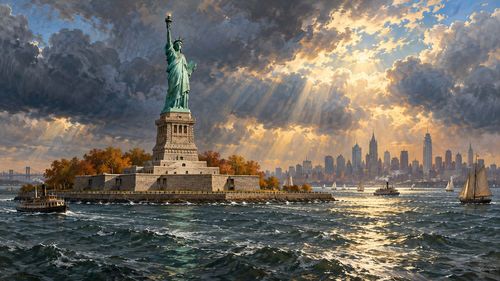
October 28: Liberty Unveiled, the Arch Completed, Chandler Gone Three October 28ths defined by monuments — one raised to freedom, one to westward ambition, and one built quietly across thirty years in the living rooms of people who loved a character who made them laugh while carrying something heavy Monuments take many forms. Some are built of copper on an island in a harbor, their torches visible for miles. Some are bent into 630 feet of stainless steel over a river that once marked the boundary between the known and the unknown. And some are built, invisibly and over decades, in the way a performer inhabits a character so completely that when they are gone, the character goes with them and something in the culture goes quiet. October 28 has seen all three kinds of monument raised — and in the case of the last one, lowered. A torch lifted. An arch closed. A room that used to be full of laughter. Liberty Enlightening the World   On October 28, 1886, President Grover Cleveland stood on Bedloe's Island in New York Harbor and pulled a cord that released a French tricolor from the face of the Statue of Liberty, unveiling the largest sculpture in the world to a crowd of dignitaries, naval vessels, and the enormous enthusiasm of a city that had been waiting for years. The statue — officially titled Liberty Enlightening the World — had been conceived by French political thinker Édouard de Laboulaye as a gift from the French people to the American, a celebration of the democratic ideals the two nations shared and a pointed contrast with the authoritarian governments that surrounded France. Sculptor Frédéric Auguste Bartholdi designed it. The engineer who built its internal iron skeleton, making the copper skin's impossible scale structurally possible, was Alexandre Gustave Eiffel — who would apply lessons learned here to a tower in Paris three years later. Standing 305 feet from ground to torch tip, Liberty was the tallest structure in New York at the time of her dedication. The meaning of the statue has never been fixed. Laboulaye and Bartholdi intended it as a symbol of the friendship between France and the United States and of liberal democratic ideals. Emma Lazarus's 1883 sonnet, "The New Colossus" — "Give me your tired, your poor, your huddled masses yearning to breathe free" — recast it as an emblem of immigration and refuge, though the poem was not mounted on the pedestal until 1903. In the century and more since, the statue has been claimed by advocates of immigration, by advocates of restriction, by protesters, by governments, and by advertising campaigns. It has appeared on currencies, stamps, corporate logos, and political posters of every ideological persuasion. The torch that Cleveland unveiled on October 28, 1886 has meant, across its 140 years, whatever the country most needed it to mean — which may be the most honest measure of a great symbol's power.   Liberty Enlightening the World — a monument that has meant whatever America most needed it to mean across 140 years of history, argument, and aspiration. The Keystone On October 28, 1965, construction workers in St. Louis, Missouri lowered an eight-foot triangular section of stainless steel into the gap at the top of the Gateway Arch, completing one of the most mathematically demanding structures ever built and one of the most recognizable monuments in the American West. The arch had been designed by Finnish-American architect Eero Saarinen as the centerpiece of the Jefferson National Expansion Memorial, intended to commemorate the westward expansion of the United States and St. Louis's role as the gateway through which much of it passed. Saarinen's design — a catenary curve, the shape that a chain makes when hung between two points — was not an arch in the traditional sense but a precisely calculated parabolic form 630 feet tall at its apex, with legs 630 feet apart at their bases. Every dimension was mathematically exact. Every piece of stainless steel cladding had to be shaped to curve in two directions simultaneously. The final keystone piece presented the construction team with a problem: the two legs of the arch, each built independently from the ground up, had to meet within a fraction of an inch at the top after rising 630 feet. Temperature variations on the day of completion caused the steel to expand, and fire hoses had to be used to cool the south leg before the gap was small enough to receive the triangular section. Saarinen himself had died of a brain tumor in 1961, four years before the arch was completed, and never saw his design realized. The monument he left behind sits on the western bank of the Mississippi River, and on a clear day it is visible from thirty miles away — a silver curve against the Missouri sky, marking the place where the American continent opened into something that felt, to the people who crossed it, like the possibility of beginning again. The Gateway Arch on the Mississippi — a monument to westward expansion whose architect died four years before its completion, and whose keystone required fire hoses and exact mathematics to set in place. ❦ Could That BE Any More Missed   On October 28, 2023, Matthew Perry was found dead at his home in Pacific Palisades, Los Angeles. He was fifty-four years old. The Los Angeles County Medical Examiner later determined that he had died from the acute effects of ketamine, with drowning, coronary artery disease, and the effects of buprenorphine listed as contributing factors. Perry had been, for a decade, one of the most recognizable faces on American television — Chandler Bing, the self-deprecating, joke-deflecting, emotionally defended friend on Friends, the NBC sitcom that ran from 1994 to 2004 and became one of the most watched television programs in the world. The character Perry inhabited for ten seasons was, by the actor's own account, closer to him than most fictional characters come to their performers — a man who used humor as both a weapon and a shield, and who was funnier than anyone in the room as a way of never having to be more vulnerable than the room could handle. Perry had been open about his addiction struggles for years before his death — he had been hospitalized multiple times, spent time in rehabilitation facilities, and had written about his experience with painful candor in his 2022 memoir, Friends, Lovers, and the Big Terrible Thing. He estimated that he had spent approximately nine million dollars on his sobriety attempts. The memoir, published just a year before his death, described a man who understood exactly what his addiction was doing to him and who was fighting it with every resource he had. His death, despite being in some sense foreseeable given what he had lived through, arrived with the particular shock of something that shouldn't have happened to someone who had tried so hard to prevent it. The tributes that followed came from fans who had spent a decade watching him be funny on a couch in a coffee shop in Manhattan — and who had understood, without necessarily having the words for it, that the funniness was also something else.   The kind of warm, lamplit gathering place that a generation of television viewers came to think of as the background of their own friendships — and that Matthew Perry made feel, for ten years, like somewhere worth coming back to.

13 October 2026

Post

Oct. 28, 2005: NASA Loses Contact With Genesis

On October 28, 2004, Cassini Skimmed Titan's Haze and Rewrote the Map of an Alien Moon A spacecraft's first close pass of Saturn's largest moon pulled back a curtain of orange haze that had hidden its surface for decades. On October 28, 2004, NASA's Cassini spacecraft swooped to within about 745 miles of Titan, Saturn's largest moon, completing its first close targeted flyby since arriving in the Saturn system months earlier. For a moon whose thick nitrogen-methane atmosphere had frustrated telescopes for generations, the pass offered scientists their sharpest look yet at what lay beneath the orange smog. Through the Haze   Cassini's imaging team, using specialized filters designed to cut through Titan's dense atmospheric haze, captured radar and optical data revealing a landscape of light and dark patches that hinted at solid terrain rather than a uniform global ocean, a long-standing theory among planetary scientists. Bright and dark regions with sharp boundaries suggested surface features shaped by geological processes, though the exact nature remained puzzling from a single flyby. Mission scientists at NASA's Jet Propulsion Laboratory noted the images showed no obvious impact craters in the observed swath, raising early questions about whether erosion, weather, or resurfacing was erasing Titan's history in real time. It was a moon behaving less like a frozen relic and more like a world still being written. The October flyby set the stage for the Huygens probe's descent onto Titan's surface just months later, in January 2005, which would confirm liquid-carved channels and drainage networks unlike anything else in the solar system beyond Earth. Cassini's radar instrument, working alongside the imaging cameras, began assembling swaths of Titan's surface strip by strip across the mission's later flybys, eventually revealing lakes of liquid methane near the poles. What started as a hazy orange mystery became, flyby after flyby, one of the most Earth-like — and most alien — landscapes humanity had ever mapped from afar.  

13 October 2026

Quiz

Cultured

Museum-lover? Art aficionado? Put your knowledge to the test!...

13 October 2026

Quiz

Civics Class

Hope you paid attention in civics class - it's your time to shine!...

13 October 2026

Quiz

Back in My Day

We walked uphill to school - both ways! How well do you know nostalgia?...

13 October 2026

Quiz

Couch Potato

See if your binge-watching has paid off!...

13 October 2026

Quiz

Armchair Quarterback

From the Olympics to the Gridiron - how well do you know your stuff?...

13 October 2026

Quiz

Smarty Pants

Do you know your beakers from your bunsen burners?...

13 October 2026

Quiz

Name That Era

How well do you know music history?...

13 October 2026

Quiz

How Well Do You Know American History?

Test your smarts with this history quiz!...
Terms and ConditionsDo Not Sell or Share My Personal InformationPrivacy PolicyPrivacy NoticeAccessibility NoticeUnsubscribe
Copyright © 2026 Day In History