Science

Recent Content

Nov. 4, 2001: Luis Gonzalez Stuns the Yankees

Nov. 4, 2001: Luis Gonzalez Stuns the Yankees

Read more
November 4: Doctor Strange Opens, NYC Marathon at 25

November 4: Doctor Strange Opens, NYC Marathon at 25

Read more
Nov. 3, 2016: Cubs End 108-Year Title Drought

Nov. 3, 2016: Cubs End 108-Year Title Drought

Read more
November 3: Stranger Than Fiction at 20, Wintour 77

November 3: Stranger Than Fiction at 20, Wintour 77

Read more
Nov. 2, 2004: Bush Beats Kerry in Ohio Nail-Biter

Nov. 2, 2004: Bush Beats Kerry in Ohio Nail-Biter

Read more
logo
  • Introduction

  • Lessons From The Past

  • Cultural Awareness and Diversity

  • Appreciation for Progress

  • Understanding Political and Social Dynamics

  • Preserving Cultural Heritage

  • Conclusion

On October 29, 2004, NASA's Cassini Spacecraft Made Its First Close Flyby of Saturn's Mysterious Moon Titan

Peering beneath an orange haze that had hidden a world for centuries, Cassini revealed a landscape unlike anything else in the solar system.

On October 29, 2004, the Cassini spacecraft swept to within about 745 miles of Titan, Saturn's largest moon, in the first of dozens of close encounters that would define its 13-year mission. For decades, Titan's thick nitrogen-methane atmosphere had hidden its surface from every telescope and passing probe, turning the moon into one of the solar system's great blank spots. Cassini's instruments, built to pierce that orange shroud, were about to change that.

Behind the Haze

Cassini's radar and imaging instruments cut through Titan's dense atmosphere in ways visible light cameras never could, returning the sharpest views of the moon's surface humanity had ever seen. Scientists spotted bright and dark regions suggesting complex geology, along with hints of the methane lakes and dune fields that later missions would confirm in detail. Mission scientists at NASA's Jet Propulsion Laboratory described the data as immediately reshaping assumptions about Titan's surface, which some had expected to be smooth or ocean-covered. Instead, the flyby revealed a moon carved by processes eerily similar to Earth's own, just built from entirely different chemistry. It was a reminder that familiar shapes don't require familiar materials.

The October 29 pass was a prelude to Cassini's most dramatic achievement regarding Titan: the release of the European Space Agency's Huygens probe, which would land on the moon's surface just months later in January 2005. That descent, made possible by the orbital groundwork laid during early flybys like this one, delivered the first images ever taken from the surface of a world in the outer solar system. Cassini would go on to make more than 120 targeted Titan flybys before its mission ended with a deliberate plunge into Saturn in 2017. The moon it helped reveal, with its rivers and seas of liquid methane, remains one of the strongest candidates for exotic life beyond Earth, a possibility this single flyby helped bring into focus.

[#~image_alt_1~#]

More History

13 October 2026

Post

Oct. 28, 2005: NASA Loses Contact With Genesis

On October 28, 2004, Cassini Skimmed Titan's Haze and Rewrote the Map of an Alien Moon A spacecraft's first close pass of Saturn's largest moon pulled back a curtain of orange haze that had hidden its surface for decades. On October 28, 2004, NASA's Cassini spacecraft swooped to within about 745 miles of Titan, Saturn's largest moon, completing its first close targeted flyby since arriving in the Saturn system months earlier. For a moon whose thick nitrogen-methane atmosphere had frustrated telescopes for generations, the pass offered scientists their sharpest look yet at what lay beneath the orange smog. Through the Haze   Cassini's imaging team, using specialized filters designed to cut through Titan's dense atmospheric haze, captured radar and optical data revealing a landscape of light and dark patches that hinted at solid terrain rather than a uniform global ocean, a long-standing theory among planetary scientists. Bright and dark regions with sharp boundaries suggested surface features shaped by geological processes, though the exact nature remained puzzling from a single flyby. Mission scientists at NASA's Jet Propulsion Laboratory noted the images showed no obvious impact craters in the observed swath, raising early questions about whether erosion, weather, or resurfacing was erasing Titan's history in real time. It was a moon behaving less like a frozen relic and more like a world still being written. The October flyby set the stage for the Huygens probe's descent onto Titan's surface just months later, in January 2005, which would confirm liquid-carved channels and drainage networks unlike anything else in the solar system beyond Earth. Cassini's radar instrument, working alongside the imaging cameras, began assembling swaths of Titan's surface strip by strip across the mission's later flybys, eventually revealing lakes of liquid methane near the poles. What started as a hazy orange mystery became, flyby after flyby, one of the most Earth-like — and most alien — landscapes humanity had ever mapped from afar.  

13 October 2026

Post

Oct. 23, 2001: Apple Unveils the iPod

On October 23, 2001, Steve Jobs Introduced the World to the iPod A small white device with a click wheel promised to put a thousand songs in your pocket—and quietly began rewriting the rules of the music business. On October 23, 2001, in a modest auditorium at Apple's Cupertino headquarters, Steve Jobs pulled a small white rectangle from his pocket and told the assembled press that Apple was introducing a breakthrough digital device. The company was still years from the iPhone, still recovering from the dot-com bust, and best known for candy-colored iMacs. What Jobs held up that day looked unassuming, almost toy-like, but it carried a claim that sounded almost absurd for its time. 1,000 Songs   The device was the iPod, a 6.5-ounce gadget with a 5GB hard drive that Apple promised could hold "1,000 songs in your pocket." It used a mechanical scroll wheel for navigation, connected via FireWire for what was then blazing-fast transfers, and carried a price tag of $399 — steep enough that some technology writers dismissed it as a niche product for Mac loyalists. Compared to the clunky MP3 players already on the market, most of which held a fraction of the songs and ran on double-A batteries, the iPod felt like it had arrived from another decade entirely. Jobs, dressed in his familiar black turtleneck, framed it not as a gadget but as a lifestyle shift, a way of carrying an entire music collection without carrying anything heavy at all. Skeptics wondered aloud whether Apple, a computer company, had any business making a music player — a question that would soon answer itself in the most emphatic terms possible. The first iPod shipped a few weeks later, compatible only with Macs, which limited its reach in a market still dominated by Windows PCs. But the device's design language — minimalist, white, built around Apple's new iTunes software — set a template the company would refine for years. Within two years, Windows compatibility and the iTunes Music Store would turn the iPod into a cultural fixture, its white earbuds becoming a visible symbol of the early 2000s. The record labels that once shrugged off digital music would soon find themselves negotiating with the company that had made downloading songs feel effortless, a shift that began with one modest press event and a device nobody outside Cupertino was sure the world actually needed.  

13 October 2026

Post

Oct. 22, 2008: The First Android Phone Debuts

On October 22, 2008, the T-Mobile G1 Went on Sale, Introducing the World to Android A slide-out keyboard and a search-engine giant's operating system quietly launched the smartphone war's second act. On October 22, 2008, shoppers filing into T-Mobile stores across the United States could walk out with a chunky, slide-out-keyboard handset called the G1 — the first phone ever to run Google's new Android operating system. Built by HTC and priced at $179 with a two-year contract, it arrived just over a year after Apple's iPhone had redefined what a phone could be, and few outside the tech press understood they were watching the opening move of a rivalry that would reshape the entire industry. The Underdog Debut   The G1 was, by most measures, an awkward machine. It had a trackball, a physical keyboard that popped out from beneath the screen, and no multi-touch pinch-to-zoom, a deliberate step around Apple's patents. Reviewers at the time noted its clunky software and middling battery life, and Google itself was cautious about the launch, treating Android less as a finished product than as an open invitation to manufacturers and developers who felt boxed out of Apple's tightly controlled ecosystem. T-Mobile sold out its initial stock within days, driven less by the hardware than by curiosity about what Google intended to build. What followed was not immediate dominance but a slow accumulation of scale. Android's open-source licensing meant that Samsung, Motorola, LG, and eventually manufacturers worldwide could adopt it for free, and within three years Android phones outsold iPhones globally. The G1 itself was discontinued within two years, a footnote next to the operating system it introduced, which today runs on the majority of smartphones on Earth — proof that the clumsiest first draft can still write the ending.  

13 October 2026

Post

Oct. 18, 2019: First All-Female Spacewalk

On October 18, 2019, Christina Koch and Jessica Meir Stepped Into History Outside the ISS A scheduling quirk months earlier had delayed this moment, but on this day two women finally floated alone into the vacuum of space together. On October 18, 2019, NASA astronauts Christina Koch and Jessica Meir opened the hatch of the International Space Station and drifted out into open space, becoming the first all-female team to conduct a spacewalk in the six-decade history of extravehicular activity. Their task was technical — replacing a failed power controller — but the moment carried a weight far beyond hardware. The Long Way Up   The spacewalk almost happened months earlier, in March 2019, when Koch and fellow astronaut Anne McClain were slated to go out together. NASA scrubbed that plan after discovering there weren't enough medium-sized spacesuit torsos aboard the station to fit both women, a logistical gap that drew sharp public criticism about how spaceflight infrastructure had been designed. Koch went out instead with a male colleague, and the milestone waited. By October, the suit situation was resolved, and Meir, on her first spaceflight, joined Koch for a seven-hour, seventeen-minute excursion. They successfully swapped the faulty battery charge-discharge unit, restoring full power capacity to the station's solar array circuit. The fix worked precisely as engineers had hoped, a quietly competent end to a walk that the whole world had been watching for reasons that had nothing to do with batteries. Inside the station, NASA astronaut Jessica Meir spoke with President Donald Trump and NASA administrator Jim Bridenstine during the walk, fielding a call that framed the moment as a national milestone rather than a routine repair. Koch would go on to spend 328 days in space, setting a record for the longest single spaceflight by a woman, while Meir's own path back to Earth carried the quiet distinction of having been part of the first spacewalk performed entirely by women. NASA had conducted more than 200 spacewalks since 1965 before this one finally matched its astronaut corps to its long-overdue moment, a gap closed not by grand ceremony but by two women fixing a battery a few hundred miles above the planet that had kept them waiting.  

13 October 2026

Post

Oct. 16, 2003: China's First Astronaut Returns

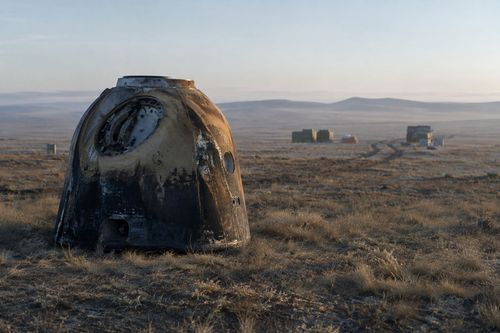
On October 16, 2003, Yang Liwei Touched Down and Made China a Spacefaring Nation After 21 hours circling the Earth, a 38-year-old fighter pilot turned taikonaut landed on the Mongolian steppe and rewrote the map of human spaceflight. On the morning of October 16, 2003, a scorched capsule descended over the grasslands of Inner Mongolia, carrying Yang Liwei back to Earth after roughly 21 hours in orbit aboard Shenzhou 5. His safe landing capped a mission that had launched the day before from the Jiuquan Satellite Launch Center, making China only the third nation — after the Soviet Union and the United States — to independently send a human into space. The Long Descent   Yang, a former People's Liberation Army Air Force pilot selected from a pool of more than a thousand candidates, had spent the flight orbiting the planet fourteen times in a spacecraft built with heavy Soviet-era design influence but engineered and assembled domestically. State television broadcast the launch live, an unusual move for a government typically cautious about publicizing failures, and it paid off: the mission went almost exactly to plan. When the reentry module separated and parachuted down near Siziwang Banner, recovery teams found Yang conscious, mobile, and reportedly in good spirits, later saying he saw no need to feel nervous during the flight. The successful landing turned a national gamble into a broadcast triumph. The flight instantly became a cornerstone of Chinese national identity, celebrated with parades, commemorative stamps, and Yang's near-instant elevation to celebrity status and military honors. It also announced, to a world still processing the post-Cold War space landscape, that a third power now had the capability to launch and recover humans on its own terms. Within a decade, China would build on the Shenzhou 5 blueprint to construct a modular space station, but the moment of Yang stepping out of that capsule under his own power remained the symbolic starting gun — a quiet field in Mongolia serving as the unlikely stage for a new era in space history.  

13 October 2026

Post

Oct. 14, 2012: Baumgartner's Supersonic Leap

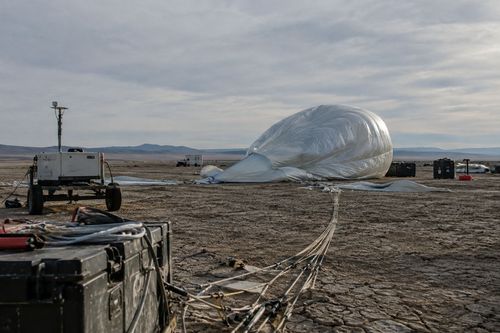
On October 14, 2012, Felix Baumgartner Stepped Off a Balloon 24 Miles Above New Mexico and Became the First Human to Break the Sound Barrier in Freefall A daredevil, a helium balloon, and a 128,000-foot leap into the record books. On October 14, 2012, millions watched a live stream as Austrian skydiver Felix Baumgartner rode a helium balloon to the edge of the stratosphere, then stepped off the capsule ledge into a fall that would make him the first person to travel faster than sound without the aid of a vehicle. The Red Bull Stratos mission was equal parts science experiment, engineering feat, and global spectacle, and for a few tense minutes, the world held its breath watching a tiny figure tumble against the black curve of the earth. The Long Fall   Baumgartner ascended in a pressurized capsule tethered to a balloon nearly as tall as a 55-story building, filled with helium that expanded to over 30 million cubic feet as it climbed. At 128,100 feet — roughly 24 miles above Roswell, New Mexico — he opened the capsule door, saluted the camera, and stepped into the near-vacuum of the upper atmosphere. Within seconds he was in freefall, and within thirty-four seconds he had exceeded Mach 1, hitting a peak speed of 843.6 miles per hour. For a brief, disorienting stretch, his body spun uncontrollably before he stabilized, a moment engineers had feared could end the jump in catastrophe rather than triumph. He landed on his feet in the New Mexico desert after a fall lasting about four minutes and 20 seconds, part of it in freefall before his parachute deployed. The mission, backed by Red Bull and a team led by retired U.S. Air Force officer Joe Kittinger — whose own 1960 jump record Baumgartner had just shattered — generated data on high-altitude survival gear still referenced by aerospace researchers. It also broke a different kind of record: the live YouTube stream peaked at over 8 million concurrent viewers, proof that a man falling silently through the sky could still stop the entire internet in its tracks.  

13 October 2026

Post

Oct. 13, 2010: Chile's Miners Rise From the Earth

On October 13, 2010, the Last of 33 Trapped Chilean Miners Emerged After 69 Days Underground A rescue capsule named Fénix carried men from half a mile below the Atacama Desert into a waiting world that had refused to give up on them. For 69 days, the world had watched a hole in the Chilean desert with something between dread and hope. On October 13, 2010, that hope was vindicated: one by one, 33 miners trapped nearly 2,300 feet underground since an August cave-in at the San José mine were pulled to the surface in a narrow steel capsule, ending one of the most closely followed rescue operations in modern history. The Fénix Rises   The men had survived on rationed tuna and milk for the first 17 days before rescuers even confirmed they were alive, sending down a narrow probe that returned with a note reading, in Spanish, that all 33 were well in the shelter. What followed was a scramble of engineering improvisation: NASA consultants, drilling teams from at least three countries, and a purpose-built capsule barely wider than a man's shoulders, christened Fénix after the mythical bird. Chilean President Sebastián Piñera stood at the mine site for the extraction, greeting each miner as he stepped out blinking into sunlight he hadn't seen in over two months. Shift foreman Luis Urzúa, credited with organizing the men's survival underground, was the last to ascend, closing out an ordeal that had become a fixture of nightly news broadcasts worldwide. An estimated one billion people watched the rescue unfold live, drawn by a story that offered something increasingly rare on television: an outcome nobody had to spin. The operation, dubbed Plan B by rescuers, used a drill borrowed from oil-field technology to bore the escape shaft in just over a month, far faster than initial estimates of Christmas. Each miner wore sunglasses to protect eyes unaccustomed to daylight and had lost an average of 20 pounds. The men later became briefly famous, visiting Piñera's palace, meeting Manchester United players, and touring as minor celebrities, though several would spend years afterward navigating the psychological weight of having been declared dead by their own government before anyone knew otherwise.  

13 October 2026

Post

Oct. 8, 2013: Higgs Boson Wins the Nobel Prize

On October 8, 2013, the Nobel Committee Finally Crowned the 'God Particle' Nearly five decades after their theory, Peter Higgs and François Englert were awarded physics' highest honor for predicting a particle that gives the universe mass. On October 8, 2013, the Royal Swedish Academy of Sciences announced that Peter Higgs and François Englert would share the Nobel Prize in Physics, capping one of the longest waits in the award's history. Their theoretical work, published independently in 1964, had predicted the existence of a fundamental particle responsible for giving mass to matter — a idea so elusive it took the world's largest machine, buried beneath the Franco-Swiss border, to finally catch it in the act. The Long Wait   The theory that would eventually bear Higgs's name emerged from a deceptively simple question: why do particles have mass at all? In 1964, Higgs and, separately, Englert (working with the late Robert Brout) proposed that an invisible field permeates all of space, and that particles gain mass by interacting with it. For decades the idea remained mathematically elegant but physically unconfirmed, a placeholder theory waiting on technology to catch up. Physicists nicknamed the particle tied to that field the 'Higgs boson,' and eventually, less reverently, the 'God particle' — a label Higgs himself reportedly disliked, finding it overstated and a little embarrassing for something so thoroughly explainable by physics. Confirmation finally came in July 2012, when researchers at CERN's Large Hadron Collider announced they had detected a particle consistent with the long-theorized boson, smashing protons together at nearly the speed of light to briefly recreate conditions from the universe's first fractions of a second. Fourteen months later, the Nobel committee made it official, awarding the prize jointly to Higgs and Englert — Brout having died in 2011 and thus ineligible under Nobel rules barring posthumous honors. Higgs, notoriously press-shy, reportedly went out for lunch on the day of the announcement and couldn't initially be reached by reporters, a fittingly understated end for a man whose name had spent fifty years attached to one of physics' biggest ideas.  

13 October 2026

Post

Oct. 6, 2021: A Nobel for Green Chemistry

On October 6, 2021, Two Chemists Who Worked an Ocean Apart Shared a Nobel for the Same Idea Benjamin List and David MacMillan never collaborated, yet they independently unlocked a cheaper, cleaner way to build molecules — and the Nobel committee decided they deserved to share the credit. On the morning of October 6, 2021, the Royal Swedish Academy of Sciences announced that the Nobel Prize in Chemistry would be split between Benjamin List of Germany's Max Planck Institute and David MacMillan of Princeton University, honoring a breakthrough that quietly transformed how chemists assemble everything from pharmaceuticals to plastics. Neither man had planned it that way — they'd developed the same technique in the same year, working thousands of miles apart, unaware the other was chasing an identical answer. A Simultaneous Discovery   For decades, chemists building complex molecules relied on two main tools: metals and enzymes, both of which came with drawbacks — metals could be toxic or expensive, enzymes finicky and hard to scale. In 2000, List and MacMillan each published papers, separately and without knowledge of one another, describing a third option: asymmetric organocatalysis, using small, stable organic molecules to speed up chemical reactions and control their molecular shape. The idea had been hiding in plain sight, dismissed for years as chemists assumed only metals and biological enzymes could do this kind of precise work. It took two researchers, oceans apart, arriving at the same insight in the same twelve months to prove the field wrong. The applications proved immediate and vast. Organocatalysts turned out to be cheaper, more environmentally friendly, and easier to produce than the metal catalysts they often replaced, and within two decades the technique was being used to manufacture pharmaceuticals, including antiviral and antidepressant drugs, at industrial scale. When the Nobel committee called List, he reportedly assumed the ringing phone was a prank; MacMillan later said he initially let his own call go to voicemail. Twenty-one years after their parallel papers appeared, two chemists who'd never worked together stood credited jointly for reinventing a field neither had realized the other was quietly rewriting.  

13 October 2026

Post

Oct. 4, 2004: SpaceShipOne Wins the X Prize

On October 4, 2004, SpaceShipOne Rockets Into History and Claims the $10 Million Ansari X Prize A privately built rocket plane proved that space didn't belong to governments alone. On October 4, 2004, a stubby white spacecraft called SpaceShipOne roared off the Mojave Desert floor and climbed past the edge of space for the second time in five days, sealing the first privately funded human spaceflight program's claim to the $10 million Ansari X Prize. The Mojave Gambit   Piloted by Brian Binnie, SpaceShipOne launched from beneath its carrier aircraft, White Knight, before igniting its hybrid rocket motor and screaming past the 100-kilometer Kármán line that internationally defines the boundary of space. The flight capped a challenge first announced in 1996 by the X Prize Foundation, which promised its purse to the first non-government team to fly a reusable crewed spacecraft to space twice within two weeks. Funded largely by Microsoft co-founder Paul Allen and designed by aviation maverick Burt Rutan's Scaled Composites, SpaceShipOne had already made its qualifying flight on September 29, piloted by Mike Melvill. Binnie's follow-up flight pushed the craft to roughly 368,000 feet, a record altitude for a winged, reusable vehicle. Skeptics had spent years dismissing commercial spaceflight as a rich man's fantasy, a notion that dissolved somewhere over the Mojave's dry lakebeds. The victory reverberated far beyond the prize money, which barely covered the estimated $25 million Allen had poured into the project. Richard Branson, watching closely, soon licensed the underlying technology to launch Virgin Galactic, betting that ordinary paying passengers might one day follow Binnie's path. NASA officials took notice too, as the flight arrived amid growing pressure to open low-Earth orbit and suborbital travel to commercial players rather than keeping it a exclusively government enterprise. SpaceShipOne itself never flew again, retiring to the Smithsonian's National Air and Space Museum, hung beside the Spirit of St. Louis and Apollo 11's command module—odd company for a machine built in a Mojave hangar on a billionaire's bet.  

13 October 2026

Post

Sept. 27, 2015: The Super Blood Moon Rises

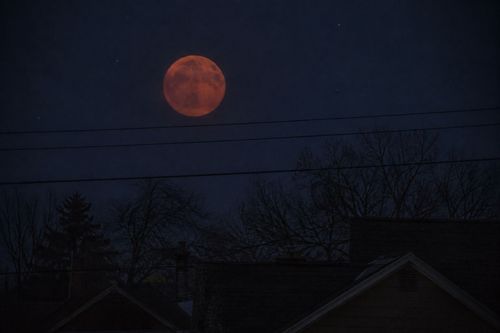
On September 27, 2015, the Moon Turned Blood-Red in a Once-in-a-Generation Sky Show A supermoon and a total lunar eclipse aligned for the first time in over three decades, sending millions outside to watch the sky turn crimson. On the evening of September 27, 2015, skywatchers across the Americas, Europe, Africa, and parts of Asia turned their eyes upward for a celestial rarity: a total lunar eclipse coinciding with a supermoon, the closest the Moon comes to Earth in its orbit. NASA confirmed it as the final act of a lunar tetrad — four consecutive total eclipses — that wouldn't repeat until 2033, giving the night an unmistakable sense of occasion. The Crimson Hour   As Earth's shadow crept across the lunar surface, the Moon didn't vanish so much as transform, taking on a deep coppery-red hue as sunlight bent through the planet's atmosphere and painted the far side of the eclipse. Because the Moon was also at perigee — its closest approach to Earth — it appeared roughly 14 percent larger and 30 percent brighter than a typical full moon, amplifying the spectacle for the estimated hundreds of millions who watched, many without ever leaving their backyards. NASA livestreamed the event from the Marshall Space Flight Center, fielding a flood of public questions in real time, while observatories from Griffith Park to the Vatican opened their domes for free public viewing. For a few hours, the sky itself became the most democratic show on Earth, no ticket required, just clear weather and a working set of eyes. Astronomers noted that the pairing of supermoon and total eclipse had occurred only five times since 1900, with the prior instance falling in 1982 and the next not due until 2033 — a scarcity that turned casual stargazers into instant astronomy enthusiasts for a night. Social media lit up with amateur photos of the reddened orb hanging low over skylines from New York to Nairobi, an unplanned global photography contest with no judges and no prize beyond the image itself. NASA scientists used the occasion to explain the eclipse's physics to a curious public, noting that the same atmospheric scattering responsible for red sunsets was, in that moment, painting the entire Moon the color of a dying ember, a reminder that the sky's oldest tricks still had the power to stop people in their tracks.  

13 October 2026

Post

Sept. 26, 2013: IPCC's Landmark Climate Verdict

On September 26, 2013, the World's Top Climate Scientists Declared Human-Caused Warming 'Extremely Likely' In a Stockholm conference room, the IPCC's Fifth Assessment Report turned scientific consensus into a number the world could not ignore. On September 26, 2013, the Intergovernmental Panel on Climate Change released the first installment of its Fifth Assessment Report in Stockholm, Sweden, delivering the most confident scientific statement yet on humanity's role in a warming planet. After years of data collection, peer review, and diplomatic wrangling among hundreds of scientists from dozens of countries, the panel concluded that it was "extremely likely" — meaning at least 95 percent probability — that human activity was the dominant cause of global warming since the mid-20th century. The figure marked a jump from the 90 percent certainty cited in the panel's previous report in 2007, and it landed at a moment when public debate over climate science remained fierce. The 95 Percent   The report's authors, drawn from more than 800 scientists working across nine years of research, synthesized findings from more than 9,200 peer-reviewed studies. Their conclusion rested on multiple independent lines of evidence: rising ocean temperatures, shrinking Arctic sea ice, accelerating glacier melt, and a well-documented rise in atmospheric carbon dioxide tied directly to fossil fuel combustion. Thomas Stocker, co-chair of the working group that produced the report, told reporters in Stockholm that continued emissions would cause "further warming and changes in all components of the climate system," language deliberately calibrated to avoid overstatement while still conveying urgency. The panel's Nobel Prize-winning credibility — shared with Al Gore in 2007 — gave the findings institutional weight that few scientific bodies could match, even as the report itself acknowledged lingering uncertainties in exactly how fast some changes would unfold. Reaction split along familiar lines almost immediately. Environmental groups and many governments treated the 95 percent figure as a call to action ahead of the Paris climate negotiations still two years away, while skeptics in the U.S. Congress and elsewhere questioned the models underpinning the projections. What neither side disputed was the scale of the undertaking: the report ran to thousands of pages, condensed into a 36-page summary for policymakers that took a marathon overnight session to finalize word by word. That summary would go on to become one of the most cited documents in modern environmental policy, a single number — 95 percent — doing the work of a decade's worth of data.  

13 October 2026

Post

Sept. 21, 2003: Galileo's Fiery Dive Into Jupiter

On September 21, 2003, NASA Sent the Galileo Spacecraft Plunging Into Jupiter to End Its Historic Mission After eight years orbiting the gas giant and its moons, Galileo was deliberately destroyed to protect a world it had helped make famous. On September 21, 2003, mission controllers at NASA's Jet Propulsion Laboratory watched their screens go quiet as the Galileo spacecraft, running on fumes after 14 years in space, plummeted into Jupiter's crushing atmosphere and was vaporized. It was not a malfunction or an accident — it was the planned, deliberate end to one of the most productive planetary missions in the history of American spaceflight. The Final Plunge   Galileo had launched from the space shuttle Atlantis back in 1989, and after a circuitous six-year journey that used gravity assists from Venus and Earth to reach Jupiter, it began orbiting the planet in 1995. Over eight years there, it dropped a probe into Jupiter's clouds, discovered strong evidence of a saline ocean beneath the icy crust of the moon Europa, and captured the first close-up images of an asteroid. By 2003, its propellant was nearly exhausted and its aging systems were failing. Rather than risk an uncontrolled crash onto Europa — a moon considered one of the solar system's best candidates for hosting microbial life — NASA engineers steered Galileo on a final, irreversible path directly into Jupiter itself, ensuring no Earth microbes hitching a ride on the probe could ever contaminate that fragile, distant ocean. The spacecraft entered Jupiter's atmosphere at more than 30 miles per second, disintegrating within seconds under the immense heat and pressure, its signal vanishing from mission control's readouts at 12:57 p.m. Pacific time. Scientists who had spent careers working with Galileo's data described the moment with a mix of pride and mourning, having wrung nearly a decade and a half of discovery from a probe originally designed for a two-year primary mission. The very success that made Europa's ocean so tantalizing was what forced Galileo's builders to destroy their own creation — a machine sacrificed to protect the mystery it had uncovered.  
Terms and ConditionsDo Not Sell or Share My Personal InformationPrivacy PolicyPrivacy NoticeAccessibility NoticeUnsubscribe
Copyright © 2026 Day In History