On September 27, 2015, the Moon Turned Blood-Red in a Once-in-a-Generation Sky Show
On the evening of September 27, 2015, skywatchers across the Americas, Europe, Africa, and parts of Asia turned their eyes upward for a celestial rarity: a total lunar eclipse coinciding with a supermoon, the closest the Moon comes to Earth in its orbit. NASA confirmed it as the final act of a lunar tetrad — four consecutive total eclipses — that wouldn't repeat until 2033, giving the night an unmistakable sense of occasion.
The Crimson Hour
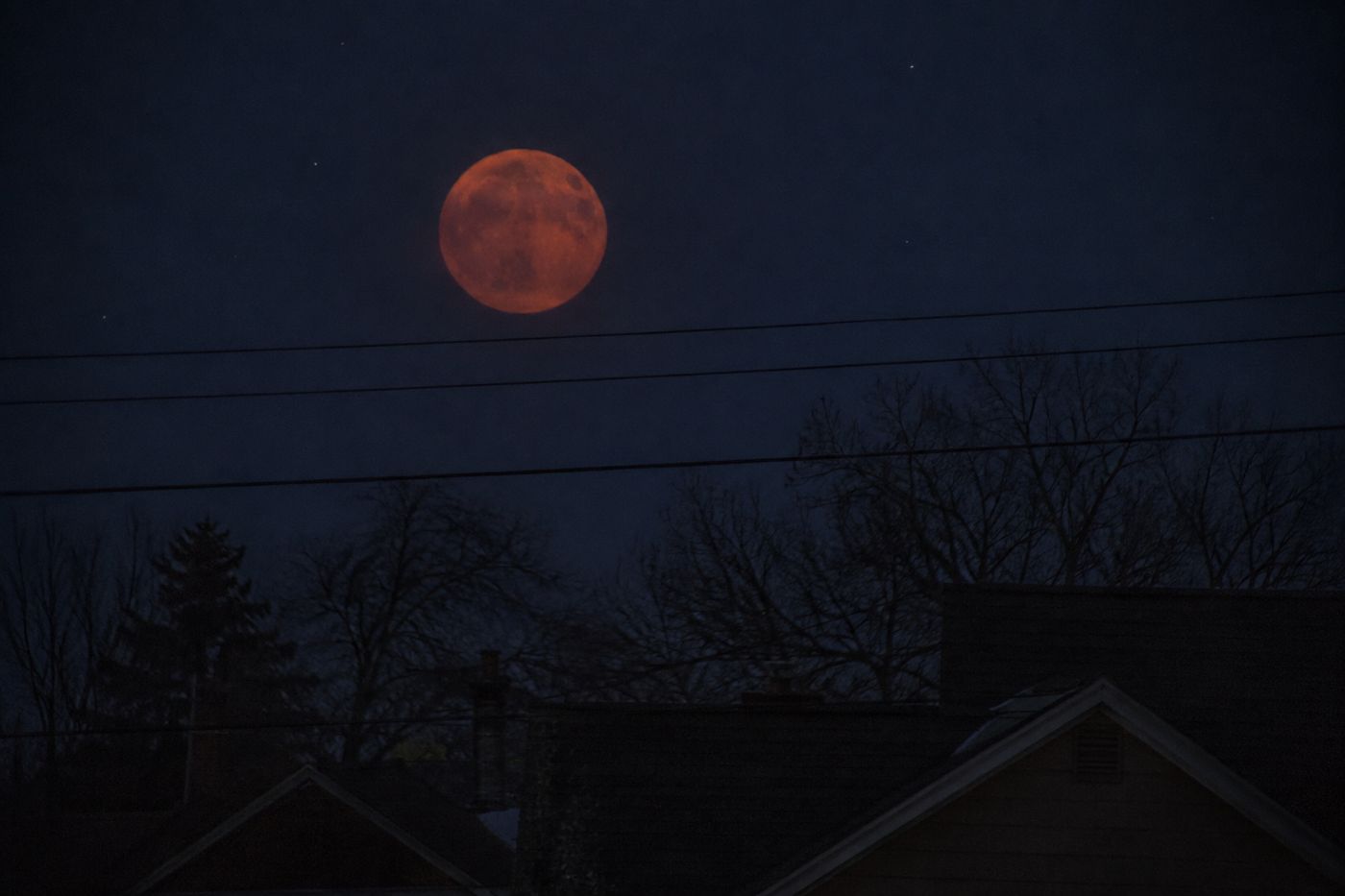
As Earth's shadow crept across the lunar surface, the Moon didn't vanish so much as transform, taking on a deep coppery-red hue as sunlight bent through the planet's atmosphere and painted the far side of the eclipse. Because the Moon was also at perigee — its closest approach to Earth — it appeared roughly 14 percent larger and 30 percent brighter than a typical full moon, amplifying the spectacle for the estimated hundreds of millions who watched, many without ever leaving their backyards. NASA livestreamed the event from the Marshall Space Flight Center, fielding a flood of public questions in real time, while observatories from Griffith Park to the Vatican opened their domes for free public viewing. For a few hours, the sky itself became the most democratic show on Earth, no ticket required, just clear weather and a working set of eyes.
Astronomers noted that the pairing of supermoon and total eclipse had occurred only five times since 1900, with the prior instance falling in 1982 and the next not due until 2033 — a scarcity that turned casual stargazers into instant astronomy enthusiasts for a night. Social media lit up with amateur photos of the reddened orb hanging low over skylines from New York to Nairobi, an unplanned global photography contest with no judges and no prize beyond the image itself. NASA scientists used the occasion to explain the eclipse's physics to a curious public, noting that the same atmospheric scattering responsible for red sunsets was, in that moment, painting the entire Moon the color of a dying ember, a reminder that the sky's oldest tricks still had the power to stop people in their tracks.