Science

Science

18 November 2026

Nov. 18, 2013: MAVEN Launches to Mars

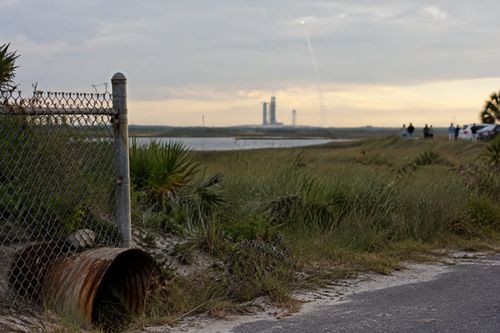
On Nov. 18, 2013, NASA's MAVEN Spacecraft Rocketed Toward Mars to Solve the Mystery of the Vanishing Atmosphere A single Atlas V launch from Florida set out to answer how a planet that once may have had rivers and lakes ended up cold, dry and nearly airless. On the afternoon of Nov. 18, 2013, an Atlas V rocket climbed off the pad at Cape Canaveral Air Force Station in Florida carrying a spacecraft with an unusual assignment. Most Mars missions had gone to look at the ground. MAVEN, short for Mars Atmosphere and Volatile EvolutioN, was built to look up, at the thin, tattered air that is all that remains of whatever Mars once had. The Missing Sky   Orbiters and rovers had already turned up channels, minerals and ancient lakebeds that pointed to a wetter, warmer Mars in the distant past. Water that flows on the surface needs a thicker atmosphere than the one the planet has now, so the obvious question was where that atmosphere went. MAVEN was NASA's attempt to measure the answer rather than guess at it. The spacecraft lifted off at 1:28 p.m. Eastern time aboard an Atlas V 401, on the first day of its launch period. Its plan was to settle into a looping orbit around Mars and sample the planet's upper atmosphere directly, while tracking the solar wind and ultraviolet light that strip gas away into space. Its instruments were designed to watch that process in action instead of inferring it from rocks. It was a small, focused mission built around a single big question, and its mission team knew that the answer might reveal as much about Earth's own long-term fate as about its neighbor's. It would be a ten-month trip before anyone could begin to find out. The trip ended on Sept. 21, 2014, when MAVEN fired its engines and slipped into orbit around Mars. It arrived just three days before India's Mars Orbiter Mission, which had left Earth two weeks before MAVEN, on Nov. 5, 2013. The two missions had set out in the same narrow launch window and finished the journey nearly together. Once MAVEN began its science work, it confirmed that the solar wind was a major force in eroding the Martian atmosphere, and NASA reported in 2015 that the loss was far greater during solar storms. The spacecraft that was built to look at what Mars had lost became, in effect, a witness to the loss still happening. Mars is not simply a planet that once had air. It is a planet whose air is, even now, still leaving.  
Science

16 November 2026

Nov. 16, 2020: Moderna's 94.5% Vaccine Result

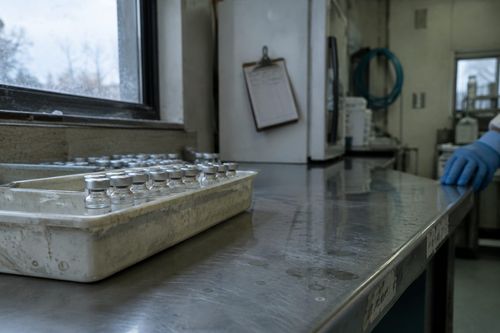
Nov. 16, 2020: Moderna Announces That Its mRNA COVID-19 Vaccine Was 94.5% Effective in Its Phase 3 Trial A Monday-morning press release put a number on the hope that a new kind of vaccine could end the worst pandemic in a century. On Monday, Nov. 16, 2020, a Cambridge, Massachusetts, biotech company that had never brought a product to market announced results that would change the pandemic's trajectory. Moderna said an early look at its Phase 3 trial showed its COVID-19 vaccine candidate, mRNA-1273, was 94.5% effective at preventing symptomatic disease. The figure arrived as case counts climbed across the United States and Europe. The Interim Analysis   The trial, run with the National Institutes of Health, had enrolled about 30,000 volunteers across the United States. An independent data safety monitoring board conducted the first interim analysis once 95 participants had developed confirmed symptomatic COVID-19. Of those cases, 90 were in the placebo group and only five were in the group that received the vaccine. The board also counted 11 severe cases, and all 11 were in the placebo group. Moderna said the vaccine could be stored at standard refrigerator temperatures, 36 to 46 degrees Fahrenheit, for 30 days, and at minus 4 degrees for six months, a practical edge for distribution. The company's design work had begun in January 2020, shortly after the virus's genetic sequence was published. A technology long considered promising but unproven had gone from a computer file to a late-stage trial in under a year, which is a pace that vaccine development had never come close to matching. The announcement came one week after Pfizer and BioNTech had reported that their own mRNA vaccine was more than 90% effective, so Moderna's result served as confirmation as much as surprise. Two different companies, using the same underlying idea, had arrived at results far above the 50% efficacy that regulators had set as a minimum bar. Moderna cautioned that the data were preliminary and still needed review by regulators. That review came quickly. The U.S. Food and Drug Administration granted emergency use authorization to the vaccine on Dec. 18, 2020. For a company that had spent a decade as a scientific curiosity, a single Monday press release had been enough to turn years of skepticism about messenger RNA into one of the most closely watched medical results of the century.  

Science

13 November 2026

Nov. 13, 2014: Philae's Comet Landing Aftermath

Nov. 13, 2014: The Day After a Comet Landing, Philae's Race Against a Dying Battery Begins A day after a bouncing touchdown on Comet 67P, the little lander in a shadowed spot had hours to do its science. Landing on a comet was the easy headline. By Nov. 13, 2014, the European Space Agency's Philae lander sat tilted somewhere on Comet 67P/Churyumov-Gerasimenko, far from its intended site, and the mission team in Darmstadt, Germany was racing to get as much science out of it as possible. Borrowed Time   Philae had touched down on Nov. 12 after a ten-year ride aboard the Rosetta spacecraft. The harpoons meant to anchor it to the surface did not fire, and the lander bounced before settling in a spot partly shadowed by a cliff or crater wall. That left its solar panels with far less sunlight than planned. The mission's backup plan was simple: use the primary battery to complete as many experiments as possible before it ran out. Controllers sequenced the instruments in order of priority, and Philae returned its first-ever data from a comet's surface, including measurements from instruments built to analyze the surface and the comet's makeup. The comet was not a quiet place to work. Every command had to fit into windows when Rosetta was overhead to relay the signal. The lander's fate was written in its orbit, in a way, by geometry and light rather than by anything the team could adjust. As the battery ran low, the team made a last-ditch attempt to shift the lander's position, hoping to catch more sunlight. Philae then went silent as its power ran out, entering a kind of hibernation. The mission had delivered the first sampling and surface analysis attempts ever made on a comet. Then, in June 2015, the lander briefly woke and phoned home as the comet neared the Sun, before falling quiet again for good. Its resting place was only pinpointed in 2016, when Rosetta photographed it wedged in a dark crevice. A machine designed to anchor itself had spent its brief life unanchored, and its best discoveries came from the shadows it never meant to land in.  
…
logo
  • Introduction

  • Lessons From The Past

  • Cultural Awareness and Diversity

  • Appreciation for Progress

  • Understanding Political and Social Dynamics

  • Preserving Cultural Heritage

  • Conclusion

Terms and ConditionsDo Not Sell or Share My Personal InformationPrivacy PolicyPrivacy NoticeAccessibility NoticeUnsubscribe
Copyright © 2026 Day In History