Sports Facts

Recent Content

Nov. 4, 2001: Luis Gonzalez Stuns the Yankees

Nov. 4, 2001: Luis Gonzalez Stuns the Yankees

Read more
November 4: Doctor Strange Opens, NYC Marathon at 25

November 4: Doctor Strange Opens, NYC Marathon at 25

Read more
November 3: Stranger Than Fiction at 20, Wintour 77

November 3: Stranger Than Fiction at 20, Wintour 77

Read more
Nov. 2, 2004: Bush Beats Kerry in Ohio Nail-Biter

Nov. 2, 2004: Bush Beats Kerry in Ohio Nail-Biter

Read more
November 2: No Diggity Hits #1, Monsters Inc at 25

November 2: No Diggity Hits #1, Monsters Inc at 25

Read more
logo
  • Introduction

  • Lessons From The Past

  • Cultural Awareness and Diversity

  • Appreciation for Progress

  • Understanding Political and Social Dynamics

  • Preserving Cultural Heritage

  • Conclusion

In the Early Hours of November 3, 2016, the Chicago Cubs Finally Became World Champions

A rain delay, extra innings, and 108 years of heartbreak all collided in one unforgettable night in Cleveland.

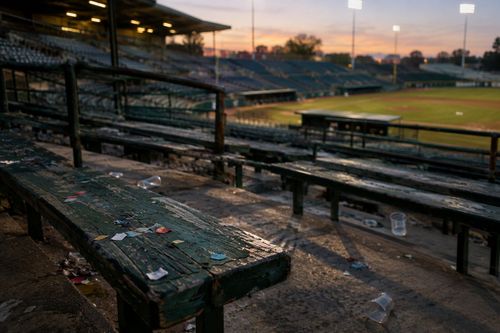
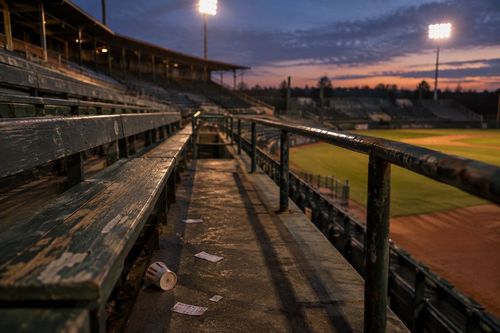
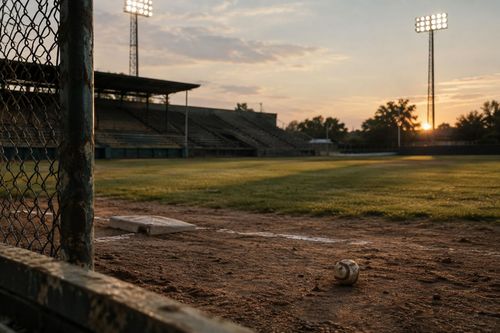
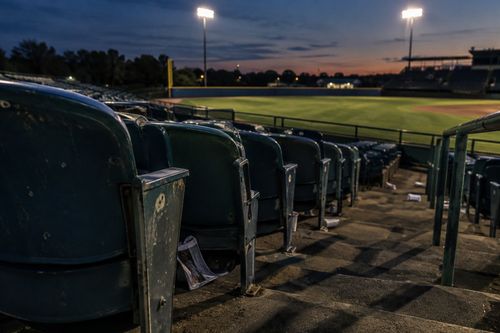
The calendar had already flipped to November 3, 2016, by the time the Chicago Cubs recorded the final out of a World Series Game 7 that felt less like a baseball game than an exorcism. For the better part of a week, the Cubs and Cleveland Indians had traded blows in a series that pushed America's oldest sports curse to its absolute breaking point, and when it finally ended, it did so past midnight, fittingly, in extra innings.

The Rain Delay

Game 7 at Cleveland's Progressive Field had everything a script could demand: the Cubs raced to an early lead, Cleveland clawed back to tie it in the eighth inning, and the game rolled into extra frames with the weight of 108 years pressing down on every pitch. Then, with the score knotted at six, the skies opened and play paused for a 17-minute rain delay. In the Cubs' cramped weight room, veteran outfielder Jason Heyward gathered his teammates for an impromptu talk, reminding them of who they were and what they had already survived together that season. It was an unscheduled timeout that, players later said, reset the entire tenor of the night.

When play resumed, the Cubs scored twice in the top of the tenth, survived a nervy Cleveland rally that cut the lead to one, and finally retired the Indians to seal a 8-7 victory. The final out fell at 12:47 a.m. Eastern time on November 3, officially making it the first World Series title for the Cubs since 1908. Fans who had waited generations for the moment watched it arrive not at the dramatic close of a prime-time broadcast, but deep into the small hours of a Thursday morning — proof that history, when it finally comes due, rarely checks the clock first.

[#~image_alt_1~#]

More History

13 October 2026

Post

Oct. 26, 2004: Red Sox Break the Curse

On October 26, 2004, the Boston Red Sox Completed a Sweep of the St. Louis Cardinals to Win Their First World Series Title in 86 Years A franchise haunted since 1918 finally exorcised its ghosts in St. Louis, four games to none. On October 26, 2004, the Boston Red Sox took the field at Busch Stadium in St. Louis carrying eight decades of accumulated heartbreak, near-misses, and a curse blamed on the sale of Babe Ruth. By the time the night ended, none of it mattered anymore. A 3-0 win over the Cardinals completed a four-game sweep and delivered Boston its first championship since 1918, closing out one of the most improbable postseason runs in baseball history just weeks after the team had trailed the Yankees three games to none in the ALCS. The Long Wait Ends   Manager Terry Francona's club had already made history two weeks earlier, becoming the first team in Major League Baseball postseason play to overcome a 3-0 series deficit, doing it against their bitter rivals from New York no less. That comeback carried an almost mythic momentum into the World Series, where the Red Sox never trailed the Cardinals for a single inning across all four games. Derek Lowe pitched seven scoreless innings in the clincher, backed by a lineup that had bulldozed St. Louis's league-best offense into submission. Boston's pitching staff, anchored by a rotation that included Curt Schilling's now-legendary bloody sock outing, allowed the Cardinals to look outmatched at every turn, a stunning role reversal for a franchise so long defined by late-inning collapse. When closer Keith Foulke fielded a soft grounder from Edgar Renteria and threw to first for the final out, players poured off the bench and a city eighty-six years removed from its last parade finally got to plan one. Fans who had inherited the disappointment from parents and grandparents, who had absorbed 1946, 1967, 1975, and 1986 as folklore rather than memory, watched the Red Sox hoist the Commissioner's Trophy on a stage that felt less like triumph and more like overdue correction. The so-called Curse of the Bambino, invoked for generations to explain every Boston collapse, was finally, officially retired, a punchline turned into a footnote.  

13 October 2026

Post

Oct. 25, 2004: Red Sox Open Curse-Breaking Series

On October 25, 2004, the Boston Red Sox Opened the World Series With a Wild, High-Scoring Win A slugfest in St. Louis marked the first step toward the end of an 86-year championship drought. On October 25, 2004, the Boston Red Sox took the field in St. Louis for Game 1 of the World Series carrying the weight of eighty-six years without a title. What followed was less a pitchers' duel than a demolition derby, and by the time the dust settled, Boston had a lead in a series that would end a curse decades in the making. The Slugfest   The Red Sox had just dispatched the New York Yankees in a historic ALCS comeback from a three-games-to-none deficit, and they carried that momentum into Busch Stadium against the St. Louis Cardinals, owners of the best record in baseball. Game 1 was sloppy and chaotic, with both teams combining for six errors and twenty runs. Boston's offense, anchored by Manny Ramirez and David Ortiz, jumped out early and never fully relinquished control, even as St. Louis clawed back repeatedly. Reliever Curt Schilling wasn't on the mound that night, but the Red Sox bullpen held on through a bizarre, error-filled affair that felt more like a battle of attrition than a showcase of World Series polish. When it ended, the scoreboard read 11-9, an oddly fitting number for a franchise whose recent history had rarely been tidy either. The final score made it the highest-scoring World Series opener since 1932, and it set the tone for a series defined by momentum rather than pitching precision. Boston would go on to sweep St. Louis in four games, completing a championship run that erased the so-called Curse of the Bambino, the supposed hex traced back to the sale of Babe Ruth to the Yankees in 1920. Fans who had waited generations for a title watched a team that stumbled its way into greatness, three errors and all, prove that history doesn't always break cleanly—sometimes it just breaks.  

13 October 2026

Post

Oct. 17, 2004: Ortiz Ignites Red Sox Comeback

On October 17, 2004, David Ortiz's Extra-Inning Walk-Off Homer Kept the Red Sox Alive and Sparked an Unprecedented Comeback Down three games to none against the Yankees, Boston found a lifeline in the most unlikely of places: a 12th-inning swing from Big Papi. On October 17, 2004, the Boston Red Sox stood on the brink of elimination, trailing the New York Yankees three games to none in the American League Championship Series—a deficit no team in baseball history had ever overcome. At Fenway Park, in a game that stretched past midnight and into the early hours of the next day, David Ortiz delivered a moment that would alter the trajectory of the franchise forever. Big Papi Delivers   The Yankees had dominated the series, outscoring Boston by staggering margins and pushing the Red Sox to the edge of a historically bitter offseason. Game 4 stretched into the twelfth inning, both bullpens frayed and the crowd at Fenway equal parts hopeful and resigned. With runners on base, David Ortiz stepped in against reliever Paul Quantrill and drove a pitch into the Fenway bullpen, sending the ballpark into delirium. The walk-off two-run homer, arriving at 1:22 a.m., kept Boston's season alive by the barest possible margin, forcing a Game 5 that nobody outside New England had expected to happen. What followed became one of the most improbable runs in sports history: Boston won four straight games to complete the only 3-0 comeback in Major League Baseball postseason history, then swept the St. Louis Cardinals to break an 86-year championship drought. Ortiz's home run on October 17 wasn't the Series-clinching blow, but it was the spark—the single swing that turned inevitability into belief. For a franchise long defined by heartbreak, the comeback began not with a bang of finality, but with a walk-off in the dead of night that simply refused to let the story end.  

13 October 2026

Post

Oct. 11, 2008: Rays Clinch First AL Pennant Berth

October 11, 2008: The Tampa Bay Rays Push the Red Sox to the Brink in a Worst-to-First Miracle Season A franchise that had never finished above last place forced a Game 7 against the sport's reigning dynasty, and nobody in Florida could quite believe it. On October 11, 2008, the Tampa Bay Rays took the field at Tropicana Field carrying a story so improbable that even their own fans hesitated to trust it. A team that had lost 90-plus games in nine of its first ten seasons of existence stood one win away from its first-ever American League pennant, and that night's victory over the Boston Red Sox pushed the defending champions to a decisive Game 7. The Rise   The Rays had entered 2008 as baseball's perennial punchline, a franchise so accustomed to losing that a winning record felt like a rumor. Under new manager Joe Maddon and a young core built around Evan Longoria, Carl Crawford, and a pitching staff anchored by James Shields and Scott Kazmir, Tampa Bay won 97 games and the AL East, dethroning the Yankees and Red Sox in the process. By October, the Rays were facing Boston in the ALCS, and on the 11th they held on for a hard-fought win that put them within one victory of the World Series. The crowd noise inside the Trop that night sounded less like a celebration and more like disbelief made audible. Two days later, the Rays would finish the job, winning Game 7 to clinch the American League pennant and a trip to the World Series against the Philadelphia Phillies, a franchise-defining moment that arrived barely a decade after Tampa Bay's inaugural, 99-loss season. The Rays would ultimately fall to the Phillies in five games, but the pennant itself rewrote what the franchise's history could look like. A team once synonymous with cellar-dwelling had, in a single October, become proof that even baseball's most hopeless rosters can find their way to the brink of a title.  

13 October 2026

Post

Sept. 30, 2007: Bonds' Home Run Chase Ends

On September 30, 2007, Barry Bonds Played His Last Game in a San Francisco Giants Uniform A record-breaking season ended not with a parade, but with a quiet exit from the only team he'd ever called home in the National League. By the time Barry Bonds stepped onto the field at AT&T Park on September 30, 2007, the fireworks had already gone off weeks earlier. His record-shattering 756th home run, hit that August, had turned him into baseball's most scrutinized man—celebrated by some, booed by others, and dogged throughout by the specter of steroid allegations. The season finale against the San Diego Padres wasn't billed as a farewell, but it turned out to be exactly that: Bonds's final game as a Giant, closing a 15-year run with the franchise that had watched him rewrite the record books under an increasingly heavy cloud. The Final Out   Bonds went 0-for-1 with two walks in that last game, a quiet statistical footnote for a player whose career had been defined by outsized numbers. The Giants, mired in a last-place finish, made no formal announcement that day suggesting the end was near, but the writing had been on the wall for months. Team management, wary of the ongoing federal investigation into performance-enhancing drug use that would culminate in Bonds's perjury indictment the following November, chose not to re-sign him. He left as the sport's all-time home run king, a title earned amid asterisks whispered in press boxes and shouted from outfield bleachers across the country all season long. Bonds never played another major league game after that afternoon in San Francisco, despite reportedly fielding little serious interest from other clubs during the following offseason. The man who had once been baseball's most feared hitter—seven-time MVP, single-season home run record holder—found no team willing to take on the controversy that trailed him. His departure marked the end of an era for the Giants, who had built their identity around him for over a decade, and left baseball to grapple, unresolved, with how to remember a record that so many refused to fully embrace.  

13 October 2026

Post

Sept. 28, 2019: Japan's Rugby World Cup Shocker

On September 28, 2019, Japan's Rugby World Cup Team Shocked the World by Beating Ireland In a downpour in Shizuoka, the host nation toppled the world's second-ranked team and rewrote what was possible for Japanese rugby. Rugby World Cups are built on hierarchies decades in the making, and on September 28, 2019, one of the sport's oldest assumptions collapsed in the rain at Shizuoka Stadium. Ireland arrived ranked No. 1 in the world just months earlier and No. 2 at kickoff, a Six Nations powerhouse expected to steamroll a host nation still fighting for respect on the global stage. Japan had other plans. The Upset   Japan's Brave Blossoms had flashed promise before, most famously in a 2015 win over South Africa still cited as one of the greatest shocks in rugby history. But beating Ireland on home soil, in front of a raucous 47,000-strong crowd, was different territory entirely. Kenki Fukuoka scored two tries, slicing through Ireland's defense with a footwork that turned a physical mismatch into a track meet. Japan's forwards, long dismissed as too small for the international game, held their own in scrums and mauls against a pack built to dominate. By the final whistle, the scoreboard read 19-12, and a stadium built for a World Cup that many doubted Japan could even host erupted for a team that had just outplayed the second-best side on earth. The result reverberated far beyond the pool standings. Ireland's captain Rory Best and head coach Joe Schmidt faced immediate scrutiny over a campaign that had promised a deep tournament run and instead opened with a statement defeat. For Japan, the win validated years of investment in a domestic Top League and a roster stitched together from naturalized players and homegrown talent alike, coached by Jamie Joseph toward a run that would eventually reach the quarterfinals. World Rugby's own broadcast partners and journalists on-site described it as a result that could reshape the sport's global footprint, proof that the traditional powers no longer owned a monopoly on Cup-stage drama. Ireland, favored by oddsmakers and pedigree alike, left Shizuoka having learned that rankings mean nothing once the whistle blows.  

13 October 2026

Post

Sept. 25, 2016: Vin Scully's Last Dodger Stadium Call

On September 25, 2016, Vin Scully Called His Final Game From the Dodger Stadium Booth After 67 seasons, the voice of the Los Angeles Dodgers signed off from home for the last time. On September 25, 2016, tens of thousands of fans packed Dodger Stadium not just for a game against the Colorado Rockies, but for a farewell. Vin Scully, the broadcaster who had narrated Dodgers baseball since 1950 — first in Brooklyn, then in Los Angeles — was calling his final home game before retiring at the end of the season, closing out a career that had made him as much a fixture of the franchise as any player who ever wore the uniform. The Last Call   Scully had joined the Brooklyn Dodgers broadcast team in 1950 at age 22, hired by legendary sportscaster Red Barber, and moved west with the franchise in 1958. Over the following decades he narrated some of baseball's most indelible moments — Sandy Koufax's perfect game, Hank Aaron's 715th home run, Kirk Gibson's limping walk-off in the 1988 World Series — always in the same unhurried, conversational cadence that treated listeners like old friends rather than an audience. By 2016, he was the last broadcaster in Major League Baseball who had called games before the sport was even televised nationally, a living bridge between baseball's radio age and its era of high-definition replay. That afternoon against Colorado, the Dodgers Stadium crowd gave Scully multiple standing ovations, and the broadcast itself became the story as much as the game on the field. Scully, true to form, deflected the attention outward, reminding viewers that the moment belonged to the fans who had let him into their homes and cars for six decades. He would call three more road games before officially retiring, but the Dodger Stadium sendoff was the emotional close of a run that began when Harry Truman was president — a farewell built not on grand declarations, but on the same quiet, steady voice that had made leaving so hard to imagine.  

13 October 2026

Post

Sept. 19, 2004: Vijay Singh Ends Tiger's Reign

On September 19, 2004, Vijay Singh Finally Knocked Tiger Woods Off Golf's Throne After 264 consecutive weeks at No. 1, Tiger Woods lost the top spot in the world rankings to a soft-spoken Fijian who simply refused to stop practicing. For more than five years, Tiger Woods had occupied the No. 1 spot in the Official World Golf Ranking so completely that the position seemed less like a title and more like his permanent address. But on September 19, 2004, that streak—264 weeks, a record at the time—finally ended, as Vijay Singh's dominant season caught up to and passed him. The Long Wait   Singh's ascension wasn't a fluke or a single-week statistical quirk—it was the product of one of the most relentless competitive seasons golf had seen in years. By September 2004, Singh had already won five tournaments that season, including the PGA Championship, and had entered nearly every event with the single-minded focus of a player determined to out-work everyone on tour. Known for hitting more practice balls than any player of his generation, often well past dusk under portable lights, Singh built his case for No. 1 not through a signature knockout performance but through sheer accumulated weeks of excellence. When the rankings updated that Sunday, Woods, who had gone through a swing change and a comparatively lean stretch by his own standards, watched the streak end not with a dramatic final-round collapse but with a quiet mathematical inevitability. The moment carried a symbolic weight beyond the rankings algorithm itself. Woods had held the top spot since August 1999, a run so long that an entire generation of professionals had turned pro without ever knowing a different world No. 1. Singh, at 41, became the oldest player to top the rankings, a quiet rebuke to golf's obsession with youth and a reminder that discipline could outlast even generational talent. Woods would eventually reclaim the No. 1 ranking in 2005, but the 2004 changeover remains a marker of the sport's cyclical nature—proof that even the most dominant reigns are, in golf as everywhere else, a matter of time.  
Terms and ConditionsDo Not Sell or Share My Personal InformationPrivacy PolicyPrivacy NoticeAccessibility NoticeUnsubscribe
Copyright © 2026 Day In History