June 28: Uprisings, Diplomas, and a Comeback Story
June 28 is a day for defying the verdict. In 1969, patrons of a Greenwich Village bar pushed back against a police raid and ignited a movement that would reshape civil rights across the globe — proving that the people society had deemed least worth protecting were more than willing to fight for themselves. Thirty-five years earlier, a young woman who had been told by the world that her disabilities made higher education unthinkable walked across a graduation stage at one of the country's most prestigious colleges and collected a degree she had earned fair and square. And in 2007, a bird that had been driven to the edge of extinction by pesticides, hunters, and the indifference of a nation that used its image on every seal and dollar bill came back — against all reasonable expectation — in numbers that astonished even the people who had worked hardest to save it. Three comebacks. Three June days that got the last word.
Stonewall
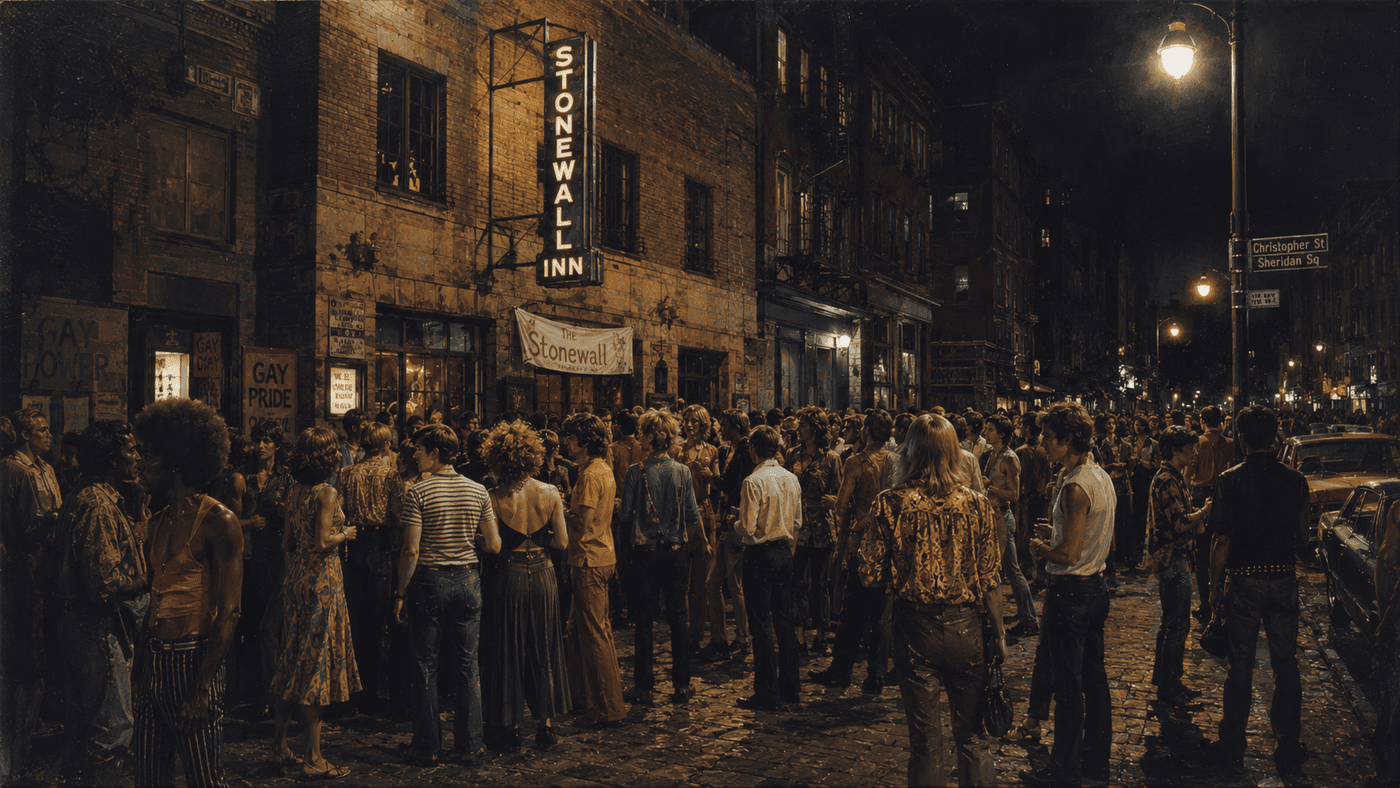
In the early hours of June 28, 1969, officers from the New York City Police Department raided the Stonewall Inn, a gay bar on Christopher Street in Greenwich Village — a routine enforcement action of the kind that had been happening for years. Bars that served gay patrons operated under constant threat: police raids were frequent, arrests were common, and the law offered no protection to people whose very identity was criminalized in most states. What made that particular night different was that the patrons of the Stonewall Inn fought back. Rather than submitting to arrest or dispersing into the street, they resisted — and the resistance spread. A crowd gathered outside, then grew, then erupted. The uprising continued for six nights, drawing in increasing numbers of community members, activists, and residents of the Village who had reached the end of their patience with systematic harassment and abuse.
The Stonewall uprising did not create the gay rights movement — organizations had been working toward LGBTQ+ visibility and legal protection since the 1950s — but it transformed it. In the months and years that followed, new and more militant organizations formed, including the Gay Liberation Front and the Gay Activists Alliance, bringing a confrontational energy that earlier groups had largely avoided. The first gay pride marches were held on the anniversary of Stonewall in June 1970, in New York, Los Angeles, San Francisco, and Chicago. Those marches became an annual tradition that spread to cities around the world, eventually evolving into the Pride celebrations held every June across the globe. The Stonewall Inn was designated a national monument in 2016 — the first in American history created to honor the LGBTQ+ community. The raid that was meant to keep a community in its place became, instead, the moment that community decided it was done staying there.
Radcliffe
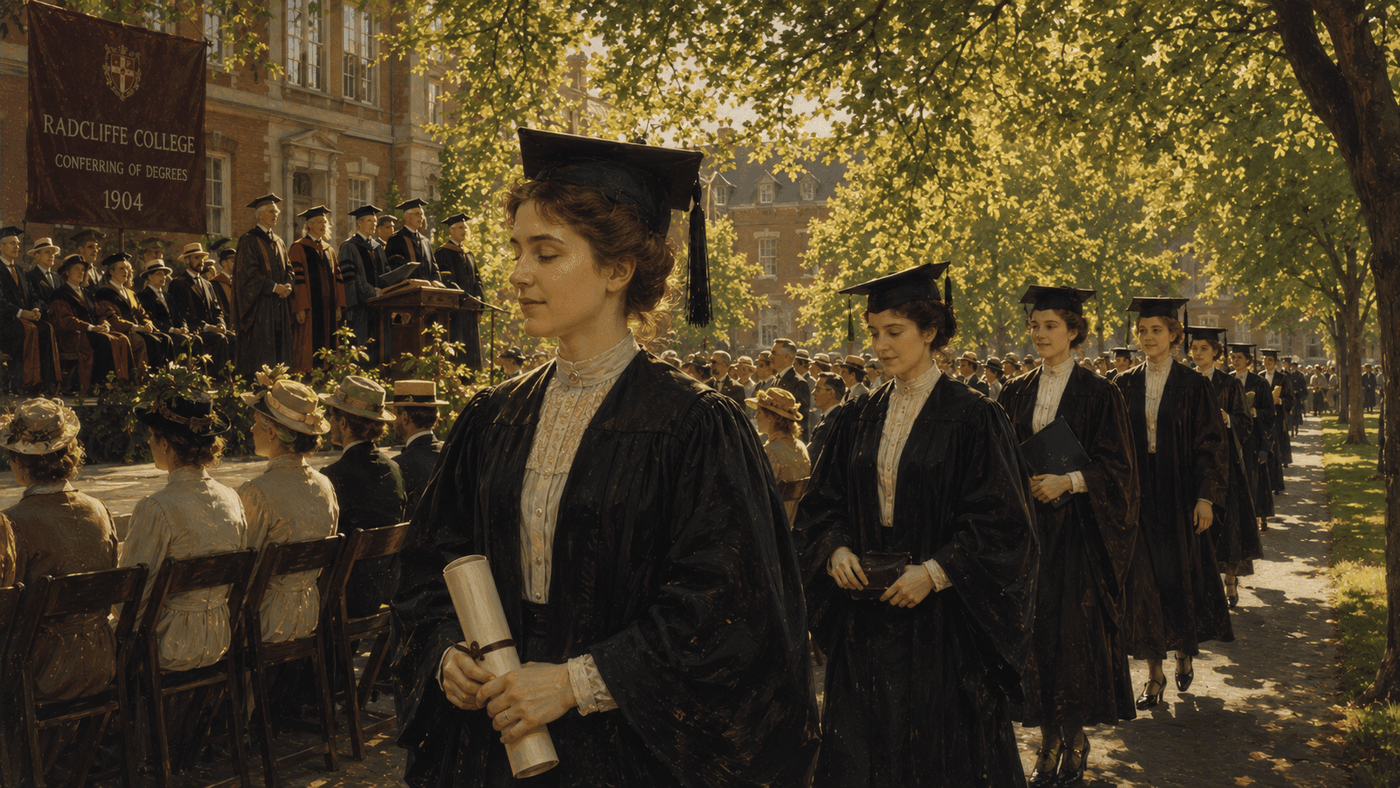
On June 28, 1904, Helen Keller graduated from Radcliffe College — the women's coordinate college of Harvard University — with a Bachelor of Arts degree, becoming the first deafblind person in history to earn a college degree. Keller had lost her sight and hearing to illness at nineteen months old, and her early childhood had been defined by isolation and frustration that her teacher Anne Sullivan famously began to break through in 1887 with the revelation that things had names — that the water pumped over a young girl's hand and the letters spelled into her palm were connected. From that moment, Keller's intellectual appetite proved insatiable. She learned to read Braille in multiple languages, to write, and eventually to speak. When she applied to Radcliffe, the college's administrators were skeptical. She enrolled anyway, in 1900, and spent four years completing a curriculum that required her professors' lectures to be spelled into her hand in real time.
Keller graduated with honors, and the degree she collected on June 28, 1904, was only the beginning of a public life of extraordinary reach and influence. She became a prolific author — her memoir The Story of My Life, published while she was still at Radcliffe, remains in print — a tireless advocate for people with disabilities, and a prominent political activist who campaigned for women's suffrage, workers' rights, and pacifism. She co-founded the American Civil Liberties Union in 1920. She traveled the world, met every American president from Grover Cleveland to Lyndon Johnson, and received the Presidential Medal of Freedom in 1964. The woman who had been told that education was beyond her reach became one of the most educated and influential Americans of the twentieth century. Her graduation from Radcliffe was not just a personal triumph — it was an argument, made once and for all, about what was possible when the doors of learning were opened rather than closed.
The Eagle Returns
On June 28, 2007, the United States Fish and Wildlife Service officially removed the bald eagle from the federal list of threatened and endangered species — completing one of the most remarkable conservation recoveries in American history. The bald eagle had been chosen as the national symbol in 1782, but by the mid-twentieth century, the bird that appeared on the presidential seal, the dollar bill, and the Great Seal of the United States was disappearing at an alarming rate. Hunting, habitat destruction, and above all the widespread use of DDT — a pesticide that accumulated in the eagles' prey and caused their eggshells to thin so severely that they cracked under the weight of nesting birds — had reduced the population in the lower forty-eight states to fewer than 500 nesting pairs by the early 1960s. The bird that symbolized American strength was vanishing from American skies.
The recovery that followed was the product of deliberate, sustained collective action. DDT was banned in the United States in 1972, following Rachel Carson's landmark 1962 book Silent Spring, which had exposed the pesticide's devastating effects on wildlife. The Endangered Species Act of 1973 provided legal protection for the eagle and its habitat. Breeding programs, nest monitoring, and public education campaigns followed. The results exceeded almost every projection: by 2006, there were an estimated 9,789 nesting pairs in the lower forty-eight states, and the population has continued to grow since delisting. Today, an estimated 300,000 bald eagles live in North America. The story of the bald eagle's recovery is, among other things, a story about what environmental law can accomplish when it is written with teeth and enforced with conviction — and about the particular American capacity to rescue, sometimes, the things it has most carelessly put at risk.