June 27: A Martyr, a Pathogen, and a Road's Last Mile
Endings, it turns out, are rarely final. On June 27, a mob stormed an Illinois jail and killed a religious leader — and instead of extinguishing his movement, turned it into one of the most remarkable migrations in American history. One hundred and thirty-two years later, in a remote township in Sudan, a factory storekeeper fell gravely ill, and the disease that killed him would go on to introduce the world to one of the most feared pathogens ever identified. And in 1985, a highway that had carried millions of Americans across the continent was quietly erased from the federal map — only to be reborn almost immediately as a cultural institution that no government decree could dissolve. Three endings. Three afterlives. Three June days that refused to stay in the past.
Carthage
On June 27, 1844, a mob of roughly two hundred men with blackened faces stormed the Carthage Jail in Carthage, Illinois, and killed Joseph Smith — the founder and prophet of the Church of Jesus Christ of Latter-day Saints — along with his brother Hyrum. Smith was thirty-eight years old. He had been arrested on charges of treason and inciting a riot after ordering the destruction of a newspaper that had published accounts critical of him, and had surrendered to Illinois Governor Thomas Ford on a promise of protection. The promise was not kept. The mob broke through the jail door, shot Hyrum where he stood, and Joseph Smith — who had managed to get hold of a pistol — was hit multiple times before falling from the second-story window. He died on the ground outside. The governor's promised protection had evaporated entirely.
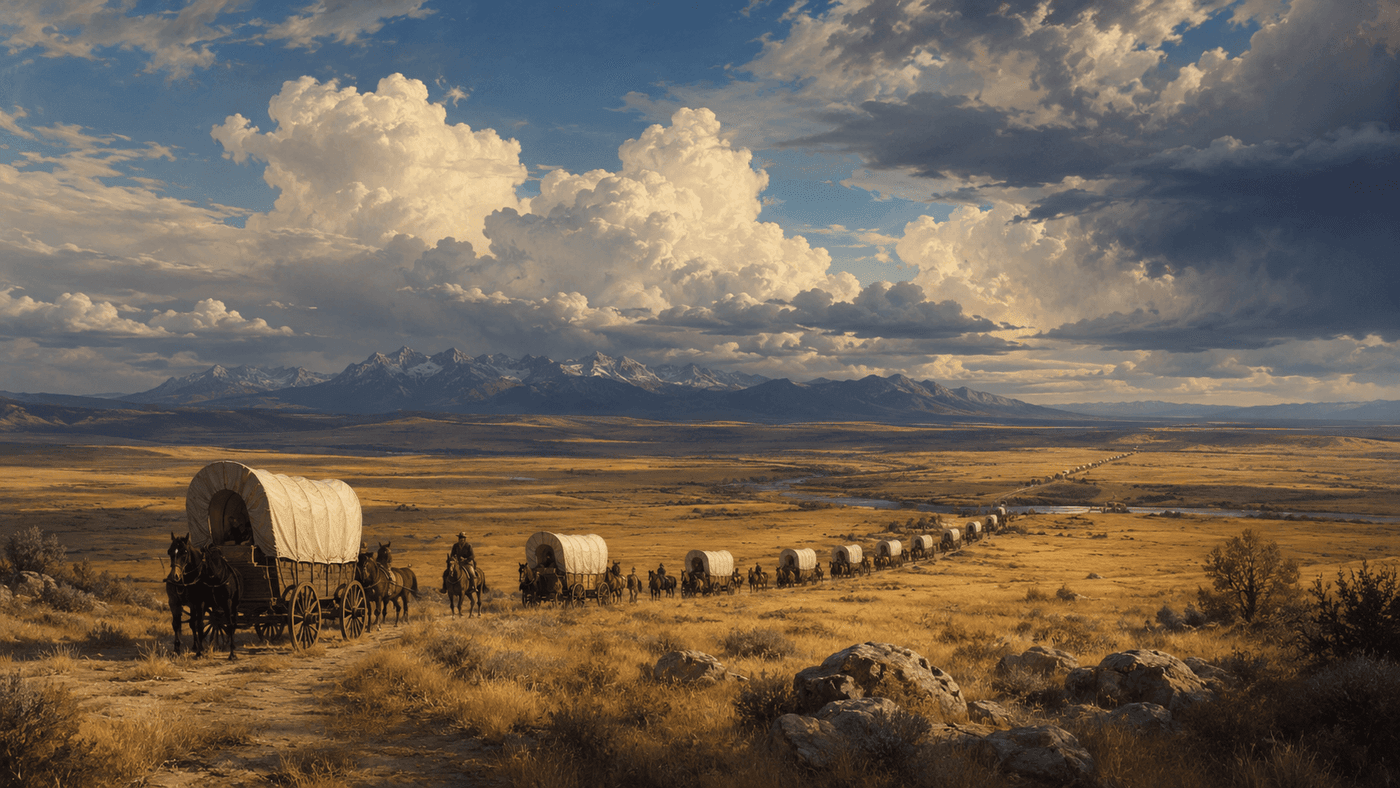
The murders at Carthage did not destroy the movement Smith had founded. They galvanized it. Leadership of the church passed to Brigham Young, who made the decision that the Latter-day Saints could not remain in Illinois — or anywhere in the United States proper. Beginning in 1846, Young organized one of the most extraordinary mass migrations in American history, leading tens of thousands of followers across the Great Plains and the Rocky Mountains to the Salt Lake Valley, then part of Mexican territory. They arrived in July 1847, and what they built in the Utah desert — cities, farms, an entire civilization in an arid wilderness — stands as one of the great feats of nineteenth-century American settlement. The Church of Jesus Christ of Latter-day Saints today has more than seventeen million members worldwide. It began, in no small part, with the violence at Carthage Jail on June 27, 1844 — the moment that turned a movement into a mission.
A New Terror
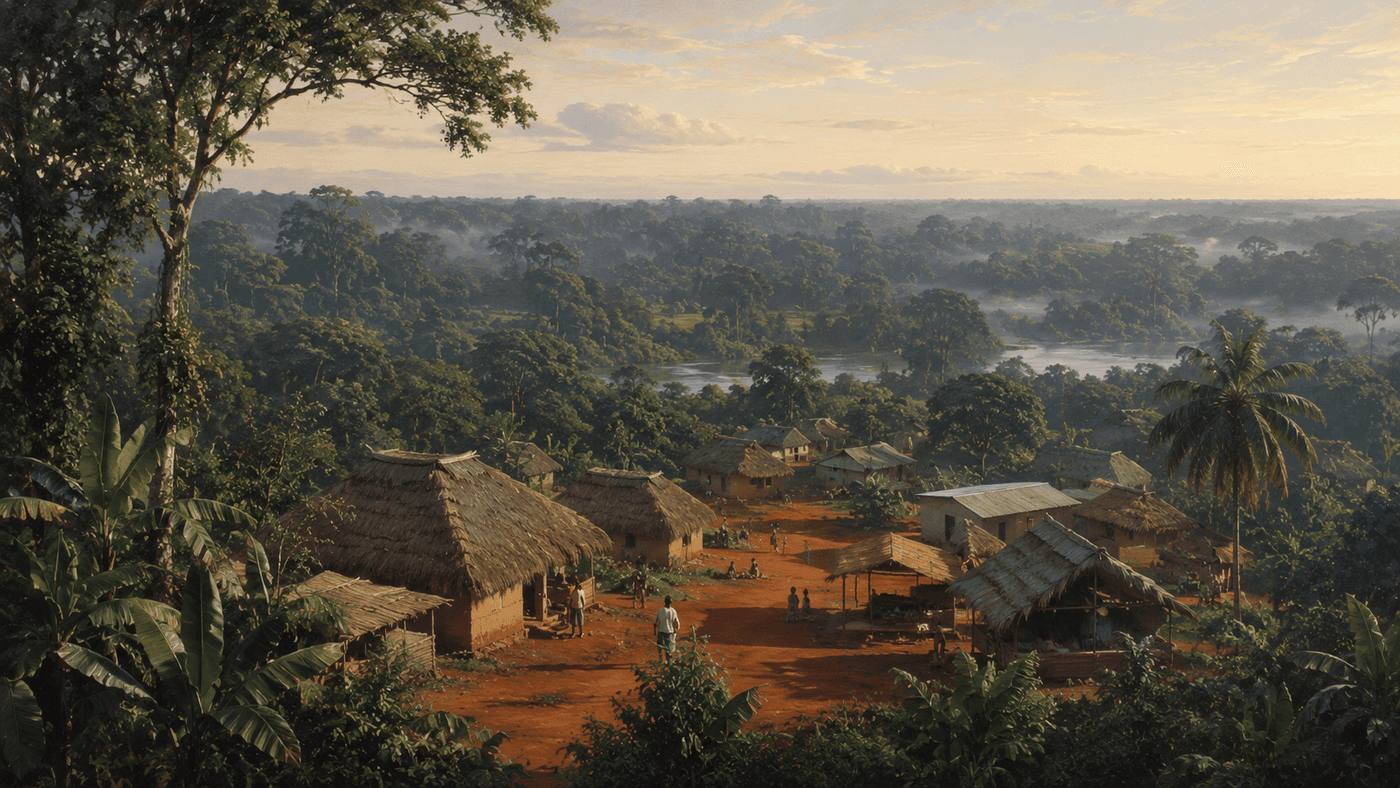
On June 27, 1976, a factory storekeeper in the town of Nzara, in what is now South Sudan, became ill with symptoms that confounded local medical workers: fever, severe headache, and a rapid, catastrophic deterioration. He died five days later. Within weeks, similar cases were appearing across the region, and a parallel outbreak had erupted nine hundred miles away near the Ebola River in Zaire — now the Democratic Republic of Congo. By the time international investigators arrived, they were confronting something none of them had seen before: a viral hemorrhagic fever of extraordinary lethality, with no known treatment, no vaccine, and a transmission pattern that was still poorly understood. The new pathogen was named for the Ebola River near the Zairean outbreak's epicenter. The Sudan strain and the Zaire strain, investigators eventually determined, were related but distinct — two simultaneous introductions of a family of viruses that had been circulating, silently, in animal reservoirs for an unknown period of time.
The 1976 outbreaks killed 284 people in Sudan and 280 in Zaire, with case fatality rates between 53 and 88 percent. American researchers at the Centers for Disease Control were among the international scientists who traveled to the outbreak zones to study the disease and help contain it — marking the beginning of a decades-long American investment in understanding and combating Ebola. The virus disappeared after those initial outbreaks, returning sporadically over the following decades in localized incidents, until the catastrophic West Africa epidemic of 2014 to 2016 killed more than 11,000 people and prompted a global public health emergency. Experimental vaccines and treatments developed in the aftermath of that crisis have since proven effective, fundamentally changing the calculus of Ebola response. The disease that first announced itself in a Sudanese factory town in the summer of 1976 forced the world to reckon with how little it understood about the viral threats emerging from equatorial Africa — and how unprepared its health systems were to meet them.
The Main Street of America
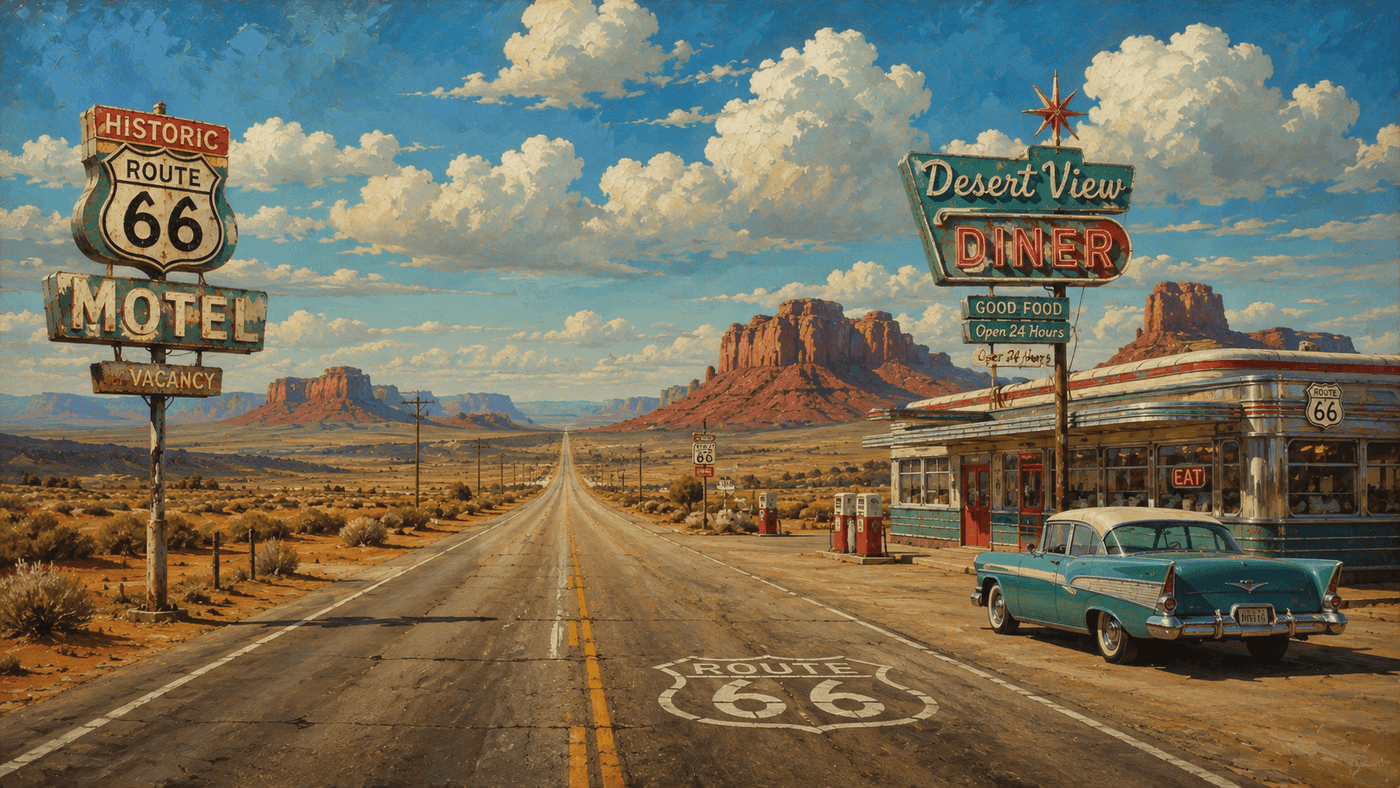
On June 27, 1985, the American Association of State Highway and Transportation Officials voted to remove Route 66 from the United States highway system, officially decertifying the 2,400-mile road that had run from Chicago to Santa Monica, California, since 1926. The decision had been coming for years. The Interstate Highway System, begun in 1956, had gradually rendered Route 66 obsolete — bypassing its towns, drawing traffic away from its diners and motor courts, and rerouting commerce onto faster, straighter roads. By the early 1980s, much of the old highway had already been superseded by interstates, and maintaining its designation had become largely ceremonial. When the last stretch was bypassed in 1984, the end was formally acknowledged the following year. The signs came down. Route 66 ceased to exist as a federal highway.
What happened next surprised almost everyone. Rather than fading into obscurity, Route 66 became more beloved in death than it had ever been in life. The road had already accumulated an extraordinary mythology — it was the path of the Dust Bowl migrants John Steinbeck immortalized in The Grapes of Wrath, the subject of Bobby Troup's enduring song, the setting of a television series, and the symbol of a particular kind of American freedom: the open road, the self-invented journey, the country available to anyone willing to drive through it. Preservation groups formed almost immediately after decertification, working to restore historic roadside landmarks, re-erect signage, and develop tourism along the old alignment. Today, Route 66 is one of the most traveled tourist corridors in the United States and an internationally recognized cultural landmark, drawing visitors from around the world who come specifically to drive a road that technically no longer exists. The highway that America erased became, almost immediately, the highway America couldn't forget.