June 25: Colors, Crossings, and a Last Stand
June 25 is a day of lines drawn and lines crossed. In 1978, an artist stitched together a flag of eight colors and carried it through the streets of San Francisco — a declaration that a community long forced into invisibility would be invisible no more. Two years before that flag flew, on a ridge above the Little Bighorn River in Montana, Lakota and Cheyenne warriors delivered the United States Army its most decisive defeat at the hands of Native forces, a moment of extraordinary resistance that would prove to be a final, pyrrhic victory. And in 1950, on the other side of the world, an army crossed a parallel on a map and ignited the Cold War's first shooting conflict — a war America is still, technically, waiting to end. Three crossings. Three flags. Three June days that refused to be forgotten.
Eight Colors, One Flag
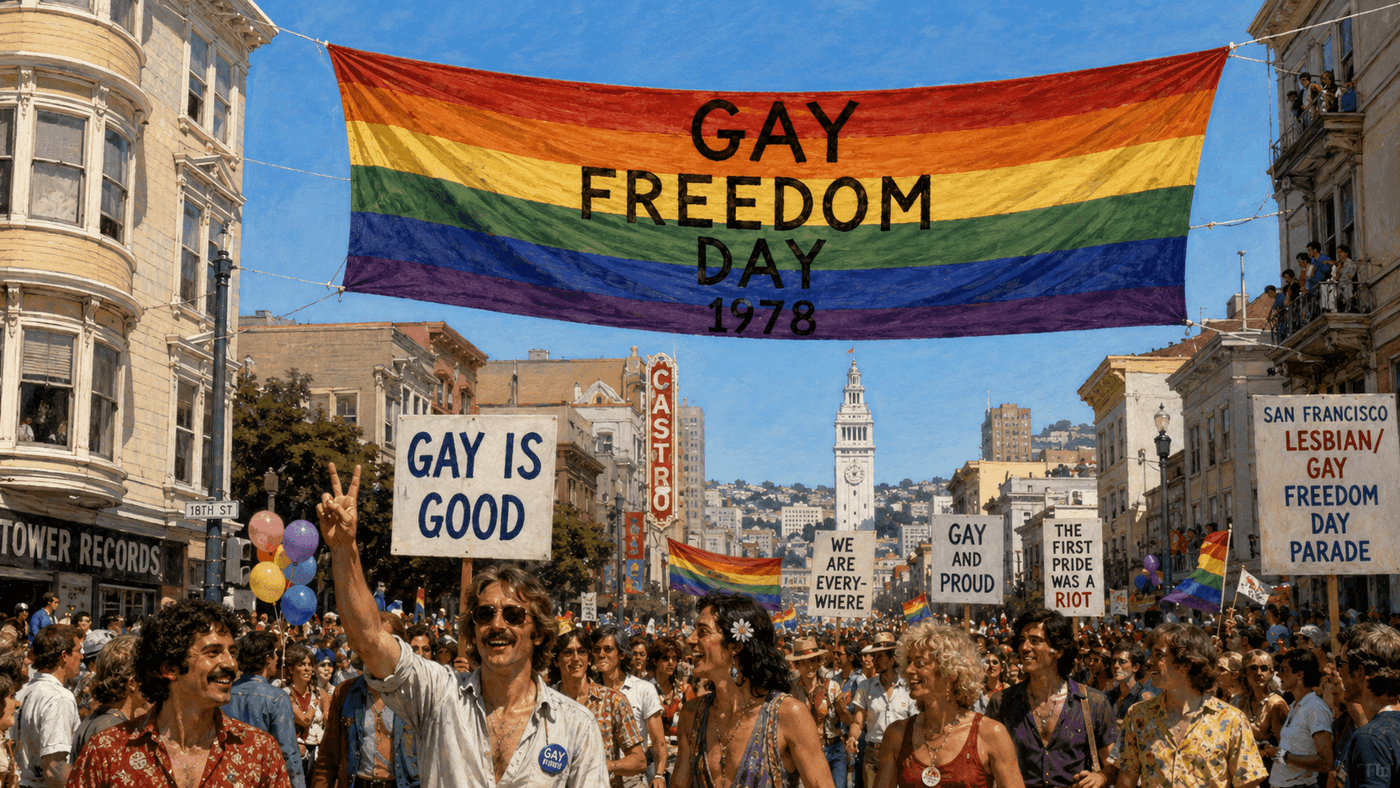
On June 25, 1978, the first rainbow Pride flag was unfurled at the San Francisco Gay Freedom Day Parade, the creation of Gilbert Baker — an artist, drag performer, and activist who had been asked by Harvey Milk to design a symbol for the gay community. Baker and a team of volunteers hand-dyed and hand-stitched two enormous flags, each bearing eight stripes: hot pink for sexuality, red for life, orange for healing, yellow for sunlight, green for nature, turquoise for magic, indigo for serenity, and violet for spirit. They flew above the parade crowd that June morning as something the LGBTQ+ community had never quite had before: a flag of its own. Not a slogan, not a protest sign, but a banner — the kind of symbol that nations and movements plant in the ground to say, here we are, and we are not leaving.
The flag's evolution in the decades since reflects the community it represents. Hot pink was dropped almost immediately when the fabric proved too difficult to source commercially. Turquoise and indigo were later consolidated into royal blue, bringing the design to the six-stripe version that became globally standard. In subsequent years, additional versions incorporated black and brown stripes to center LGBTQ+ people of color, and the transgender pride colors were added in the Progress Pride flag design that has become widely adopted in the twenty-first century. Baker himself continued making and exhibiting flags until his death in 2017, at sixty-five. The rainbow flag he first raised in San Francisco is now among the most recognized symbols in the world — displayed in more than a hundred countries, flown from embassy flagpoles, projected onto landmarks, and carried by millions of people in cities where, not long ago, gathering in public at all required considerable courage.
The Forgotten War
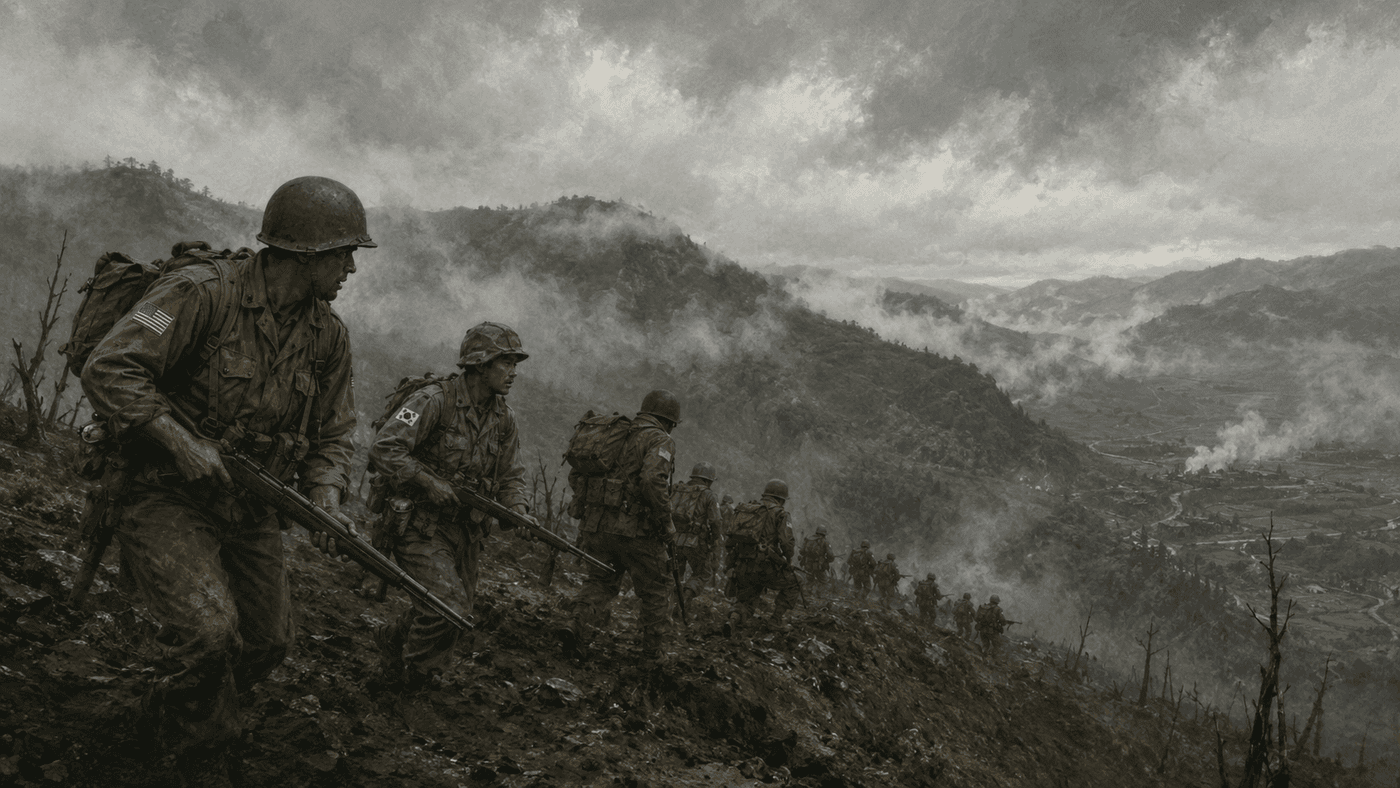
On June 25, 1950, at approximately 4:00 in the morning, North Korean forces crossed the 38th parallel — the line dividing the communist North from the American-backed South — with some 75,000 soldiers and a column of Soviet-supplied tanks. The invasion caught South Korea almost entirely unprepared and triggered an immediate international crisis. President Harry Truman, invoking a United Nations Security Council resolution passed in the absence of the Soviet representative, committed American forces to South Korea's defense within days. It was the first hot war of the Cold War era — a proxy conflict between the United States and the Soviet Union and China fought on Korean soil, at Korean cost. The South Korean capital, Seoul, fell within three days of the invasion.
The war that followed lasted three years and cost more than 36,000 American lives, along with an estimated three million Korean civilian deaths and hundreds of thousands of military casualties on all sides. It ended not with a peace treaty but with an armistice agreement signed on July 27, 1953 — a ceasefire that froze the conflict along roughly the same line where it had begun, near the 38th parallel. Technically, the Korean War has never ended; no formal peace treaty has been signed. The demilitarized zone that divides the Korean peninsula remains one of the most heavily fortified borders in the world. The conflict is often called the Forgotten War, sandwiched as it was between the moral clarity of World War II and the cultural upheaval of Vietnam. But for the men and women who fought it — and for the Koreans on both sides of that line — June 25, 1950, is a date that has never been forgotten.
Little Bighorn
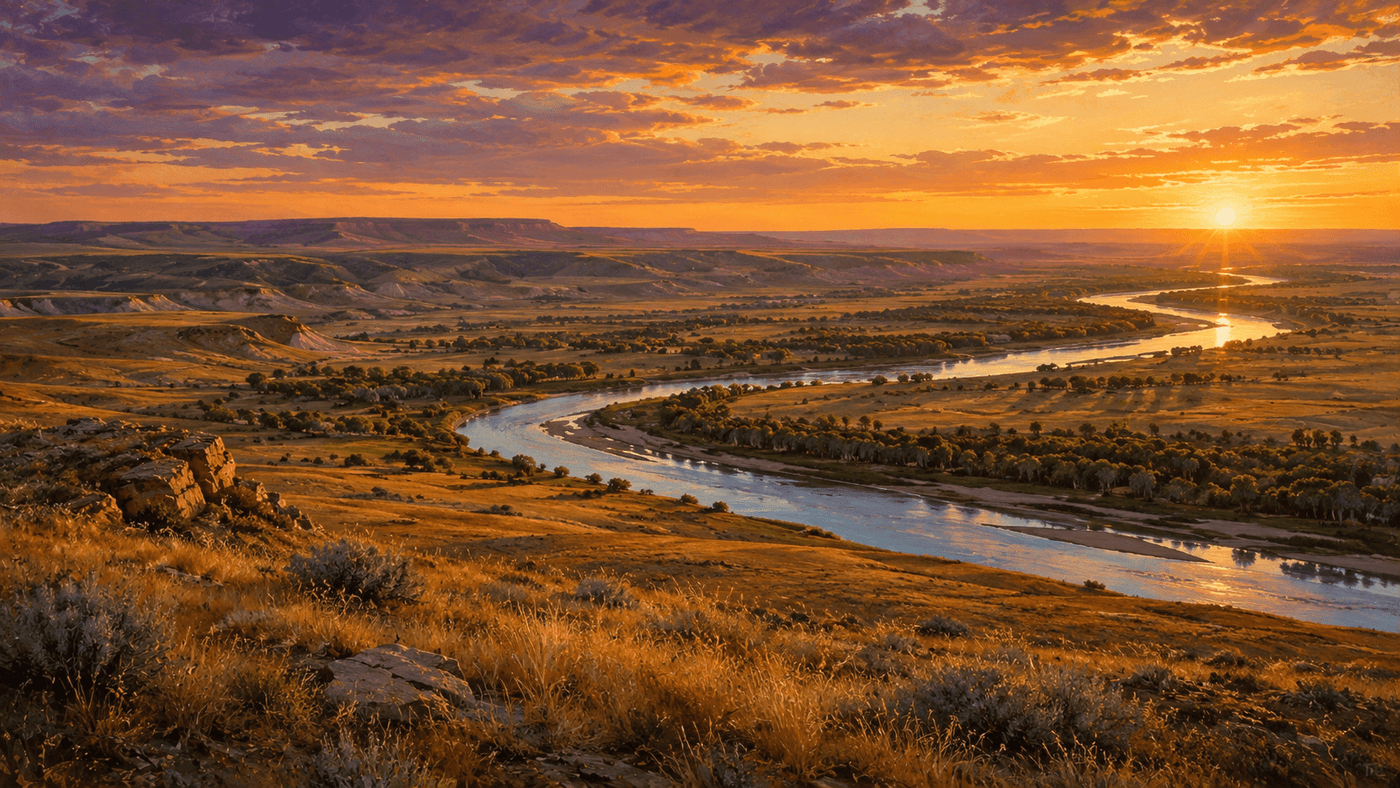
On June 25, 1876, Lieutenant Colonel George Armstrong Custer led five companies of the 7th Cavalry Regiment into the valley of the Little Bighorn River in what is now southeastern Montana — and into the largest gathering of Native warriors the United States Army had ever faced. The encampment along the river held somewhere between 1,500 and 2,500 Lakota Sioux, Northern Cheyenne, and Arapaho warriors, drawn together under leaders including Sitting Bull and Crazy Horse in defiance of a government order to return to their reservations. Custer, badly underestimating both the size of the force and the resolve of the men he faced, divided his regiment and attacked. Within an hour, he and all 210 men under his immediate command were dead. It was the most decisive defeat of the United States Army at the hands of Native forces in the history of the Indian Wars.
The battle shocked the nation and immediately entered American mythology, though the myth and the reality diverged almost at once. Custer was lionized in death in ways he had not always merited in life — a cavalry officer of genuine dash and genuine recklessness, whose strategic failures that afternoon were recast as heroic sacrifice. For the Lakota and Cheyenne, the victory at Little Bighorn proved to be a last high-water mark: the Army responded with overwhelming force in the months that followed, and by the spring of 1877, Crazy Horse had surrendered and Sitting Bull had fled to Canada. The Great Sioux War ended in the military defeat and forced relocation of the very nations that had won the most famous battle of the conflict. The ridge above the Little Bighorn where Custer fell is now a national monument — marked by white headstones for the cavalry dead and, since 1999, by a red granite memorial to the Native warriors who fought and died there too.