Recent Content

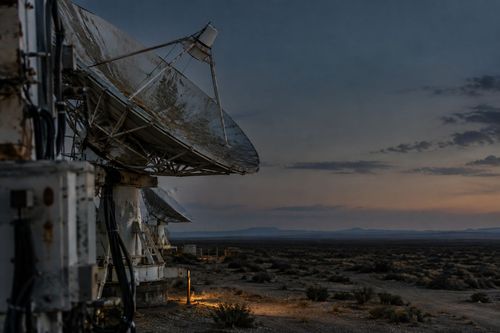
Oct. 28, 2005: NASA Loses Contact With Genesis

Oct. 28, 2005: NASA Loses Contact With Genesis

Read more
October 28: Wrigley Hosts Series, Roberts Turns 59

October 28: Wrigley Hosts Series, Roberts Turns 59

Read more
Oct. 27, 2022: Musk Closes the Twitter Deal

Oct. 27, 2022: Musk Closes the Twitter Deal

Read more
October 27: Saw III Turns 20, Cleese Turns 87

October 27: Saw III Turns 20, Cleese Turns 87

Read more
Oct. 26, 2004: Red Sox Break the Curse

Oct. 26, 2004: Red Sox Break the Curse

Read more
logo
  • Introduction

  • Lessons From The Past

  • Cultural Awareness and Diversity

  • Appreciation for Progress

  • Understanding Political and Social Dynamics

  • Preserving Cultural Heritage

  • Conclusion

The Flight That Didn't Go Down

A stabbed pilot and a handful of passengers are being hailed as heroes today after together foiling an attempted attack aboard a FlyDubai flight bound for Tel Aviv.

Yesterday, a FlyDubai flight traveling from Dubai to Tel Aviv was thrown into chaos when, according to officials, the aircraft's co-pilot attacked and stabbed the flight's captain, Smit Machchhar, in the cockpit. What followed was a desperate several minutes in which passengers broke through to intervene, the plane dropped sharply more than once, and a flight carrying ordinary travelers came, by one leader's account, dangerously close to catastrophe.

Ordinary Passengers, Extraordinary Minutes

Israeli Defense Minister Israel Katz described the incident as an attempted jihadist terror attack, thwarted, in his words, "thanks to the heroism of several Israeli passengers who broke into the cockpit, overpowered the terrorist, and with their own hands returned control of the aircraft" to the wounded captain and another crew member present. One passenger, Miryam Shira Ohayon, described the plane as "pretty much out of control" during the struggle, recalling it dropping "very, very sharply suddenly" multiple times over Jordanian airspace before leveling out. The flight ultimately diverted and landed safely in Saudi Arabia, where the co-pilot was taken into custody; an Omani official confirmed the man holds Omani citizenship.

Machchhar, an Indian national from Mumbai, has since been celebrated as a hero across both India and Israel. Indian Prime Minister Narendra Modi called him a hero directly, while Israeli Prime Minister Benjamin Netanyahu told CNN at Ben Gurion Airport that Machchhar's actions had "managed to prevent a 9/11 disaster." Despite his stab wounds, Machchhar fought back against his attacker and helped keep the aircraft under control alongside the passengers who stormed the cockpit to assist him. He is reported in stable condition, being treated at a hospital in Saudi Arabia, according to India's embassy in Riyadh. FlyDubai has temporarily suspended flights to and from Israel while authorities investigate the co-pilot's motive.

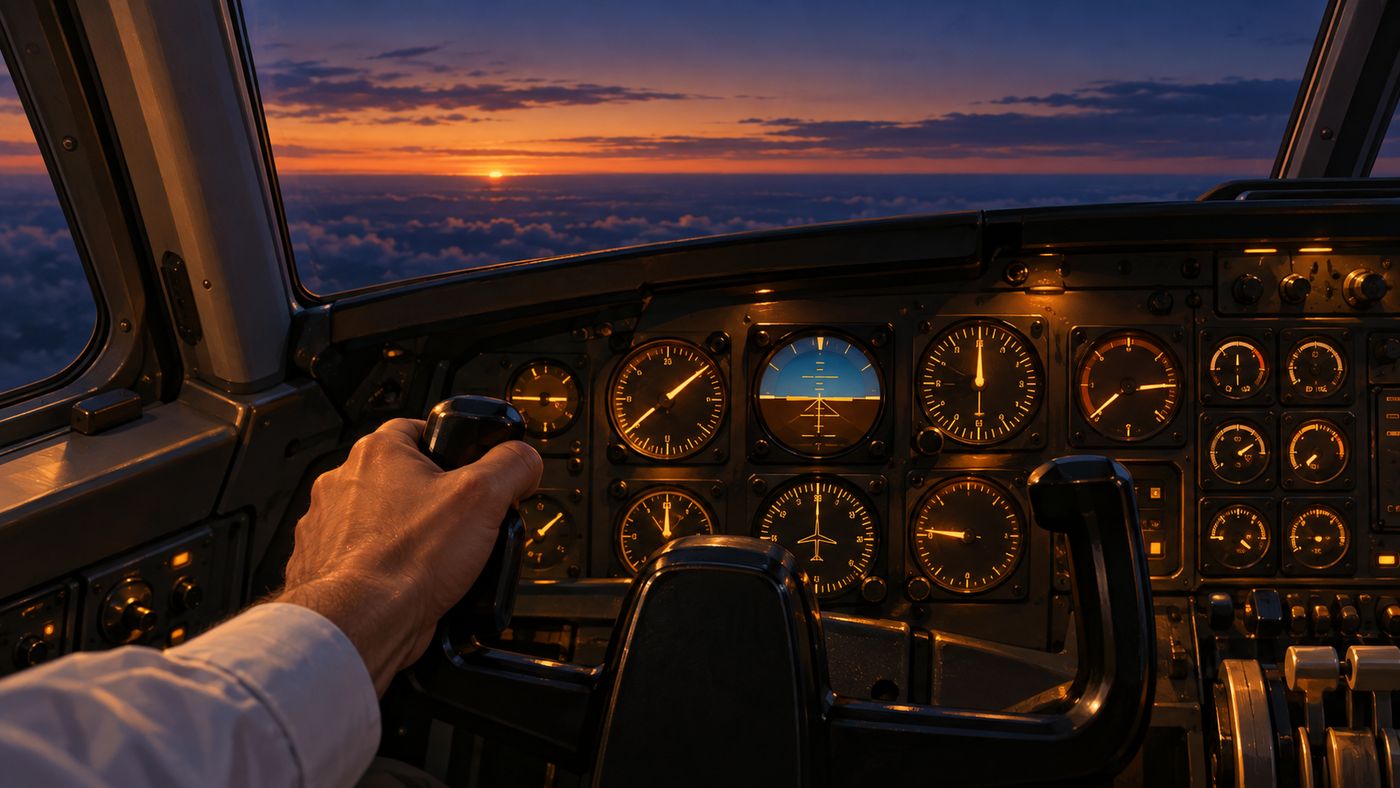
An airplane cockpit interior with warm instrument lighting, evoking a moment of crisis and control regained
A pilot and several passengers are being credited with averting disaster aboard a flight bound for Tel Aviv.

Aviation history includes a long, uneasy record of hijackings and attempted attacks aboard flights to and from Israel, stretching back to the earliest El Al hijackings of the late 1960s — incidents that permanently reshaped how airlines screen passengers and secure cockpits worldwide. What's striking about yesterday's events is how little of the outcome depended on any of those systems, and how much depended instead on a wounded pilot who kept fighting and a group of strangers willing to act. In the immediate aftermath, officials in two countries have been unambiguous in calling that, simply, heroism.

More History

01 October 2026

Post

Oct. 28, 2005: NASA Loses Contact With Genesis

On October 28, 2004, Cassini Skimmed Titan's Haze and Rewrote the Map of an Alien Moon A spacecraft's first close pass of Saturn's largest moon pulled back a curtain of orange haze that had hidden its surface for decades. On October 28, 2004, NASA's Cassini spacecraft swooped to within about 745 miles of Titan, Saturn's largest moon, completing its first close targeted flyby since arriving in the Saturn system months earlier. For a moon whose thick nitrogen-methane atmosphere had frustrated telescopes for generations, the pass offered scientists their sharpest look yet at what lay beneath the orange smog. Through the Haze   Cassini's imaging team, using specialized filters designed to cut through Titan's dense atmospheric haze, captured radar and optical data revealing a landscape of light and dark patches that hinted at solid terrain rather than a uniform global ocean, a long-standing theory among planetary scientists. Bright and dark regions with sharp boundaries suggested surface features shaped by geological processes, though the exact nature remained puzzling from a single flyby. Mission scientists at NASA's Jet Propulsion Laboratory noted the images showed no obvious impact craters in the observed swath, raising early questions about whether erosion, weather, or resurfacing was erasing Titan's history in real time. It was a moon behaving less like a frozen relic and more like a world still being written. The October flyby set the stage for the Huygens probe's descent onto Titan's surface just months later, in January 2005, which would confirm liquid-carved channels and drainage networks unlike anything else in the solar system beyond Earth. Cassini's radar instrument, working alongside the imaging cameras, began assembling swaths of Titan's surface strip by strip across the mission's later flybys, eventually revealing lakes of liquid methane near the poles. What started as a hazy orange mystery became, flyby after flyby, one of the most Earth-like — and most alien — landscapes humanity had ever mapped from afar.  

01 October 2026

Post

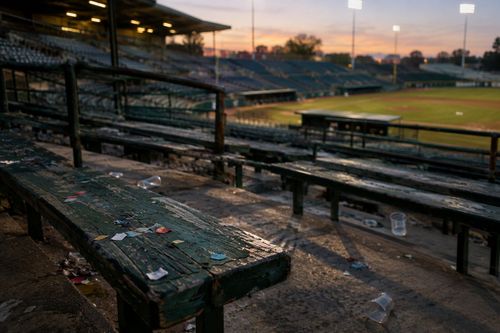
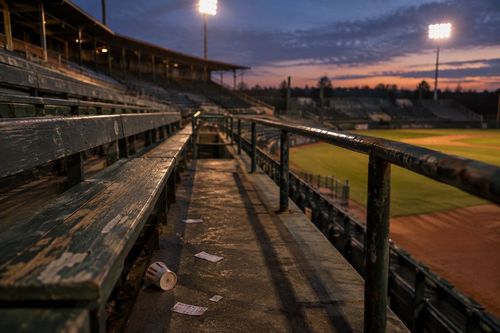
October 28: Wrigley Hosts Series, Roberts Turns 59

■  The Pop Edition October 28: Wrigley Hosts Series, Roberts Turns 59 A century-old ballpark finally gets its World Series moment, a Hollywood leading lady hits 59, and a boot-wearing cat tops the box office. Wrigley Field lit up for its first World Series game since 1945, on October 28, 2016. October 28 splits the difference between old and new pop culture — a ballpark that hadn't seen a World Series game since Harry Truman was in office, a birthday for one of the last true movie stars, and a talking cat in boots quietly outdrawing every grown-up in the multiplex. None of it makes headlines the way disasters or elections do, which is exactly why it belongs here. Here's the full accounting of what actually happened on this date, checked against the record rather than the aggregator sites. Julia RobertsBORN 1967 · TURNS 59She went from Georgia unknown to the highest-paid actress in the world on the strength of a laugh that carried Pretty Woman, and she's spent three decades since proving she could do more than that laugh, from Erin Brockovich's Oscar to Ocean's Eleven's ensemble cool.Joaquin PhoenixBORN 1974 · TURNS 52He built a career on discomfort, from the volatile emperor in Gladiator to the unraveling comic in Joker, an approach that finally won him an Academy Award and cemented him as one of the few actors who treats a role like a full-body commitment rather than a costume change.Bill GatesBORN 1955 · TURNS 71The kid who co-founded Microsoft in a Harvard dorm room helped put a computer, and eventually a graphical interface, on a desk in nearly every home and office — a shift in daily life that pop culture is still reckoning with.Annie PottsBORN 1952 · TURNS 74Janine Melnitz in Ghostbusters, the sardonic receptionist fielding calls about slime and specters, gave the franchise its deadpan center, and she followed it with a long run of TV work that never quite got the recognition the film work deserved.Charlie DanielsBORN 1936 · WOULD HAVE BEEN 90He died in 2020, but The Devil Went Down to Georgia turned a fiddle showdown into a Southern rock standard that outlived every trend it was supposed to fade with, and his sound helped define what country-rock radio meant for a generation. THE MOMENT: World Series Returns to Wrigley Field On October 28, 2016, the Chicago Cubs hosted Game 3 of the World Series at Wrigley Field, ten years ago today — the first World Series game played there since 1945, back when FDR was still in office the last time the franchise had won it all in 1908. The Cubs fell to the Cleveland Indians 1-0 that night, but the significance had nothing to do with the score.The ivy-covered ballpark had spent 71 years as a symbol of lovable futility, a stage for heartbreak rather than triumph, and the goat curse had calcified into a national punchline. Just having the Series back on Waveland Avenue was itself the story, months before the Cubs would clinch it four days later in Cleveland with an extra-innings Game 7 that ended the longest championship drought in North American professional sports.Fox's broadcast that October drew some of the largest World Series audiences in a generation, a sign that a genuinely uncertain, historically loaded story could still pull a live national audience the way appointment television used to. Wrigley Field itself became a character in the coverage — the bricks, the hand-turned scoreboard, the neighborhood rooftops packed with fans who'd waited their whole lives for this.    OPENING WEEKEND: Puss in Boots Claws to #1DreamWorks Animation's Puss in Boots opened wide on October 28, 2011, fifteen years ago, and debuted at number one at the domestic box office. The film pulled the fan-favorite Shrek sidekick, voiced by Antonio Banderas, out of a supporting role and into his own origin story, teaming him with Salma Hayek's Kitty Softpaws and Zach Galifianakis's Humpty Dumpty.The bet was a risky one on paper. Spin-off movies built around a scene-stealing side character rarely equal the original, and the Shrek franchise itself was showing signs of fatigue after four increasingly uneven installments. Puss in Boots sidestepped the exhaustion by leaning into style over gag density, borrowing visual cues from spaghetti Westerns and swashbuckler films rather than recycling the fairy-tale-mashup jokes that had defined Shrek.Critics responded better than they had to the last couple of Shrek sequels, and the film went on to earn an Academy Award nomination for Best Animated Feature, a rare honor for a spin-off. It also set up a sequel of its own nearly a decade later, Puss in Boots: The Last Wish, which many consider the sharper of the two films — proof that the character had more in the tank than anyone expected back in 2011.   1886The Statue of Liberty is dedicated in New York Harbor, instantly becoming one of the most photographed and referenced landmarks in American film and television.1994Stargate, starring Kurt Russell and James Spader, opens in theaters and quietly launches a franchise that would eventually spin off into three television series.2005Saw II opens in theaters, cementing the low-budget horror franchise's habit of releasing a new installment every Halloween season.2009Michael Jackson's This Is It, assembled from rehearsal footage for his planned comeback concerts, opens in theaters worldwide and tops the box office.1971Frank Zappa and the Mothers of Invention play a Montreux Casino show that burns down mid-set, an incident later immortalized in Deep Purple's Smoke on the Water.1962The Cuban Missile Crisis ends, but pop culture's Cold War anxieties keep showing up in film and television for decades afterward. From a century-old ballpark finally getting its moment to a talking cat quietly outperforming expectations, October 28 is a reminder that pop culture's biggest days don't always announce themselves. Come back tomorrow for another one.

01 October 2026

Post

Oct. 27, 2022: Musk Closes the Twitter Deal

On October 27, 2022, Elon Musk Walked Into Twitter Headquarters Carrying a Sink — and Officially Owned the Company After months of legal threats and public back-and-forth, the world's richest man closed a $44 billion deal that would remake one of the internet's most influential platforms. By the time Elon Musk arrived at Twitter's San Francisco headquarters on October 27, 2022, the deal he'd spent six chaotic months trying to escape was finally, irreversibly his. Carrying a porcelain sink through the lobby, he posted a video captioned 'let that sink in,' a wink that instantly went viral even as lawyers, employees, and shareholders scrambled to process what had just happened. Let That Sink In   The acquisition capped an extraordinary saga that began in April 2022, when Musk revealed a 9.2% stake in Twitter before offering to buy the entire company for $54.20 a share. He later tried to back out, citing concerns about bot accounts, triggering a lawsuit from Twitter's board that threatened to drag him into a Delaware courtroom. Facing a trial he was widely expected to lose, Musk abruptly reversed course in October and agreed to close the deal on his original terms. By the evening of October 27, the transaction was finalized, and Musk confirmed via Twitter itself that he now controlled the platform outright, ending its run as a publicly traded company after 16 years. Within hours, Musk fired top executives including CEO Parag Agrawal, and within days he began reshaping the company's policies, workforce, and verification system, moves that would ripple through media, politics, and advertising for years to come. The sink stunt, absurd on its surface, doubled as a quiet signal: a platform once defined by 140-character restraint now belonged to a man famous for saying whatever came to mind, whenever he pleased.  

01 October 2026

Post

October 27: Saw III Turns 20, Cleese Turns 87

■  The Pop Edition October 27: Saw III Turns 20, Cleese Turns 87 A horror franchise hits its bloody stride, a comedy legend hits 87, and Prince drops a record that redefines an entire decade of pop. Saw III opened wide 20 years ago this Halloween season, cementing the franchise as an annual ritual. October 27 splits the difference between scares and celebration. Two decades back, a low-budget horror franchise proved it could keep filling theaters every fall, while a purple-clad genius in Minneapolis quietly released an album that would become shorthand for an entire decade. Add a Monty Python legend turning 87, a pop-punk princess turning 42, and a theme park that once tried its hand at prime-time TV, and you've got a date that covers nearly every corner of pop culture's map. Here's the full accounting. John Cleese1939 · TURNS 87He co-founded Monty Python's Flying Circus, wrote and starred in Fawlty Towers, and turned a dead parrot into one of the most quoted sketches in comedy history. Later career turns in A Fish Called Wanda and the Bond franchise proved his particular brand of controlled chaos traveled well beyond British TV.Roberto Benigni1952 · TURNS 74The Italian filmmaker climbed over chairs to accept his Best Actor Oscar for Life Is Beautiful in 1999, a moment that remains one of the Academy Awards' most spontaneous. He'd already built a career blending slapstick with sincerity, and that Oscar night made him a permanent fixture in awards-show highlight reels.Lee Greenwood1942 · TURNS 84His anthem God Bless the U.S.A. became a fixture of American public life well beyond country radio, resurfacing at sporting events, campaign rallies, and Fourth of July broadcasts for four decades running.Simon Le Bon1958 · TURNS 68As Duran Duran's frontman, he helped define MTV's early visual language with videos like Rio and Hungry Like the Wolf, turning the New Romantic look into a global export. The band's staying power through decades of lineup shuffles owes plenty to his steady presence out front.Kelly Osbourne1984 · TURNS 42She grew up on camera as part of MTV's The Osbournes, one of the shows that proved celebrity families made compelling unscripted television years before the format took over cable. She later built her own lane as a fashion commentator and podcast host. OPENING WEEKEND: Saw III Twenty years ago, Saw III opened in theaters just before Halloween, the third installment of a franchise that had already turned a shoestring premise into an annual box-office event. Where the original Saw ran on a single locked-room concept, the third film widened the mythology considerably, giving Tobin Bell's Jigsaw a fuller backstory and Shawnee Smith's Amanda a larger role as his reluctant apprentice.Critics were unkind at the time, and the reviews for Saw III read a lot like the reviews for Saw II — plenty of complaints about gore for gore's sake. Audiences disagreed, or at least showed up anyway, and Lionsgate had by then locked into a release pattern that would define the studio's fall calendar for years: a new Saw movie, every October, like clockwork. The franchise's insistence on annual Halloween-season releases predated the modern glut of legacy sequels and reboots, and in retrospect looks like an early blueprint for how a studio could turn one property into a recurring cultural appointment rather than a one-off hit.The series would eventually run to ten films, with Saw III often cited by fans as the point where the puzzle-box plotting either tipped into satisfying complexity or collapsed under its own convolution, depending who you ask.    ON THE CHARTS: Prince's 1999Prince released his fifth studio album, 1999, on this date in 1982, and it's the record where all the pieces of his sound finally locked into place at once — the drum machines, the falsetto, the guitar solos that seemed to arrive from nowhere and then vanish just as fast. The title track and Little Red Corvette both became hit singles, and the album itself would eventually go multi-platinum, though its impact on the radio charts was slower than its impact on the culture.What made 1999 different from Prince's earlier work was scale: it was a sprawling double album at a moment when double albums were considered commercially risky, and it bet correctly that MTV's still-new video format would reward an artist who understood image as much as sound. Little Red Corvette became one of the first videos by a Black artist to get heavy rotation on the still largely segregated network, a fact that mattered as much to Prince's trajectory as any chart number.The album's title track would get a second life entirely on its own terms come the actual year 1999, when radio stations across the country dusted it off for millennium countdown parties — a strange kind of victory lap seventeen years after release.   1954ABC premieres Disneyland, Walt Disney's anthology series, giving the studio its first foothold in living rooms and previewing the theme park that would open the following year.1968The Beatles' Hey Jude continues its extended run atop the Billboard Hot 100, part of a nine-week stay that was the longest of the band's career.1989Halloween 5: The Revenge of Michael Myers opens in theaters, keeping the slasher franchise's yearly October tradition alive well before Saw picked up the mantle.2004The Boston Red Sox complete a sweep of the St. Louis Cardinals to win their first World Series title since 1918, ending one of sports' most talked-about droughts.1982Prince releases 1999, the double album that pushes his sound toward the mainstream and lands him regular rotation on MTV.2006Saw III opens nationwide, extending the franchise's run as the horror genre's reliable annual Halloween-season event. From a locked room in a horror franchise to a double album that redefined a decade, October 27 covers plenty of ground. Whichever corner of pop culture you gravitate toward, this date's got an anniversary for it.

01 October 2026

Post

Oct. 26, 2004: Red Sox Break the Curse

On October 26, 2004, the Boston Red Sox Completed a Sweep of the St. Louis Cardinals to Win Their First World Series Title in 86 Years A franchise haunted since 1918 finally exorcised its ghosts in St. Louis, four games to none. On October 26, 2004, the Boston Red Sox took the field at Busch Stadium in St. Louis carrying eight decades of accumulated heartbreak, near-misses, and a curse blamed on the sale of Babe Ruth. By the time the night ended, none of it mattered anymore. A 3-0 win over the Cardinals completed a four-game sweep and delivered Boston its first championship since 1918, closing out one of the most improbable postseason runs in baseball history just weeks after the team had trailed the Yankees three games to none in the ALCS. The Long Wait Ends   Manager Terry Francona's club had already made history two weeks earlier, becoming the first team in Major League Baseball postseason play to overcome a 3-0 series deficit, doing it against their bitter rivals from New York no less. That comeback carried an almost mythic momentum into the World Series, where the Red Sox never trailed the Cardinals for a single inning across all four games. Derek Lowe pitched seven scoreless innings in the clincher, backed by a lineup that had bulldozed St. Louis's league-best offense into submission. Boston's pitching staff, anchored by a rotation that included Curt Schilling's now-legendary bloody sock outing, allowed the Cardinals to look outmatched at every turn, a stunning role reversal for a franchise so long defined by late-inning collapse. When closer Keith Foulke fielded a soft grounder from Edgar Renteria and threw to first for the final out, players poured off the bench and a city eighty-six years removed from its last parade finally got to plan one. Fans who had inherited the disappointment from parents and grandparents, who had absorbed 1946, 1967, 1975, and 1986 as folklore rather than memory, watched the Red Sox hoist the Commissioner's Trophy on a stage that felt less like triumph and more like overdue correction. The so-called Curse of the Bambino, invoked for generations to explain every Boston collapse, was finally, officially retired, a punchline turned into a footnote.  

01 October 2026

Post

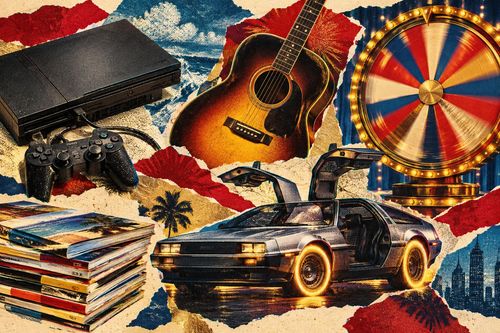
October 26: PS2 Launches, Sajak Turns 80

■  The Pop Edition October 26: PS2 Launches, Sajak Turns 80 A wheel-spinning legend hits a milestone birthday, Sony's gray monolith changes gaming forever, and a certain flux capacitor date gets its due. Midnight launch lines, a game show institution, and the day Marty McFly went home — all October 26. Some dates in pop culture carry more weight than others, and October 26 has quietly stacked up a few good ones. A game console reshaped how a generation spent its evenings, a fictional time-travel deadline became real-world trivia, and the man who's spun letters into a fortune for four decades turns a round number today. None of it is loud history — no scandals, no shockwaves — just the steady accumulation of things that made staying in fun. Born On This DayPat Sajak1946 · TURNS 80He took over Wheel of Fortune in 1981 and stayed put for over four decades, becoming the longest-running host of the same game show in American TV history before handing the podium to Ryan Seacrest in 2024. His deadpan asides to contestants outlasted several eras of studio sets and turntable designs.Keith Urban1967 · TURNS 59The New Zealand-born, Australia-raised guitarist crossed over from Nashville session player to arena headliner through the 2000s, racking up multiple ACM and CMA Entertainer of the Year trophies along the way. He's also spent years as a coach's chair fixture on The Voice Australia.Seal1963 · TURNS 63His breakthrough came with 1991's Killer, but it was Kiss From a Rose finding a second life on the Batman Forever soundtrack in 1995 that turned him into a Grammy-winning household name. His distinctive facial scarring, from a form of lupus, became as recognizable as the voice.Natalie Merchant1963 · TURNS 63She fronted 10,000 Maniacs through the college-rock 1980s before going solo with 1995's Tigerlily, which turned Carnival and Wonder into inescapable radio staples. Her voice — low, deliberate, a little mournful — became a signature that outlasted the alt-rock moment that produced it.Cary Elwes1962 · TURNS 64The British actor became Westley in 1987's The Princess Bride, a role that didn't make him a box office giant but did make him beloved for life among a certain kind of devoted rewatcher. He kept working steadily afterward, including a memorably grim turn in the original Saw. Press Start: PlayStation 2 Launches Sony's PlayStation 2 went on sale across North America on October 26, 2000, and the lines outside electronics stores the night before became their own small cultural event — a preview of the midnight-release ritual that would define console launches for the next two decades. Demand outstripped supply so badly that Sony's initial shipment sold out almost immediately, leaving plenty of hopeful buyers empty-handed on launch day itself.What made the PS2 different wasn't just games — it was the built-in DVD player, which meant a lot of households bought their first DVD player because it happened to also play Tekken Tag Tournament. That dual purpose helped push it toward becoming the best-selling console of all time, a title it would hold for years afterward, with a library eventually stretching past 3,800 titles worldwide.Twenty-six years on, the console's backward-compatible slim redesigns are still floating around secondhand shops, and its DVD-playing party trick reads as a quaint footnote in an era when consoles now stream everything. But in the fall of 2000, it was the reason kids were lying to their parents about how much the thing actually cost.    The Moment: Back to the Future's Big DateOctober 26, 1985 isn't when Back to the Future opened — that was July 3 that year, and the film was already a runaway hit by fall. It's the date within the story itself: the night Marty McFly gets sent back to 1955, and the night, 30 years later in the plot's internal calendar, he's meant to return to set everything right.The date stuck in a way few fictional calendar details do. Fans have marked it for decades the way others mark real anniversaries, and it laid the groundwork for the far bigger frenzy around October 21, 2015 — the film's other famous date, the one Marty travels forward to in Part II — which turned into a genuine cultural event with news anchors doing segments on hoverboards that didn't exist.“Roads? Where we're going, we don't need roads.”— Doc Brown, Back to the FutureForty-one years after that in-story date, the film's tangle of internal continuity — plutonium, clock towers, a lightning bolt timed to the minute — still gets debated by people who've clearly watched it more times than is strictly healthy.   Meanwhile…1911Gospel singer Mahalia Jackson is born in New Orleans, a voice that would later move Martin Luther King Jr. to say, “Sing it, Mahalia,” on the steps of the Lincoln Memorial.1945Charlie's Angels co-star Jaclyn Smith is born, a decade before television made her one of three household names sharing top billing.1968The Beatles' “Hey Jude” is deep into its record nine-week reign atop the Billboard Hot 100, a record that would stand for a quarter century.2000Overnight lines outside Toys R Us and Best Buy locations become their own news story as the PlayStation 2's initial shipment sells out within hours.1962Bob Dylan is deep into recording sessions for The Freewheelin' Bob Dylan, the album that would establish him as the era's defining protest voice.1987The Princess Bride, starring today's birthday boy Cary Elwes, continues its slow build from modest box office to eventual cult classic status. That's the ledger for October 26 — a game show fixture hitting 80, a console that changed living rooms, and a movie's fictional deadline that never stopped mattering. Same time tomorrow, another date, another stack of things worth remembering.


01 October 2026

Post

Oct. 25, 2004: Red Sox Open Curse-Breaking Series

On October 25, 2004, the Boston Red Sox Opened the World Series With a Wild, High-Scoring Win A slugfest in St. Louis marked the first step toward the end of an 86-year championship drought. On October 25, 2004, the Boston Red Sox took the field in St. Louis for Game 1 of the World Series carrying the weight of eighty-six years without a title. What followed was less a pitchers' duel than a demolition derby, and by the time the dust settled, Boston had a lead in a series that would end a curse decades in the making. The Slugfest   The Red Sox had just dispatched the New York Yankees in a historic ALCS comeback from a three-games-to-none deficit, and they carried that momentum into Busch Stadium against the St. Louis Cardinals, owners of the best record in baseball. Game 1 was sloppy and chaotic, with both teams combining for six errors and twenty runs. Boston's offense, anchored by Manny Ramirez and David Ortiz, jumped out early and never fully relinquished control, even as St. Louis clawed back repeatedly. Reliever Curt Schilling wasn't on the mound that night, but the Red Sox bullpen held on through a bizarre, error-filled affair that felt more like a battle of attrition than a showcase of World Series polish. When it ended, the scoreboard read 11-9, an oddly fitting number for a franchise whose recent history had rarely been tidy either. The final score made it the highest-scoring World Series opener since 1932, and it set the tone for a series defined by momentum rather than pitching precision. Boston would go on to sweep St. Louis in four games, completing a championship run that erased the so-called Curse of the Bambino, the supposed hex traced back to the sale of Babe Ruth to the Yankees in 1920. Fans who had waited generations for a title watched a team that stumbled its way into greatness, three errors and all, prove that history doesn't always break cleanly—sometimes it just breaks.  

01 October 2026

Post

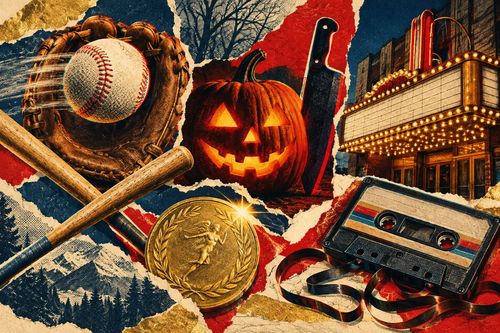
October 25: Mets Win Game 6, Halloween Turns 48

■  The Pop Edition October 25: Mets Win Game 6, Halloween Turns 48 A ground ball through Bill Buckner's legs, a masked killer's first walk down a suburban street, and a pop star born the same day — October 25's cultural ledger. Shea Stadium erupted on October 25, 1986 — forty years later, the moment still defines a franchise's fortunes. Some dates carry one big anniversary. October 25 carries two that couldn't be more different — a horror movie that changed what a Friday night at the multiplex could feel like, and a baseball game that turned a routine grounder into permanent lore. Add a pop star's birthday and a handful of smaller, stranger footnotes, and you've got a date that rewards a closer look rather than a quick scroll. Born On This Day Katy Perry 1984 · TURNS 42 She started out as a Christian gospel singer named Katy Hudson before reinventing herself with a wig, a candy-colored aesthetic, and a run of number-one singles that made her one of the defining pop hitmakers of the early 2010s. She's since branched into TV judging and Vegas residencies without ever quite leaving the charts behind. Chad Smith 1961 · TURNS 65 The Red Hot Chili Peppers' drummer since 1988, he's the guy whose resemblance to Will Ferrell spawned an actual charity drum-off between the two. Beyond the internet gag, he's anchored a rhythm section that helped turn funk-punk into stadium rock. Craig Robinson 1971 · TURNS 55 He spent years doing stand-up and Second City sketch work before landing Darryl Philbin on The Office, a role that let his deadpan warmth carry entire episodes. Hot Tub Time Machine and This Is the End followed, cementing him as a reliable comic anchor in ensemble casts. Persia White 1972 · TURNS 54 Best known as Lynn Searcy on Girlfriends, the UPN comedy that ran eight seasons and became a touchstone for its portrayal of Black women's friendships. She's also released music as a singer-songwriter outside her acting career. Zachery Ty Bryan 1981 · TURNS 45 He played oldest son Brad Taylor on Home Improvement for its entire eight-season run, growing up on screen alongside Tim Allen's sitcom dad. It remains the role that defines his career, a fixture of 1990s Tuesday nights. Opening Weekend: Halloween   John Carpenter's Halloween made its first theatrical appearance on October 25, 1978, opening in Kansas City before spreading through the country over the following weeks — a rollout typical of low-budget horror in an era before wide simultaneous releases. Shot in about 21 days on a budget widely cited around $325,000, it introduced Michael Myers, a mask that cost less than two dollars, and a synth score Carpenter wrote himself. Critics were slow to warm to it; some early reviews dismissed it as exploitation. Audiences disagreed, and word of mouth turned it into one of the most profitable independent films ever made relative to its budget. It didn't invent the slasher formula outright — Black Christmas and Psycho got there first — but it codified the rules that Friday the 13th and A Nightmare on Elm Street would follow: a masked killer, a final girl, a holiday setting turned menacing. Forty-eight years later, the franchise has survived reboots, timeline retcons, and at least three different continuities, and the original still gets a theatrical re-release most Octobers. Carpenter's score alone has outlived plenty of bigger movies.     The Moment: Game 6, 1986 World Series On October 25, 1986, the Boston Red Sox were one out from their first championship since 1918, up 5-3 in the tenth inning at Shea Stadium against the New York Mets. Then came three straight singles, a wild pitch to tie it, and a slow ground ball from Mookie Wilson that skipped through Bill Buckner's legs at first base, scoring the winning run. The Red Sox lost the game and, two nights later, the series. “A little roller up along first…” — Vin Scully, calling the play Buckner, a respected veteran with a long career and a bad ankle, became an unfair shorthand for Boston's misery for nearly two decades, the play looping endlessly on highlight reels every October. It fed the idea of a Red Sox curse that only got heavier with retelling, until the team finally broke through in 2004. Buckner himself eventually made peace with it publicly, throwing out a first pitch at Fenway to a standing ovation in 2008, but the ground ball itself remains one of the most replayed six seconds in sports television.   Meanwhile… 1968The Beatles' Hey Jude is in the fourth of its nine consecutive weeks at #1 on the Billboard Hot 100. 1985October 25, 1985 is the exact date on Doc Brown's note in Back to the Future — the day Marty's whole ordeal in the DeLorean kicks off. 2001Microsoft releases Windows XP, the operating system that would stay on office desktops for well over a decade. 2002Jackass: The Movie opens in theaters, taking the MTV stunt show's chaos to the multiplex. 2013The Counselor, Ridley Scott's Cormac McCarthy-scripted thriller, opens wide. 1986The same Game 6 also gives us Vin Scully's call, still replayed every October as baseball's most famous heartbreak. A slasher classic, a ground ball, a birthday cake for a pop star — October 25 covers a lot of ground. Come back tomorrow for the next chapter, and check the archive if today's rabbit hole wasn't deep enough.

01 October 2026

Post

Oct. 24, 2003: Concorde's Final Flight Lands

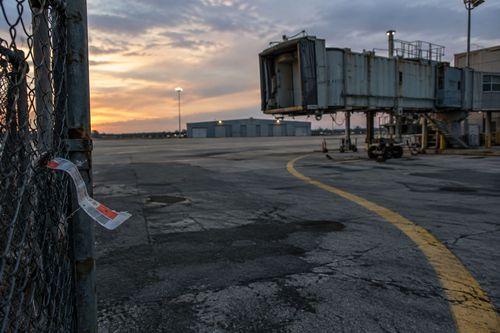
On October 24, 2003, the Concorde Touched Down for the Last Time, Ending the Age of Supersonic Travel After 27 years of breaking the sound barrier with champagne service, the world's most glamorous jet made its final descent. On October 24, 2003, three Concorde jets touched down at Heathrow Airport within minutes of each other, marking the end of commercial supersonic flight. Crowds gathered along the runway fences and rooftops near the airport, many holding cameras skyward, to witness the closing chapter of an aviation dream that had once promised a future where crossing the Atlantic took barely three hours. The Last Descent   British Airways operated the retirement flights, with one Concorde arriving from New York's JFK carrying passengers who had paid steep premiums for a seat in aviation history, including celebrities and aviation enthusiasts who had followed the jet's career since its 1976 debut. Air France had already retired its own Concorde fleet earlier that year, following the fatal 2000 crash near Paris that had shaken public confidence in the program and accelerated the economics working against it. Rising maintenance costs, dwindling passenger numbers, and the plane's notorious fuel inefficiency had made the math impossible to sustain, even for a jet that once carried presidents and rock stars at twice the speed of sound. What began as a symbol of Anglo-French engineering ambition ended not with a technical failure but with a spreadsheet. Inside the cabin on that final BA flight, pilots and crew members who had spent careers associated with the aircraft fought back tears as the jet made its approach, aware that no successor was waiting in the wings. Sonic booms that once rattled windows along the Concorde's transatlantic corridor fell silent, and the record for commercial crossing time—New York to London in under three hours—has stood unbroken ever since. More than two decades later, the Concorde remains the only supersonic passenger jet to have flown commercial routes at scale, a reminder that progress in aviation has not always moved in a straight line forward.  

01 October 2026

Post

October 24: John Wick Opens, Kline Turns 79

■  The Pop Edition October 24: John Wick Opens, Kline Turns 79 A revenge thriller that rewrote action cinema, a Tony-winning actor's milestone birthday, and a World Series win that crossed a border. Keanu Reeves, a stolen car, and a dead dog changed action movies forever on October 24, 2014. October 24 has a habit of producing moments that outlast their news cycle: a magician's final bow, a barrel ride over a waterfall, and a baseball team winning a championship for a country that isn't even the one hosting the league. This year the date brings a 12th anniversary for the film that resurrected an entire genre, a birthday for one of the stage-and-screen greats, and a 34-year look back at the night Toronto made World Series history. Here's the full rundown. Born On This DayKevin Kline1947 · TURNS 79Kline built a stage career at Juilliard and the Public Theater before Hollywood figured out what to do with a classically trained actor who could also do slapstick. A Fish Called Wanda got him the Oscar in 1989; the range never narrowed after that, from Sophie's Choice to In & Out.F. Murray Abraham1939 · TURNS 87Abraham won Best Actor for playing Salieri in Amadeus, a role that could have been the whole career. Instead he kept working steadily for decades, most recently finding a whole new audience as Hera on The White Lotus and Hank Thompson in the Mythic Quest ensemble.B.D. Wong1960 · TURNS 66Wong won a Tony for M. Butterfly before most Americans knew his face, then became a fixture of prestige and genre television alike, from Law & Order: SVU to Jurassic Park's Dr. Wu across two film trilogies.Monica1980 · TURNS 46Monica hit the Hot 100 as a teenager with Don't Take It Personal and never really left, later teaming with Brandy for The Boy Is Mine, a duet built on a rivalry that turned out to be mostly marketing.Wayne Rooney1985 · TURNS 41Rooney became Manchester United's all-time leading scorer and one of the most recognizable athletes of his generation, a teenage prodigy who turned into a tabloid fixture as much as a sporting one. Opening Weekend: John Wick John Wick opened in US theaters on October 24, 2014, and nobody involved expected it to become a franchise, let alone a genre reset. Keanu Reeves was coming off a run of mid-budget dramas and had spent years being politely written off as an action star with an expiration date. The film opened modestly, well behind that weekend's box office leader, and made most of its money through word of mouth once people realized the choreography wasn't the usual shaky-cam blur.Directors Chad Stahelski and David Leach, both former stunt coordinators, built the fight scenes like dance numbers, wide shots, minimal cuts, and a hand-to-hand style borrowed from Hong Kong cinema and mixed martial arts. The plot, a retired hitman avenging a puppy, became shorthand for the whole thing: simple premise, relentless execution. It spawned three sequels, a spinoff, an expanded cinematic universe called the Continental, and a permanent shift in how Hollywood choreographs violence.Twelve years later, the film's DNA shows up everywhere from Marvel fight scenes to video games built explicitly to feel like it. Reeves, for his part, went from washed-up to the industry's most reliable action leading man virtually overnight.    The Moment: Blue Jays Win the World SeriesOn October 24, 1992, the Toronto Blue Jays beat the Atlanta Braves in Game 6 to win the World Series, and did something no team had ever done before: won it while playing for a country other than the United States. The moment carried weight beyond baseball, arriving amid genuine anxiety about Canadian identity and free trade politics, and the win got treated as a national event rather than just a sports story.The series had its own minor controversy before Game 6 even started, when a US Marine color guard carried the Canadian flag upside down before a prior game, an error that briefly turned into a diplomatic headache. Toronto's win the following year cemented the team as a back-to-back champion and turned the Jays into one of the most recognizable brands in the sport for a stretch that, in retrospect, Canadian baseball has never quite recaptured.Thirty-four years on, it's remembered less for any single play than for what it represented: a championship parade that spilled across a border, and a reminder that sports-as-spectacle doesn't respect national lines.   Meanwhile…1926Harry Houdini gives his final performance in Detroit, exactly a century ago, days before his death from a ruptured appendix.1901Annie Edson Taylor becomes the first person to survive going over Niagara Falls in a barrel, a stunt she pulled off at 63.1987Michael Jackson's Bad reaches number one on the Billboard Hot 100.1970The Jackson 5's I'll Be There holds at number one for another week.2003Concorde makes its final commercial passenger flight, closing out an era of supersonic travel that pop culture had spent decades treating as the future.2014Dracula Untold and John Wick open in the same theatrical window, though only one of them spawns a cinematic universe. From a magician's last bow to a puppy-fueled revenge thriller, October 24 keeps proving that spectacle doesn't need an anniversary that ends in a zero to matter. Some dates just collect them.

01 October 2026

Post

Oct. 23, 2001: Apple Unveils the iPod

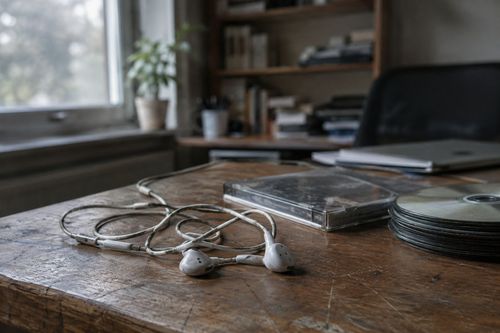
On October 23, 2001, Steve Jobs Introduced the World to the iPod A small white device with a click wheel promised to put a thousand songs in your pocket—and quietly began rewriting the rules of the music business. On October 23, 2001, in a modest auditorium at Apple's Cupertino headquarters, Steve Jobs pulled a small white rectangle from his pocket and told the assembled press that Apple was introducing a breakthrough digital device. The company was still years from the iPhone, still recovering from the dot-com bust, and best known for candy-colored iMacs. What Jobs held up that day looked unassuming, almost toy-like, but it carried a claim that sounded almost absurd for its time. 1,000 Songs   The device was the iPod, a 6.5-ounce gadget with a 5GB hard drive that Apple promised could hold "1,000 songs in your pocket." It used a mechanical scroll wheel for navigation, connected via FireWire for what was then blazing-fast transfers, and carried a price tag of $399 — steep enough that some technology writers dismissed it as a niche product for Mac loyalists. Compared to the clunky MP3 players already on the market, most of which held a fraction of the songs and ran on double-A batteries, the iPod felt like it had arrived from another decade entirely. Jobs, dressed in his familiar black turtleneck, framed it not as a gadget but as a lifestyle shift, a way of carrying an entire music collection without carrying anything heavy at all. Skeptics wondered aloud whether Apple, a computer company, had any business making a music player — a question that would soon answer itself in the most emphatic terms possible. The first iPod shipped a few weeks later, compatible only with Macs, which limited its reach in a market still dominated by Windows PCs. But the device's design language — minimalist, white, built around Apple's new iTunes software — set a template the company would refine for years. Within two years, Windows compatibility and the iTunes Music Store would turn the iPod into a cultural fixture, its white earbuds becoming a visible symbol of the early 2000s. The record labels that once shrugged off digital music would soon find themselves negotiating with the company that had made downloading songs feel effortless, a shift that began with one modest press event and a device nobody outside Cupertino was sure the world actually needed.  

01 October 2026

Post

October 23: iPod Launches at 25, Reynolds Turns 50

■  The Pop Edition October 23: iPod Launches at 25, Reynolds Turns 50 A pocket-sized music player rewired how we listened, a Canadian kid became a movie star, and Chicago ruled the airwaves — all on the same calendar square. The white earbuds era began quietly in a San Francisco auditorium 25 years ago today. October 23 splits its attention between a piece of hardware that changed how an entire generation carried its music and a run of birthdays that spans decades of pop culture range — from a Grammy-winning parody artist to a superhero-movie leading man. Add in a soft-rock chart-topper from the bicentennial year, and you've got a date that's less about one big bang and more about steady, lasting influence. Here's the full rundown. Ryan Reynolds BORN 1976 · TURNS 50 He spent years as the reliable charming guy in comedies nobody quite loved before Deadpool let him weaponize the smirk into a franchise. Since then he's built a second career as a marketing savant, turning a gin brand and a mobile carrier into punchlines that sell. Emilia Clarke BORN 1986 · TURNS 40 She was a working actress with a handful of small credits when Game of Thrones cast her as a teenager who inherits dragons and a claim to a throne. Eight seasons later she'd become one of the most recognizable faces on television, and has since moved into voice work and producing. "Weird Al" Yankovic BORN 1959 · TURNS 67 He started recording song parodies on an accordion in his college dorm and turned it into a five-decade career that's outlasted most of the artists he's spoofed. He's won multiple Grammys and remains the rare novelty act that critics take seriously. Pelé BORN 1940 · WOULD HAVE BEEN 86 He won three World Cups with Brazil and turned soccer into a global television spectacle decades before most of the world had a television. He died in 2022, but his highlight reels still circulate as the standard other players get measured against. Dwight Yoakam BORN 1956 · TURNS 70 He dragged honky-tonk twang back into the mainstream at a moment when country radio wanted polish, and did it his own way from Los Angeles rather than Nashville. He's since built a second career as a character actor in films like Sling Blade.   PRESS START: The iPod Arrives Steve Jobs stood in a small auditorium at Apple's Cupertino campus on October 23, 2001, and pulled a white plastic device out of his jeans pocket. It held, he said, a thousand songs. That was the whole pitch, and it was enough. The first-generation iPod cost $399, worked only with Macs, and used a mechanical scroll wheel that felt like nothing else on the market. Reviewers were cautiously impressed but skeptical of the price tag; sales were modest at first, and it took the 2003 arrival of Windows compatibility and the iTunes Store to turn the device into a phenomenon rather than a niche gadget for Mac loyalists. What the iPod actually displaced was the Discman and the CD binder, and with them the entire ritual of carrying physical albums around. It also quietly rewired the music business, making the single, not the album, the default unit of consumption again — a shift that streaming later completed. Apple stopped selling the iPod entirely in 2022, by which point its job — proving people would buy music digitally, one song at a time — was long finished.     ON THE CHARTS: Chicago's Soft-Rock Peak Chicago's "If You Leave Me Now" held the top of the Billboard Hot 100 through the week of October 23, 1976, capping a two-week run at number one for a band that had spent most of the decade known for horn-driven rock, not ballads. The song marked a deliberate pivot. Chicago had scored plenty of hits earlier in the '70s, but this was their first number one, and it arrived stripped of the brass section that had defined the group — just Peter Cetera's vocal, strings, and a mid-tempo ache that fit perfectly between the disco and soft-rock lanes dominating 1976 radio. It also won the Grammy for Best Pop Vocal by a Duo or Group that year. The success reoriented the band's whole approach for the rest of the decade, pushing them further toward ballads and away from the jazz-fusion instincts of their earlier records — a shift that some longtime fans grumbled about but that kept Chicago on the radio well into the 1980s.   Meanwhile… 1998Pleasantville opens in wide release, sending teenagers into a black-and-white 1950s sitcom world that gradually blooms into color. 1983Country singer Ronnie Milsap's run of chart-toppers continues to define Nashville's crossover pop sound of the era. 2001The same Apple event that unveils the iPod also marks one of the last times Steve Jobs keynotes a product launch without a global audience already expecting a hit. 1956Elvis Presley's early singles continue climbing the country and pop charts simultaneously, a crossover feat that was still rare at the time. 1976Chicago's ballad turn coincides with a broader shift on FM radio away from arena rock and toward smoother, string-laden production. 2015Crimson Peak opens in theaters, giving Guillermo del Toro's gothic sensibilities a big-budget studio showcase. From a scroll wheel that reshaped the music industry to a ballad that reshaped a band's whole identity, October 23 is a reminder that quiet pivots often outlast the loud ones. Check back tomorrow for another day's worth.

01 October 2026

Post

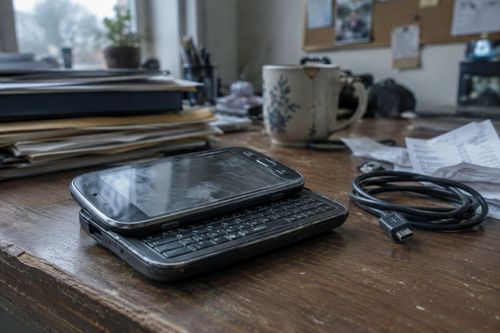
Oct. 22, 2008: The First Android Phone Debuts

On October 22, 2008, the T-Mobile G1 Went on Sale, Introducing the World to Android A slide-out keyboard and a search-engine giant's operating system quietly launched the smartphone war's second act. On October 22, 2008, shoppers filing into T-Mobile stores across the United States could walk out with a chunky, slide-out-keyboard handset called the G1 — the first phone ever to run Google's new Android operating system. Built by HTC and priced at $179 with a two-year contract, it arrived just over a year after Apple's iPhone had redefined what a phone could be, and few outside the tech press understood they were watching the opening move of a rivalry that would reshape the entire industry. The Underdog Debut   The G1 was, by most measures, an awkward machine. It had a trackball, a physical keyboard that popped out from beneath the screen, and no multi-touch pinch-to-zoom, a deliberate step around Apple's patents. Reviewers at the time noted its clunky software and middling battery life, and Google itself was cautious about the launch, treating Android less as a finished product than as an open invitation to manufacturers and developers who felt boxed out of Apple's tightly controlled ecosystem. T-Mobile sold out its initial stock within days, driven less by the hardware than by curiosity about what Google intended to build. What followed was not immediate dominance but a slow accumulation of scale. Android's open-source licensing meant that Samsung, Motorola, LG, and eventually manufacturers worldwide could adopt it for free, and within three years Android phones outsold iPhones globally. The G1 itself was discontinued within two years, a footnote next to the operating system it introduced, which today runs on the majority of smartphones on Earth — proof that the clumsiest first draft can still write the ending.  

01 October 2026

Post

October 22: GTA III Turns 25, Goldblum Turns 74

■  The Pop Edition October 22: GTA III Turns 25, Goldblum Turns 74 The game that rewrote what an open world could be turns 25, Jeff Goldblum turns 74, and Dune's sandworms roared into theaters five years back. Liberty City, a chaotic star turn, and a desert planet — October 22 across the decades. Some days in pop culture history are quiet footnotes. October 22 isn't one of them. A video game landed a quarter-century ago and permanently changed what open-world meant. A sci-fi epic reintroduced audiences to a planet made of sand and spice. And a handful of birthdays remind us how long certain faces have been part of the cultural furniture — in the best possible way. Here's the full accounting. Jeff GoldblumBORN 1952 · TURNS 74He built a career on making exposition sound like jazz improvisation, from The Fly to Jurassic Park to a Wes Anderson ensemble or two. Decades in, he's somehow become more famous for his speaking cadence than any single role, which is its own kind of achievement.Catherine DeneuveBORN 1943 · TURNS 83French cinema's most enduring leading lady, she broke through with The Umbrellas of Cherbourg and never stopped working, building a filmography that spans Bunuel to Ozon across six decades.ShaggyBORN 1968 · TURNS 58The Jamaican-American singer behind It Wasn't Me turned a smoky baritone and a nothing-to-see-here alibi into one of the biggest pop hits of 2000, a song that's still inescapable at karaoke bars.Zac HansonBORN 1985 · TURNS 41The youngest Hanson brother was pounding drums and singing lead on MMMBop at eleven years old. He's still touring and recording with his brothers three decades later, running the band as an independent operation.Brian BoitanoBORN 1963 · TURNS 63The 1988 Olympic gold medalist turned figure skating into event television, and later became an unlikely pop-culture punchline courtesy of a certain South Park movie song. PRESS START: Grand Theft Auto III Rockstar North's Grand Theft Auto III shipped for PlayStation 2 in North America on October 22, 2001, twenty-five years ago, and the industry hasn't looked the same since. Earlier GTA games had been top-down and cartoonish; III dropped players into a fully three-dimensional Liberty City with no mission markers forcing you along a single path. You could steal a car, run a red light, rob a store, or just drive around listening to fake radio stations, and the game let you.The reception was immediate and enormous — critics praised the freedom, parents groups objected to the violence, and lawmakers in several states tried to legislate around it. Sales topped 13 million copies over its lifetime on PS2 alone, and the template it set — a dense, morally loose sandbox city dropped over a driving-and-shooting game — became the industry's default open-world grammar for the next two decades, from Saints Row to Watch Dogs to Cyberpunk 2077.It also cemented Rockstar's reputation for controversy as marketing, a strategy the studio would lean on again and again through the San Andreas 'Hot Coffee' scandal and beyond.    OPENING WEEKEND: DuneDenis Villeneuve's Dune opened wide in US theaters on October 22, 2021, five years ago, after a pandemic-driven delay that had already pushed it off the calendar twice. It arrived simultaneously in theaters and on HBO Max, a hybrid release strategy Warner Bros. adopted across its entire 2021 slate, and the arrangement worried studio executives and talent alike about whether audiences would show up at all.They did, enough to convince Warner Bros. to greenlight a sequel almost immediately. Timothee Chalamet led an ensemble that included Oscar Isaac, Rebecca Ferguson, and Zendaya, and the film's sandworm-scale visual ambition — shot largely on practical desert locations in Jordan and Abu Dhabi rather than green screen — earned it six Academy Awards, mostly in technical categories.Frank Herbert's 1965 novel had defeated two previous major adaptation attempts, including a famously abandoned Alejandro Jodorowsky version and David Lynch's 1984 film, which Lynch himself later disowned. Villeneuve's version, split across two films, became the first to be considered a genuine critical and commercial success.   1975Bruce Springsteen appears on the covers of both Time and Newsweek in the same week, the moment the Born to Run hype fully broke through.1988Sonny Bono is elected mayor of Palm Springs, California, a stepping stone toward his later career in Congress.1990MC Hammer's Please Hammer, Don't Hurt 'Em continues its long reign atop the Billboard 200, part of a 21-week run at number one.2004The Grudge, starring Sarah Michelle Gellar, opens as the weekend's top film, part of the early-2000s wave of American remakes of Japanese horror.2009Whip It, Drew Barrymore's roller derby directorial debut, is in theaters, quietly building the cult following it enjoys today.2013Apple unveils the iPad Air and a redesigned iPad Mini with Retina display at an event in San Francisco. From a Liberty City heist to a desert planet's spice fields, October 22 has a habit of moving the culture's goalposts. Same time tomorrow for the next one.

01 October 2026

Post

Oct. 21, 2015: Back to the Future Day Arrives

On October 21, 2015, Fans Worldwide Celebrated the Real 'Back to the Future' Day The date Marty McFly time-traveled to in 1989's sci-fi sequel finally arrived, and pop culture couldn't resist marking the occasion. For twenty-six years, one specific date lived rent-free in the imaginations of movie fans everywhere: October 21, 2015, the moment Marty McFly and Doc Brown touched down in their flying DeLorean in 'Back to the Future Part II.' When the calendar finally caught up to fiction, the anticipation exploded into a genuine cultural event, with brands, cities, and studios racing to make hoverboards, self-lacing shoes, and flying cars feel just a little more real. The Future Arrives   Universal Pictures leaned hard into the milestone, releasing a promotional trailer starring Christopher Lloyd reprising his role as Doc Brown, breaking the fourth wall to address the audience directly about the film's predictions. Michael J. Fox made public appearances tied to the day, and Nike unveiled a limited pair of self-lacing Air Mag sneakers inspired by Marty's futuristic footwear, auctioning them off for Fox's Parkinson's research foundation. Toyota rolled out a hoverboard-style prototype for a promotional stunt, while pizza chains and tech companies scrambled to reference the film's whimsical predictions, some accurate, most gloriously not. The internet, still a relatively young stage for viral moments, treated the date like a secular holiday, proving that a joke embedded in a 1989 script could still command global attention decades later. Beneath the marketing blitz was a sincere nostalgia: the film's 2015 vision, equal parts prophetic and absurd, included fax machines everywhere and flying cars nowhere, a mismatch that became part of the day's charm. News outlets ran side-by-side comparisons of the movie's predictions against reality, noting hits like tablet computing and video calls alongside misses like flying DeLoreans and dehydrated pizza. Robert Zemeckis, the film's director, had once insisted he never wanted a third installment revisiting the story, yet the day made clear that no sequel was necessary, the audience had been quietly counting down for over two decades already. The film's throwaway gag had become one of the most affectionately anticipated dates in movie history, precisely because nobody involved in writing it ever expected anyone to actually get there.  

01 October 2026

Quiz

Cultured

Museum-lover? Art aficionado? Put your knowledge to the test!...

01 October 2026

Quiz

Civics Class

Hope you paid attention in civics class - it's your time to shine!...

01 October 2026

Quiz

Back in My Day

We walked uphill to school - both ways! How well do you know nostalgia?...

01 October 2026

Quiz

Couch Potato

See if your binge-watching has paid off!...

01 October 2026

Quiz

Armchair Quarterback

From the Olympics to the Gridiron - how well do you know your stuff?...

01 October 2026

Quiz

Smarty Pants

Do you know your beakers from your bunsen burners?...

01 October 2026

Quiz

Name That Era

How well do you know music history?...

01 October 2026

Quiz

How Well Do You Know American History?

Test your smarts with this history quiz!...
Terms and ConditionsDo Not Sell or Share My Personal InformationPrivacy PolicyPrivacy NoticeAccessibility NoticeUnsubscribe
Copyright © 2026 Day In History