September 15: Steel Monsters at the Somme, Five Nations Free at Once, and the Lone Ranger Rides onto Television
September 15 is a day for firsts that changed the categories they entered. In 1916, the British Army sent into battle a weapon that had never been used in warfare before — an armored, tracked vehicle that could cross the trenches and barbed wire of the Western Front — and demonstrated, however imperfectly in this first deployment, that the stalemate of industrial war could be broken by industrial innovation. In 1821, five nations in Central America declared independence from Spain in a single coordinated day, completing a regional transformation that turned a colonial territory into five sovereign republics simultaneously. And in 1949, a character who had been a radio hero since 1933 appeared on a television screen for the first time, beginning an eight-season run that helped establish the Western as American television's first dominant genre and that made the Lone Ranger and his companion Tonto among the most recognized figures in mid-century popular culture. Three firsts. Three September fifteenths when the world gained something that hadn't existed in it before.
The First Tanks
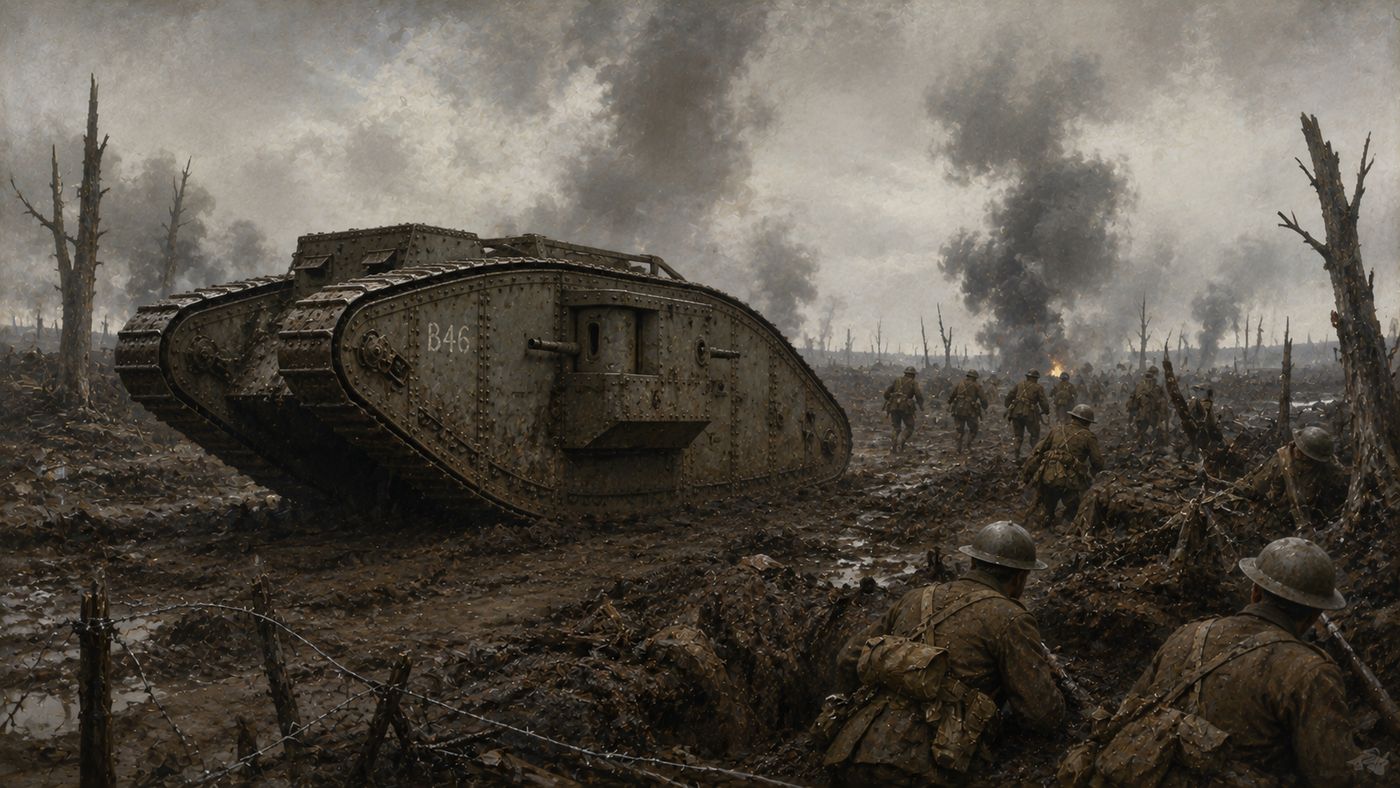
On September 15, 1916, during the Battle of Flers-Courcelette — part of the larger Battle of the Somme — the British Army deployed forty-nine Mark I tanks in combat for the first time in military history. The vehicles, which had been developed in secret over the previous two years under the deliberately misleading cover name "water carriers for Mesopotamia" (later shortened to "tanks," which stuck), were essentially armored boxes mounted on caterpillar tracks, capable of crossing trenches and crushing barbed wire while their crews fired machine guns and small artillery through ports in the hull. The deployment was deeply flawed: many of the tanks broke down before reaching the front, the terrain was unsuitable, the crews were undertrained, and the infantry coordination that would eventually make tanks effective had not yet been developed. Of the forty-nine committed, only thirty-two reached the starting line and perhaps eighteen made meaningful contributions to the advance. Yet the psychological effect on German troops who encountered them was significant, and the concept had been proven viable.
The tanks that appeared at Flers-Courcelette on September 15, 1916, were the direct ancestors of the armored vehicles that became the decisive weapon of the Second World War and that continue to form the backbone of modern ground forces worldwide. The concept they embodied — mobile, armored firepower capable of crossing obstacles and supporting infantry — was refined over the two years remaining in the First World War, deployed far more effectively at Cambrai in 1917 and during the Hundred Days Offensive in 1918, and developed by German, British, Soviet, and American military thinkers into the doctrine of armored warfare that defined the Second World War's major campaigns. The first use of September 15, 1916, was by most measures a tactical failure — the results were modest, the losses to breakdown significant, and the premature deployment arguably forfeited the element of surprise that might have made the initial appearance more decisive. But it established the principle, and the principle changed warfare permanently. Every tank that has fought since owes its existence to the lumbering machines that crossed the Somme mud on September 15, 1916.
Five Nations, One Day
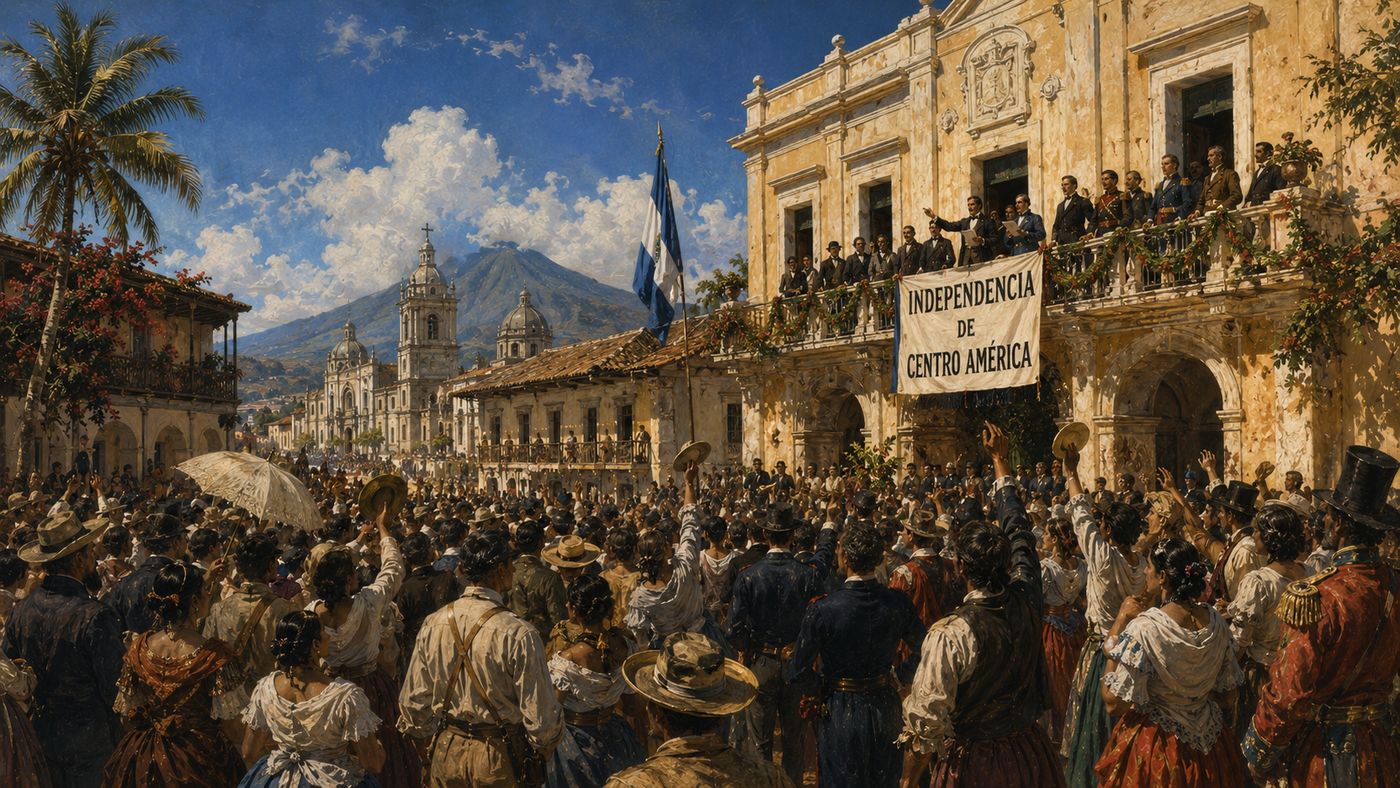
On September 15, 1821, the five territories that had constituted the Captaincy General of Guatemala under Spanish colonial rule — Guatemala, El Salvador, Honduras, Nicaragua, and Costa Rica — declared independence simultaneously, in what is among the most remarkable coordinated acts of decolonization in the history of the Americas. The declaration had been enabled by the success of Agustín de Iturbide's Mexican independence movement, which had produced the Treaty of Córdoba on August 24, 1821 — just three weeks earlier — formally ending Spanish sovereignty over Mexico and demonstrating that the colonial order in Spanish America was collapsing. The Central American declaration of September 15 was largely bloodless: the Spanish colonial authorities, aware that the broader imperial system they represented was crumbling, did not mount significant resistance. The five territories initially joined the short-lived Mexican Empire under Iturbide before declaring the Federal Republic of Central America in 1823 after his abdication.
The independence proclaimed on September 15, 1821, is celebrated as the national day of all five Central American republics — Guatemala, El Salvador, Honduras, Nicaragua, and Costa Rica — making it one of the few dates in history that is simultaneously the national independence day of five separate countries. The Federal Republic of Central America that the five territories attempted to form proved unstable, dissolving into five separate independent nations between 1838 and 1840 — a fragmentation driven by regional rivalries, economic differences, and the difficulty of maintaining a federal system across a geographically challenging terrain without strong central institutions. The borders established during and after this period have largely persisted, though the political histories of the five nations have diverged dramatically: Costa Rica established a stable democracy; Nicaragua, El Salvador, and Honduras have experienced extended periods of authoritarian rule, civil war, and military government; Guatemala's history has included a CIA-backed coup in 1954 and a thirty-six-year civil war that ended in 1996. The day of collective liberation celebrated on September 15 has not produced identical outcomes for the five nations that share it.
Hi-Yo, Silver
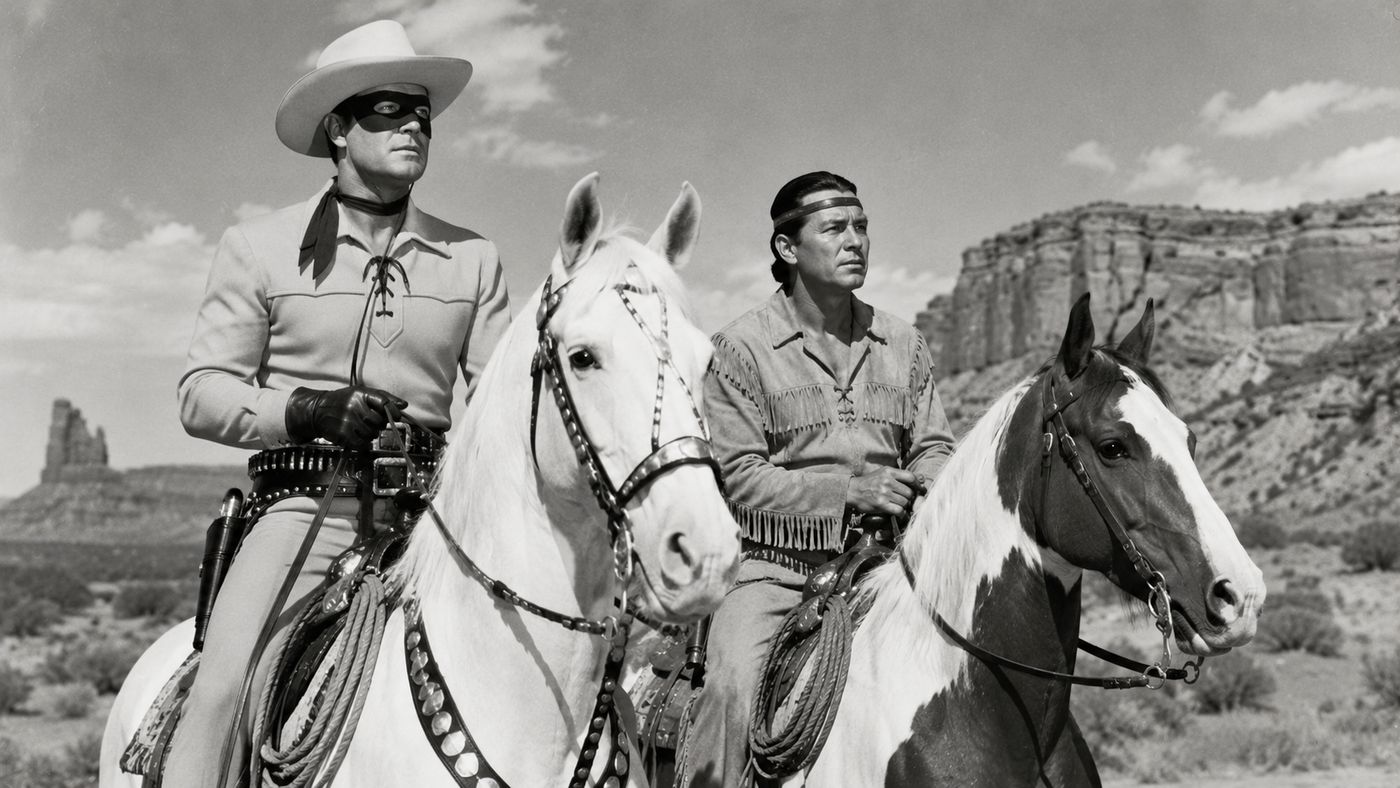
On September 15, 1949, The Lone Ranger made its television debut on ABC, starring Clayton Moore as the masked Texas Ranger and Jay Silverheels as his Potawatomi companion Tonto — bringing to the new medium a character who had been one of American radio's most beloved heroes since the program's debut in 1933. The television series, produced by George Trendle and Jack Wrather, was among the earliest television Westerns and quickly became one of the most popular programs on the air, running for 221 episodes across eight seasons before its conclusion in 1957. The show's formula — the masked man with a mysterious past, the loyal companion, the silver bullets, the white horse Silver and the paint horse Scout, the William Tell Overture thundering under the opening credits — was simple, consistent, and proved extraordinarily effective at the moment when American families were acquiring their first television sets and discovering what the medium could offer.
The television debut of September 15, 1949, helped establish the Western as American television's first major genre — a category that would dominate prime-time programming through the 1950s and into the 1960s, producing Gunsmoke, Have Gun – Will Travel, Bonanza, Maverick, and dozens of other series that collectively defined a generation's relationship with the mythology of the American frontier. Jay Silverheels's performance as Tonto was the highest-profile role an Indigenous actor had held in American television, though the character's positioning as a subordinate companion to the white protagonist reflected the limitations of the era's racial imagination that subsequent generations would criticize and that Silverheels himself occasionally spoke about with frustration. Clayton Moore embodied the role so completely that he continued to make public appearances in the Lone Ranger's mask and costume for decades after the show's cancellation, a dedication to the character that included a legal dispute with the property's owners over his right to wear the mask in public. The masked rider who galloped onto American television on September 15, 1949, left a cultural impression that outlasted the show by decades.