September 10: The Machine Beneath the Alps, a Treaty That Remade Europe, and the Truth Is Out There
September 10 is a day for reckoning with what we don't yet know. In 2008, scientists sent the first proton beam around a seventeen-mile ring buried under the Swiss-French border — the most complex machine ever built, designed to answer questions about the fundamental nature of matter that had been unresolvable by any other means — and the world, briefly, wondered whether it might also end the planet. It did not. In 1919, the Allied powers signed the peace treaty with Austria that completed the dissolution of the Austro-Hungarian Empire, redrew the map of Central Europe in ways that were partly principled and partly punitive, and left behind borders and grievances that contributed to the next war within twenty years. And in 1993, a television show about two FBI agents investigating paranormal phenomena debuted on a network that most people underestimated, and gradually became one of the defining cultural artifacts of its decade. Three September tenths. Three attempts to understand what's actually out there.
First Beam
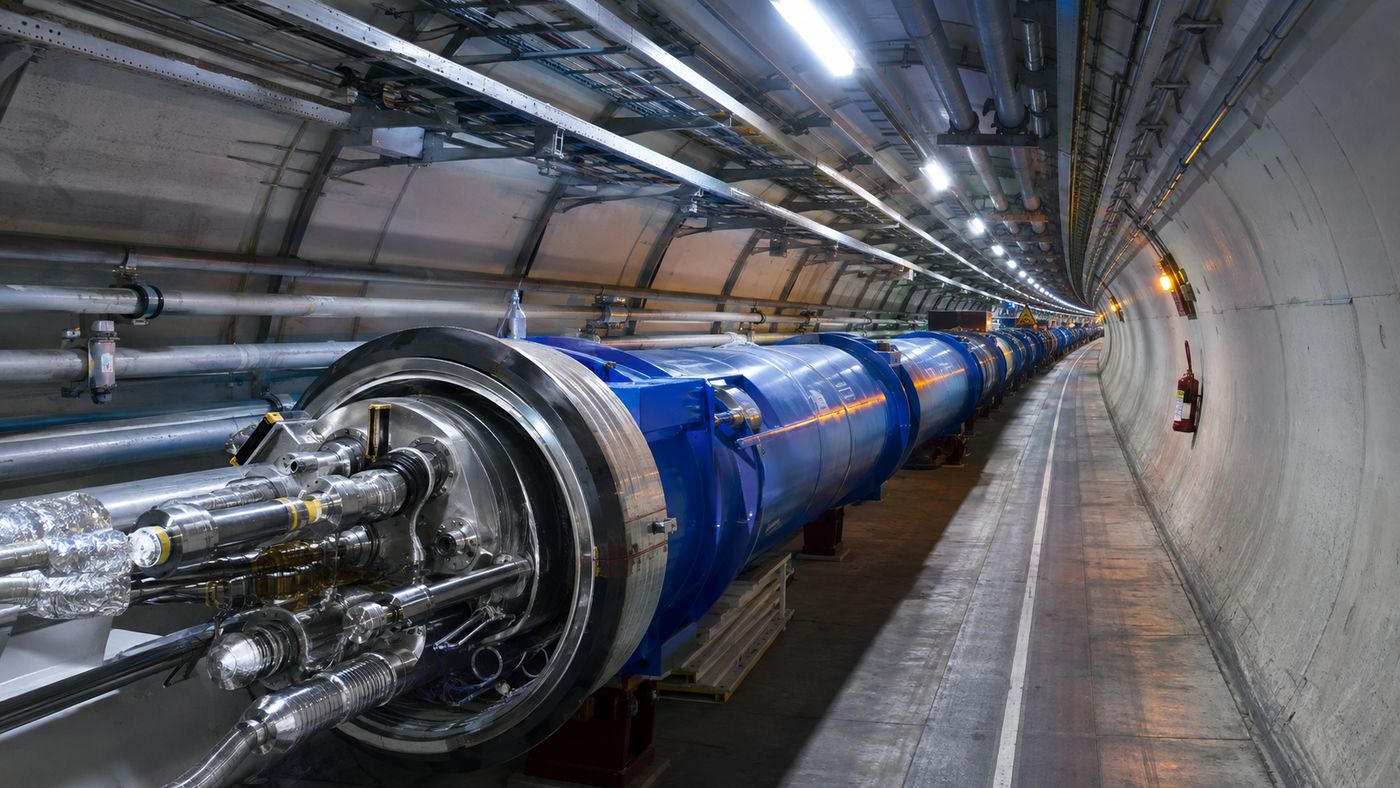
On September 10, 2008, the Large Hadron Collider at CERN — the European Organization for Nuclear Research, located on the Swiss-French border near Geneva — successfully circulated the first proton beam around its 27-kilometer underground ring, marking the operational beginning of the most powerful and complex scientific instrument ever built. The LHC had been under construction for a decade, following more than a decade of design and planning, at a total cost of approximately $4.75 billion — funded by 21 member states and contributions from scientists and governments in over 100 countries, involving more than 10,000 physicists, engineers, and technicians across the globe. The machine was designed to accelerate subatomic particles to nearly the speed of light and collide them with sufficient energy to probe the fundamental structure of matter at scales and energies far beyond those accessible by any previous instrument. Its primary scientific target was the Higgs boson — the particle theorized to give other particles their mass — which had been predicted since 1964 but never observed.
The first beam circulated on September 10, 2008, was followed nine days later by a serious electrical fault that set the LHC's science program back by more than a year. When collisions finally began in earnest in 2010 at unprecedented energies, the machine began producing results at a rate that has kept the global physics community occupied ever since. The Higgs boson was confirmed on July 4, 2012 — a discovery for which Peter Higgs and François Englert received the Nobel Prize in Physics in 2013. Beyond the Higgs, the LHC has produced tens of millions of proton-proton collisions per second across years of operation, generating datasets so large that they require distributed computing networks across dozens of countries to process. The machine has not yet produced evidence of supersymmetry, dark matter candidates, or other phenomena predicted by theories beyond the Standard Model — absences that are themselves scientifically significant. The proton beam that circled the underground ring on September 10, 2008, inaugurated an era of experimental physics whose full results will take decades to analyze.
The Empire's End
On September 10, 1919, Austria and the Allied powers signed the Treaty of Saint-Germain-en-Laye in a Paris suburb, completing the post-World War I peace settlement and formally dissolving the Austro-Hungarian Empire — one of Europe's great multinational states, which had ruled Central Europe in various forms since the fifteenth century. The treaty reduced Austria from an empire of more than 51 million people spanning a dozen nationalities to a small German-speaking republic of about 6.5 million, landlocked, stripped of its coastline, its industrial regions, and the capital, Vienna, which was now a imperial city without an empire to serve — a metropolis disproportionate to the nation it now headed. The successor states created or enlarged by the treaty's territorial redistribution — Czechoslovakia, Yugoslavia, Hungary, Poland, and an enlarged Romania and Italy — were themselves multi-ethnic entities whose internal tensions would prove substantial.
The Treaty of Saint-Germain signed on September 10, 1919, also included a provision prohibiting Austria from unifying with Germany — a measure the Allies imposed to prevent the emergence of a large German-speaking state in Central Europe, but that many Austrians themselves resented, since union with Germany had seemed to many of them the logical consequence of their new circumstances. The prohibition was effectively overridden by Hitler's Anschluss in 1938, when Germany annexed Austria without military resistance and with considerable popular support within Austria — a consequence of the resentments and economic difficulties the post-1919 settlement had produced. The borders drawn or confirmed by the Treaty of Saint-Germain were partly based on the principle of national self-determination advocated by Woodrow Wilson and partly on the strategic and economic interests of the Allied powers, a tension that produced compromises satisfying to no one and contributing to the instabilities of the interwar period. The Austria established by the treaty on September 10, 1919, was a truncated, economically struggling republic that struggled with its identity for two decades before being absorbed into the larger German state it had been forbidden to join.

The Truth Is Out There
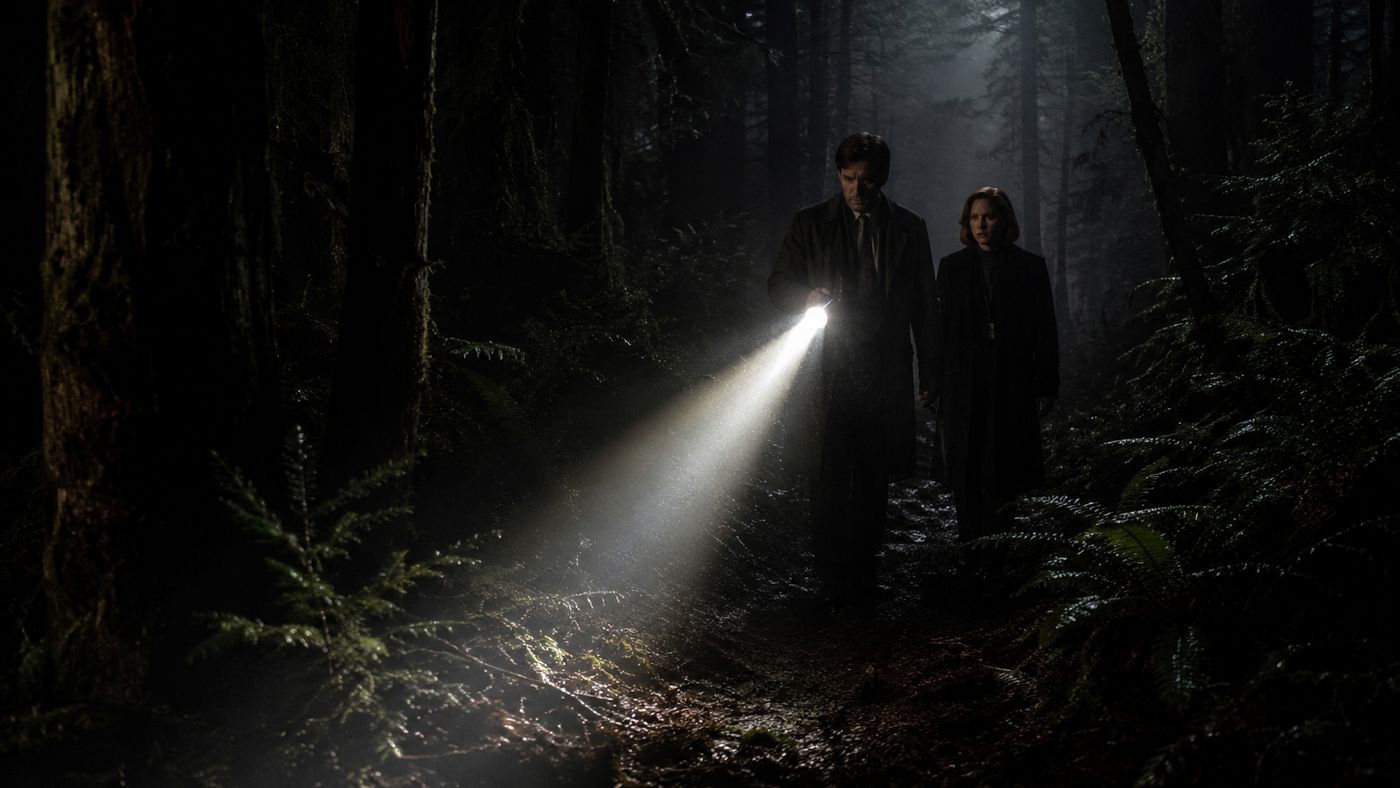
On September 10, 1993, The X-Files debuted on the Fox Broadcasting Company — a show created by Chris Carter about two FBI agents, Fox Mulder and Dana Scully, assigned to investigate unexplained cases involving paranormal phenomena, government conspiracies, and possible extraterrestrial contact. The pilot episode drew modest ratings but found an audience that returned, grew, and evangelized the show with an enthusiasm that predated the internet's capacity to amplify fan communities but that anticipated it in important ways. The X-Files merged the paranoid political atmosphere of post-Cold War, post-Watergate America with the aesthetic of the classic horror anthology and the procedural structure of the crime drama, producing a hybrid that felt both familiar and genuinely new. Its central dynamic — the skeptical, scientifically rigorous Scully against the credulous, intuition-driven Mulder — provided a template for partnership and intellectual argument that influenced virtually every subsequent prestige television drama with a paired protagonist structure.
The X-Files that premiered on September 10, 1993, ran for nine seasons, produced two theatrical films, was revived for additional seasons in 2016 and 2018, and generated a cultural impact that extended well beyond its direct viewership. Its "mythology" episodes — the ongoing arc about a government conspiracy to conceal evidence of extraterrestrial life — captured something specific about American anxieties in the 1990s: the distrust of institutions, the conviction that official explanations were incomplete, the suspicion that powerful forces were operating beyond public accountability. The show's tagline — "The truth is out there" — became one of the defining phrases of the decade. Gillian Anderson's Dana Scully, a scientist and skeptic who never abandoned her empirical framework regardless of what she encountered, became a cultural model for women in science: surveys of American female scientists who entered the field in the 1990s have consistently found a disproportionate number who cite Scully as an early influence — a phenomenon researchers have called the "Scully Effect." The show that debuted on September 10, 1993, was about things that weren't true. Its effects on the real world have been more complex.