October 24: The Peace That Made the World, the Barrel, the United Nations
October 24 belongs to people who decided that enough was enough. In 1648, the exhausted diplomats of Europe gathered in two German cities and negotiated an end to conflicts that had killed millions and devoured entire regions — and in doing so, invented the principles of international relations that the world still runs on. In 1901, a sixty-three-year-old schoolteacher from Michigan climbed into a barrel and went over Niagara Falls because she needed the money and had decided that fear was not a reason not to try. And in 1945, the nations that had just finished the most destructive war in human history signed a charter committing themselves to the proposition that there had to be a better way. Three very different kinds of enough. Three October 24ths.
Westphalia
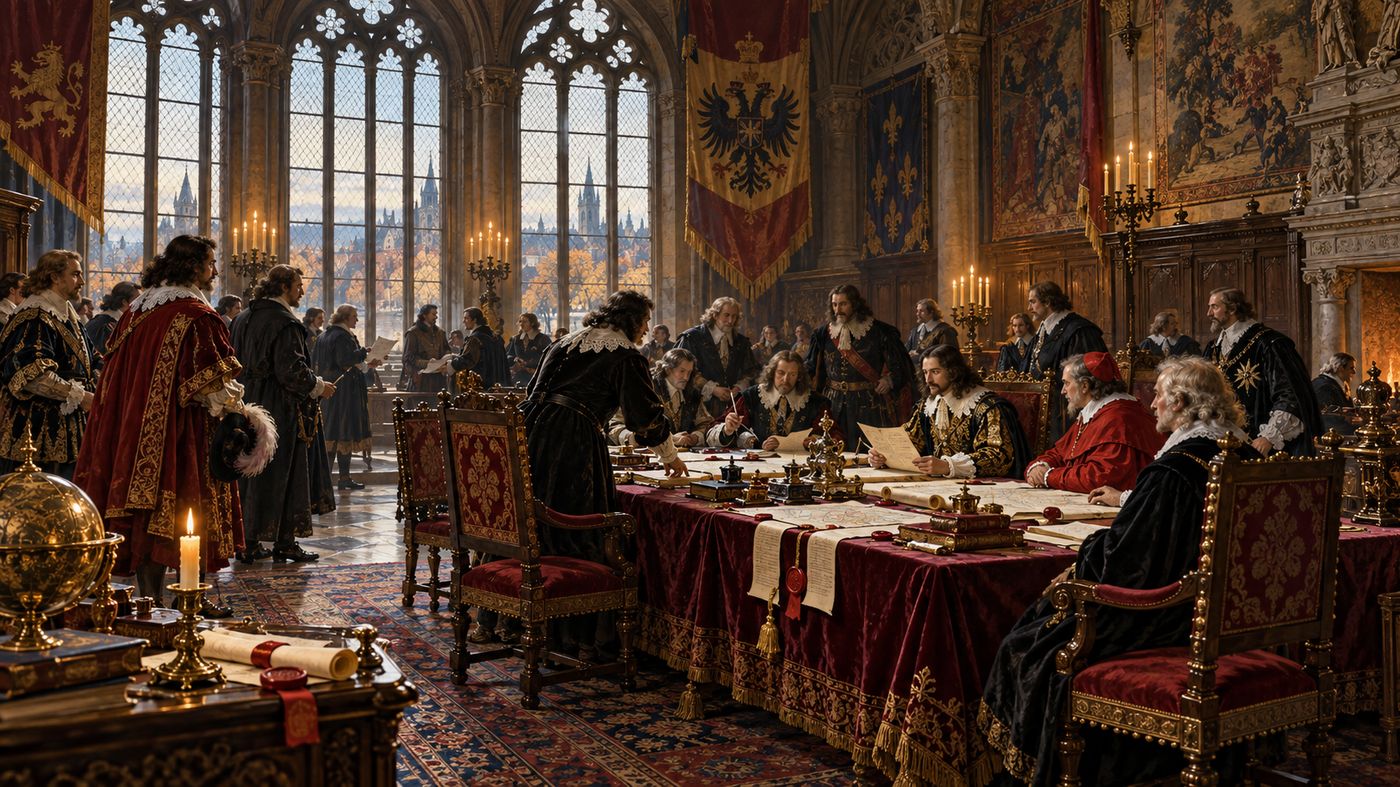
On October 24, 1648, the Peace of Westphalia was signed — actually two treaties, negotiated simultaneously in the German cities of Münster and Osnabrück, that brought to an end the Thirty Years' War, which had consumed the Holy Roman Empire since 1618, and the Eighty Years' War between Spain and the Dutch Republic, which had been grinding on since 1568. Together, these conflicts had killed an estimated eight million people through combat, famine, and disease, and had left whole regions of central Europe depopulated and devastated. The negotiations that produced the peace had themselves taken five years and involved representatives from nearly every European power — one of the first instances of multilateral international diplomacy at continental scale. What the diplomats produced in those two German cities was more than a ceasefire. It was a new architecture for international relations.
The principles embedded in the Peace of Westphalia — that sovereign states are equal before international law, that no external power has the right to interfere in the internal affairs of another state, that religious minorities deserve tolerance rather than elimination — were not universally applied or instantly transformative. But they established a framework for thinking about the relationships between nations that has shaped every international treaty, every diplomatic negotiation, and every concept of sovereignty from 1648 to the present. The modern international system — with its nation-states, its diplomats, its conventions about territorial integrity and non-interference — is, in a real and traceable sense, the child of what was agreed in Münster and Osnabrück on October 24, 1648. When scholars speak of the "Westphalian order," they are describing a world that a group of exhausted diplomats invented because the alternative was permanent war.
The Schoolteacher and the Falls
On October 24, 1901 — her sixty-third birthday, as it happened — Annie Edson Taylor climbed into a custom-made oak and iron barrel on the Canadian shore of the Niagara River, was sealed inside with a leather harness and cushions, and was pushed into the current above Horseshoe Falls. The barrel went over the edge and plunged 167 feet into the churning basin below. Seventeen minutes passed before rescuers could retrieve and open it. When they did, Taylor emerged — bruised, with a small gash on her head, but alive and largely intact. She had just become the first person in history to survive going over Niagara Falls in a barrel. Her first words to the crowd, by multiple accounts, were: "No one ought ever do that again."
Taylor had conceived the stunt as a solution to a financial problem. Widowed young and having spent her savings, she had calculated that surviving Niagara Falls would make her famous enough to earn a living on the lecture circuit. The calculation was not entirely wrong — she was famous, briefly and intensely — but the financial returns proved disappointing. Her manager absconded with her barrel. Imitators began going over the falls and drawing the crowds she had hoped to keep. She spent her later years sitting near the falls with a photograph and a cat named Jimmy, selling autographs to tourists. She died in 1921, not wealthy. The stunt that was supposed to solve her financial problems became the entirety of her legacy — which is, in its own way, remarkable enough. Sixty-three years old, on her birthday, over the largest waterfall in North America. The world has produced few braver or more practical decisions.

We the Peoples
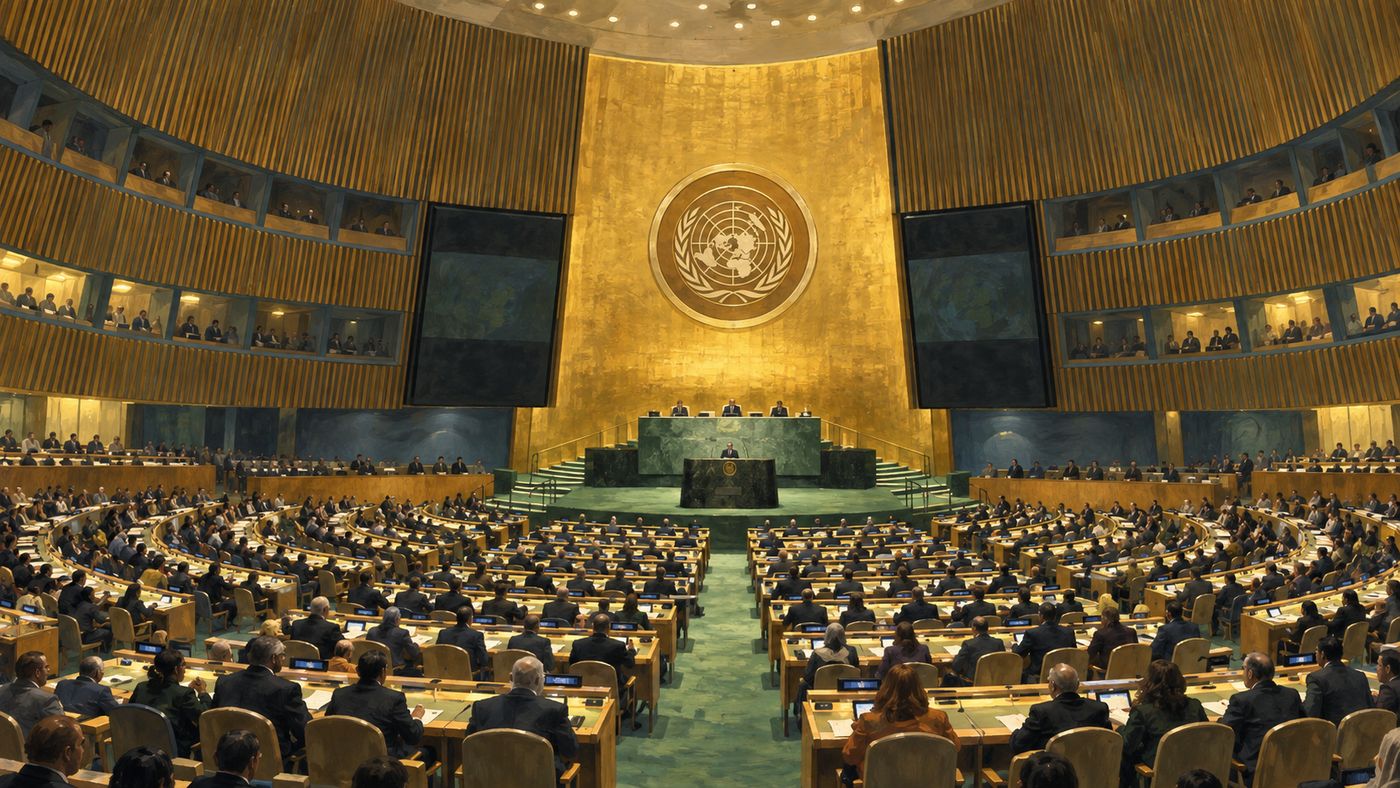
On October 24, 1945 — less than three months after the atomic bombings of Hiroshima and Nagasaki and six months after the death of Franklin Roosevelt, who had been among its principal architects — the United Nations came into official existence when the five permanent members of the Security Council ratified the UN Charter, joined by a majority of the fifty-one founding member states. The organization that came into being that day was the second attempt in a generation to build an international institution capable of preventing global war — the first, the League of Nations, having failed to stop the very conflict whose devastation had made the second attempt seem so urgently necessary. The UN Charter's opening words — "We the Peoples of the United Nations, determined to save succeeding generations from the scourge of war" — carried the weight of sixty million dead.
The United Nations has been criticized, with varying degrees of justification, for most of its existence: for the paralysis built into its Security Council veto structure, for its inability to prevent numerous wars and genocides, for the gap between its proclaimed principles and its operational realities. These criticisms are not without foundation. What the institution has also done — coordinated global responses to disease outbreaks, delivered humanitarian aid in conflict zones, established international legal frameworks for human rights, facilitated peacekeeping operations on multiple continents, and provided a forum in which nations that might otherwise be shooting at each other are at least talking — is less dramatic but not negligible. October 24 is observed as United Nations Day in all 193 member states. The world the UN was built to improve remains imperfect. The alternative to trying remains worse.