October 23: A Thousand Songs, a Teen Pop Explosion, and a Flying Elephant
Some inventions change behavior. Others change feeling. The best ones do both simultaneously — they alter the mechanics of daily life and, in doing so, alter something subtler about what it means to move through the world. October 23 holds three of them: a small white device that put a thousand songs in a shirt pocket and rewired the relationship between music and movement; a pop single released by a sixteen-year-old that announced a new template for fame with such force that its opening piano notes remain among the most recognized sounds in contemporary music; and a sixty-four-minute animated film about an elephant with oversized ears that has been making children cry — and then cheer — since 1941. Three different kinds of feeling. Three October 23rds.
1,000 Songs in Your Pocket
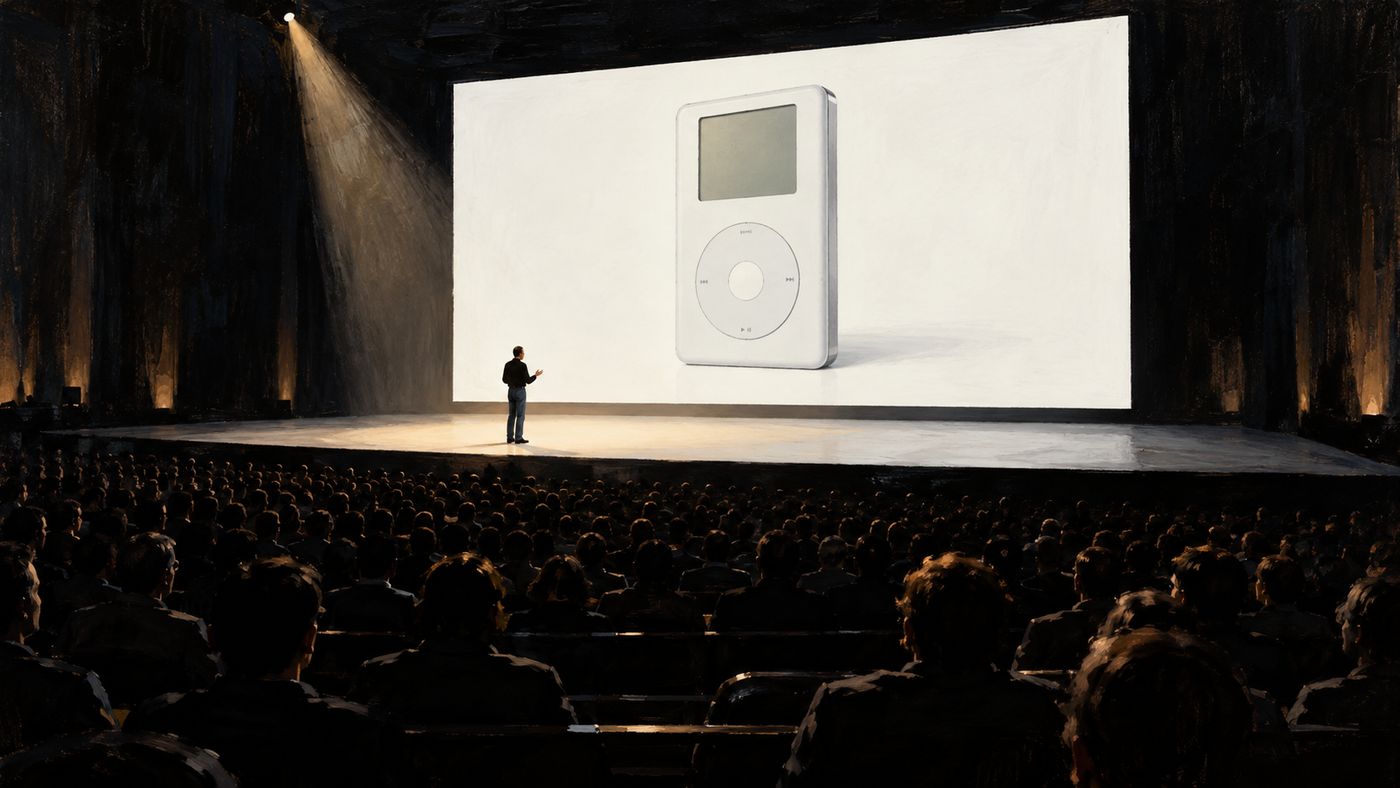
On October 23, 2001, Steve Jobs walked onto a stage at Apple's Cupertino headquarters, reached into the pocket of his jeans, and produced a small white rectangle. "This is iPod," he said. "It's a thousand songs in your pocket." The first-generation iPod held 5 gigabytes of music on a hard drive small enough to fit in a shirt pocket, navigated by a mechanical scroll wheel that was instantly intuitive to anyone who touched it, and connected to a Macintosh computer through Apple's iTunes software to synchronize a music library with a single click. Jobs described it as a major leap, and the technology press was skeptical — the MP3 player market already existed, and at $399 the iPod was significantly more expensive than its competitors. The skeptics misunderstood what Apple had built. The iPod was not a better MP3 player. It was a different experience of music entirely.
Within five years, the iPod had sold more than fifty million units and Apple had launched the iTunes Store, which would sell over a billion songs within three years of opening. The device fundamentally altered the music industry's business model — the album, which had been the unit of sale for half a century, gave way to the individual track as the primary way people bought and thought about music. It altered urban experience: the sight of white earbuds became a universal signal of personal soundtrack, a way of marking one's own territory in public space. And it laid the engineering, software, and retail groundwork for the iPhone, which arrived six years later and subsumed the iPod entirely. The device that Jobs pulled from his pocket on October 23, 2001 was not the end of something. It was the beginning of the world we now live in.
…Baby One More Time
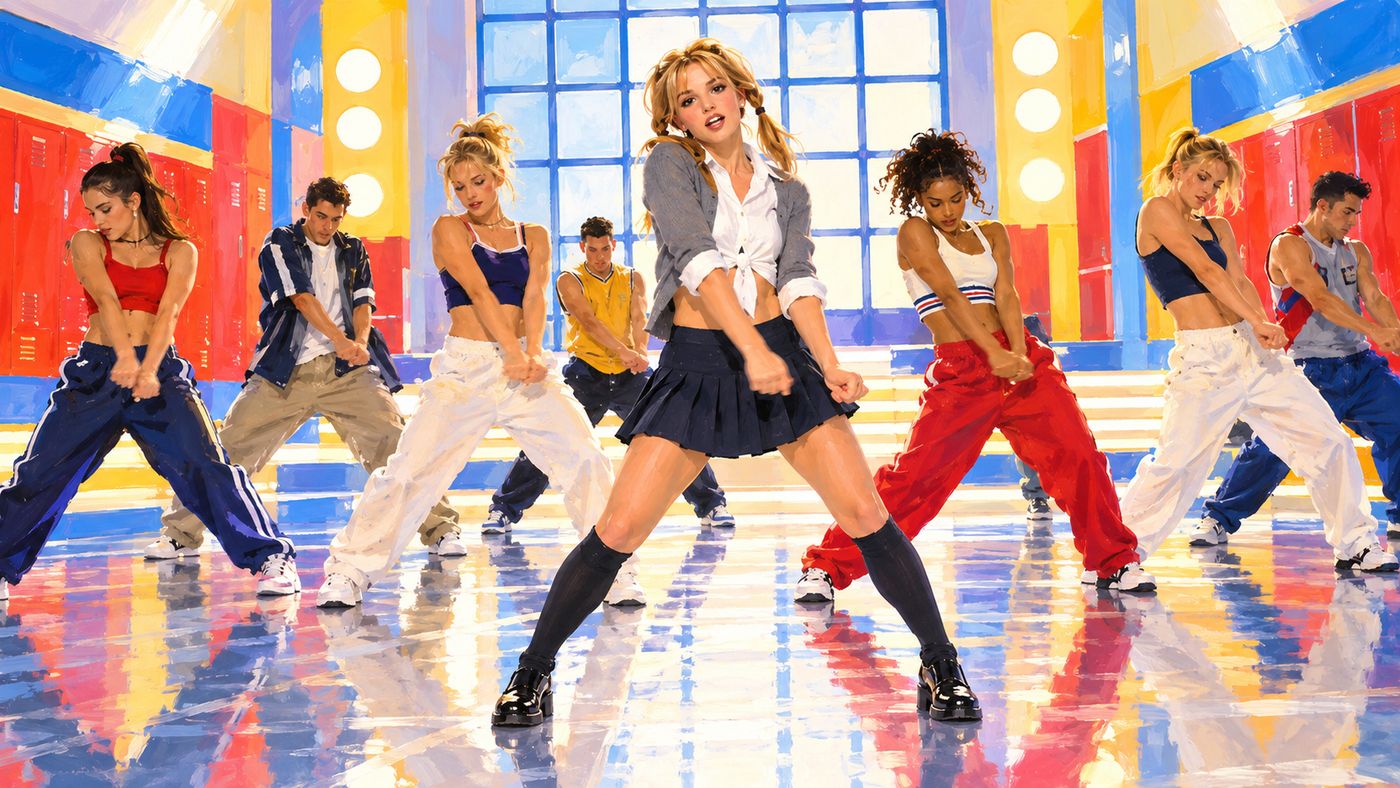
On October 23, 1998, Jive Records released "…Baby One More Time," the debut single from a sixteen-year-old singer from Kentwood, Louisiana named Britney Spears, and the late-1990s teen pop era announced itself with the force of something that had been waiting. The song — written by Swedish producer Max Martin, who would go on to become one of the most successful pop songwriters in history — opened with a piano figure so immediately recognizable that it has become one of the defining sonic signatures of its decade. Spears's vocal delivery, combining girlish vulnerability with an instinctive understanding of pop dynamics, connected with an audience of adolescent listeners who had not been served a voice quite like this before. The single went to number one in fourteen countries.
The music video that accompanied the single — Spears in a schoolgirl uniform, dancing through high school hallways — was rejected by the director initially assigned to it and conceived largely by Spears herself, who had insisted on something more youthful and energetic than the treatment she had been given. It became one of the most watched music videos of its era and established the visual template for the teen pop phenomenon that would dominate the charts for the following five years. Spears went on to sell more than 150 million records, win multiple Grammy Awards, and become one of the most recognizable entertainers in the world — a career whose later chapters, complicated by public scrutiny, mental health crises, and a legal conservatorship that lasted thirteen years, added dimensions to her story that "…Baby One More Time" could not have predicted. The voice on that single in October 1998 was only the beginning of a much longer, more complicated aria.
The Big-Eared Elephant
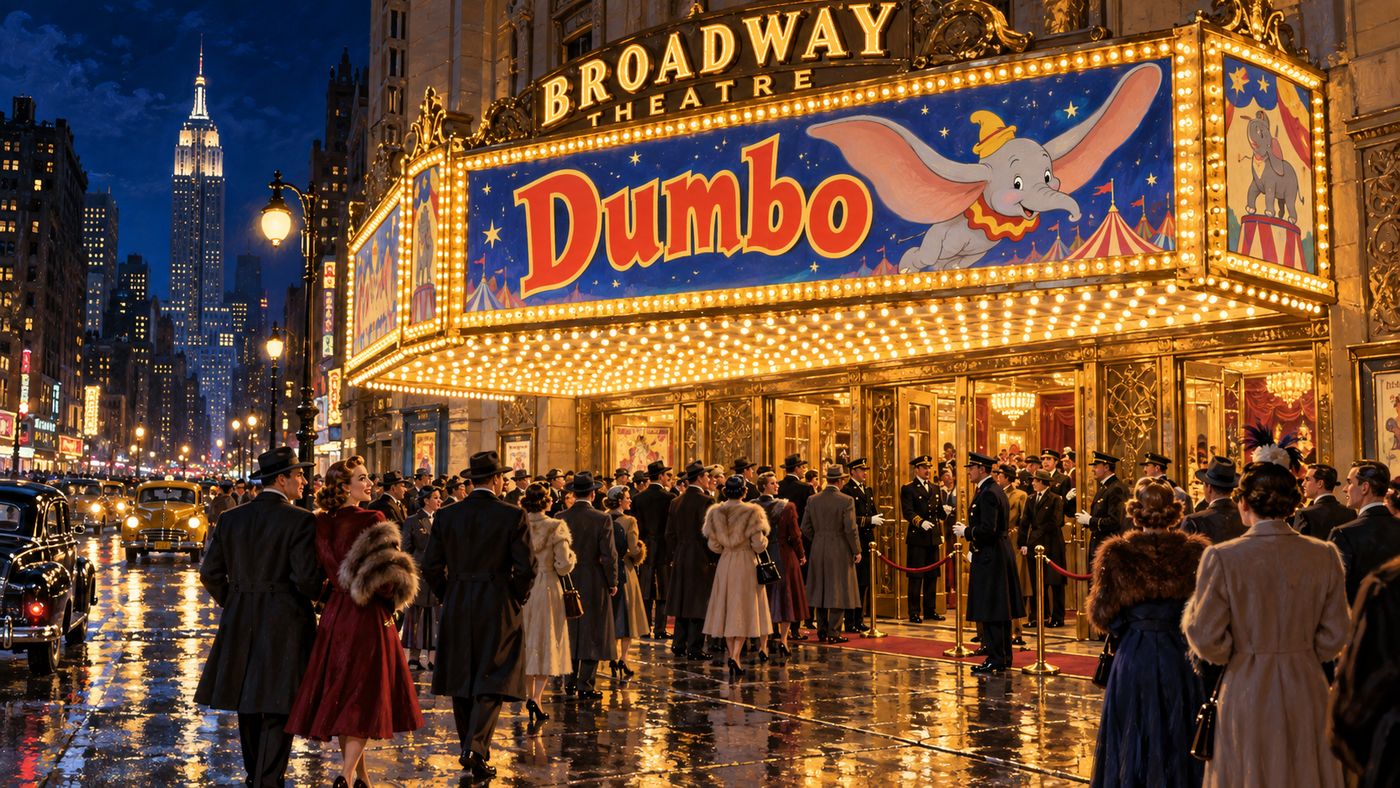
On October 23, 1941, Walt Disney Productions premiered Dumbo at the Broadway Theatre in New York City, introducing the world to a baby elephant whose oversized ears had made him the object of mockery and whose eventual discovery that they were not a deformity but a gift became one of the most economical and emotionally effective stories in the history of American animation. The film had been produced under financial duress — Disney was still recovering from the expensive failure of Fantasia and the labor strike that had fractured the studio — and its relative simplicity compared to earlier Disney features was as much a function of budget as artistic choice. Running sixty-four minutes and costing $812,000, it was the shortest and cheapest Disney feature film to that point. It was also one of the most successful, becoming the studio's highest-grossing film of 1941.
Dumbo has endured not because of its technical ambition — though its animation contains sequences of genuine brilliance, including the "Pink Elephants on Parade" hallucination that remains one of the more psychedelically inventive sequences in mainstream American animation — but because its emotional core is so precisely calibrated. A mother separated from her child. A child who is different and learns that different is not wrong. The moment when Dumbo spreads his ears and flies is not simply an exciting plot development; it is one of cinema's cleaner expressions of the idea that the thing that makes you strange might also be the thing that makes you extraordinary. The film has been making that argument, quietly and without apology, for more than eighty years.