October 19: Black Monday, Jane Eyre, and the Last Great Video Store
Some October 19ths arrive with the particular violence of things that cannot be undone. A market opens in New York and, before it closes, has lost more than a fifth of its value in a single afternoon — a number so large it strains comprehension, printed in headlines that morning papers will struggle to explain. A novel appears in London under a false name and gives Victorian readers a female character so direct, so demanding of her own dignity, that some of them will find it genuinely unsettling. And a video store opens in Dallas with eight thousand tapes in a bright organized space, launching a business model that will dominate American entertainment for two decades before disappearing so completely that its name has become shorthand for obsolescence. Three October 19ths. Three permanent changes.
Black Monday
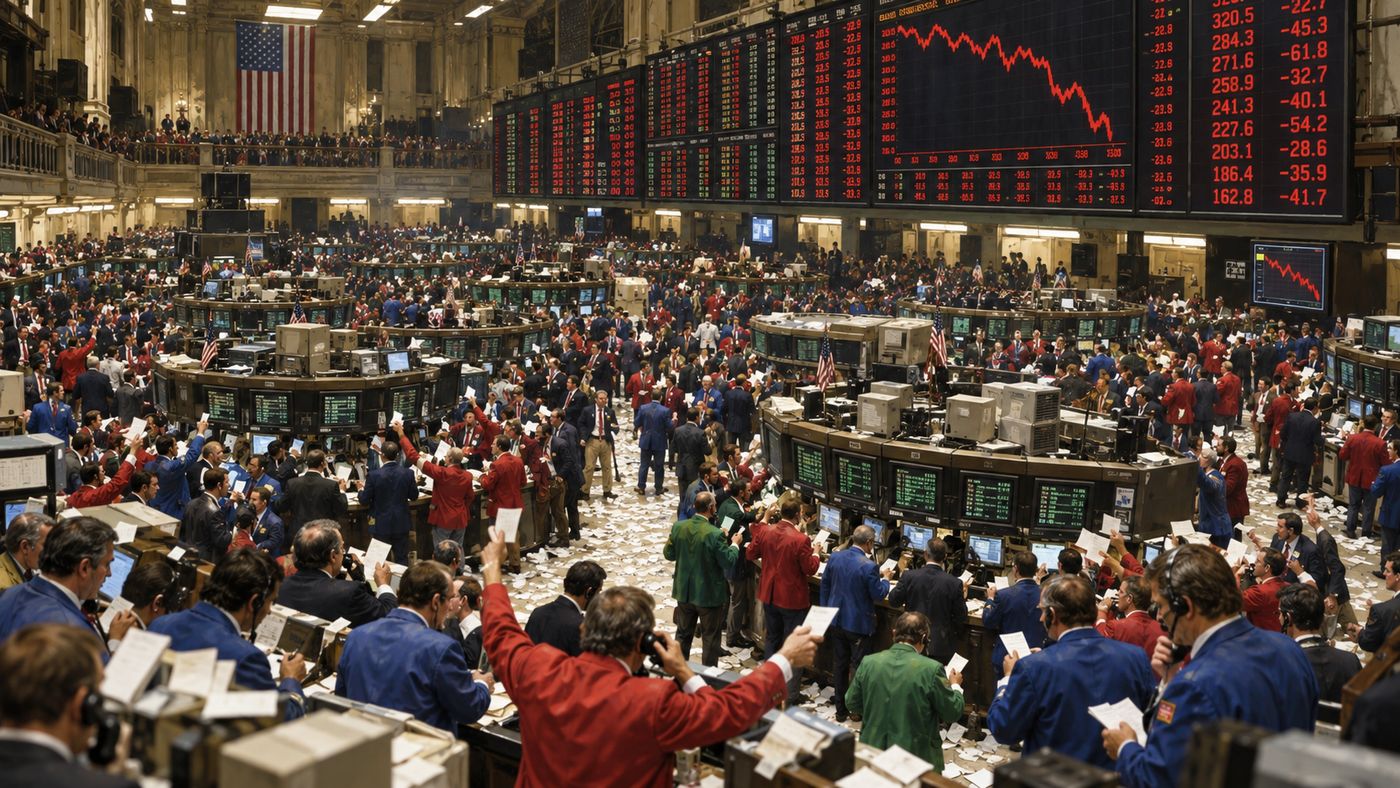
On October 19, 1987, the Dow Jones Industrial Average fell 508 points — a decline of 22.6 percent in a single trading session, the largest single-day percentage drop in the history of the American stock market. The crash did not begin in New York. It had started in Hong Kong the previous week, spread through Asian markets, crossed to London, and arrived on Wall Street already gathering momentum when the opening bell rang. What followed was a cascade of selling that the market's circuit breakers — mechanisms designed to slow or halt trading during extreme volatility — were not yet built to handle. Roughly $500 billion in market value evaporated in hours. Traders on the floor described scenes of controlled panic. The Federal Reserve, under newly appointed chairman Alan Greenspan, moved immediately to signal that liquidity would be provided to the banking system — a response that many economists credit with preventing a broader financial collapse.
The causes of Black Monday have been debated by economists and financial historians for nearly four decades without producing a definitive consensus. Portfolio insurance strategies, which used computer-driven selling to limit losses but accelerated the decline, played a role. Overvaluation of equities following five years of extraordinary bull market gains played a role. The global interconnectedness of financial markets — still relatively new in 1987 — meant that instability in one market transmitted instantly to others in ways that regulators had not anticipated. The market recovered within two years, and Black Monday did not produce the extended depression that some feared in its immediate aftermath. What it did produce was a permanent change in how markets understood their own fragility, a new vocabulary of systemic risk, and the circuit breakers and regulatory mechanisms that now govern trading in moments of extreme stress.
Currer Bell
On October 19, 1847, the London publisher Smith, Elder & Co. released Jane Eyre: An Autobiography, attributed to a writer named Currer Bell — a pseudonym adopted by Charlotte Brontë and her sisters to avoid the dismissal that Victorian critics routinely applied to fiction written by women. The novel had been written in a remarkably short time, completed after Brontë's previous manuscript had been rejected, and it arrived in the world with the force of something that had been waiting too long. Its narrator — Jane, an orphan of no wealth or conventional beauty, employed as a governess — spoke directly, honestly, and without the apologetic softening that female literary voices of the period were expected to perform. She wanted things. She said so. She refused to be less than what she was in order to make others more comfortable. Victorian readers did not know quite what to make of her.
The novel was an immediate sensation — praised by some, condemned by others, suspected by several critics of having been written by a man on the grounds that no woman could have produced something so morally confident. Thackeray, to whom Brontë dedicated the second edition in an act of literary admiration that caused some awkward misunderstanding, called it the best novel of the season. Charlotte Brontë's authorship was revealed within a year. Jane Eyre has been in continuous print ever since, translated into dozens of languages, adapted for stage, film, and television more than any other Victorian novel. The argument it makes — that a plain woman without money or connections has the same claim to dignity, love, and self-determination as anyone else — has never stopped being relevant, which is why the novel has never stopped being read.

Be Kind, Rewind
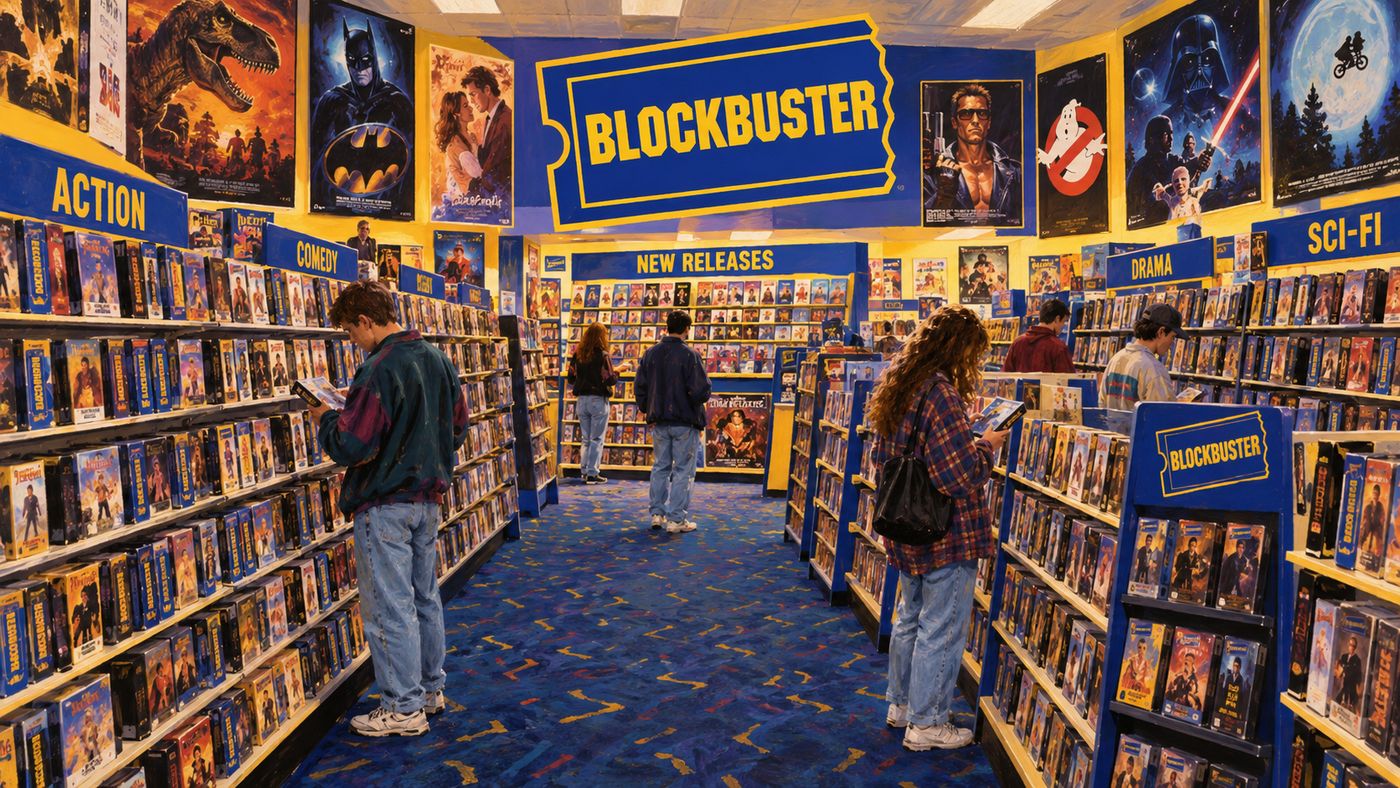
On October 19, 1985 — two years before Black Monday would rattle the financial system that funded it — the first Blockbuster Video store opened on Skillman Avenue in Dallas, Texas, and the Friday night ritual of the American family was permanently altered. The store offered over 8,000 VHS titles in a clean, well-lit environment with organized shelving, knowledgeable staff, and a selection that dwarfed anything available at the mom-and-pop video shops that had previously dominated the market. Founder David Cook, who had made his money in software systems for the oil industry, applied the same database logic to video rental — sophisticated inventory management, membership systems, and real-time tracking of titles that let the store function with the efficiency of a retail operation rather than a weekend hobby. Blockbuster was not the first video rental store. It was the first one that felt inevitable.
At its peak in the early 2000s, Blockbuster operated more than 9,000 stores, employed 60,000 people, and generated nearly $6 billion in annual revenue — a significant portion of it from late fees, which customers resented deeply and which a Netflix co-founder named Reed Hastings later cited as the inspiration for starting a competing service after being charged $40 for an overdue copy of Apollo 13. Whether that story is entirely true or somewhat embellished, the late fees were real, the resentment was real, and by 2010 Blockbuster had filed for bankruptcy. The last remaining corporate-owned Blockbuster closed in 2019. A single franchise location in Bend, Oregon, remains open, operating as both a functional video store and a monument to a business model that once seemed as permanent as the Friday evening it defined.