October 18: The Wizard Dies, Seward's Folly Pays Off, Roseanne Arrives
History has a habit of vindicating the people and decisions it mocked. A secretary of state paid $7.2 million for what his critics called a frozen wasteland, and the purchase turned out to contain more oil, natural resources, and strategic value than anyone standing on the dock at Sitka in 1867 could have imagined. An inventor accumulated 1,093 patents across eighty-four years of relentless work, and when he died the world dimmed its lights in tribute to the man who had taught it how to turn them on. And a comedian from Colorado stepped in front of a camera and showed American television what a working-class family actually looked like — not the sanitized version, but the real one, with money problems and sharp words and love that didn't always arrive on cue. October 18 belongs to all three.
Menlo Park
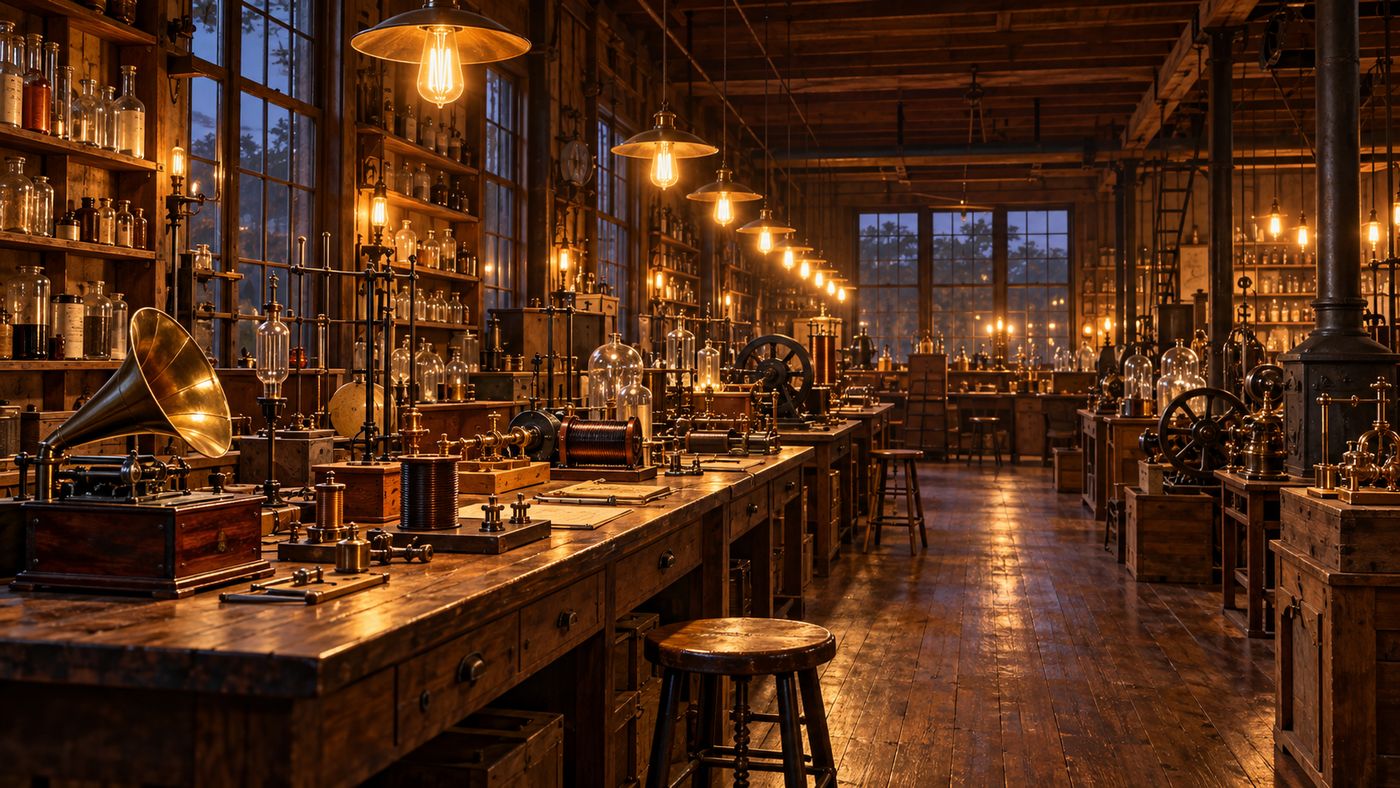
On October 18, 1931, Thomas Alva Edison died at his home in West Orange, New Jersey, at the age of eighty-four. He left behind 1,093 patents — a record that stood for decades — and a civilization so thoroughly transformed by his work that it was difficult, by the time of his death, to imagine the world that had existed before him. Edison had not simply invented things; he had invented the system for inventing things, establishing in his Menlo Park laboratory in 1876 what was essentially the world's first industrial research and development facility — a place where invention was organized, staffed, and funded as a professional enterprise rather than left to the solitary genius working alone. The phonograph, the motion picture camera, the carbon microphone, and the practical incandescent light bulb all emerged from that system, along with the electrical distribution infrastructure — generators, transmission lines, metering systems — that made the light bulb useful to anyone beyond Edison's laboratory.
President Herbert Hoover, in tribute, asked Americans to dim their electric lights at 10 p.m. on the night of Edison's funeral — a gesture whose poetry was not lost on a nation that understood, in a way earlier generations could not have, what it meant to turn off the light. Edison's legacy is not without complexity: his bitter "War of Currents" against Nikola Tesla and George Westinghouse, in which he campaigned against alternating current with methods that included publicly electrocuting animals, is a chapter in his biography that time has not treated kindly. But the scope of what he built, the deliberateness with which he built it, and the degree to which the modern world runs on infrastructure he either invented or made possible — all of it justifies the grief of October 18, 1931, and the lights that dimmed in his honor.
Seward's Folly
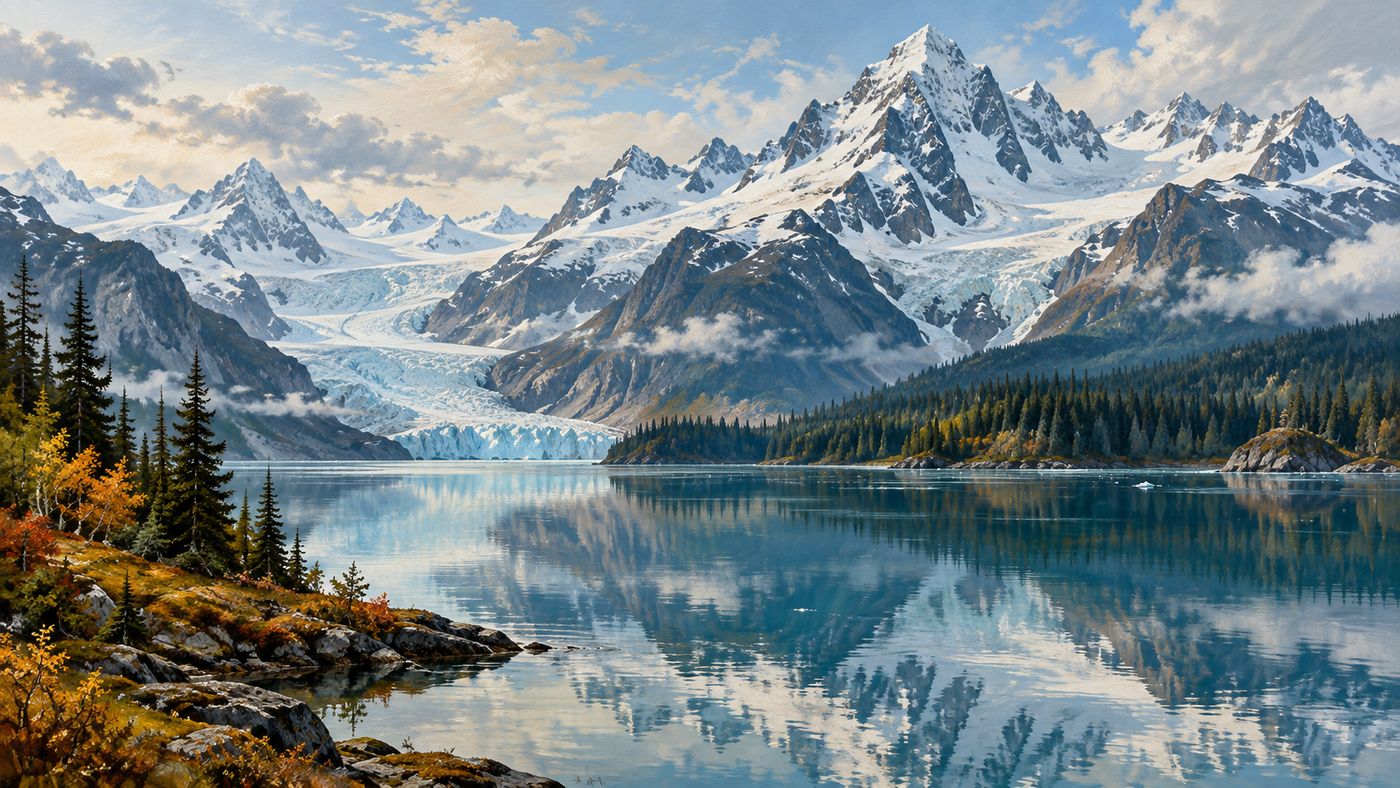
On October 18, 1867, in a ceremony at Sitka, the Russian flag was lowered over the territory of Alaska and the American flag raised in its place, completing a transfer of approximately 586,000 square miles of North American wilderness for $7.2 million — roughly two cents per acre. The purchase had been negotiated by Secretary of State William Seward with remarkable speed: Russia, anxious to divest itself of a territory it found difficult to defend and supply, had approached the United States in March 1867, and the treaty was signed by April. Congress, less enthusiastic, had to be persuaded to appropriate the funds. Critics were not kind. The press dubbed the acquisition "Seward's Folly," "Seward's Icebox," and "Walrussia." The New York Tribune dismissed it as a barren, worthless land of ice and snow that no sensible nation would want.
The territory that Seward's critics called a wasteland turned out to contain gold — discovered in the Klondike in 1896, drawing a stampede of prospectors that transformed the region. It contained copper, coal, and timber in quantities that generated enormous wealth across the following century. And beneath its coastal waters and North Slope tundra, it contained oil — the Prudhoe Bay discovery in 1968 proved to be the largest oil field ever found in North America, producing billions of barrels and generating revenues that still fund the Alaska Permanent Fund, which distributes annual dividends to every Alaskan resident. The strategic value of Alaska — its position commanding the North Pacific, the Bering Strait, and the Arctic — proved similarly prescient, particularly in the Cold War decades that followed World War II. Seward's Folly has been, by any reasonable accounting, one of the greatest real estate transactions in the history of human civilization.
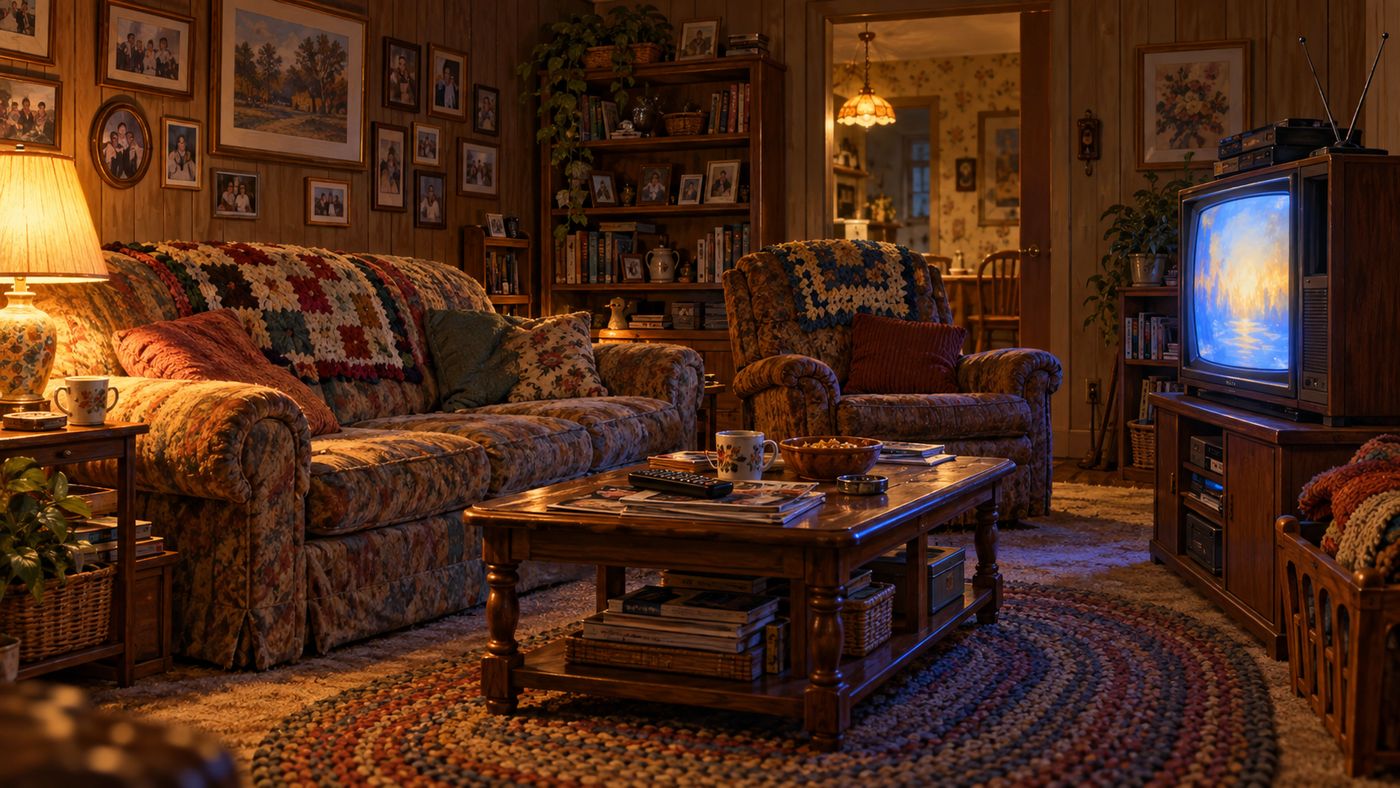
The Conner House
On October 18, 1988, ABC premiered Roseanne, and American prime-time television encountered something it had been carefully avoiding for decades: a working-class family that looked and sounded like one. The show starred Roseanne Barr as Roseanne Conner, a large woman with an acid tongue and an exhausted patience, raising three children in Lanford, Illinois with her husband Dan, played by John Goodman, on the combined income of blue-collar jobs that were never quite enough. The Conners argued about money in a way that television families didn't argue about money — specifically, concretely, with the particular anxiety of people who knew to the dollar how far behind they were. They argued about everything else the same way. The comedy came from recognition rather than from absurdity: this was not a family whose problems dissolved by the end of the episode.
Roseanne ran for nine seasons, finishing its original run as one of the highest-rated shows on American television, and its influence on the sitcoms that followed it — on every show that subsequently attempted to portray working-class or economically stressed American families with honesty rather than aspiration — is difficult to overstate. Barr's performance established a template for the working-class female lead that television has been drawing on ever since: funny, fierce, loving in ways that don't look like the television version of love, and possessed of a directness that the medium had traditionally reserved for men. The show was revived in 2018, canceled after Barr made a racist tweet, and continued without her as The Conners. The family she created has outlasted the circumstances of its creation — which is, in its way, very much in keeping with what the Conners were always about.