October 15: The Panthers, Lucy, and the Other Half of Microsoft
The most consequential acts of creation are rarely recognized as such in the moment. Two college students in Oakland writing a ten-point platform in a poverty law office were not yet famous. A comedian and her bandleader husband stepping in front of a CBS camera for the first time were not yet legends. A teenager in Albuquerque pitching a software company to a computer magazine had not yet changed the world. October 15 belongs to all of them — to the founders, the builders, the people who looked at what existed and decided it wasn't enough. What they built outlasted every prediction, every dismissal, and in some cases every intention they began with.
Oakland, 1966
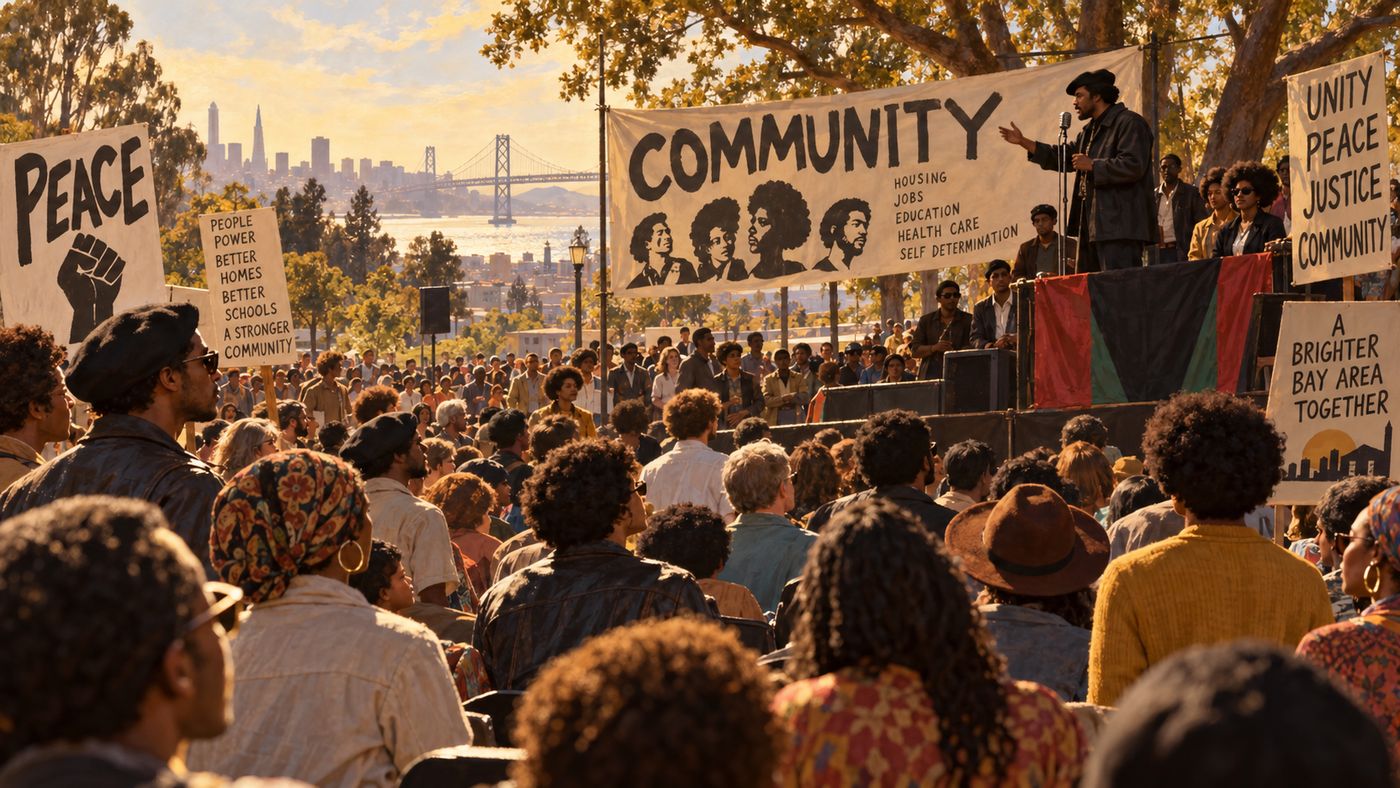
On October 15, 1966, Huey P. Newton and Bobby Seale sat down in a poverty law office at the North Oakland Neighborhood Anti-Poverty Center and drafted the ten-point platform of the Black Panther Party for Self-Defense. The document they produced that afternoon was direct and unsparing: it demanded full employment, decent housing, an end to police brutality, the release of Black prisoners from jails and prisons, and the right of Black Americans to determine their own destiny. The party they founded in the weeks that followed was equally direct — its members patrolled Oakland's streets with legally owned firearms and law books, monitoring police interactions with Black residents and asserting a community's right to protect itself. The sight of armed Black men in black berets and leather jackets, exercising a constitutional right that American society had implicitly reserved for others, was a provocation the establishment found intolerable.
The Black Panther Party became, in the years that followed, one of the most surveilled, infiltrated, and suppressed organizations in American history. The FBI's COINTELPRO program targeted the Panthers specifically and systematically — spreading disinformation, manufacturing conflicts between the Panthers and other organizations, and contributing to the deaths of party members. At its peak in 1969, the party had chapters in sixty-eight cities and more than ten thousand members. It also ran free breakfast programs for children, health clinics, and schools — social programs that the party regarded as central to its mission and that the FBI regarded as dangerous. The Panthers' legacy is still contested, still debated, and still present in the organizing traditions, the demands, and the unfinished business of American racial justice movements five decades later.
Lucy
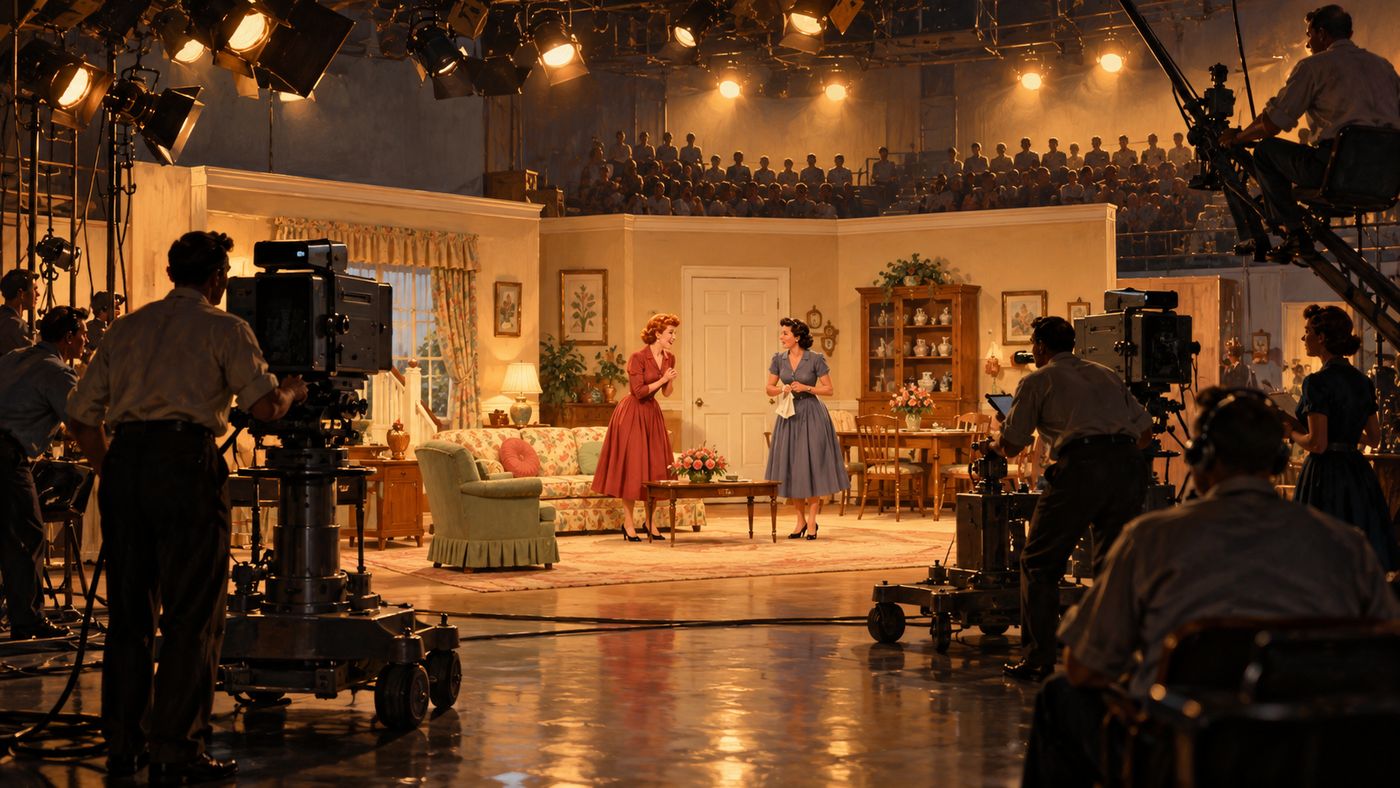
On October 15, 1951, CBS aired the first episode of I Love Lucy, and American television comedy found its footing. The premiere episode — "The Girls Want to Go to a Nightclub" — introduced Lucy and Ricky Ricardo and their neighbors Ethel and Fred Mertz in a domestic dispute that escalated, as Lucy Ricardo's schemes invariably did, far beyond anything its participants had planned. Lucille Ball had come to the show after a successful radio career and a moderately successful film career, and she had negotiated the unusual right to film the series in Hollywood rather than New York and to include her real-life husband Desi Arnaz as her co-star — a demand CBS initially resisted, unconvinced that American audiences would accept an interracial couple. Ball and Arnaz agreed to take a pay cut to retain creative control. The gamble made them among the wealthiest people in Hollywood within five years.
I Love Lucy ran for six seasons and 180 episodes, and it never finished lower than third in the Nielsen ratings — spending four seasons at number one. Ball's physical comedy was unlike anything television had produced: she had an extraordinary ability to commit completely to a bit, to sustain a joke past the point where most performers would have pulled back, and to make humiliation both hilarious and somehow dignified. The episode in which she works on a chocolate factory assembly line, the one in which she attempts to promote Vitameatavegamin, the one in which she stomps grapes in a Tuscan vineyard — these sequences are among the most recognizable in the history of American television. Ball and Arnaz's production company, Desilu, went on to produce Star Trek and Mission: Impossible. The show that premiered on October 15, 1951 built an empire that the entertainment industry is still living in.
The Quiet Co-Founder
On October 15, 2018, Paul Allen died in Seattle at the age of sixty-five, from complications related to non-Hodgkin's lymphoma. Allen had co-founded Microsoft with Bill Gates in 1975 — the two had been childhood friends at Lakeside School in Seattle — and it was Allen who spotted the opportunity that became Microsoft's origin story: a 1974 issue of Popular Electronics featuring the Altair 8800 microcomputer kit, which Allen brought to Gates with the conviction that personal computing was about to change everything. The BASIC interpreter they wrote for the Altair, delivered in a legendarily improvised final form, launched the company. Allen left Microsoft in 1983 after a Hodgkin's lymphoma diagnosis, by which point the company had already established the trajectory that would make it the most valuable software company in the world. He owned approximately fifteen percent of it when he left.
What Allen did with the fortune Microsoft produced was, by any measure, extraordinary. He funded the search for extraterrestrial intelligence, bankrolled the private spacecraft that became the first to reach space twice in a two-week period, and committed more than two billion dollars to brain science research through the Allen Institute for Brain Science. He bought the Seattle Seahawks and the Portland Trail Blazers, preserved the history of rock and roll through the Museum of Pop Culture in Seattle, and recovered historic aircraft, ships, and artifacts with the zeal of someone who understood that the past disappears if no one fights to keep it. He was, in the history of Microsoft, the less famous partner. In the history of what a technology fortune can be used to build, he may have been the more interesting one.