October 12: Two Worlds Meet, a Giant Falls, a Festival Is Born
Some October 12ths arrive quietly. Others reorder the world. The date has held, across five centuries and three wildly different settings, a recurring pattern: a meeting between something that existed and something that was coming, and the irreversible transformation that followed. A sailor stepped onto a beach in the Bahamas and set in motion consequences neither he nor anyone alive could have imagined. A basketball player whose gifts exceeded the sport's ability to contain him died and left behind records that still stand as monuments to what one body could do. And in a field outside Munich, a horse race held to celebrate a royal wedding planted a seed that would grow into the largest folk festival in human history. Three encounters. Three October 12ths. Three things that became much larger than their beginnings.
Landfall
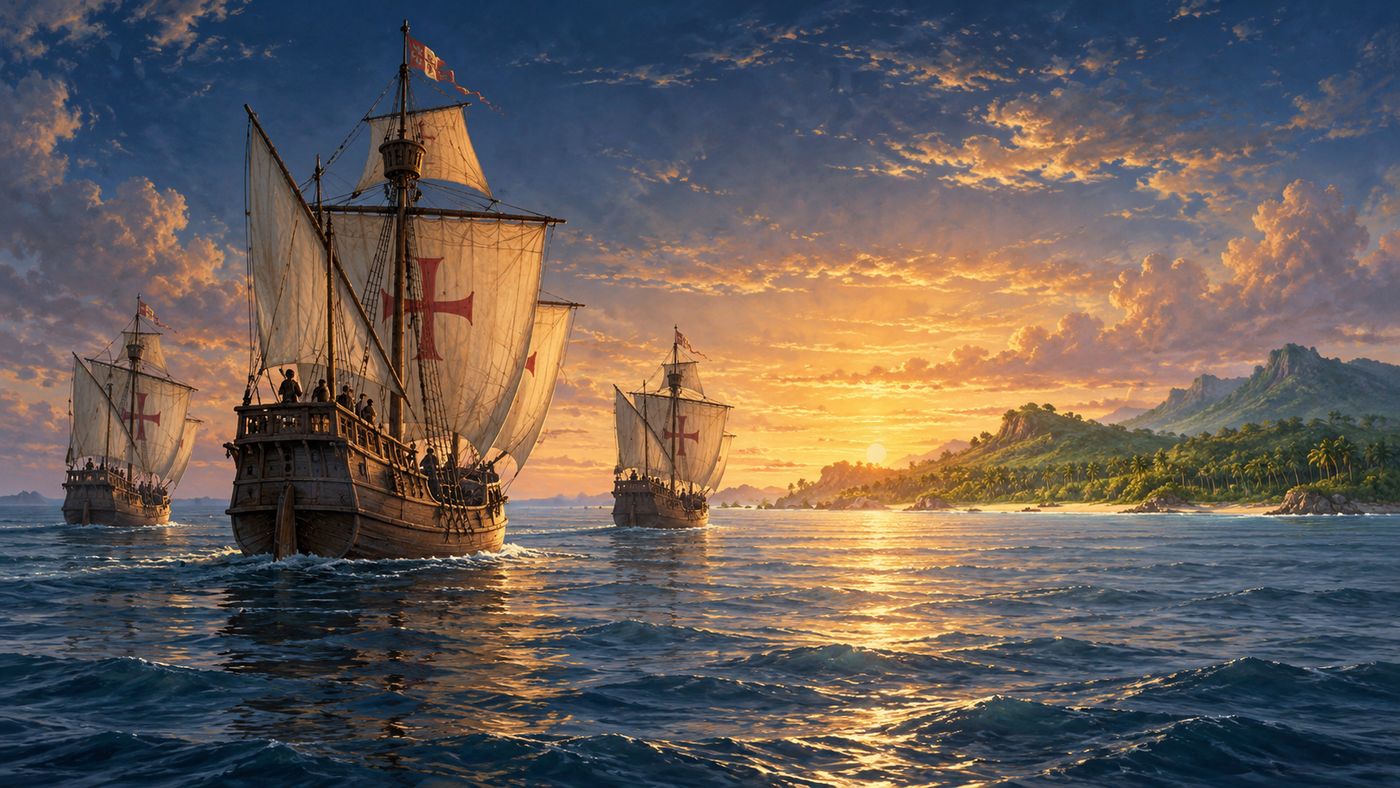
On October 12, 1492, after thirty-six days at sea from the Canary Islands, Christopher Columbus made landfall on an island he named San Salvador — almost certainly the island the Taíno people called Guanahani, in what is now the Bahamas. Columbus had sailed west from Spain under the Spanish Crown's commission, convinced that a relatively short ocean crossing would bring him to Asia. What he found instead was a world that European cartographers had not imagined, inhabited by peoples who had developed sophisticated civilizations across two vast continents entirely unknown to the Old World. The Taíno who greeted Columbus on that October morning were, by his own account, peaceful and generous. He noted in his journal that they would make good servants. The encounter that followed was the beginning of everything.
The consequences of Columbus's landfall are among the most debated and consequential in human history. The sustained contact between Europe and the Americas that followed brought exchange in both directions — crops, animals, technologies, and ideas that transformed both hemispheres. It also brought catastrophe to the indigenous peoples of the Americas on a scale that has no parallel: disease, displacement, enslavement, and the systematic destruction of cultures and civilizations that had flourished for millennia. Columbus himself never understood what he had found. He died in 1506 still believing he had reached Asia. The holiday that bears his name in the United States has become, in recent decades, a site of ongoing reckoning — an acknowledgment that the story of October 12, 1492 cannot be told honestly from only one shore.
The Big Dipper
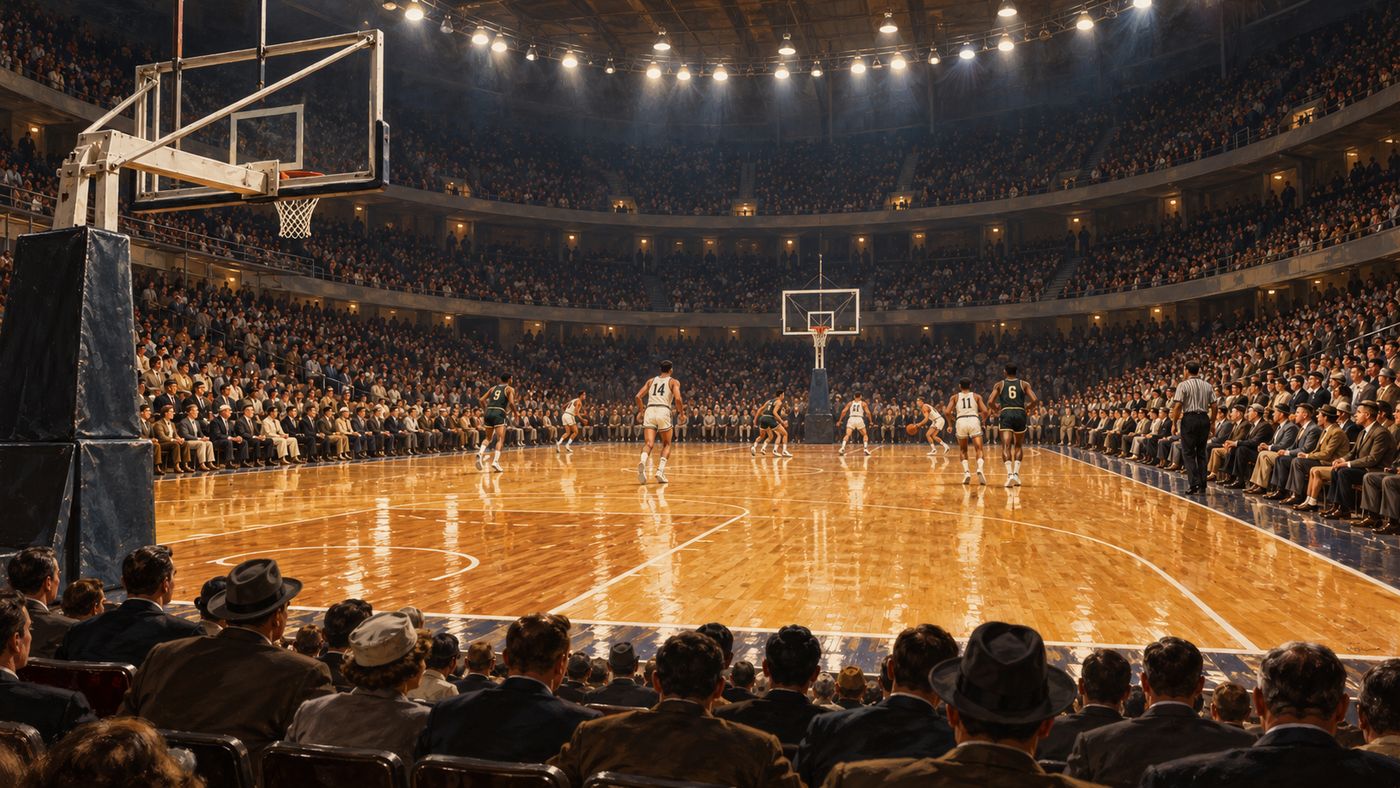
On October 12, 1999, Wilt Chamberlain died of heart failure at his home in Bel Air, California, at the age of sixty-three. He had played fourteen seasons in the NBA — for the Philadelphia/San Francisco Warriors, the Philadelphia 76ers, and the Los Angeles Lakers — and in that time had accumulated a statistical record so extraordinary that several of his marks remain untouched more than six decades after he set them. He led the league in scoring seven consecutive seasons. He led the league in rebounding eleven times. He never fouled out of a game. And on March 2, 1962, in a game in Hershey, Pennsylvania, he scored 100 points in a single night — a number so far beyond what the sport had produced before or has produced since that it exists in basketball consciousness less as a record than as a fixed point of reference, the way certain mountains exist in geography.
Chamberlain's relationship with his sport was complicated in ways that his statistics alone don't capture. He was, at seven feet one inch and somewhere north of 275 pounds, a physical presence the game had never encountered, and the NBA repeatedly changed its rules in response to what he could do — widening the lane, adjusting the free throw rules, altering offensive goaltending regulations. He was criticized throughout his career for not winning enough championships relative to his individual dominance, a charge he shared with teammate peers and rivals in ways that reflected the game's team structure more than his individual will. He won two titles. He was selected to thirteen All-Star teams. He averaged 30.1 points and 22.9 rebounds per game across his career — numbers that read, half a century later, less like a box score than like a different sport entirely.
Theresienwiese
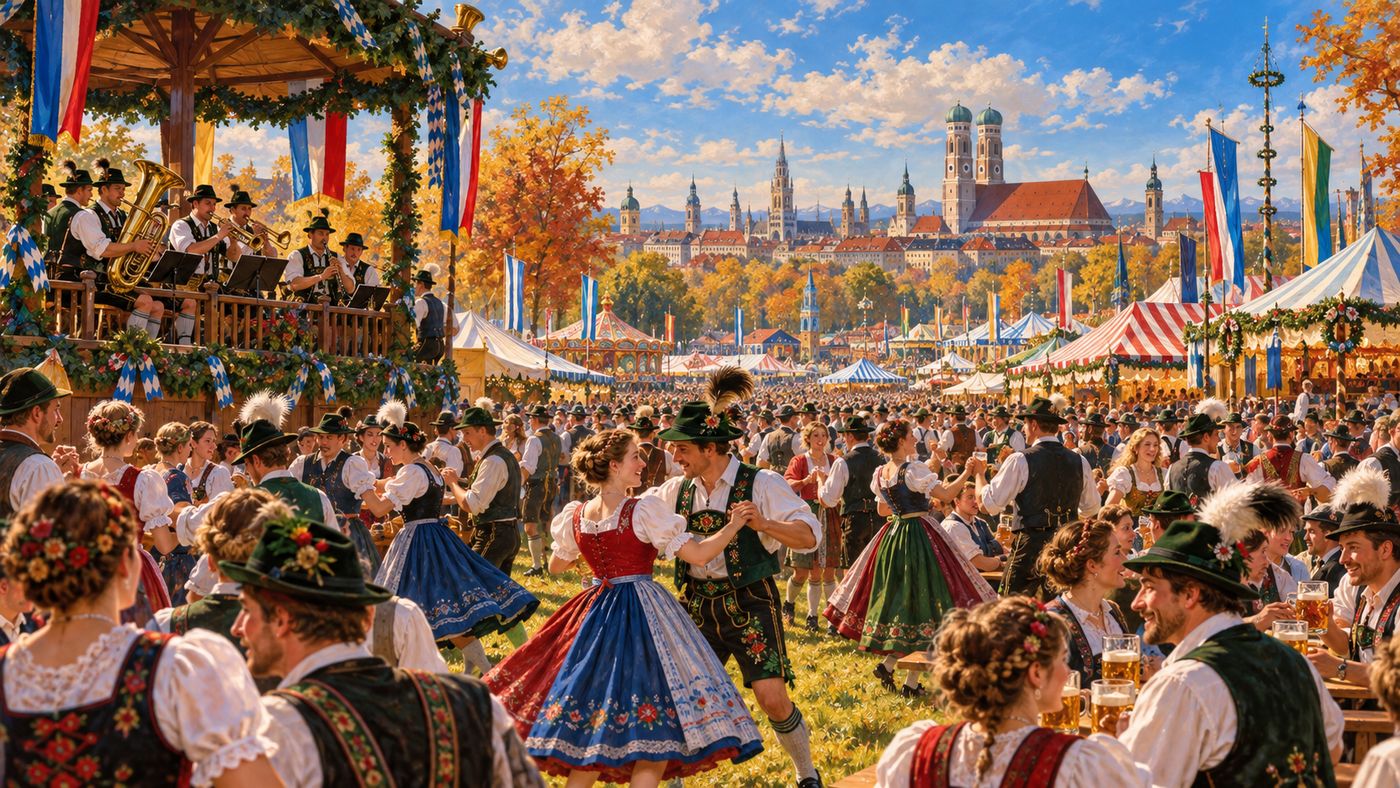
On October 12, 1810, the citizens of Munich gathered on a meadow outside the city gates to watch a horse race organized in celebration of the marriage of Crown Prince Ludwig of Bavaria to Princess Therese von Sachsen-Hildburghausen. The race was the centerpiece of a festival that drew thousands of spectators for days of food, music, and communal celebration. The meadow was subsequently named Theresienwiese — Therese's meadow — in honor of the bride, and the following year the Bavarian Agricultural Association proposed repeating the festival, adding livestock exhibitions to the horse racing. The horse racing eventually disappeared. The beer stayed. What began as a royal wedding celebration had, within a generation, become something far larger than any occasion that could have created it.
Oktoberfest today is the largest folk festival in the world, drawing roughly six million visitors to Munich each year across sixteen to eighteen days in late September and early October. The event that Princess Therese's wedding set in motion has become a global cultural export — celebrated in cities from Cincinnati to São Paulo to Tokyo with varying degrees of Bavarian authenticity and universal enthusiasm. The tents that line the Theresienwiese each autumn hold tens of thousands of people at a time, served by a hospitality infrastructure whose scale would have been unimaginable to the citizens who gathered on that same ground in 1810. The horse race is long forgotten. The meadow named for the bride endures, and every October it fills again with exactly the kind of communal joy that a royal wedding, two centuries ago, briefly and accidentally invented.