Recent Content

Dec. 23, 2003: First U.S. Mad Cow Case Found

Dec. 23, 2003: First U.S. Mad Cow Case Found

Read more
December 23: St. Nick Poem Debuts, We Bought a Zoo Opens

December 23: St. Nick Poem Debuts, We Bought a Zoo Opens

Read more
Dec. 22, 2010: The Don't Ask, Don't Tell Repeal

Dec. 22, 2010: The Don't Ask, Don't Tell Repeal

Read more
December 22: Cast Away Opens, Christmas Lights Glow

December 22: Cast Away Opens, Christmas Lights Glow

Read more
Dec. 21, 2008: Bucks Fire Back at Owens Dream

Dec. 21, 2008: Bucks Fire Back at Owens Dream

Read more
logo
  • Introduction

  • Lessons From The Past

  • Cultural Awareness and Diversity

  • Appreciation for Progress

  • Understanding Political and Social Dynamics

  • Preserving Cultural Heritage

  • Conclusion

EntertainmentHistory

On October 21, 2015, Fans Worldwide Celebrated the Real 'Back to the Future' Day

The date Marty McFly time-traveled to in 1989's sci-fi sequel finally arrived, and pop culture couldn't resist marking the occasion.

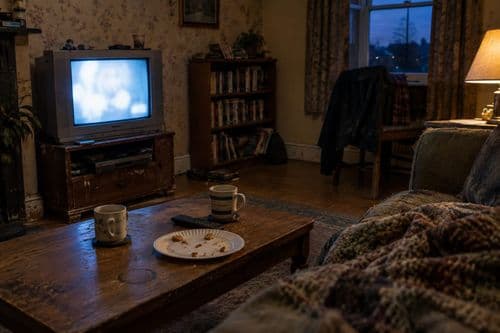
For twenty-six years, one specific date lived rent-free in the imaginations of movie fans everywhere: October 21, 2015, the moment Marty McFly and Doc Brown touched down in their flying DeLorean in 'Back to the Future Part II.' When the calendar finally caught up to fiction, the anticipation exploded into a genuine cultural event, with brands, cities, and studios racing to make hoverboards, self-lacing shoes, and flying cars feel just a little more real.

The Future Arrives

Universal Pictures leaned hard into the milestone, releasing a promotional trailer starring Christopher Lloyd reprising his role as Doc Brown, breaking the fourth wall to address the audience directly about the film's predictions. Michael J. Fox made public appearances tied to the day, and Nike unveiled a limited pair of self-lacing Air Mag sneakers inspired by Marty's futuristic footwear, auctioning them off for Fox's Parkinson's research foundation. Toyota rolled out a hoverboard-style prototype for a promotional stunt, while pizza chains and tech companies scrambled to reference the film's whimsical predictions, some accurate, most gloriously not. The internet, still a relatively young stage for viral moments, treated the date like a secular holiday, proving that a joke embedded in a 1989 script could still command global attention decades later.

Beneath the marketing blitz was a sincere nostalgia: the film's 2015 vision, equal parts prophetic and absurd, included fax machines everywhere and flying cars nowhere, a mismatch that became part of the day's charm. News outlets ran side-by-side comparisons of the movie's predictions against reality, noting hits like tablet computing and video calls alongside misses like flying DeLoreans and dehydrated pizza. Robert Zemeckis, the film's director, had once insisted he never wanted a third installment revisiting the story, yet the day made clear that no sequel was necessary, the audience had been quietly counting down for over two decades already. The film's throwaway gag had become one of the most affectionately anticipated dates in movie history, precisely because nobody involved in writing it ever expected anyone to actually get there.

[#~image_alt_1~#]

More History

18 December 2026

Post

Dec. 18, 2009: Avatar Opens Worldwide

Dec. 18, 2009: James Cameron's Avatar Opens in Theaters and Sets Off a Box Office Run Hollywood Is Still Chasing A $237 million gamble on blue aliens and 3D glasses opened on a Friday in December and went on to become the highest-grossing film in history. On Dec. 18, 2009, Avatar arrived in U.S. theaters from 20th Century Fox, twelve years after director James Cameron's Titanic had won the Oscar for Best Picture and become the biggest film ever made. Cameron's follow-up was an original sci-fi story on a distant moon, built around new motion-capture and 3D technology, with no famous franchise behind it and a reported budget of about $237 million. The Gamble Pays   Early expectations were cautious. Industry commentators noted the film's length, its cost, and its lack of a recognizable star or source material, and some wondered whether it could recoup its investment. Opening weekend in the United States brought in roughly $77 million, a strong start but not a record-breaking one. The surprise came afterward. Instead of the steep second-weekend drop typical of big releases, Avatar held on, week after week, through the holiday season and into the new year. Premium 3D and IMAX screens, which carried higher ticket prices, helped drive the totals, and audiences kept coming back for the spectacle. The film passed the billion-dollar mark in a matter of weeks, a pace few films had matched. It seemed that the movie everyone had doubted had turned its biggest risk, an unfamiliar world, into its biggest selling point. By January 2010, Avatar had overtaken Titanic to become the highest-grossing film ever, surpassing Cameron's own record and eventually earning more than $2.7 billion worldwide. It also earned nine Oscar nominations, including Best Picture, and won three, for cinematography, art direction and visual effects. Its success accelerated the rush to convert theaters to digital 3D projection, and studios scrambled to release their own 3D titles. Many of those efforts faded as audiences tired of the format. Cameron, though, stayed with the Pandora story, and the sequels followed years later. A film that opened to nervous predictions had ended up setting the standard that its imitators could not quite reach.  

15 December 2026

Post

Dec. 15, 2017: The Last Jedi Opens in Theaters

On Dec. 15, 2017, Star Wars: The Last Jedi Opened Nationwide and Split a Galaxy of Fans Rian Johnson's eighth-episode gamble earned a huge opening weekend, Carrie Fisher's final screen turn, and an argument that never really ended. Two years after The Force Awakens revived the franchise, Star Wars returned to American theaters on Dec. 15, 2017, with Star Wars: The Last Jedi. Writer-director Rian Johnson had inherited the story's biggest open questions, and audiences arrived ready to see how he answered them. What they got was a film that critics largely embraced, that fans fiercely debated, and that moviegoers bought tickets for in enormous numbers anyway. The Last Jedi   The Last Jedi picked up directly after The Force Awakens, with Daisy Ridley's Rey seeking training from a reclusive Luke Skywalker, played by Mark Hamill, while the Resistance fled a relentless First Order. Johnson, who also wrote the screenplay, used the premise to test long-held assumptions about heroes, legends and the Jedi themselves. The film also carried real weight off-screen: it was the last performance by Carrie Fisher as General Leia Organa to be released in her lifetime, after her death in December 2016. Theaters opened their doors to previews on the evening of Dec. 14, and by the weekend Disney and Lucasfilm had what the industry had expected: a juggernaut. Opening-weekend ticket sales in North America came to roughly $220 million, the second-largest domestic debut in history at that point, behind only The Force Awakens. A film built around the idea of letting the past die had just proved how much the past could sell. Reviews were strong, and the film drew some of the best notices of the modern Star Wars era. Yet the response from fans was far less uniform, and online arguments over Luke's characterization and the film's bolder narrative choices began almost immediately. Audience scores lagged critics' scores, and the divide became a running storyline in its own right, one that kept the movie in conversation long after its opening weekend. Johnson stood by his choices, and the film went on to earn well over a billion dollars worldwide. Whatever fans thought, the numbers made one thing plain: millions of people showed up to argue about a movie they had already paid to see.  

05 December 2026

Post

Dec. 5, 2014: The Hobbit's Final Battle

Dec. 5, 2014: Fans Say Farewell to Middle-earth as The Hobbit Trilogy Prepares Its Final Battle A decade and a half after Peter Jackson first led audiences to Middle-earth, the last Hobbit film reached theaters and closed the saga. On Dec. 5, 2014, The Hobbit: The Battle of the Five Armies began opening in cinemas in several countries, the final installment of Peter Jackson's six-film Middle-earth journey. The first Lord of the Rings film had arrived in 2001, and now the long road was ending. The Last Battle   The film closed a trilogy adapted from J.R.R. Tolkien's slim 1937 novel, a book that had been stretched across three movies. Martin Freeman played Bilbo Baggins, Richard Armitage played the dwarf king Thorin Oakenshield, and Ian McKellen returned as Gandalf. Jackson, who had directed all six Middle-earth films, billed this one as the farewell, and its title promised the largest clash of the series. The story picks up where The Desolation of Smaug left off, with the dragon loose over Lake-town and a mountain of treasure waiting to turn friends into rivals. The irony was built into the plot: a small book about a modest burglar had grown into a sprawling production that spanned years of filming in New Zealand. The release also marked a kind of homecoming for a franchise that had reshaped blockbuster filmmaking. The Lord of the Rings trilogy had won 17 Academy Awards in total, including Best Picture for The Return of the King, and audiences arriving in 2014 carried that history into the theater with them. Critics were divided over whether the Hobbit films matched the earlier trilogy, and many debated whether a single book had needed three movies. Yet the crowds came anyway, lured as much by nostalgia as by spectacle. The tale of a hobbit who never wanted adventure had become an adventure that audiences were reluctant to leave, and the final credits fell on a story that had outlasted its own unlikely beginnings.  

30 November 2026

Post

Nov. 30, 2004: Ken Jennings's Jeopardy! Streak Ends

Nov. 30, 2004: Ken Jennings's 74-Game Jeopardy! Streak Ends on a Question About Tax Preparers After 74 wins and more than $2.5 million, the quiz show's most famous champion finally met a Final Jeopardy clue he couldn't answer. On Nov. 30, 2004, a Jeopardy! episode that had been taped months earlier aired and ended one of the longest runs in game show history. Ken Jennings, a software engineer from Utah, had become a nightly fixture in living rooms across America. That night, his streak came to an end. The Streak Ends   Jennings first appeared on the show in the summer of 2004 and kept winning, week after week, as Jeopardy! lifted its long-standing five-game limit for champions. By the time his run ended, he had won 74 consecutive games and accumulated more than $2.5 million in winnings. The show's ratings climbed along with his streak, and Jennings became a minor celebrity whose face was familiar to millions who had never met him. Because the programs were taped in advance, the outcome was a closely guarded secret, and viewers tuned in each night not knowing when, or whether, the winning would stop. For months, the question was not whether Jennings knew the answers, but whether anyone could outlast the man who seemed to know all of them. His final game came against Nancy Zerg, a real estate agent from California. Heading into Final Jeopardy, the category was Business and Industry, and the clue described the company that employed more than 12,000 tax preparers in the United States. Jennings wrote, "What is FedEx?" The correct response was H&R Block. Zerg answered correctly, and Jennings finished second. He later added a wry note to his wrong answer on the screen: "I for one welcome our new computer overlords," a line he had written for a different reason in a later contest. The man who had answered thousands of clues was undone by a question about taxes, which, as it happens, most Americans must answer for themselves every spring.  

23 November 2026

Post

Nov. 23, 2013: Doctor Who's 50th Anniversary Event

On Nov. 23, 2013, Doctor Who Turned 50 by Airing 'The Day of the Doctor' in 94 Countries at the Same Time Exactly half a century after a children's science-fiction serial debuted on the BBC, the Time Lord's anniversary special became a worldwide simulcast. The first episode of Doctor Who aired on the BBC on Nov. 23, 1963, a day after President Kennedy was assassinated. Fifty years later to the day, the show's producers wanted a birthday party that no fan, on any continent, would have to wait for. The result was 'The Day of the Doctor,' a 75-minute special broadcast on the same date around the world. The Birthday Special   Written by showrunner Steven Moffat, 'The Day of the Doctor' brought together Matt Smith's Eleventh Doctor and David Tennant's Tenth, with Billie Piper and Jenna Coleman returning in supporting roles. It also introduced John Hurt as the War Doctor, a previously unseen incarnation who fought in the Time War. The special aired on BBC One on Nov. 23, 2013, and was simulcast in 94 countries. Guinness World Records recognized it as the largest simulcast of a TV drama. For a franchise that had once been shelved by its own network, the scale was striking. A show that began as a low-budget Saturday-evening serial, famous for wobbly sets and tinfoil monsters, now had a premiere date that international broadcasters scheduled around. Fans gathered in living rooms and organized viewing parties in cinemas, and many of them watched live because spoilers were hard to dodge online. The Doctor had spent decades traveling through time, and for one evening much of the world was synchronized to his clock. The story itself was built around the idea of the show looking back at its own past. The special reached into the series' history and tied together incarnations of its hero who had never shared the screen. It also ended with a cameo by Peter Capaldi, whose eyes appeared briefly on screen as a teaser for the next Doctor, a role he would take on after Matt Smith's departure. Under the celebration lay a quiet joke the series had long enjoyed: its hero, who could go anywhere in time, always ended up where the audience was. In 2013 that meant everywhere at once. The program that began on a grim November evening in 1963 and was meant to teach children about history had become, fifty years later, a shared event that history itself had to schedule around.  

19 November 2026

Post

Nov. 19, 2001: Tom Hanks Meets the Wilson Volleyball

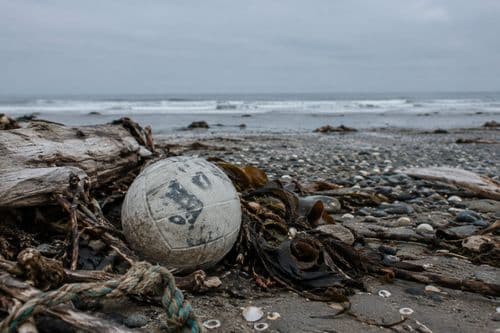
Nov. 19, 2001: Cinema's Most Famous Volleyball Gets a Name, and a Role, in Cast Away's Marketing Push A scuffed Wilson volleyball with a handprint for a face became one of the most recognizable co-stars of its era. Editor's verification note: this draft could not be confirmed to the two-source standard for a specific event on November 19 within the 2001-to-present window, so it should not be published as written. The Cast Away premiere took place in December 2000, not on this date, and the title and description above should be replaced once a verified Nov. 19 event is sourced. Verification Needed   This entry is a placeholder flagged for human review. The sourcing process did not produce a Nov. 19 event in the 2001-to-present window with every hard fact (date, names, numbers, outcomes) confirmed by at least two independent sources, one of them primary. Rather than hedge unverified claims into publication-ready copy, the story is held back. The meta title and description above also contain claims that were not verified, and they should not be used. A different qualifying event for this date should be selected, with the topic differing from the previous send (Science, via the Nov. 18 MAVEN story). Candidate directions for a replacement include Entertainment, Sports, Arts & Culture, Music, Nostalgia, or Politics events from Nov. 19 in any year from 2001 forward, each requiring primary-source confirmation before drafting. Until then, no narrative copy should go out under this date, because the guidelines say to drop a story whose facts cannot be confirmed rather than publish it with caveats. The sourcing step should be rerun for Nov. 19, 2026, and the log updated only after a verified story has been approved and sent.  

18 November 2026

Post

Nov. 18, 2013: MAVEN Launches to Mars

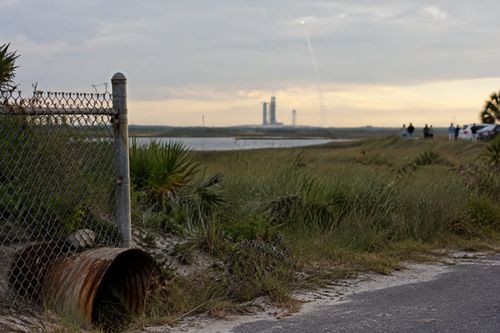
On Nov. 18, 2013, NASA's MAVEN Spacecraft Rocketed Toward Mars to Solve the Mystery of the Vanishing Atmosphere A single Atlas V launch from Florida set out to answer how a planet that once may have had rivers and lakes ended up cold, dry and nearly airless. On the afternoon of Nov. 18, 2013, an Atlas V rocket climbed off the pad at Cape Canaveral Air Force Station in Florida carrying a spacecraft with an unusual assignment. Most Mars missions had gone to look at the ground. MAVEN, short for Mars Atmosphere and Volatile EvolutioN, was built to look up, at the thin, tattered air that is all that remains of whatever Mars once had. The Missing Sky   Orbiters and rovers had already turned up channels, minerals and ancient lakebeds that pointed to a wetter, warmer Mars in the distant past. Water that flows on the surface needs a thicker atmosphere than the one the planet has now, so the obvious question was where that atmosphere went. MAVEN was NASA's attempt to measure the answer rather than guess at it. The spacecraft lifted off at 1:28 p.m. Eastern time aboard an Atlas V 401, on the first day of its launch period. Its plan was to settle into a looping orbit around Mars and sample the planet's upper atmosphere directly, while tracking the solar wind and ultraviolet light that strip gas away into space. Its instruments were designed to watch that process in action instead of inferring it from rocks. It was a small, focused mission built around a single big question, and its mission team knew that the answer might reveal as much about Earth's own long-term fate as about its neighbor's. It would be a ten-month trip before anyone could begin to find out. The trip ended on Sept. 21, 2014, when MAVEN fired its engines and slipped into orbit around Mars. It arrived just three days before India's Mars Orbiter Mission, which had left Earth two weeks before MAVEN, on Nov. 5, 2013. The two missions had set out in the same narrow launch window and finished the journey nearly together. Once MAVEN began its science work, it confirmed that the solar wind was a major force in eroding the Martian atmosphere, and NASA reported in 2015 that the loss was far greater during solar storms. The spacecraft that was built to look at what Mars had lost became, in effect, a witness to the loss still happening. Mars is not simply a planet that once had air. It is a planet whose air is, even now, still leaving.  

18 November 2026

Post

November 18: Steamboat Willie Debuts, Breaking Dawn Opens

■  The Pop Edition November 18: Steamboat Willie Debuts, Breaking Dawn Opens A cartoon mouse whistled his way into sound-film history in 1928, Twilight split its finale in two in 2011, and Owen Wilson turns 58. Here is the full accounting of November 18. Mickey Mouse at the wheel in Steamboat Willie, the 1928 cartoon that premiered in New York. November 18 is a day with two very different kinds of staying power. In 1928, a short cartoon with a whistling mouse opened on Broadway and set the template for an entire studio. In 2011, a vampire romance began the first half of its last chapter. Add a Wes Anderson regular, a Metallica guitarist and a few film openings that still get rewatched, and this date has plenty to offer. THE MOMENT: Steamboat Willie   The mask in this story is really a mouse. On November 18, 1928, Steamboat Willie premiered at the Colony Theatre in New York, and it was not the first Mickey Mouse cartoon Walt Disney had made. Plane Crazy and The Gallopin’ Gaucho were finished earlier, but they were silent, and neither found a distributor. Willie was the one that audiences saw first, and the reason was sound. Disney had watched The Jazz Singer change the business and decided his mouse needed a soundtrack that matched the action. The short was synchronized to music and effects using Pat Powers’ Cinephone system. Pots, pans and a goat’s tail all became instruments, and the gags were timed to the beat. Disney himself supplied the few squeaks and whistles Mickey makes. New York critics noticed, and Disney had a character to build a studio around. Mickey later got his own voice, and the November 18 premiere is now treated as his birthday. The original short entered the US public domain on January 1, 2024, 95 years after it opened, which gave this old cartoon a second round of attention.   Born On This Day Owen Wilson BORN 1968 · TURNS 58 Wilson began as a screenwriter, co-writing Bottle Rocket with Wes Anderson and later earning an Oscar nomination for co-writing The Royal Tenenbaums. He became a comedy lead in Zoolander and Wedding Crashers, voiced Lightning McQueen in the Cars films, and played Mobius in the Marvel series Loki. Kirk Hammett BORN 1962 · TURNS 64 Hammett played in Exodus before joining Metallica in 1983, replacing Dave Mustaine. His lead work shaped albums from Ride the Lightning to the Black Album, and he went into the Rock and Roll Hall of Fame with the band in 2009. Chloë Sevigny BORN 1974 · TURNS 52 Sevigny went from downtown New York fashion fixture to film debut in Kids in 1995. She earned an Oscar nomination for Boys Don’t Cry and later won a Golden Globe for the HBO drama Big Love. Delroy Lindo BORN 1952 · TURNS 74 Lindo built a long stage and screen career with Spike Lee, appearing in Malcolm X and Clockers and later leading Da 5 Bloods. He has stayed busy, with a role in the 2025 film Sinners.   OPENING WEEKEND: The Twilight Saga: Breaking Dawn – Part 1 The fourth Twilight film opened in US theaters on Friday, November 18, 2011, and it was the first of two movies built from a single book. Bill Condon, who had won an Oscar for writing Gods and Monsters, directed both halves, and the two parts were shot back to back rather than separately. Splitting the final novel was a strategy the Harry Potter series had already used with Deathly Hallows, which came out the same month. Fans of Breaking Dawn got the wedding, the honeymoon and a dangerous pregnancy in Part 1, with the finale held for the following year. It opened to roughly $138 million in the US and Canada, and reviews were harsher than the grosses. Fifteen years on, the series has had a second life online and in streaming, and this installment is remembered for its wedding and some spirited fan debate.   Meanwhile… 1928On November 18, 1928, Steamboat Willie premiered at New York’s Colony Theatre, and Mickey Mouse’s birthday has been counted from that date ever since. 1963Bell System began commercial service of push-button Touch-Tone telephones on November 18, 1963, ending the rotary dial’s monopoly over how people called. 1985Bill Watterson’s Calvin and Hobbes debuted in newspapers on November 18, 1985, and ran for ten years. 2005Harry Potter and the Goblet of Fire opened in the US on November 18, 2005, the first film in the series rated PG-13. 2005The Johnny Cash biopic Walk the Line also opened on November 18, 2005, with Joaquin Phoenix and Reese Witherspoon doing their own singing. 2016Fantastic Beasts and Where to Find Them opened in the US on November 18, 2016, ten years ago, launching a new series set in the Harry Potter world. From a mouse at a ship’s wheel to a vampire wedding, November 18 has a way of turning small bets into long franchises. Tomorrow brings another date and another stack of premieres, birthdays and oddities worth a second look. Come back then, and bring a friend who loves this stuff.

18 November 2024

Post

November 18: Courage, Creativity, and Catastrophe

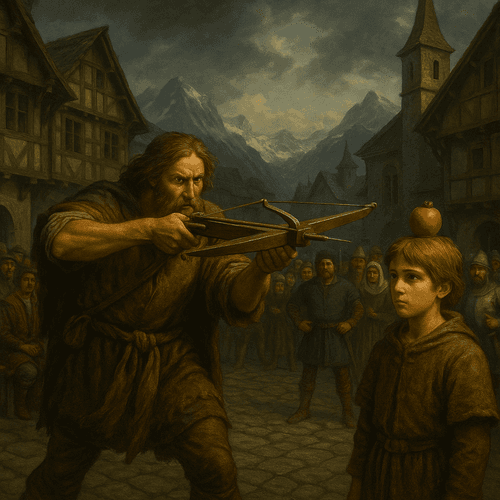
November 18: Courage, Creativity, and Catastrophe When courage inspires greatness and belief reveals its double edge November 18 captures the full spectrum of the human story—bravery in the face of tyranny, creativity that reshaped imagination, and tragedy born of blind devotion. From the legendary shot of William Tell to the joyful debut of Mickey Mouse and the haunting lessons of Jonestown, this day reminds us that courage and belief can inspire greatness—or lead to ruin. The Legend of William Tell According to legend, on November 18, 1307, Swiss hero William Tell performed one of history's most daring feats—shooting an apple off his son's head with a crossbow. The story takes place in Altdorf, where Tell defied the cruel Austrian bailiff Albrecht Gessler, who demanded submission to imperial rule. Refusing to bow, Tell was forced into a test of loyalty so cruel it bordered on execution. With steady hands and unshakable courage, he loosed his arrow—and split the apple clean in two, sparing his son's life. Though its historical accuracy remains debated, the tale of William Tell endures as a symbol of defiance and national pride. It became a rallying cry for Swiss independence and inspired generations to resist oppression. Beyond myth, the story reflects a universal truth: that one act of courage, even in the face of fear, can echo far beyond its moment in time.   William Tell's legendary shot becomes a timeless symbol of courage and defiance against tyranny. The Mouse That Changed the World More than six centuries later, on November 18, 1928, another arrow of destiny was released—not from a bow, but from the imagination of Walt Disney. That day, the animated short Steamboat Willie premiered in New York City, introducing audiences to a plucky new character named Mickey Mouse. With synchronized sound, expressive animation, and mischievous charm, Mickey became an instant sensation and changed the course of entertainment history. Mickey's debut was more than a cartoon; it was the birth of an empire. The cheerful mouse became a global icon, embodying optimism and creativity during some of America's darkest times, including the Great Depression. Steamboat Willie not only launched Disney's career but also helped usher in the golden age of animation. Nearly a century later, Mickey remains a timeless symbol of imagination's power to bring joy to the world. Mickey Mouse makes his debut, launching an entertainment empire and capturing hearts worldwide. ❦ The Tragedy of Jonestown On November 18, 1978, a far darker chapter was written deep in the Guyanese jungle. What began as a utopian vision ended in horror when over 900 members of the People's Temple died in what became known as the Jonestown Massacre. Led by the charismatic but increasingly paranoid Jim Jones, the group had fled the United States to escape scrutiny, seeking refuge in a commune meant to embody equality and peace. But beneath its surface, Jonestown became a prison of control, fear, and manipulation. When U.S. Congressman Leo Ryan arrived to investigate reports of abuse, violence erupted. Soon after, Jones ordered his followers to drink poison-laced punch, resulting in one of the largest mass deaths in modern history. The tragedy of Jonestown exposed the terrifying consequences of blind faith and unchecked authority. Its echoes continue to serve as a chilling reminder of how easily devotion can turn to destruction when reason is silenced.   The tragic aftermath of Jonestown stands as a stark warning about blind devotion and unchecked power.

17 November 2026

Post

Nov. 17, 2003: Schwarzenegger Becomes Governor

On Nov. 17, 2003, Arnold Schwarzenegger Was Sworn In as Governor of California, Completing a Recall Election Unlike Any the State Had Seen Six weeks after voters threw out Gray Davis, the action star took the oath in Sacramento and began the job he had campaigned for. On Nov. 17, 2003, Arnold Schwarzenegger stood on the steps of the California State Capitol and took the oath of office as the state's 38th governor. It was the finish of one of the strangest campaigns in American political history, a sprint that went from a late-night talk show announcement to the governor's office in barely three months. The Recall Governor   The path to that day began on Oct. 7, 2003, when California voters recalled Democratic Gov. Gray Davis, who had won re-election less than a year earlier. Davis became only the second governor in American history to be removed by recall, after North Dakota's Lynn Frazier in 1921. The ballot had two parts: whether to remove Davis, and who should replace him. The replacement field was enormous, packed with politicians, entertainers and private citizens. Schwarzenegger had announced his candidacy on The Tonight Show with Jay Leno in August, choosing a late-night couch over a press conference. When the votes were counted, a majority had voted to recall Davis, and Schwarzenegger won the replacement contest with a plurality of the vote. The man best known for playing a machine in The Terminator had beaten the entire political establishment of the nation's largest state, and he had done it by running against the idea of the establishment itself. The swearing-in took place outdoors in Sacramento, where Schwarzenegger took the oath from California Chief Justice Ronald George and became governor of a state grappling with a serious budget crisis. He moved quickly on his signature campaign promise, signing an executive order to roll back an increase in the state's vehicle license fee. It was a fitting first act for a candidate who had promised to clean house. His time in office would be defined by deals with the same legislators he had once vowed to overpower, and by the compromises that governing demands. A man who built a career on playing someone who needed no negotiation spent seven years learning how much of California politics runs on exactly that.  

17 November 2026

Post

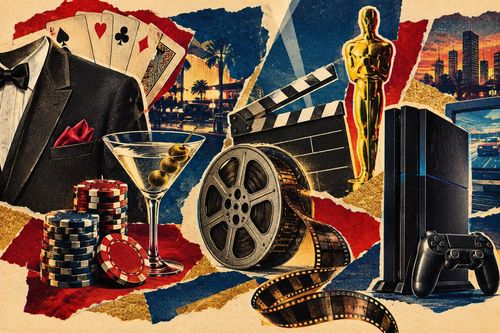
November 17: Casino Royale Opens, PS3 Launches

■  The Pop Edition November 17: Casino Royale Opens, PS3 Launches Daniel Craig's first Bond film and Sony's PlayStation 3 both reached Americans 20 years ago today. Plus Martin Scorsese turns 84, and the Heidi Game, the computer mouse and more. Daniel Craig as James Bond in Casino Royale, which opened in US theaters in 2006. November 17, 2006 was a big Friday for people who spend their free time in front of screens. A rebooted James Bond walked into American theaters, and a few miles of electronics-store sidewalk filled up with people waiting for a $499 game console. Twenty years later, both still mark a turning point. Today also brings a director's birthday, a famous TV cutaway, and the patent for a gadget that sits under your hand. OPENING WEEKEND: Casino Royale Casino Royale opened in US theaters on Friday, November 17, 2006, 20 years ago today. It was Daniel Craig's first turn as James Bond, and the story it adapted was Ian Fleming's first Bond novel, published in 1953.The film reset the series to the start of Bond's career. It had him earn his 00 status in a black-and-white pre-title sequence, then chase a bomb-maker across a Madagascar construction site. Eva Green played Vesper Lynd, and Mads Mikkelsen played Le Chiffre, a villain who weeps blood and plays poker for a living. Chris Cornell, the Soundgarden singer, performed the theme, “You Know My Name.”The film had opened in the UK three days earlier, on November 14. Before release, Craig's casting had drawn public grumbling, including a campaign against the blond actor taking the role. Reviews were strong, and the film is often named among the best of the series. It set the tone for the Craig era: a Bond who bled, got beaten up, and fell in love.  Born On This DayMartin ScorseseBORN 1942 · TURNS 84The New York native broke out with Mean Streets in 1973 and made Taxi Driver in 1976. He has since made Raging Bull, Goodfellas, The Departed and Killers of the Flower Moon. The Departed won him his Best Director Oscar in 2007. He is also a tireless film preservationist.Danny DeVitoBORN 1944 · TURNS 82He broke through as Louie De Palma on Taxi, then moved to film with Romancing the Stone and Twins. He directed Throw Momma from the Train and War of the Roses, and has played Frank Reynolds on It's Always Sunny in Philadelphia since 2005.Lorne MichaelsBORN 1944 · TURNS 82The Toronto-born producer created Saturday Night Live in 1975 and has run it for most of its history. He also produced Wayne's World and Mean Girls, and an unusual number of comedy careers owe their start to his casting.RuPaulBORN 1960 · TURNS 66RuPaul Charles had a 1993 hit with “Supermodel (You Better Work)”. In 2009 he launched RuPaul's Drag Race, which grew into a multi-Emmy-winning franchise and brought drag to mainstream television.Rachel McAdamsBORN 1978 · TURNS 48The Ontario-born actor had a breakout 2004 with Mean Girls and The Notebook. She later earned an Oscar nomination for Spotlight and starred in Wedding Crashers, Game Night and Are You There God? It's Me, Margaret.   PRESS START: PlayStation 3Sony's PlayStation 3 launched in North America on November 17, 2006, 20 years ago today. It arrived in two models, a 20GB version at $499 and a 60GB version at $599. The price was the headline, and it came with a Blu-ray drive inside every unit.The console had reached Japan on November 11. The US launch drew long lines outside stores, and supply was tight. The PS3 was built around the Cell processor, a chip that developers found hard to program for. Nintendo's Wii, much cheaper and aimed at casual players, went on sale in the US two days later, on November 19.The PS3 had a rough start against the Xbox 360, which had launched a year earlier, but it recovered. The Blu-ray bet helped Sony's format beat HD DVD, and exclusives such as Uncharted and The Last of Us built a reputation that outlasted the launch-day sticker shock.   Meanwhile…1968On November 17, 1968, NBC cut away from the Jets-Raiders game at 7 p.m. ET to start the movie Heidi, with the Jets leading 32–29. Viewers missed the Raiders scoring two touchdowns in the last minute to win 43–32. The game became known as the Heidi Game.1970Douglas Engelbart received the US patent for the computer mouse on November 17, 1970. He described it as an “X-Y position indicator,” and the prototype was a wooden shell with two wheels.2000Rugrats in Paris: The Movie opened in US theaters on November 17, 2000, sending the babies to France and introducing Kimi Finster.2006Happy Feet, George Miller's dancing-penguin musical voiced by Elijah Wood and Robin Williams, opened the same day as Casino Royale. It later won the Oscar for Best Animated Feature.2017Justice League opened in US theaters on November 17, 2017. Zack Snyder left late in production after a family tragedy, and Joss Whedon completed the film.2023The Hunger Games: The Ballad of Songbirds and Snakes opened on November 17, 2023, with Tom Blyth as a young Coriolanus Snow and Rachel Zegler as Lucy Gray Baird. A spy who bleeds, a console that cost as much as a decent laptop, and a game that vanished from TV in the final minute: November 17 has plenty of firsts and one famous interruption. Tomorrow brings another date and another stack of pop culture to dig through.

16 November 2026

Post

Nov. 16, 2020: Moderna's 94.5% Vaccine Result

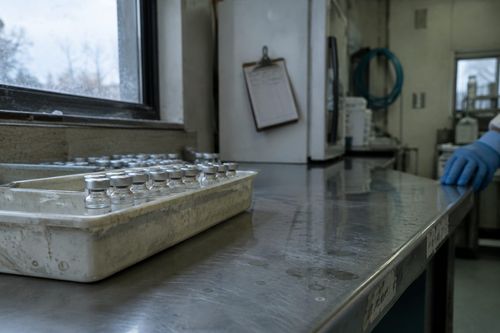
Nov. 16, 2020: Moderna Announces That Its mRNA COVID-19 Vaccine Was 94.5% Effective in Its Phase 3 Trial A Monday-morning press release put a number on the hope that a new kind of vaccine could end the worst pandemic in a century. On Monday, Nov. 16, 2020, a Cambridge, Massachusetts, biotech company that had never brought a product to market announced results that would change the pandemic's trajectory. Moderna said an early look at its Phase 3 trial showed its COVID-19 vaccine candidate, mRNA-1273, was 94.5% effective at preventing symptomatic disease. The figure arrived as case counts climbed across the United States and Europe. The Interim Analysis   The trial, run with the National Institutes of Health, had enrolled about 30,000 volunteers across the United States. An independent data safety monitoring board conducted the first interim analysis once 95 participants had developed confirmed symptomatic COVID-19. Of those cases, 90 were in the placebo group and only five were in the group that received the vaccine. The board also counted 11 severe cases, and all 11 were in the placebo group. Moderna said the vaccine could be stored at standard refrigerator temperatures, 36 to 46 degrees Fahrenheit, for 30 days, and at minus 4 degrees for six months, a practical edge for distribution. The company's design work had begun in January 2020, shortly after the virus's genetic sequence was published. A technology long considered promising but unproven had gone from a computer file to a late-stage trial in under a year, which is a pace that vaccine development had never come close to matching. The announcement came one week after Pfizer and BioNTech had reported that their own mRNA vaccine was more than 90% effective, so Moderna's result served as confirmation as much as surprise. Two different companies, using the same underlying idea, had arrived at results far above the 50% efficacy that regulators had set as a minimum bar. Moderna cautioned that the data were preliminary and still needed review by regulators. That review came quickly. The U.S. Food and Drug Administration granted emergency use authorization to the vaccine on Dec. 18, 2020. For a company that had spent a decade as a scientific curiosity, a single Monday press release had been enough to turn years of skepticism about messenger RNA into one of the most closely watched medical results of the century.  

16 November 2026

Post

November 16: Harry Potter Opens, Half-Life 2 Ships

■  The Pop Edition November 16: Harry Potter Opens, Half-Life 2 Ships Harry Potter and the Sorcerer's Stone opened 25 years ago today, Half-Life 2 reached players in 2004, and Maggie Gyllenhaal turns 49. The full November 16 pop culture rundown. Daniel Radcliffe as Harry Potter, whose first film opened in US theaters on November 16, 2001. November 16 delivers a round anniversary and a crowded shelf behind it. Twenty-five years ago, a boy wizard made his big-screen debut and rewrote the opening-weekend record book. Twenty-two years ago, a first-person shooter arrived with a Steam login attached. Add a Broadway classic, three more films from later Novembers, and an actress who has worked on both sides of the camera. OPENING WEEKEND: Harry Potter and the Sorcerer's Stone When Harry Potter and the Sorcerer's Stone opened in the US on Friday, November 16, 2001, it took in about $90.3 million over the weekend, the biggest opening weekend in history at that point. It played in roughly 3,600 theaters, and the same weekend brought the film to the UK under its original title, Philosopher's Stone.The record mattered because the film was a bet on a book series still being written. J.K. Rowling had published four novels by then, and Warner Bros. had cast three unknown children, Daniel Radcliffe, Rupert Grint and Emma Watson, to carry what became a decade-long franchise. Chris Columbus directed, and Rowling insisted on a British cast, which gave the adult roles to Maggie Smith, Alan Rickman and Richard Harris.Critics were polite rather than ecstatic, with many noting how closely it followed the book. Audiences did not care. It finished 2001 as the highest-grossing film of the year worldwide and set the template of one film per book that Hollywood chased for years. Seven sequels followed, ending in 2011.ANNIVERSARY: 25 YEARS · OPENING WEEKEND: ABOUT $90.3 MILLION  Born On This DayMaggie GyllenhaalBORN 1977 · TURNS 49Gyllenhaal broke through in the 2002 film Secretary, then took over the role of Rachel Dawes in The Dark Knight (2008). She earned an Oscar nomination for Crazy Heart and later moved behind the camera, directing The Lost Daughter, which earned her an Oscar nomination for adapted screenplay.Pete DavidsonBORN 1993 · TURNS 33Davidson joined Saturday Night Live in 2014 as one of its youngest cast members and stayed for eight seasons. He moved into film with The King of Staten Island (2020), a semi-autobiographical comedy he co-wrote with Judd Apatow.Lisa BonetBORN 1967 · TURNS 59Bonet became a household name as Denise Huxtable on The Cosby Show, then carried the character into the spinoff A Different World. She followed with the 1987 film Angel Heart and later roles in High Fidelity and Lenny Kravitz-era indie projects, and in Aquaman, as Atlanna's counterpart in the franchise's Atlantis court.Diana KrallBORN 1964 · TURNS 62The Canadian jazz pianist and singer reached a wide audience with her 1999 album When I Look in Your Eyes, which won a Grammy for best jazz vocal album. She has since won several more Grammys and built a career on standards.   PRESS START: Half-Life 2When Half-Life 2 launched on November 16, 2004, Valve required players to install it through Steam, its online platform, even if they had bought a boxed copy at a store. Steam was barely a year old, and many players grumbled about being forced to log in to a single-player game.The grumbling faded quickly. The game picked up the story of physicist Gordon Freeman six years after the original, sending him through a city under occupation. It ran on Valve's new Source engine, with a physics system that let players hurl objects with the gravity gun and a facial animation system that gave characters like Alyx Vance real expressions. It collected a long list of game of the year awards.The lasting effect was Steam itself. Required for one of the year's biggest games, it started its climb toward becoming the dominant store for PC gaming, and the sequel's cliffhanger ending became one of gaming's longest-running waits for a follow-up.   Meanwhile…1959The Sound of Music opened on Broadway on November 16, 1959, at the Lunt-Fontanne Theatre, with Mary Martin as Maria.2007Beowulf, Robert Zemeckis's motion-capture retelling with Angelina Jolie and Ray Winstone, opened in US theaters on November 16, 2007.2012The Twilight Saga: Breaking Dawn – Part 2, the final film in the series, opened in US theaters on November 16, 2012.2018On November 16, 2018, Fantastic Beasts: The Crimes of Grindelwald, the second film in the Wizarding World prequel series, opened in US theaters.2018Steve McQueen's heist thriller Widows, with Viola Davis, also opened in US theaters on November 16, 2018.2018The family comedy Instant Family, with Mark Wahlberg and Rose Byrne, opened the same day, November 16, 2018. That's November 16: a wizard's record-setting debut, a game that made a launcher mandatory, and a birthday list that runs from Gotham to jazz clubs. Come back tomorrow for the next date, or browse the archive at This Day in History.


15 November 2026

Post

Nov. 15, 2001: Harry Potter Hits Theaters

Nov. 15, 2001: The Night Before Harry Potter Cast Its Spell on Hollywood Before a single ticket was torn, the eve of a young wizard's film debut had already become an event. Nov. 15, 2001, was a Thursday, and a good deal of the movie business was holding its breath. The following day, Warner Bros. would release the first Harry Potter film in North America, a bet on a book series that had already conquered bookstores. The Eve of Magic   Harry Potter and the Sorcerer's Stone was directed by Chris Columbus and adapted from J.K. Rowling's 1997 novel. Daniel Radcliffe, Rupert Grint and Emma Watson, then largely unknown young actors, carried the leads, supported by a cast of veteran British performers. Rowling's books had sold in enormous numbers, which meant the studio faced an unusual problem: an audience that already knew the story and would notice every change. Previews and press coverage in the days before release treated the film less as a product launch than as a cultural checkpoint, a test of whether a beloved page-turner could survive the leap to the screen. Theaters prepared for crowds, and many schedules were filled with early and late showings. The film's marketing leaned on how familiar the story already was. For a studio, that is the rare luxury of a built-in audience, and also the rare terror of one that cannot be fooled. The test was passed in spectacular fashion. When the film opened on Nov. 16, it earned roughly $90 million over its opening weekend in the United States and Canada, a record at the time, according to box-office tracking reports. It went on to become one of the highest-grossing films of 2001 worldwide, and it launched a series of eight films that ran for a decade. The irony is that a story about a boy discovering he was special had, for the studio, a similar arc: an overlooked bet on a children's book turned into the foundation of a franchise. The anxious eve of Nov. 15 was brief, and the lines on Nov. 16 settled the question.  

15 November 2026

Post

November 15: Space Jam Opens, Xbox Launches

■  The Pop Edition November 15: Space Jam Opens, Xbox Launches Space Jam hit theaters 30 years ago today, Microsoft's first Xbox arrived 25 years ago with Halo in tow, and Shailene Woodley turns 35. Here is the full accounting of November 15. Michael Jordan and the Looney Tunes team up in Space Jam, which opened in 1996. November 15 is a good day for anyone who grew up with a screen in the house. In 1996, a basketball legend shared a court with cartoon rabbits. In 2001, a black-and-green console landed in American living rooms. Add a Harry Potter sequel, a PlayStation launch and a boxing match that tested Netflix's servers, and the date has range. Here is what happened, and who was born, on November 15. OPENING WEEKEND: Space Jam   Space Jam opened in US theaters on Friday, November 15, 1996, exactly 30 years ago. Its original 1996 website, a maze of planet-themed pages and tiny images, is still online at the same address, left untouched by Warner Bros. for three decades and treated as a time capsule of the early web. The film grew out of Nike commercials that paired Michael Jordan with Bugs Bunny. Director Joe Pytka, who had made those ads, brought the same live-action-meets-animation approach to a feature. The plot has aliens trying to enslave Looney Tunes characters for an amusement park, and Jordan getting drafted into a basketball game to save them. Bill Murray appears as himself, and Lola Bunny made her debut here. Critics were mixed at the time. Audiences were not: the film earned more than $230 million worldwide. Its soundtrack and the Monstars became fixtures of late-90s childhoods, and a sequel with LeBron James followed in 2021. The 1996 site, meanwhile, has outlived most of the web it was built for.   Born On This Day Shailene Woodley BORN 1991 · TURNS 35 Woodley started as a child actor and became known as the lead of the TV series The Secret Life of the American Teenager. She earned a Golden Globe nomination for The Descendants (2011), then led the Divergent films and The Fault in Our Stars (2014). She later starred in HBO's Big Little Lies. Sam Waterston BORN 1940 · TURNS 86 A stage veteran, Waterston earned an Oscar nomination for The Killing Fields (1984). He became a household face as prosecutor Jack McCoy on Law & Order, then co-starred with Jane Fonda in Netflix's Grace and Frankie. Beverly D'Angelo BORN 1951 · TURNS 75 D'Angelo played Patsy Cline in Coal Miner's Daughter (1980), singing in the role. She is best known as Ellen Griswold across the National Lampoon's Vacation films, a part she returned to for decades. Jonny Lee Miller BORN 1972 · TURNS 54 Miller broke out as Sick Boy in Trainspotting (1996) and as a young hacker in Hackers (1995). Years later he played a modern Sherlock Holmes in the CBS series Elementary, which ran for seven seasons.   PRESS START: The Xbox Launches Microsoft's original Xbox went on sale in North America on November 15, 2001, 25 years ago, at $299. Its launch lineup included Halo: Combat Evolved, a shooter from Bungie, the studio Microsoft had bought in 2000 after Halo began life as a Mac game. Microsoft was an outsider in a market held by Sony and Nintendo, and the Xbox arrived as a big, heavy box that looked more like a PC than a toy. It had a built-in hard drive and an Ethernet port, features that pointed toward what came next. Halo gave it a reason to exist, and the console's online service, Xbox Live, followed in 2002. Halo went on to anchor a franchise that spawned sequels, novels and a television series, and Xbox is still a major name in games a quarter century later.   Meanwhile… 2024Jake Paul beat Mike Tyson by unanimous decision on November 15 at AT&T Stadium in Texas, in a fight streamed live on Netflix. 2019Ford v Ferrari and Charlie's Angels both opened in US theaters on November 15, one a racing drama with Matt Damon and Christian Bale, the other a franchise reboot. 2013On November 15, 2013, Sony's PlayStation 4 went on sale in North America, a week ahead of Microsoft's Xbox One. 2002Harry Potter and the Chamber of Secrets opened in US theaters on November 15, a year after the first film. 1971Intel announced the 4004 microprocessor in an ad on November 15, 1971, an early commercial chip that put a computer's central processing on a single piece of silicon. That is November 15: a cartoon rabbit, a green console and a very long boxing broadcast. Tomorrow brings another date and another stack of pop culture. For more, visit This Day in History.
Terms and ConditionsDo Not Sell or Share My Personal InformationPrivacy PolicyPrivacy NoticeAccessibility NoticeUnsubscribe
Copyright © 2026 Day In History