Entertainment

Entertainment

15 November 2026

Nov. 15, 2001: Harry Potter Hits Theaters

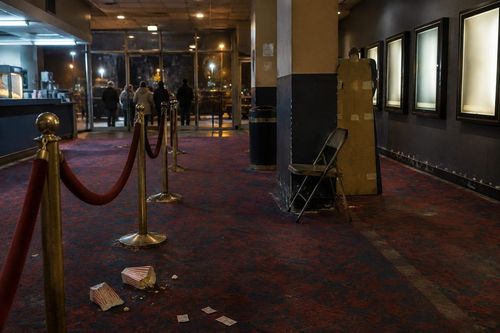
Nov. 15, 2001: The Night Before Harry Potter Cast Its Spell on Hollywood Before a single ticket was torn, the eve of a young wizard's film debut had already become an event. Nov. 15, 2001, was a Thursday, and a good deal of the movie business was holding its breath. The following day, Warner Bros. would release the first Harry Potter film in North America, a bet on a book series that had already conquered bookstores. The Eve of Magic   Harry Potter and the Sorcerer's Stone was directed by Chris Columbus and adapted from J.K. Rowling's 1997 novel. Daniel Radcliffe, Rupert Grint and Emma Watson, then largely unknown young actors, carried the leads, supported by a cast of veteran British performers. Rowling's books had sold in enormous numbers, which meant the studio faced an unusual problem: an audience that already knew the story and would notice every change. Previews and press coverage in the days before release treated the film less as a product launch than as a cultural checkpoint, a test of whether a beloved page-turner could survive the leap to the screen. Theaters prepared for crowds, and many schedules were filled with early and late showings. The film's marketing leaned on how familiar the story already was. For a studio, that is the rare luxury of a built-in audience, and also the rare terror of one that cannot be fooled. The test was passed in spectacular fashion. When the film opened on Nov. 16, it earned roughly $90 million over its opening weekend in the United States and Canada, a record at the time, according to box-office tracking reports. It went on to become one of the highest-grossing films of 2001 worldwide, and it launched a series of eight films that ran for a decade. The irony is that a story about a boy discovering he was special had, for the studio, a similar arc: an overlooked bet on a children's book turned into the foundation of a franchise. The anxious eve of Nov. 15 was brief, and the lines on Nov. 16 settled the question.  
Entertainment

30 October 2026

Oct. 30, 2010: Stewart & Colbert's Mall Rally

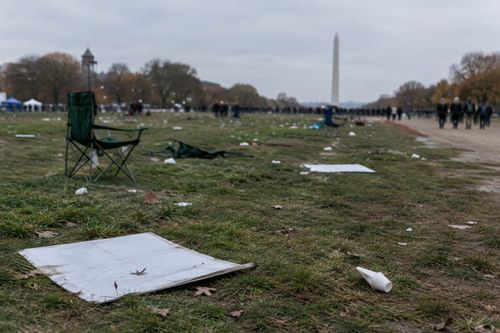
On October 30, 2010, Jon Stewart and Stephen Colbert Turned Satire Into a National Mall Spectacle The Rally to Restore Sanity and/or Fear drew a quarter-million people to Washington with jokes, signs, and a plea for perspective. On a crisp Saturday in late October 2010, the National Mall filled with a crowd more accustomed to watching cable news than making it. Jon Stewart and Stephen Colbert, hosts of Comedy Central's 'The Daily Show' and 'The Colbert Report,' had spent weeks teasing a dueling rally — one for sanity, one for fear — and on October 30, the bit became a bona fide event, drawing an estimated 215,000 people just days before a tense midterm election. The Mall of Reason   The rally's premise was simple and slyly subversive: Stewart would call for sanity, Colbert for fear, and the resulting mashup would needle a media culture addicted to outrage. What emerged instead was a strange hybrid of comedy show and civic gathering, complete with musical guests like Kid Rock, Sheryl Crow, and the Roots, cameo appearances from Yusuf Islam and Ozzy Osbourne dueling over 'Peace Train' and 'Crazy Train,' and a sea of handmade signs mocking cable punditry rather than politicians. Attendees came armed with placards reading things like 'I Disagree But I'm Pretty Sure You're Not Hitler,' a tone Stewart had been cultivating for years. By midday, crowd estimates dwarfed expectations, forcing organizers to extend the rally's footprint along the Mall, a logistical surprise for an event born from a late-night bit. In his closing remarks, delivered without the usual wink, Stewart dropped the satire and argued that America's problems were less about ideological division than a media apparatus engineered to amplify conflict for ratings, comparing the country to cars merging in a tunnel — a messy process that, he noted, mostly works because people cooperate more than cable news would have anyone believe. The speech was widely covered by outlets including The New York Times and C-SPAN, which carried the event live, and it became one of the most quoted moments of Stewart's career. Four days later, the midterms delivered a historic Republican wave in the House, a reminder that even a record-breaking plea for calm couldn't quiet the noise it was mocking.  

Entertainment

21 October 2026

Oct. 21, 2015: Back to the Future Day Arrives

On October 21, 2015, Fans Worldwide Celebrated the Real 'Back to the Future' Day The date Marty McFly time-traveled to in 1989's sci-fi sequel finally arrived, and pop culture couldn't resist marking the occasion. For twenty-six years, one specific date lived rent-free in the imaginations of movie fans everywhere: October 21, 2015, the moment Marty McFly and Doc Brown touched down in their flying DeLorean in 'Back to the Future Part II.' When the calendar finally caught up to fiction, the anticipation exploded into a genuine cultural event, with brands, cities, and studios racing to make hoverboards, self-lacing shoes, and flying cars feel just a little more real. The Future Arrives   Universal Pictures leaned hard into the milestone, releasing a promotional trailer starring Christopher Lloyd reprising his role as Doc Brown, breaking the fourth wall to address the audience directly about the film's predictions. Michael J. Fox made public appearances tied to the day, and Nike unveiled a limited pair of self-lacing Air Mag sneakers inspired by Marty's futuristic footwear, auctioning them off for Fox's Parkinson's research foundation. Toyota rolled out a hoverboard-style prototype for a promotional stunt, while pizza chains and tech companies scrambled to reference the film's whimsical predictions, some accurate, most gloriously not. The internet, still a relatively young stage for viral moments, treated the date like a secular holiday, proving that a joke embedded in a 1989 script could still command global attention decades later. Beneath the marketing blitz was a sincere nostalgia: the film's 2015 vision, equal parts prophetic and absurd, included fax machines everywhere and flying cars nowhere, a mismatch that became part of the day's charm. News outlets ran side-by-side comparisons of the movie's predictions against reality, noting hits like tablet computing and video calls alongside misses like flying DeLoreans and dehydrated pizza. Robert Zemeckis, the film's director, had once insisted he never wanted a third installment revisiting the story, yet the day made clear that no sequel was necessary, the audience had been quietly counting down for over two decades already. The film's throwaway gag had become one of the most affectionately anticipated dates in movie history, precisely because nobody involved in writing it ever expected anyone to actually get there.  
logo
  • Introduction

  • Lessons From The Past

  • Cultural Awareness and Diversity

  • Appreciation for Progress

  • Understanding Political and Social Dynamics

  • Preserving Cultural Heritage

  • Conclusion

Terms and ConditionsDo Not Sell or Share My Personal InformationPrivacy PolicyPrivacy NoticeAccessibility NoticeUnsubscribe
Copyright © 2026 Day In History