On Nov. 26, 2011, NASA Launched a Car-Sized Rover Called Curiosity Toward Mars on a Mission Meant to Last Two Years
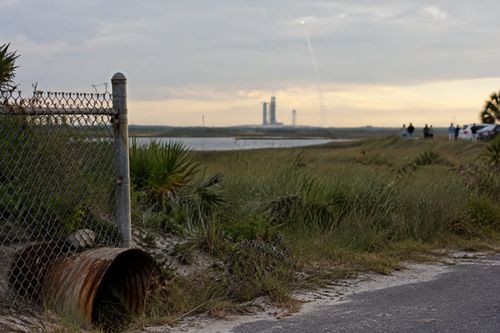
The morning after Thanksgiving weekend began, an Atlas V rocket stood on Space Launch Complex 41 at Cape Canaveral, Florida. On Nov. 26, 2011, it lifted off carrying NASA's Mars Science Laboratory, a spacecraft built around a rover the size of a small car. The rover had been named Curiosity by a sixth-grade student, Clara Ma, in a national student contest. Its destination was 354 million miles away.
The Long Cruise
The Atlas V launched at 10:02 a.m. Eastern time and sent the spacecraft on a roughly eight-month cruise to Mars. Curiosity was far larger than the rovers that came before it. It weighed about 900 kilograms, or nearly a ton, and carried ten science instruments, including a laser that could vaporize rock from a distance and a chemistry lab built to analyze soil and powdered stone. NASA put the mission's cost at about $2.5 billion. Its goal was less to find life than to find out whether Mars ever offered the conditions for it. The rover was bound for Gale Crater, where a mountain of layered rock rose from the crater floor like a geological history book. Engineers had picked it partly because the layers promised a record of how the planet changed over time. Getting there, however, required a landing method nobody had tried: the rover would be lowered to the surface on cables from a hovering rocket-powered platform. The launch was the easy part, and everyone involved knew it.
The gamble paid off on Aug. 6, 2012, UTC, when Curiosity touched down inside Gale Crater after the so-called seven minutes of terror, the descent that had to be completed without any help from Earth. Within months, it found evidence of an ancient streambed, and later analysis of mudstone showed that the crater once held a lake with chemistry that could have supported microbial life. The prime mission was set at one Martian year, about 687 Earth days. Curiosity passed that mark long ago and was still climbing Mount Sharp more than a decade later, working through terrain no engineer had seen when the rocket left the pad. A rover that left Earth to answer one question has spent years producing new ones, which is how a two-year plan turned into a career.