The Choicest Flowers of Springtime
Today is Memorial Day — Monday, May 25, 2026 — and this year it carries a weight that the holiday has not carried in many years. American military personnel are buried at Arlington National Cemetery and at cemeteries across the country from every war the United States has fought since 1775. This morning, new names have been added to that record — men and women killed in the U.S.-Iran war that began on February 28, some of them during the initial strikes on Kuwait, others in the weeks of fighting that followed, others in the naval engagements in the Strait of Hormuz. A ceasefire is holding, tenuously. Peace talks continue in Islamabad. The war is not over. This Memorial Day is not a day of historical reflection from a safe distance. It is a day of present grief — the same grief that created it 158 years ago, when a nation emerging from its most devastating war tried to find a way to honor those it had lost.
Let No Neglect, No Ravages of Time
The holiday now called Memorial Day was born not from a congressional act or a presidential proclamation but from a general's order and a nation's inconsolable grief. The Civil War had killed an estimated 620,000 Americans — more than all other American wars combined, before or since. By 1866, communities across the South had already begun holding informal observances, decorating the graves of Confederate soldiers with flowers. In Columbus, Mississippi, on April 25, 1866, a group of women visited a cemetery to honor Confederate dead and found, nearby, the neglected graves of Union soldiers — the enemy. Disturbed, they placed flowers on those graves too. The gesture, small and human and instinctive, planted a seed. On May 5, 1868 — three years after the war ended — Major General John A. Logan, commander-in-chief of the Grand Army of the Republic, a powerful organization of Union veterans, issued General Order No. 11. He called for a nationwide day of remembrance on May 30. He chose that date specifically because it was not the anniversary of any battle and because, he reasoned, flowers would be in bloom across the entire country. He called it Decoration Day. "We should guard their graves with sacred vigilance," he wrote. "Let no neglect, no ravages of time, testify to the present or to the coming generations that we have forgotten as a people the cost of a free and undivided republic."
The first national observance was held at Arlington National Cemetery on May 30, 1868 — on the grounds of the estate once owned by Robert E. Lee, whose mansion served as the mourning-draped backdrop for the ceremony. General James Garfield spoke. Children from the Soldiers' and Sailors' Orphan Home walked through the cemetery with members of the GAR, strewing flowers on both Union and Confederate graves. About 5,000 people attended. The date was observed every May 30th for the next century — through the Indian Wars, through the Spanish-American War, through World War I, which expanded the day's meaning to encompass all American war dead rather than only those of the Civil War. After World War II, it became the holiday it has remained: a three-day weekend in late May, a day of ceremony at Arlington and thousands of cemeteries across the country, a moment set aside from the calendar to remember those who did not come home. In 1971, Congress formally designated it Memorial Day and moved it to the last Monday of May. What had begun with flowers on graves in Mississippi and Virginia had become an institution — observed every year, in peace and in war, with varying degrees of collective solemnity.
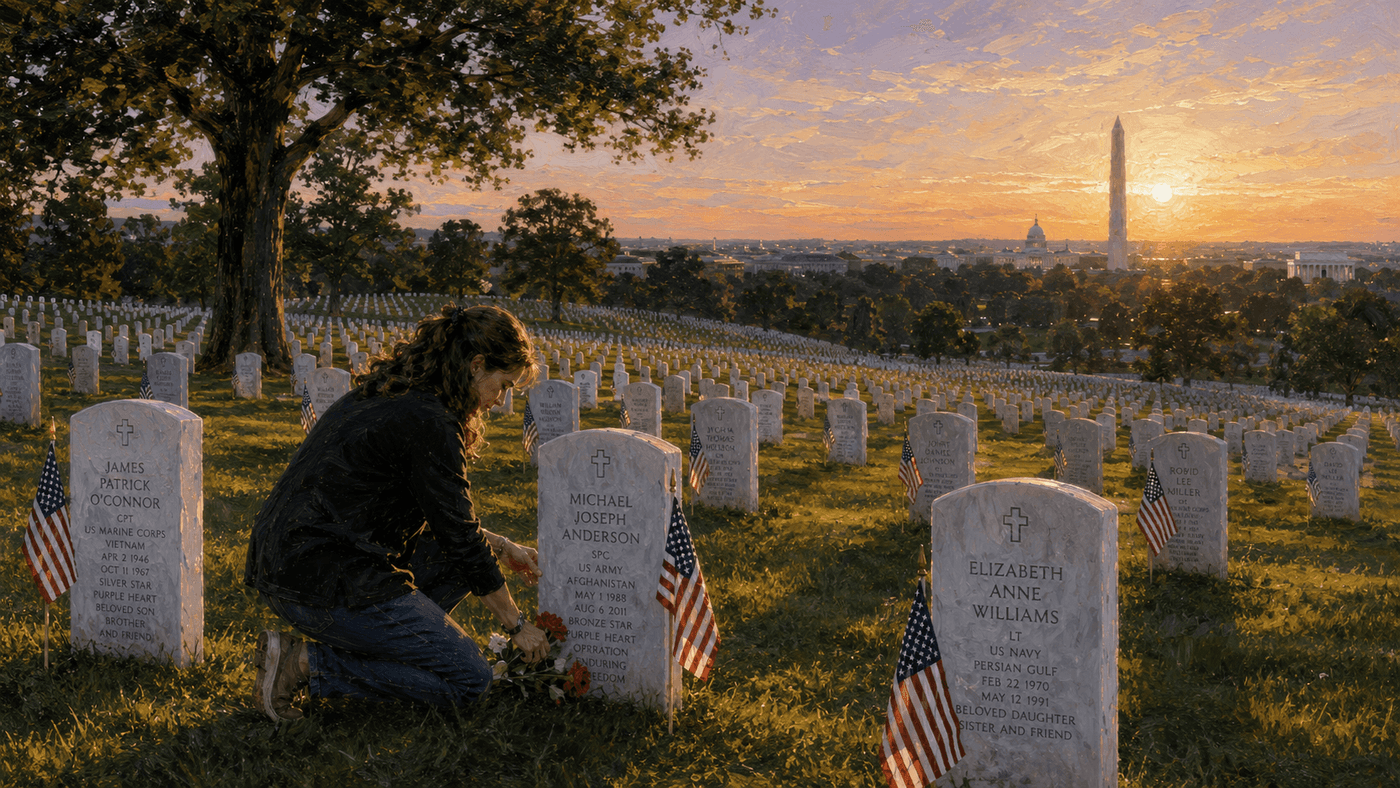
The original purpose of Decoration Day was not to celebrate victory or to honor abstract ideals. It was to go to where the dead were buried and to place flowers on their graves — to refuse, in the most personal and physical way possible, to let their absence become invisible. The women of Columbus, Mississippi who knelt beside Union graves they had no reason to tend were doing something that General Logan formalized into a national practice but could not have invented: the human insistence on acknowledgment, on the specific, individual fact of a life ended and a person gone. This Memorial Day, the families of service members who died at Shuaiba Port in Kuwait on March 1, at a refueling crash in Iraq on March 12, in naval engagements in the Strait of Hormuz in the weeks since — those families will observe the holiday from a different angle than most. They will understand, as the families of 1868 understood, what the holiday is actually for. General Logan asked that the nation "guard their graves with sacred vigilance" and not allow time to erase the cost of what had been lost. On Memorial Day 2026, that cost is not old history. It is still being counted.