The Race Born at a Dinner Party
Today, Saturday, May 16, 2026, the Preakness Stakes — the second jewel of horse racing's Triple Crown — runs for the 151st time, but for the first time in more than a century, not at its ancestral home. Pimlico Race Course in Baltimore, which has hosted the Preakness continuously since 1909, is closed for a $400 million renovation expected to produce a rebuilt venue in 2027. In its absence, the race moves 20 miles south to Laurel Park in Laurel, Maryland — a temporary displacement that, as it turns out, has a precise historical precedent. The Kentucky Derby winner, Golden Tempo, is not in today's field; trainer Cherie DeVaux announced on May 6 that she would protect her horse's long-term health by pointing him toward the Belmont Stakes on June 6 rather than asking him to race again on two weeks' rest. Without him, Bob Baffert's unbeaten Crude Velocity goes to the gate as the 9-2 morning-line favorite, in a 14-horse field that offers genuine competitive depth. But before the horses break from the gate this afternoon, the story worth knowing is the one that put this race on the American calendar in the first place — at a dinner party, in 1868, in Saratoga Springs.
A Promise Made Over Supper, Kept for 151 Years
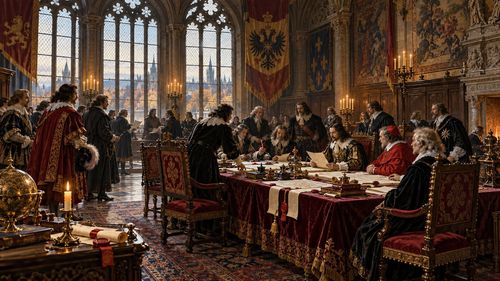
On a summer evening in 1868, Maryland Governor Oden Bowie attended an elegant dinner party in Saratoga Springs, New York, hosted by Milton Sanford — a man who had made a fortune selling blankets during the Civil War and had spent a portion of it on thoroughbreds. John Hunter of New York proposed that the occasion be commemorated with a stakes race to be held at a new racetrack. Governor Bowie, apparently in high spirits, pledged a purse of $15,000 — a staggering sum — and promised to build the track himself. He kept both promises. In 1870, Pimlico Race Course opened as the second racetrack in the United States, behind only Saratoga. On its opening day, a colt named Preakness — from Sanford's own Preakness Stud farm in New Jersey — won the Dinner Party Stakes, the race Bowie had promised that night. Three years later, when Pimlico introduced a new stakes race for three-year-olds at its first spring meet, Bowie named it after that horse: the Preakness Stakes, first run on May 27, 1873, two years before the Kentucky Derby existed. Survivor won by ten lengths and collected a purse of $2,050. The margin of victory stood as the race record for 131 years.
What followed across the next 153 years was not quite the unbroken Pimlico tradition that the race's reputation implies. In 1890, the Preakness was run at Morris Park in the Bronx — on the same card as the Belmont Stakes. It then disappeared for three years entirely. From 1894 to 1908, it was held at Gravesend Race Track on Coney Island, in Brooklyn, where it produced two of the race's first female winners before finally returning to Baltimore in 1909. That return proved permanent — the Preakness has not left Pimlico since. The phrase "Triple Crown" was not coined until the 1930s; before 1932, the Preakness was sometimes run before the Kentucky Derby, and in 1917 and 1922, both races were held on the same day. The elegant five-week sequence — Derby, then Preakness, then Belmont — that has defined American horse racing's most sacred tradition for nearly a century was the product of calendar negotiations and historical accident as much as design. Today's race at Laurel Park is, by this history, not an aberration but a continuation: the Preakness has always found a way to run, wherever the track is available, until it can come home again.
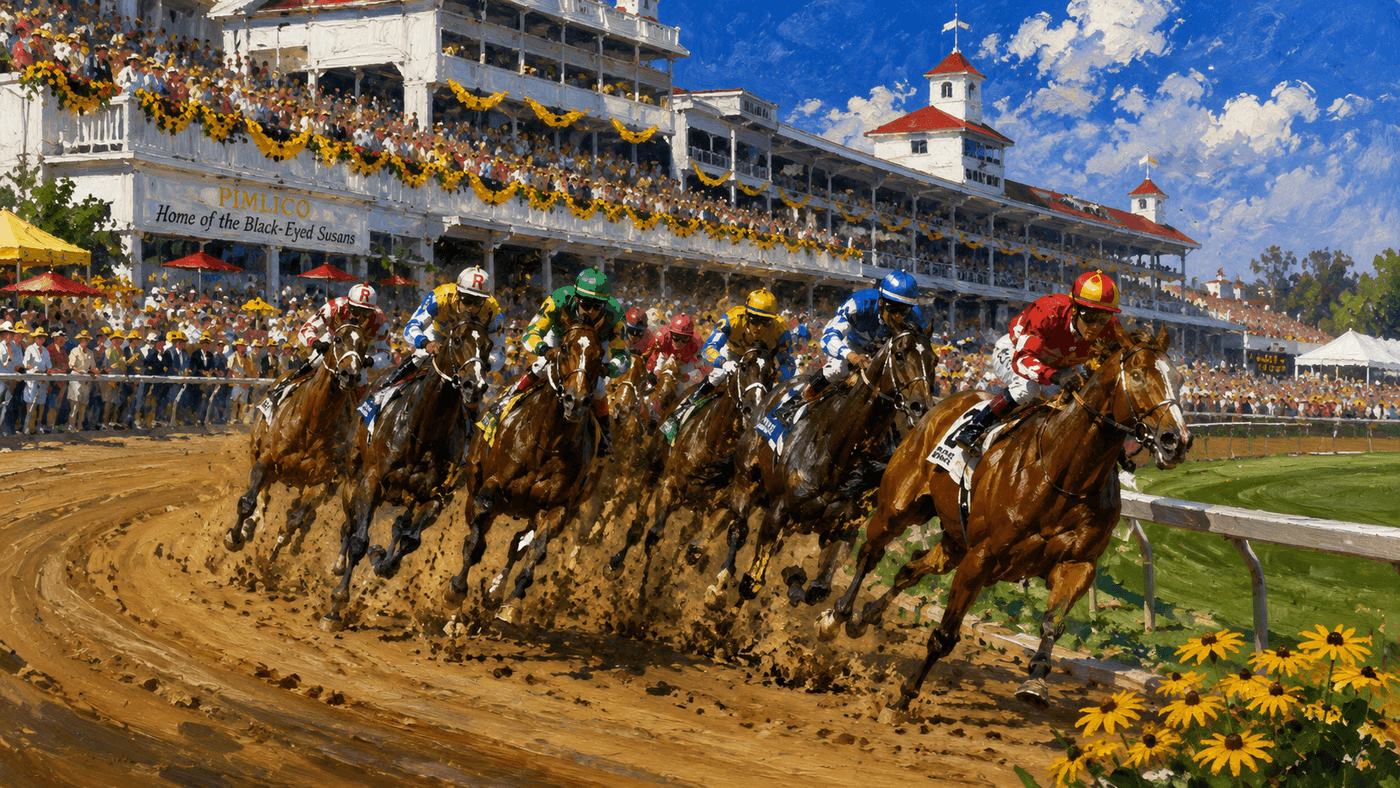
The Triple Crown remains unclaimed today; Golden Tempo's decision to rest and point toward the Belmont means the 14th Triple Crown winner in history will have to wait for another year and another horse. The series has produced only 13 champions in its entire history — Sir Barton in 1919 was the first, American Pharoah in 2015 broke a 37-year drought, and Justify in 2018 remains the most recent. The gap between Triple Crown winners averages longer than a decade, which is why, when a Derby winner like Golden Tempo turns up sound and well two weeks later, the racing world holds its breath. It will hold it again at Belmont in June. This afternoon, the race goes to a 14-horse field at Laurel Park, with a blanket of Black-Eyed Susans — Maryland's state flower, the traditional garland placed around the Preakness winner's neck — waiting in the infield. Governor Bowie made a promise at a dinner party 158 years ago. The race that promise produced is running today, and will run again next year at a rebuilt Pimlico, and the year after that, and the year after that, until the last horse runs the last furlong and the Black-Eyed Susans are placed around a neck that no one yet knows.