The Comet That Came From Somewhere Else
Sometime in the ancient past — long before our Sun ignited, perhaps before the Milky Way had settled into its current shape — a comet formed around a distant star in a region of space far colder than anything in our solar system. For millions of years it drifted between the stars, a frozen wanderer carrying within its ice a chemical signature as unique as a fingerprint. On July 1, 2025, a telescope in Chile caught it as a faint moving speck against the background of stars. By yesterday, the James Webb Space Telescope had unlocked what it was carrying: water unlike any water ever found in our solar neighborhood, with a ratio of heavy hydrogen — deuterium — so high that it could only have formed somewhere else entirely. The comet's name is 3I/ATLAS. It is only the third interstellar object ever confirmed to have visited our solar system. And it is, right now, the most scientifically extraordinary thing in the sky.
Three Visitors, Three Windows Into the Galaxy
Humanity has only ever confirmed three objects from outside our solar system passing through our cosmic neighborhood. The first, 'Oumuamua, was discovered in 2017 — a bizarre, elongated, reddish object that accelerated in ways scientists still cannot fully explain, sparking years of debate and at least one serious proposal that it might be of artificial origin. The second, 2I/Borisov, arrived in 2019 as a more conventional interstellar comet, broadly similar in composition to comets born within our own solar system. Then came 3I/ATLAS, discovered last July as it screamed through the inner solar system at extraordinary speed, already within the orbit of Jupiter when first spotted. It passed closest to Earth at a safe distance of 170 million miles in December 2025, and swept past Jupiter in March 2026 on its way back out into the galaxy. Every major telescope on Earth and in orbit turned to look. What they found has rewritten what scientists thought they knew about chemistry beyond our solar system.
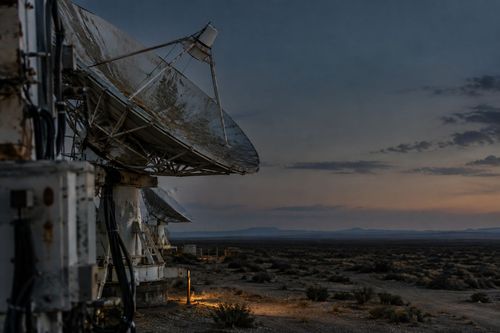
The heavy water discovery — made using the Atacama Large Millimeter/submillimeter Array in Chile and confirmed by the James Webb Space Telescope — is the first time scientists have successfully measured the deuterium-to-hydrogen ratio in an interstellar object. That ratio, which reflects the temperature conditions under which ice forms, tells astronomers where in a star system a comet was born. In our solar system, comets that formed farther from the Sun have higher deuterium ratios; 3I/ATLAS's ratio is so extreme that it suggests formation in an environment far colder than the outer reaches of our own solar system — possibly around a smaller, cooler star, in a disk of gas and dust that produced ice under conditions we have never directly sampled before. New JWST findings published yesterday added carbon ratios to the picture, pointing scientists closer to narrowing down which region of the Milky Way, and which type of stellar system, this comet originally called home.
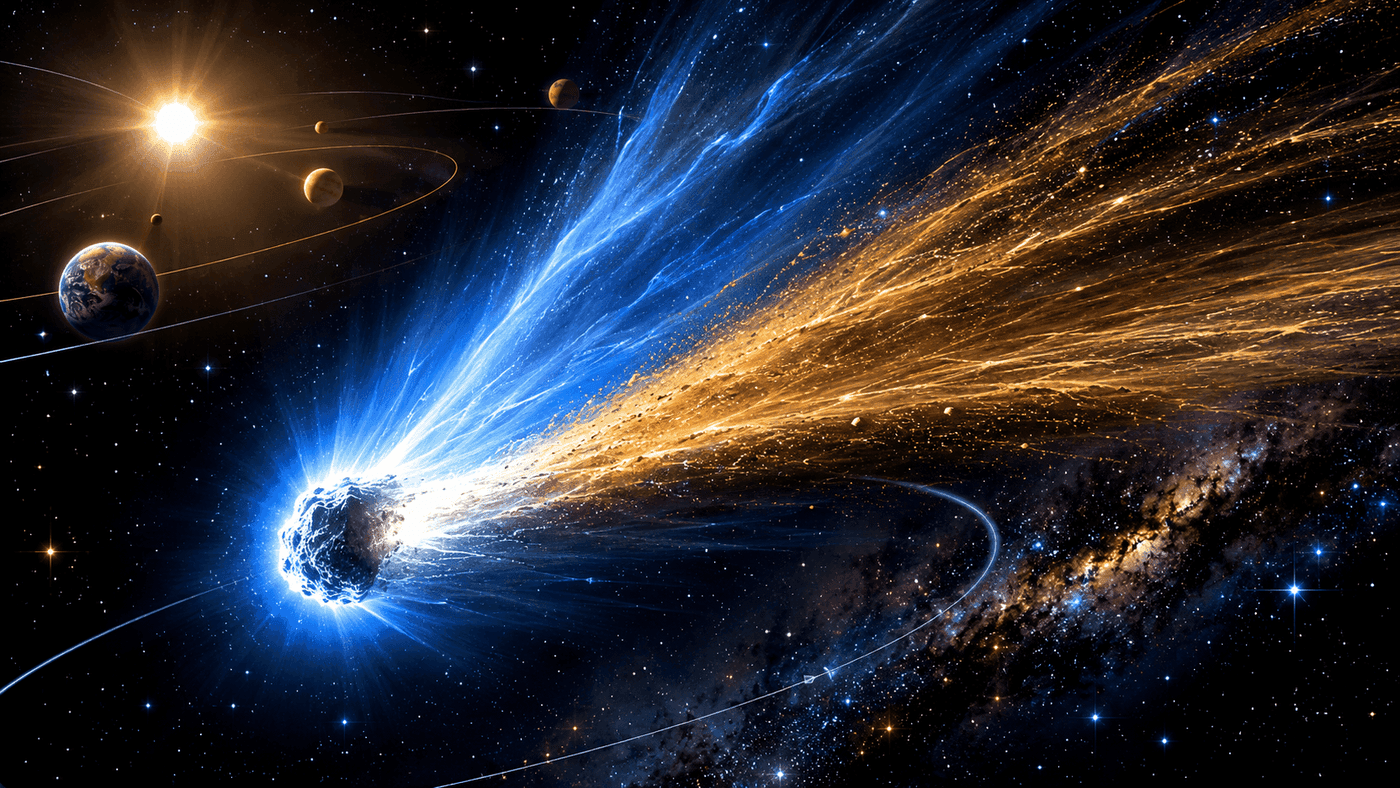
Scientists estimate that an interstellar object may pass through our solar system roughly once per year — but only recently have our telescopes become powerful enough to detect them. The next generation of observatories, including the Vera C. Rubin Observatory now beginning full science operations in Chile, is expected to find dozens more. Each one is a capsule launched billions of years ago from a star we will never visit, carrying frozen chemistry from a world we can only imagine. 3I/ATLAS is already on its way back out of our solar system, accelerating toward the stars. But the data it left behind — in telescope archives, in published papers, in the minds of astronomers who are still working through what its impossible water is trying to tell us — will be studied for decades. A comet drifted between the stars for millions of years to deliver it. The least we can do is pay attention.